The network for creativity
Join 1.25M professional creatives like you
Connect with clients, get discovered, and run your business 100% commission-free
Creatives on Contra have earned over $150M and we are just getting started
Back to feedPost

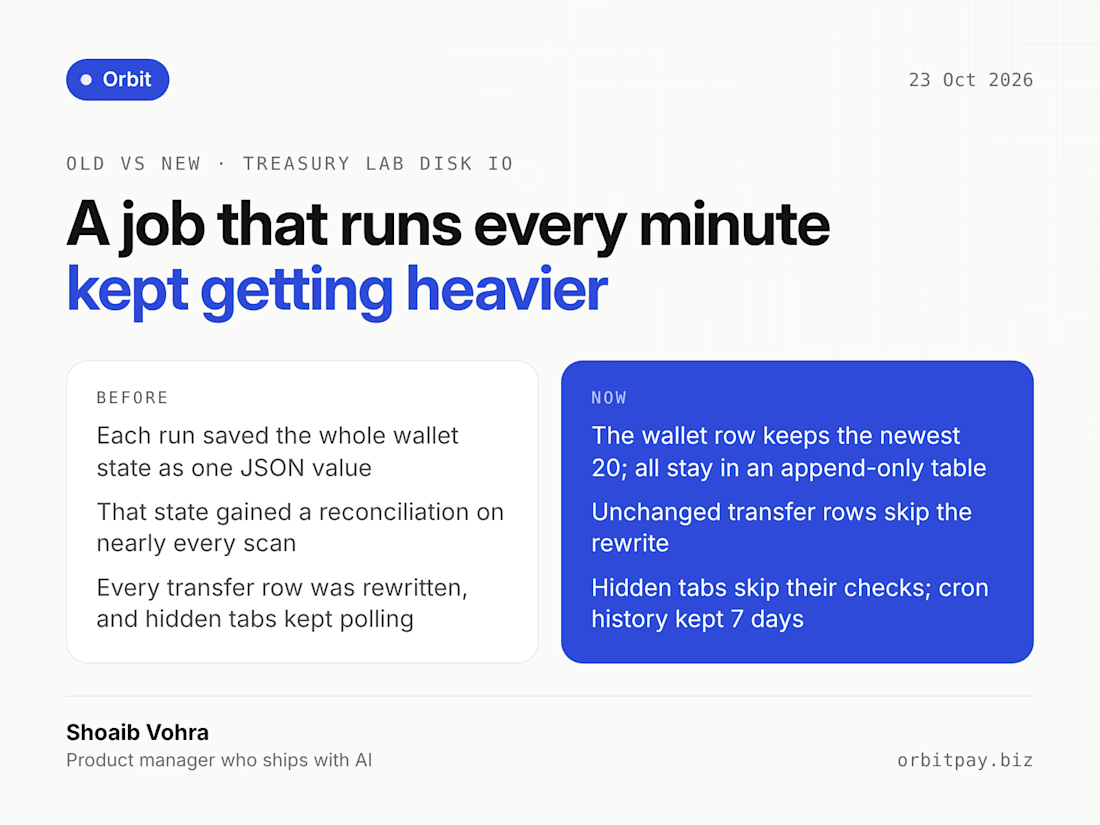
A job that runs every minute kept getting heavier.
Orbit has a treasury lab: a Base Sepolia testnet experiment that only moves valueless test USDC. A worker checks the wallet every minute. Earlier this month the project's Disk IO budget started draining.
The cause: each run saved the whole wallet state as one JSON value. That state gained a reconciliation on nearly every scan and never dropped one. So every minute the database rewrote a bigger document than the minute before, and every transfer row was rewritten too, even when nothing had changed.
The fix:
→ The wallet row keeps only the newest 20 reconciliations (the screen shows 10). Every one is still kept in an append-only table.
→ Unchanged transfer rows are no longer rewritten.
→ Treasury pages stop polling while their tab is in the background.
→ A daily cleanup keeps one week of cron run history instead of all of it (that job alone adds 1,440 rows a day).
The lesson I keep relearning: anything that runs on a timer needs a ceiling. If a payload only ever grows, the bill grows with it.
What's the sneakiest background cost you've found in your own projects?
I take on PRDs, AI-built MVPs and UX audits. DM me.
The network for creativity
Join 1.25M professional creatives like you
Connect with clients, get discovered, and run your business 100% commission-free
Creatives on Contra have earned over $150M and we are just getting started
Related posts

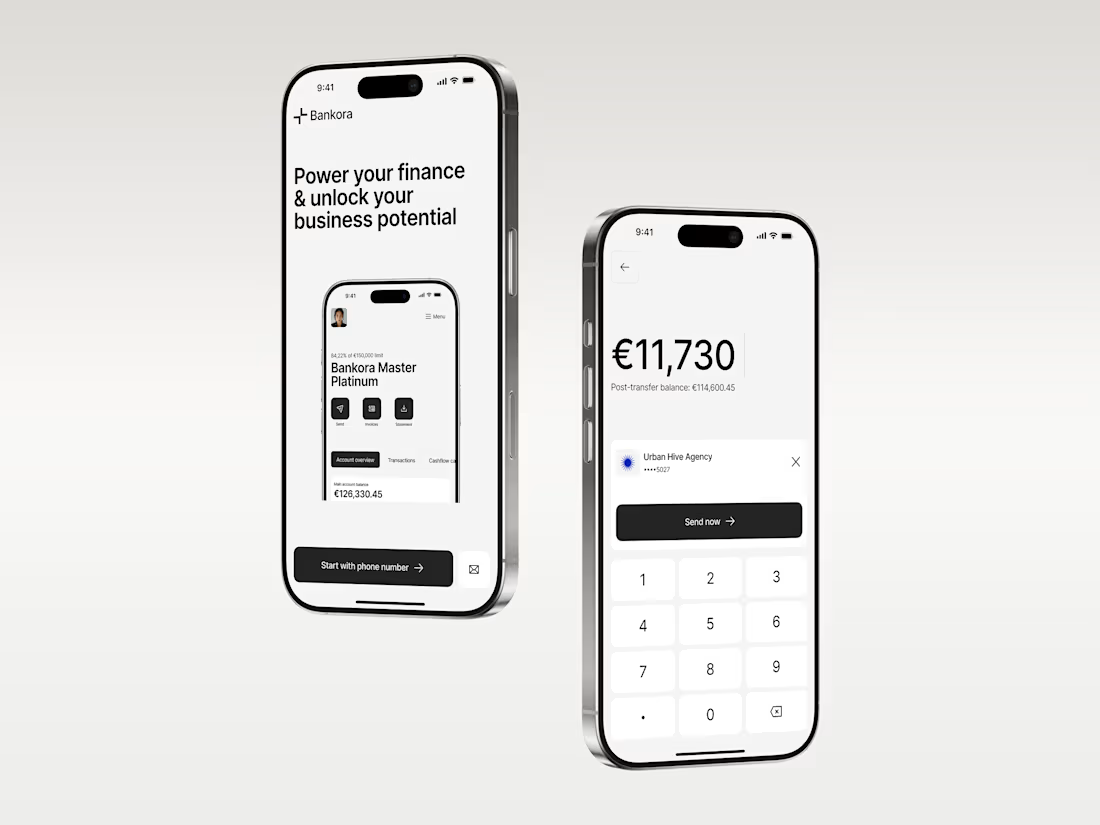
Business banking is already complex. The product shouldn’t make it feel even harder.
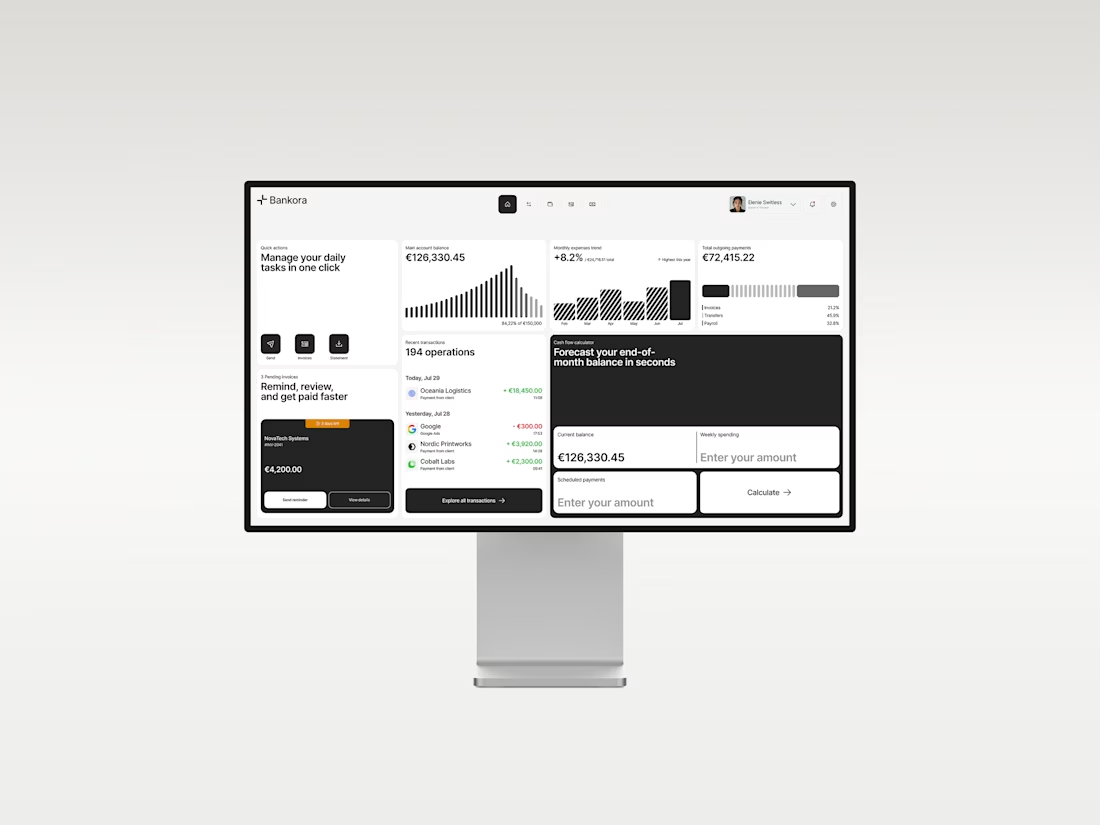
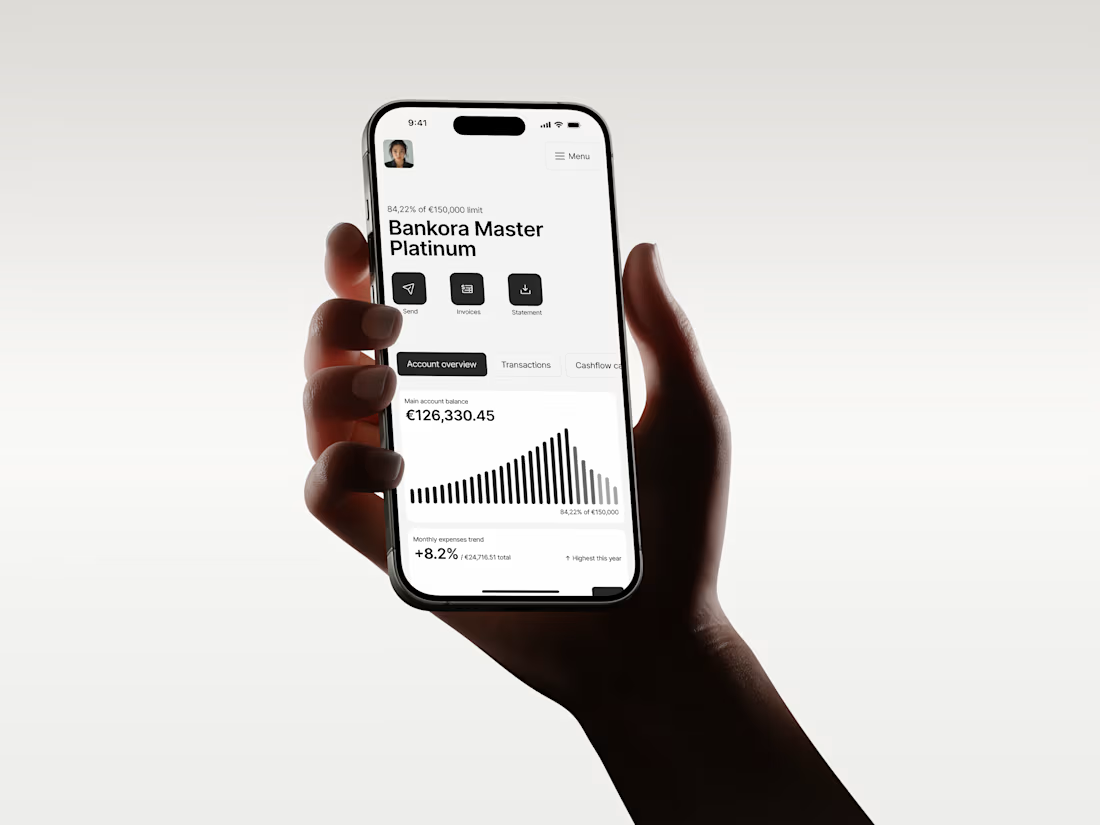
That was the thinking behind Bankora.
Payments, invoices, cash flow, financial overview. These are things business teams deal with constantly, yet many banking products still bury simple actions under dense data, long paths, and complicated navigation.
So I started with the workflows, not the screens.
I looked at the tasks people need to complete most often, where unnecessary steps appear, and what information actually needs attention first.
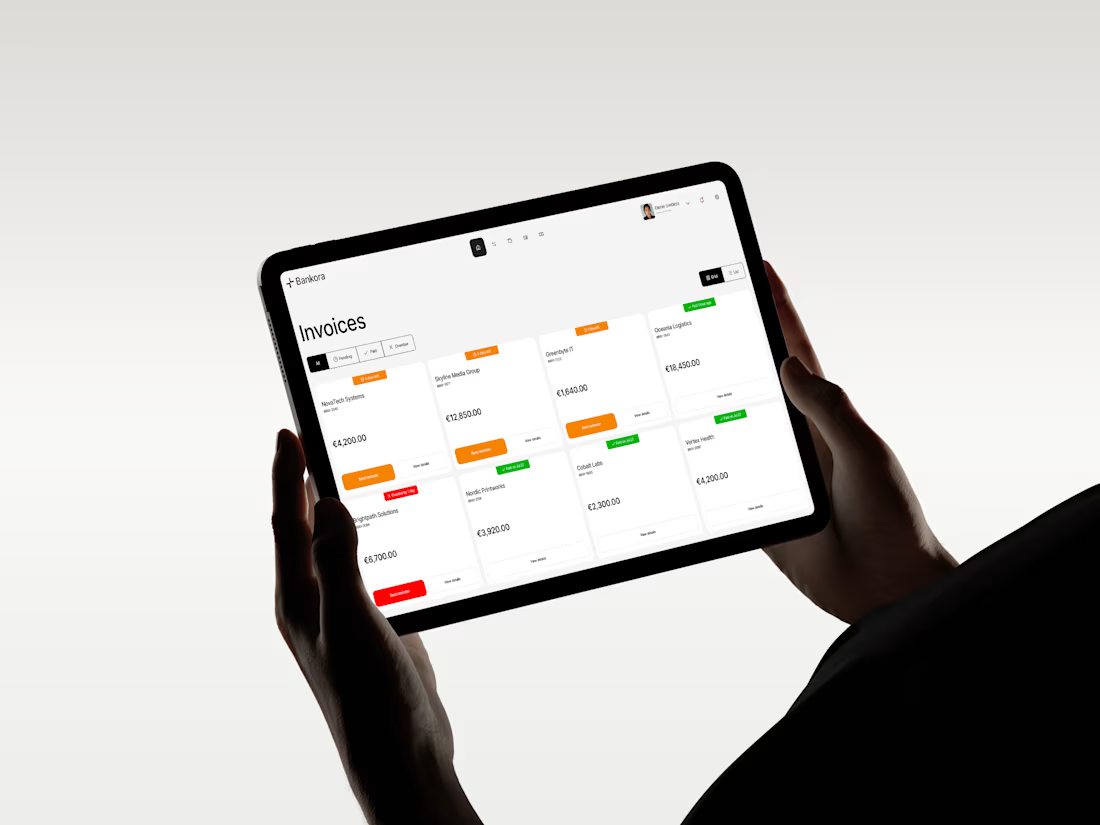
From there, I built the experience around clearer priorities: key actions available quickly, predictable navigation, structured financial data, and modular UI that makes things like pending and overdue invoices easier to understand at a glance.
I also designed an interactive cash flow calculator to help users see where the business may be heading, not just what has already happened.
The goal wasn’t to make financial operations simpler than they really are.
It was to make interacting with them feel simpler.
Less searching. Less cognitive load. More confidence in what to do next.
And it was especially nice to see Bankora later featured by Contra.

clean!

This analytical fintech project features a dashboard that presents key statistics and supports essential money-management tasks, including adding funds, transferring money, and sending payments.


Simart is a calm financial command center designed specifically for freelancers and solo consultants who are exhausted by bloated accounting software and messy spreadsheets.
Instead of burying you in complex ledger entries, it automatically reserves your taxes and calculates your exact "Safe to Spend" balance and runway in real time.
Features like a natural-language AI command bar, one-tap receipt scanning, and client-ready web invoices turn hours of weekly admin work into a few calm seconds.
It’s built on a single promise: replacing financial anxiety with total clarity.
Simple.
Smart.
Calm.


Safe to Spend is a thoughtful touch.