The network for creativity
Join 1.25M professional creatives like you
Connect with clients, get discovered, and run your business 100% commission-free
Creatives on Contra have earned over $150M and we are just getting started
Back to feedPost


The biggest lie in eCommerce marketing:
More traffic equals more sales.
It sounds logical. It is taught in almost every marketing course. It is the default response when revenue is flat.
But here is what that thinking actually produces:
Higher ad costs. Thinner margins. The same conversion rate problem, now at greater scale and greater expense.
More traffic into a leaking funnel does not fix the funnel.
It accelerates the leak.
I have worked with brands spending significant monthly budgets on paid traffic to stores converting at under 1%.
Scaling their spend did not help them. It made the problem more expensive.
The brands I have seen grow fastest in the last two years did something counterintuitive first.
They slowed down on traffic acquisition.
They fixed the funnel. They sharpened the offer. They got the conversion rate from 1% to 3%.
Then they scaled the traffic.
That sequence matters enormously.
A store converting at 3% with the same traffic budget as one converting at 1% generates three times the revenue for zero extra ad spend.
Three times. Same budget. No new audiences. No new creative.
Just a funnel that actually works.
The question is never "how do I get more traffic?"
The first question is always "what happens to the traffic I already have?"
Answer that one honestly and everything changes.
Agree or disagree? I want the real debate in the comments. Tell me where I am wrong.


The network for creativity
Join 1.25M professional creatives like you
Connect with clients, get discovered, and run your business 100% commission-free
Creatives on Contra have earned over $150M and we are just getting started
Related posts



Option B is modern

Over the past month, I've been spending more time exploring Shopify store design and thinking about what makes an online store work well.
One thing that stands out to me is that good e-commerce design involves much more than appearance.
I've been paying closer attention to:
→ How a homepage guides visitors
→ How product pages present important information
→ How collections help customers discover products
→ How navigation affects the shopping experience
→ How a store adapts to mobile screens
→ How consistent design builds a stronger brand experience
I'm also learning to think more carefully about the purpose behind each section instead of designing just because something looks good.
Every page should have a reason to exist, and every design decision should contribute to the overall experience.
I still have more to learn and improve, but each project gives me another opportunity to practice, experiment, and develop my approach.
My biggest takeaway so far: good Shopify design brings visual presentation, usability, and the customer's journey together.
What's one thing you believe every e-commerce designer should understand?

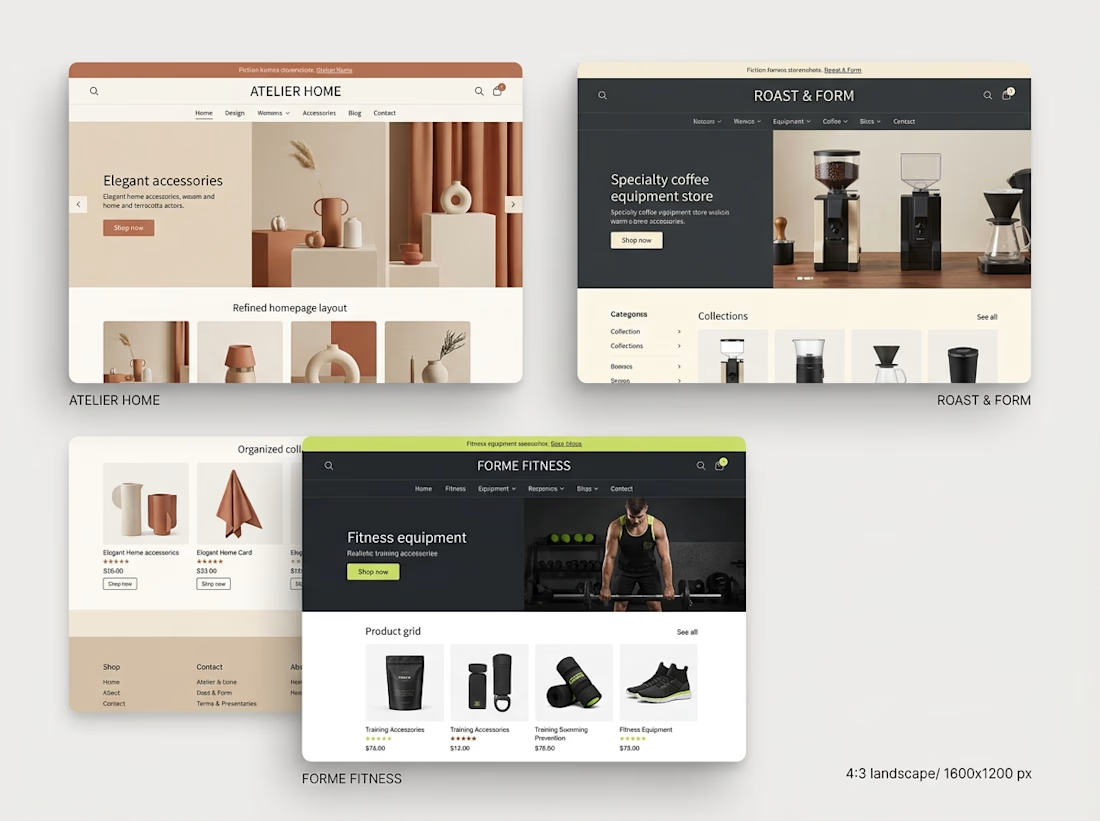

Understanding customer behavior is key to creating better shopping experiences. 👏

Shopify store for a luxury women's handbag brand: product pages, collections, and a clean storefront built to turn visitors into customers.

Great work 👏🏻