The network for creativity
Join 1.25M professional creatives like you
Connect with clients, get discovered, and run your business 100% commission-free
Creatives on Contra have earned over $150M and we are just getting started
Back to feedPost
Cropland in the U.S. has reached a record $5,830 per acre in 2025.
On paper, it sounds like growth.
But as someone working with bookkeeping and financial records, I don’t just see “higher land value” — I see what it does to the numbers behind a farm business.
Land prices have more than doubled since 2005, and at the same time, many young farmers say affordable land is one of their biggest challenges.
So what’s really happening underneath?
It’s not only about expensive land.
It’s about pressure on the whole financial system of farming.
• Bigger land prices usually mean bigger loans
• Bigger loans mean higher interest payments
• Higher fixed costs reduce monthly cash flexibility
• Even when income stays similar, cash feels tighter
• And many businesses end up looking stronger on paper than in reality
This is something I see often in bookkeeping work — the reports look “fine,” but the actual cash situation tells a different story.
That’s why bookkeeping is not just about recording numbers.
It’s about understanding what those numbers are doing to a business in real life.
Sometimes the real issue is not income.
It’s structure, cost pressure, and cash flow visibility.
That’s where clarity matters most.
The network for creativity
Join 1.25M professional creatives like you
Connect with clients, get discovered, and run your business 100% commission-free
Creatives on Contra have earned over $150M and we are just getting started
Related posts

As an accounting student, you learn how to prepare an Income Statement, Balance Sheet, and Cash Flow Statement.
But in real business, it’s not just about preparing reports.
Business is completely different from textbook accounting.
In the real world, you must understand:
• Marketplace changes
• Competition
• Overthinking and decision pressure
• Product or service quality
• Time management
A perfect business is not built only on numbers.
It is built when someone carefully balances all of these areas together.
As bookkeepers, we are not AI.
We don’t just copy similar work again and again.
We think like humans.
We analyze, create solutions, and understand the story behind the numbers.
That’s why these 3 financial statements must always be reviewed carefully—
because they show the real condition of a business, not just accounting entries.

Benchmark.
Real estate website design to properly convey what the brand stands for.


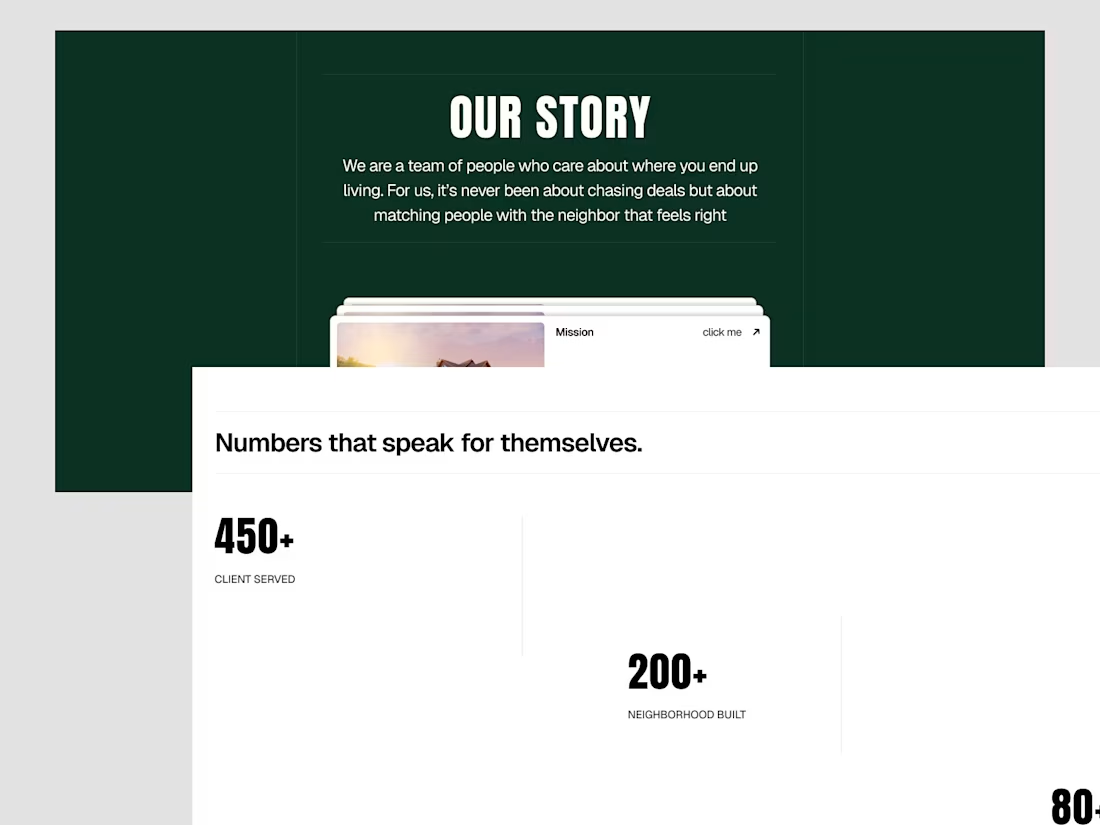

Looks good

Sometimes a simple, well-structured section that clearly explains the purpose of the business works far better than an overly fancy design that ends up creating confusion.
Here’s an example 👇


hmm, interesting =)







Trending

Claude
Claude has entered the design space. How are you using Claude Design?

Contra University
Learn from expert creatives how to earn more using next-gen AI tools.
creativeaiflow
Creative AI workflows are evolving. What tools do you use, and what are their strengths and weaknesses?
portfolioreview
The best portfolios tell a story, not just show a grid. Share yours for feedback.
freelancerlife
Freelancer life is wins, pivots, and everything in between. What’s yours right now?