The network for creativity
Join 1.25M professional creatives like you
Connect with clients, get discovered, and run your business 100% commission-free
Creatives on Contra have earned over $150M and we are just getting started
Back to feedPost
“Exit planning” can sound like something you do when you’re finally ready to retire, but I think that framing is a little too narrow.
There are a lot of ways an owner might eventually step back from a business. You might sell to an outside buyer, transition ownership to employees, bring in a successor, pass the business to family, move into a less operational role, or honestly just get to the point where taking a real vacation doesn’t create an organizational crisis. 😅
What all of those paths have in common is that they become easier when the business is less dependent on one person.
That means things like clearer roles, documented processes, stronger leadership, better communication, financial visibility, healthier decision-making, and systems people can actually use without everything running back through the owner.
The tricky part is that those things are hard to build six months before a transition. 😬 They need time to be developed, tested, adjusted, and strengthened while there is still room to do that thoughtfully.
That’s one of the areas I’m especially interested in through Clarity Forward: helping owners start that work earlier, before there’s pressure to make a major decision.
The network for creativity
Join 1.25M professional creatives like you
Connect with clients, get discovered, and run your business 100% commission-free
Creatives on Contra have earned over $150M and we are just getting started





Related posts

A business transition does not start when you list the business for sale. Ideally, it starts 3-5 years earlier!
Whether you eventually want to sell, transition ownership to employees, hand the business to family, or simply step away from day-to-day operations, the work that makes a business transferable takes time.
Processes need to be documented. Key knowledge needs to live somewhere other than the owner’s head. Teams need room to make decisions without constant approval. Systems need to work without one person holding everything together.
And perhaps most importantly, those changes need time to be tested.
That is why I’m increasingly interested in helping owners think about transition well before there is an actual transaction on the table.
A clarity and business strategist can help identify where the business is still dependent on you, what needs to become more repeatable, and what should be strengthened now so you have more options later.
Even if you are not planning to leave anytime soon, building a business that can function without you tends to make it healthier while you are still in it.

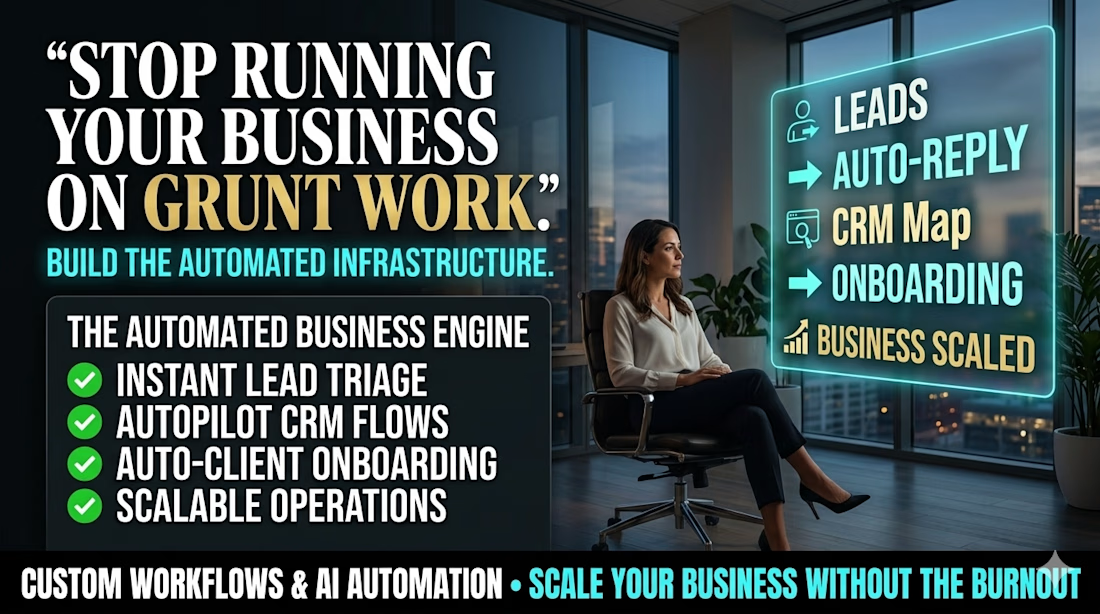
End-to-End Automated Business Infrastructure
The Problem Solved: Eliminates the exhausting "grunt work," manual copy-pasting, and disconnected workflows that slow down growth and burn out business owners.
The Solution: Custom, automated operational engines that seamlessly handle lead management, instant replies, CRM syncing, and client onboarding on autopilot.
Business Impact: Converts incoming inquiries into structured data instantly, secures 100% data alignment across your tools, and unlocks effortless, burnout-free scaling.
Ready to stop doing grunt work and start scaling? Message me here on Contra to evaluate your current business bottlenecks, and let's design an automated infrastructure built for your growth.

We launched NYC TaxAbate Advisors.
Ori Efroni helps New York co-op and condo boards claim a property tax abatement they are already entitled to. Buildings with professional managers get it filed. Smaller self-managed buildings run by volunteer boards usually do not, and the savings quietly disappear every year.
He had the expertise and no way to show it. New firm, no website, and every board was going to look him up before replying.
Brand strategy, logo, full identity system and an eight page Webflow build with a CMS he can run himself. The idea the whole brand sits on is "what's yours," because the money already belongs to the building.
Check it out here: https://contra.com/p/sQmreveB-brand-identity-and-website-design-for-nyc-tax-abate-advisors?referralExperimentNid=DEFAULT_REFERRAL_PROGRAM&referrerUsername=berniceebenezer



Niche but high impact — boards missing abatements they already qualify for is such an overlooked problem. Clear positioning.