The network for creativity
Join 1.25M professional creatives like you
Connect with clients, get discovered, and run your business 100% commission-free
Creatives on Contra have earned over $150M and we are just getting started
Back to feedPost

Performed Bank Reconciliation Statements (BRS) by matching bank records with company accounts, identifying discrepancies, reconciling transactions, and ensuring accurate financial reporting and cash flow management.


The network for creativity
Join 1.25M professional creatives like you
Connect with clients, get discovered, and run your business 100% commission-free
Creatives on Contra have earned over $150M and we are just getting started






Related posts

Your business is making sales. So why does your bank account still feel empty? 💰
This is a challenge many business owners face.
Revenue is growing, customers are paying, and the business looks successful from the outside.
But behind the scenes:
Expenses are increasing.
Customer payments are delayed.
Tax obligations are approaching.
Cash flow is becoming unpredictable.
Here's the truth: Revenue is not the same as profit, and profit is not the same as cash.
Without accurate bookkeeping and regular financial reporting, you may not know where your money is going until it's too late.
As an accounting professional, I help businesses bring clarity to their numbers so they can make better financial decisions.
📩 Want a clearer picture of your business finances? Send me a message to discuss your accounting needs.
#Accounting #Bookkeeping #CashFlowManagement #SmallBusiness #BusinessGrowth

Series 1: Things I Notice as an Accountant
Episode 3: What an old unreconciled balance can tell you. 📊
An unreconciled balance sitting in your books for months?
It might look like a small issue.
But as an accountant, I see it as a reason to investigate. 👀
Because an old unreconciled balance can tell you more than you think.
Here are 5 things I look for:
🔹 1. A payment that was never recorded
The money left the bank, but the transaction never made it into the accounting software.
🔹 2. A duplicate entry
The same expense or payment was recorded twice, making the balance inaccurate.
🔹 3. An invoice that was never settled
A customer payment or supplier transaction may have been incorrectly matched or left outstanding.
🔹 4. A transaction posted to the wrong account
The amount might be correct, but it's sitting in the wrong place.
🔹 5. An error carried forward month after month
Sometimes, an old difference is simply ignored during each reconciliation, allowing the problem to continue.
Here's what concerns me most:
When an unreconciled balance keeps rolling forward, it can make the financial reports look correct at first glance while hiding errors underneath.
And the longer it stays unresolved, the harder it can become to trace the original transaction.
My approach?
I don't just try to make the balance match.
I investigate the difference, trace it back to the source, and make sure the correction is supported by evidence.
Because reconciliation isn't just about matching numbers. It's about knowing your numbers can be trusted. ✅
💬 Question for business owners and fellow accountants:
Do you clear old unreconciled balances as soon as you find them, or do they sometimes get carried forward to the next month?
#Accounting #Bookkeeping #BankReconciliation #FinancialReporting #SmallBusiness


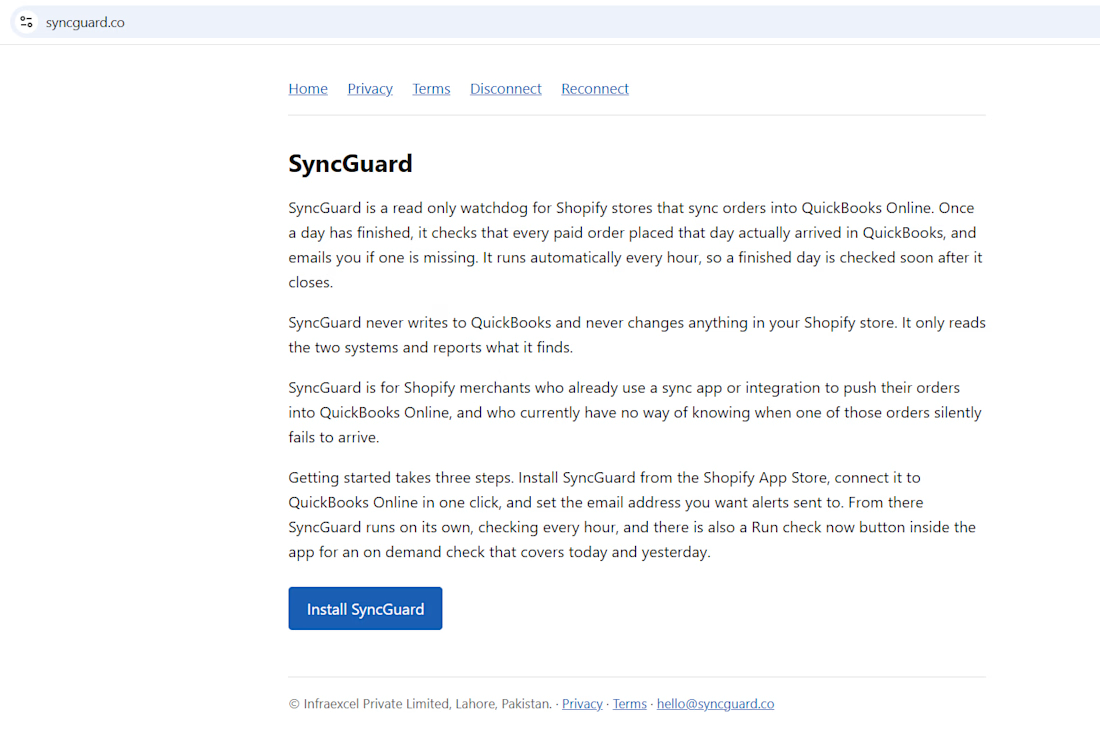
SyncGuard, a Shopify app I built that checks every order actually made it into QuickBooks Online. If the sync breaks or an order goes missing, it flags it so the books don't go out wrong. Read only, so it never touches store or accounting data.


Smart solution. Catching sync issues early can save store owners a lot of accounting headaches.