The network for creativity
Join 1.25M professional creatives like you
Connect with clients, get discovered, and run your business 100% commission-free
Creatives on Contra have earned over $150M and we are just getting started
Back to feedPost

Why So Many Startups Quietly Run on Webflow
Look under the hood of a lot of startup marketing sites — the ones that load fast, look sharp, and somehow get updated the same week the product does — and there's a decent chance you'll find Webflow.
Not the app. The marketing site. There's a difference, and it's the difference that matters here.
The problem it actually solves
Early-stage startups have a specific, recurring headache: the marketing site is never "done," but it's also never the most important thing to build. A new pricing page, a fresh case study, a landing page for the campaign launching Thursday — none of it should require pulling an engineer off the actual product. But for years, that was the only option. Either engineering owned the site, or the site quietly rotted.
Webflow's real pitch to founders isn't "no-code." It's decoupling the marketing site from the engineering roadmap. A founder, a marketer, or a freelance designer can ship a new landing page in an afternoon without touching a deploy pipeline. That's not a nice-to-have — for an early team, it's hours per week given back to the people building the product.
What it's actually good at
Speed to launch. A polished, responsive marketing site in days, not sprints.
Ownership without a dev bottleneck. Non-technical team members can edit copy, swap images, publish blog posts, all inside a visual editor — no git, no CMS admin panel with a confusing UI.
SEO-friendly by default. Clean semantic HTML, fast load times, easy control over meta tags and structured content — things that used to require a developer paying close attention.
Design fidelity. Unlike most "site builder" tools, what your designer mocks up in Figma can be rebuilt pixel-for-pixel, not approximated with a template.
Where it starts to strain
Webflow is a marketing-site tool, not an application framework — and the startups that get burned are usually the ones that try to stretch it past that line. A few honest limits worth knowing before you commit:
It's not your product. Complex logged-in dashboards, user-generated content at scale, or anything with heavy custom business logic belongs in your actual app stack, not Webflow.
CMS collections have real limits. Fine for blogs, case studies, job listings. Painful if you're trying to force it into being a database for something more relational.
Team growth changes the math. A site that one founder built solo can turn into a mess of ad-hoc classes and one-off interactions once three people are editing it. It benefits from the same discipline a codebase does — naming conventions, a design system, someone who owns it.
Exporting is not really "getting your code back." The code Webflow generates isn't meant to be handed to engineers and maintained outside the platform. If you outgrow it, you're rebuilding, not migrating a codebase.
The pattern that works well
The startups that get the most out of Webflow tend to follow a similar shape: build the initial marketing site fast (often with a freelance Webflow specialist rather than in-house, since it's not a full-time role in the early days), set up the CMS so non-technical teammates can self-serve content changes, and keep the actual product — app, dashboard, core user experience — entirely separate in whatever stack the engineering team actually wants to own.
That separation is the real unlock: marketing moves at marketing speed, product moves at product speed, and neither one is waiting on the other.
The honest bottom line
Webflow won't build your product, and it's not trying to. What it does is remove one of the most common and least valuable early-stage bottlenecks — engineers babysitting a homepage — and hand that speed back to whoever actually needs to move fast on marketing. For a lot of startups, that trade is worth a lot more than it looks like on paper.

The network for creativity
Join 1.25M professional creatives like you
Connect with clients, get discovered, and run your business 100% commission-free
Creatives on Contra have earned over $150M and we are just getting started










Related posts

Same layout, same message....but the color shift changes how the product feels.
One says get things moving, the other says stay in control.
Designed in Figma, built in Webflow.
Which one would you ship? 👇

2 voted
20%
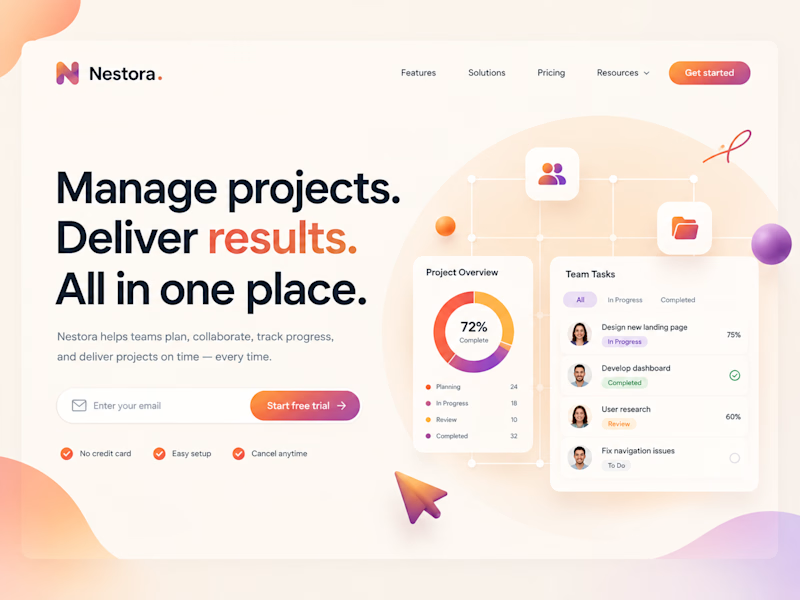
8 voted
80%
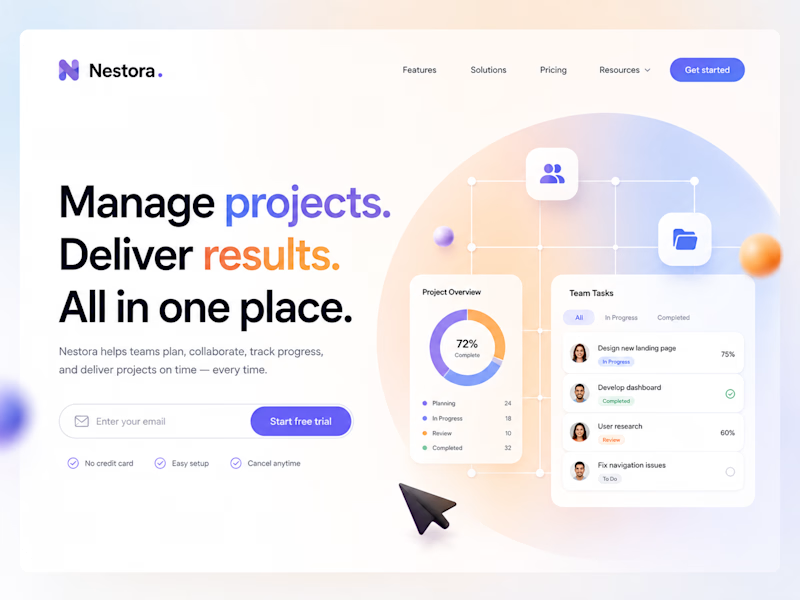
10 votes
Closed

Great job

Webflow & GSAP | Modern Roofing & Construction Website Development
A modern roofing and home restoration website concept combining Webflow development with GSAP-style animations to create a clean, professional, and engaging digital experience.
The website brings roofing services to life through bold typography, smooth scrolling interactions, animated service sections, and a visually organized project portfolio. From roof repairs and inspections to complete home restoration, every section makes it easier for homeowners to explore services and understand the company's expertise.
With responsive layouts, customer testimonials, and strategically placed quote-request buttons, the experience is designed to strengthen credibility, showcase completed projects, and turn website visits into potential customer inquiries.
Tech Stack: Webflow · GSAP · Figma · Swiper.js
Top Skills: Webflow Development · GSAP Animation · Responsive Web Design


This is the kind of work I want to do more of.
A strong visual direction and plenty of room to get creative with the development. Built in Webflow, animated with GSAP.
Here’s a look around.

Outstanding Work❤️