The network for creativity
Join 1.25M professional creatives like you
Connect with clients, get discovered, and run your business 100% commission-free
Creatives on Contra have earned over $150M and we are just getting started
Back to feedPost

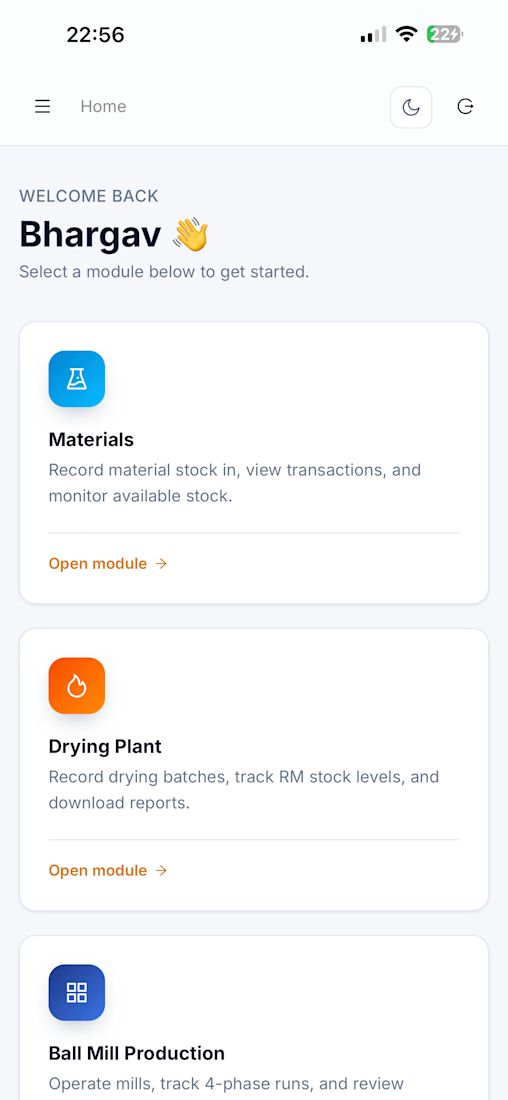
I designed and built Pristine's entire digital operations platform, from database architecture and role-based workflows to a production-deployed web suite and an AI analytics layer.
The challenge was replacing a ceramic processing plant's paper-and-spreadsheet production logs with a system that floor operators would actually use, while giving management the traceability and insight the paper trail never could. Every decision focused on data integrity, least-privilege security, and keeping the interface simple enough for shift operators to work quickly.
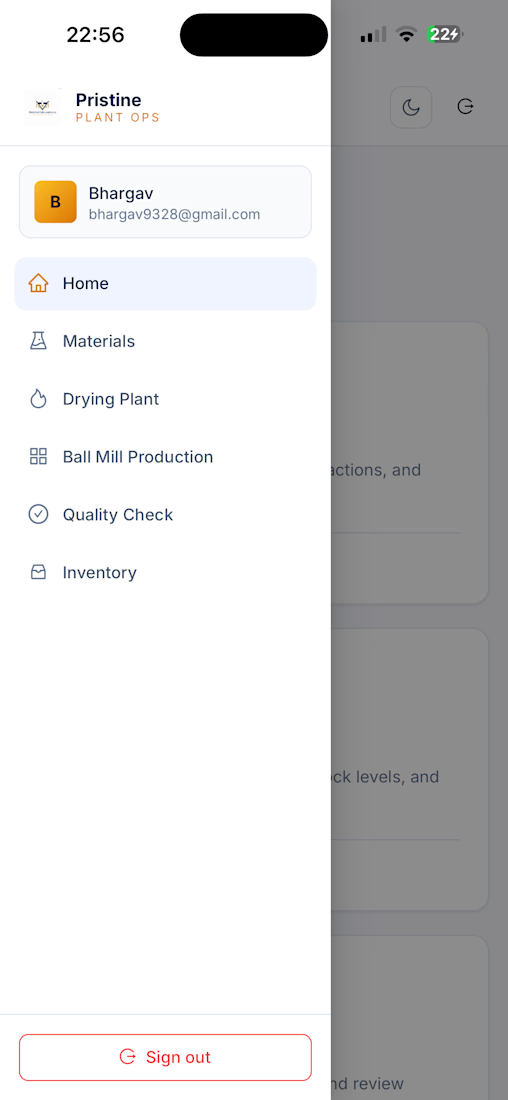
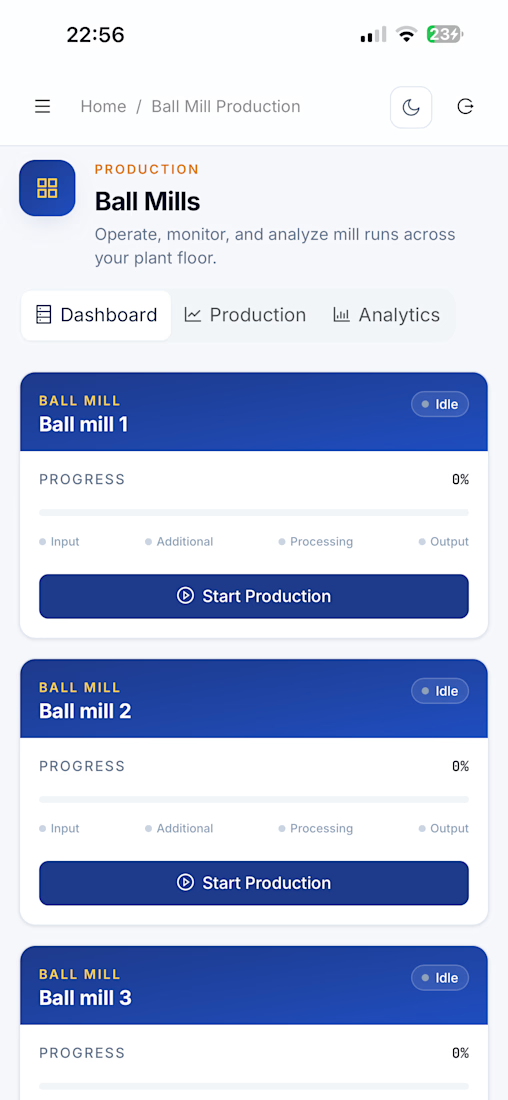
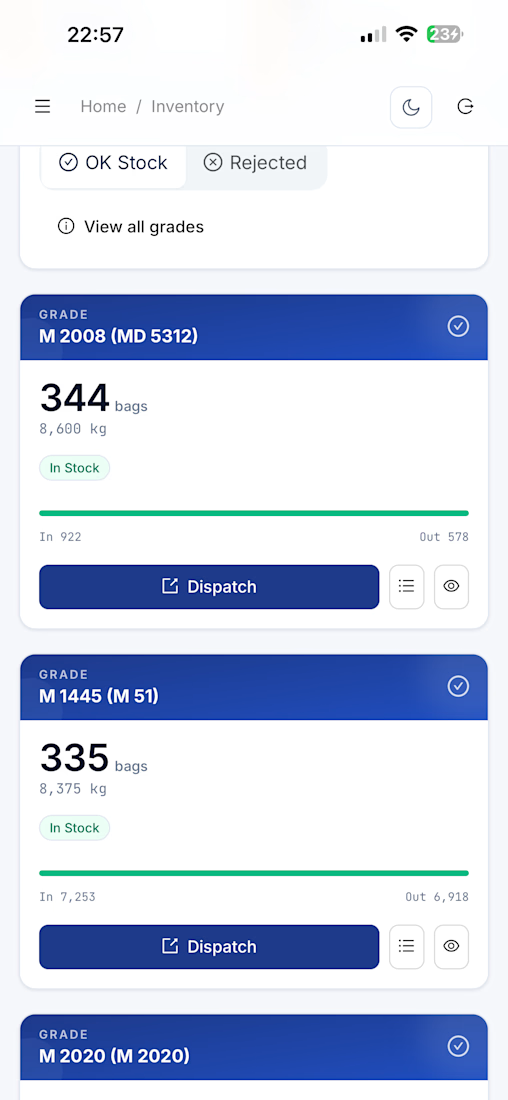
I built four services around a single PostgreSQL schema. The operator app handles the full production lifecycle: raw material intake, drying plant shifts, multi-section ball mill batch entry, quality control, and finished-goods inventory, with Excel export throughout and navigation that adapts to each of eight distinct plant roles. A modular Express and Prisma API enforces that access control at the route level. A separate React-Admin console keeps master data (mills, grades, recipes, suppliers, users) out of the operator's way.
The most important piece was traceability. I designed a quality control gate that sits between production output and inventory. QC records are created automatically when a batch completes, reviewed by an inspector, and only generate an inventory entry if quality passes. Every finished bag carries an auto-derived lot number encoding its production date, flow rate, monthly sequence, and bag count, so any outbound shipment can be traced back through inventory and QC to the exact mill batch that produced it.
On top of that I built an AI analytics agent that lets managers query the plant in plain English, architected around a zero-data-to-LLM guarantee. The model only ever sees the database schema and the question, never a row of production data. Five independent layers enforce it: two least-privilege Postgres roles separating read-only queries from insert-only auditing, a sqlglot AST guard that rejects any non-SELECT statement, a per-role table allowlist, the prompt design itself, and a full audit log of every interaction. Answers stream to the browser over Server-Sent Events through a LangGraph pipeline that routes, guards, plans the query, executes, then explains the result in business terms.
Tech Stack: React 19, TypeScript, Ant Design, TanStack Query, Tailwind CSS v4, Node.js, Express, Prisma, PostgreSQL, React-Admin, MUI, Python 3.12, FastAPI, LangGraph, OpenAI, AWS EC2, Nginx, Supabase, Vercel.


The network for creativity
Join 1.25M professional creatives like you
Connect with clients, get discovered, and run your business 100% commission-free
Creatives on Contra have earned over $150M and we are just getting started
Related posts

Is AI finally good enough to shoot a product demo on its own, or human touch is still needed?
I generated a 20s product demo with Seedance 2.5 in a single take providing it with one product image reference and an example video transcript (posted in the comments). Do you disclose to a client how much AI is involved, or just let the result speak for itself?

Is AI finally good enough to shoot a product demo on its own, or human touch is still needed?
I generated a 20s product demo with Seedance 2.5 in a single take providing it with one product image reference and an example video transcript (posted in the comments).
Do you disclose...

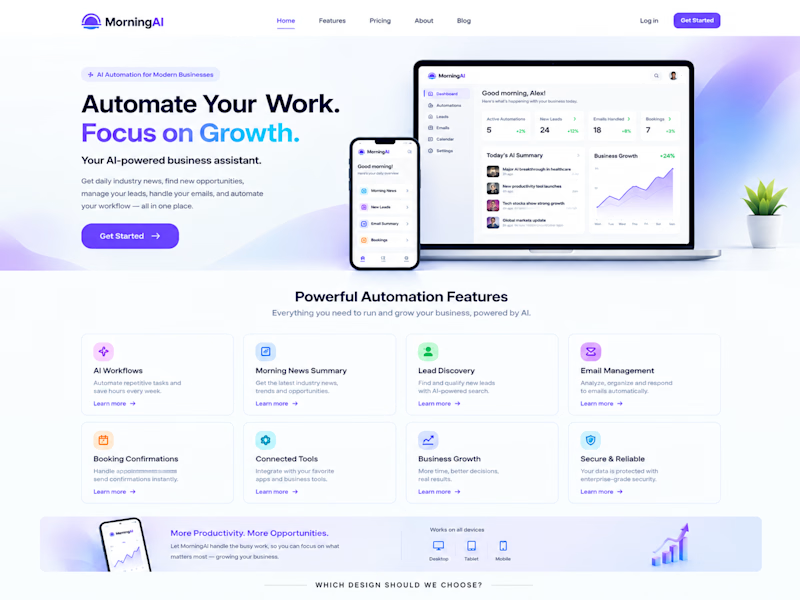
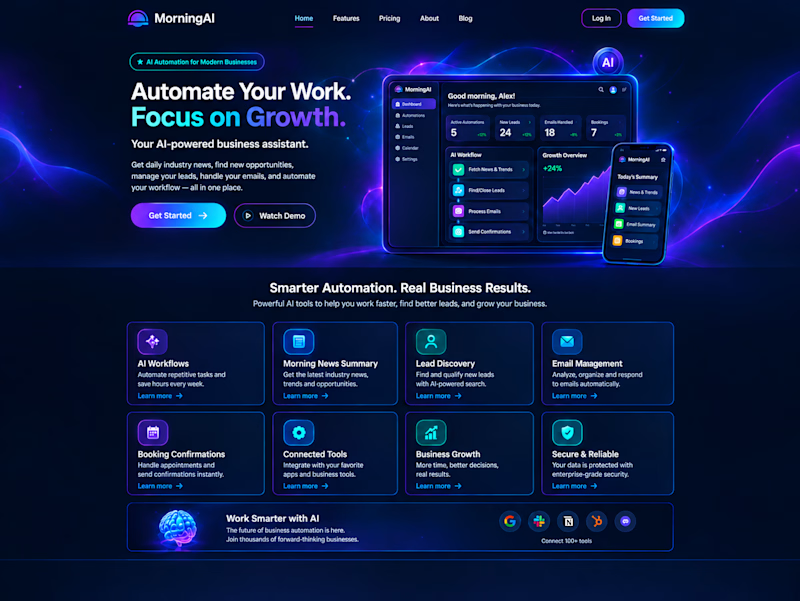
I'm building MorningAI — an AI automation platform designed to help businesses save time and work smarter.
I'm deciding on the website's visual direction, and I'd love your opinion!
🅰️ Design A: Light, clean & professional
🅱️ Design B: Dark, futuristic & premium
Which design should I choose for MorningAI — A or B?
Drop your choice in the comments! 👇
4 voted
57%
3 voted
43%
7 votes
Closed

TITAN Nexus — Enterprise AI Automation Platform
One Intelligence. Infinite Possibilities.
TITAN Nexus is an AI-powered automation platform designed to help businesses streamline workflows, coordinate intelligent AI agents, manage approvals, and monitor task execution from one centralized dashboard.
What TITAN Nexus Can Do
AI Agent Orchestration: Coordinate specialized AI agents for different business tasks.
Workflow Automation: Build and manage multi-step processes to reduce repetitive manual work.
Smart Task Execution: Plan tasks, execute authorized tools, track results, and handle errors.
Approval & Security Controls: Manage permissions and require approval for sensitive operations.
Real-Time Monitoring: Track workflow status, execution history, and system activity.
Data & Backup Management: Support persistent task records, backup exports, and recovery workflows.
Integration-Ready Architecture: Designed to support external business tools and services as connections are configured.
Our Mission
To make business automation more accessible, organized, secure, and scalable by bringing AI agents, workflows, and operational visibility together in one platform.
Built by Shubham Tripathi
TITAN Nexus — Smarter Workflows. Greater Control. Intelligent Automation.


Great 👍🏻