The network for creativity
Join 1.25M professional creatives like you
Connect with clients, get discovered, and run your business 100% commission-free
Creatives on Contra have earned over $150M and we are just getting started
Back to feedPost
2D editing, real-time 3D feedback.
One of the browser-based tools I built connects a 2D graphic editor with a Three.js-powered 3D scene.
Changes made in the 2D workspace can be reflected in the 3D view, allowing users to work with visual assets without switching between separate tools.
The interesting part wasn't simply rendering a 3D model — it was designing the interaction and data flow between the editing state, textures, scene objects, and UI.
This kind of work sits at the intersection of web engineering, interactive 3D, and product tooling.
More project details: qingsys.com/en/cases/2d-3d-editor


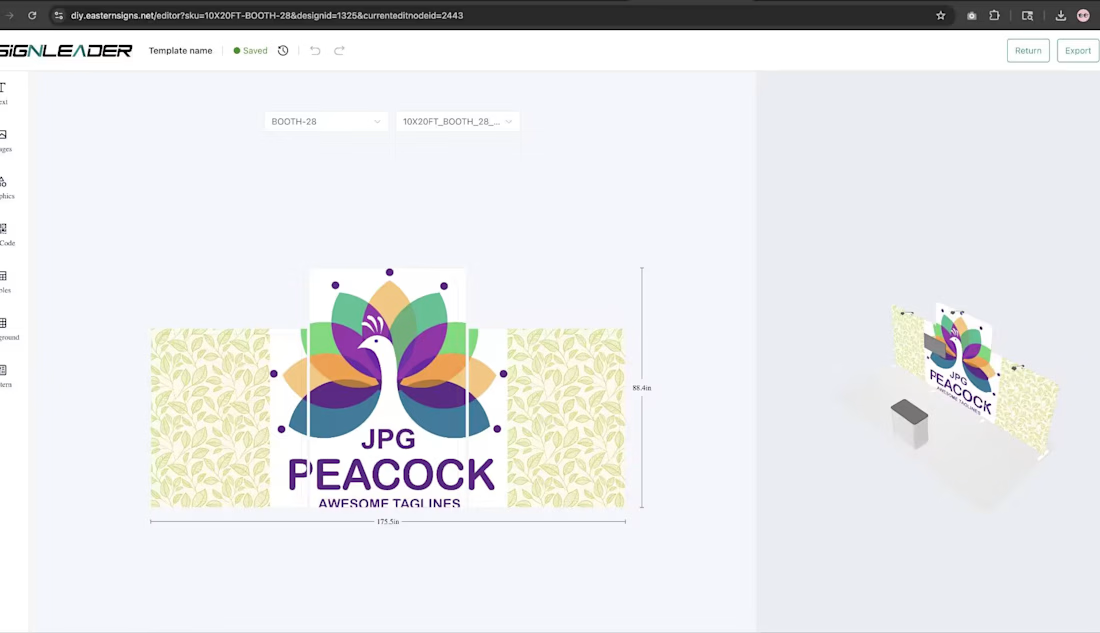
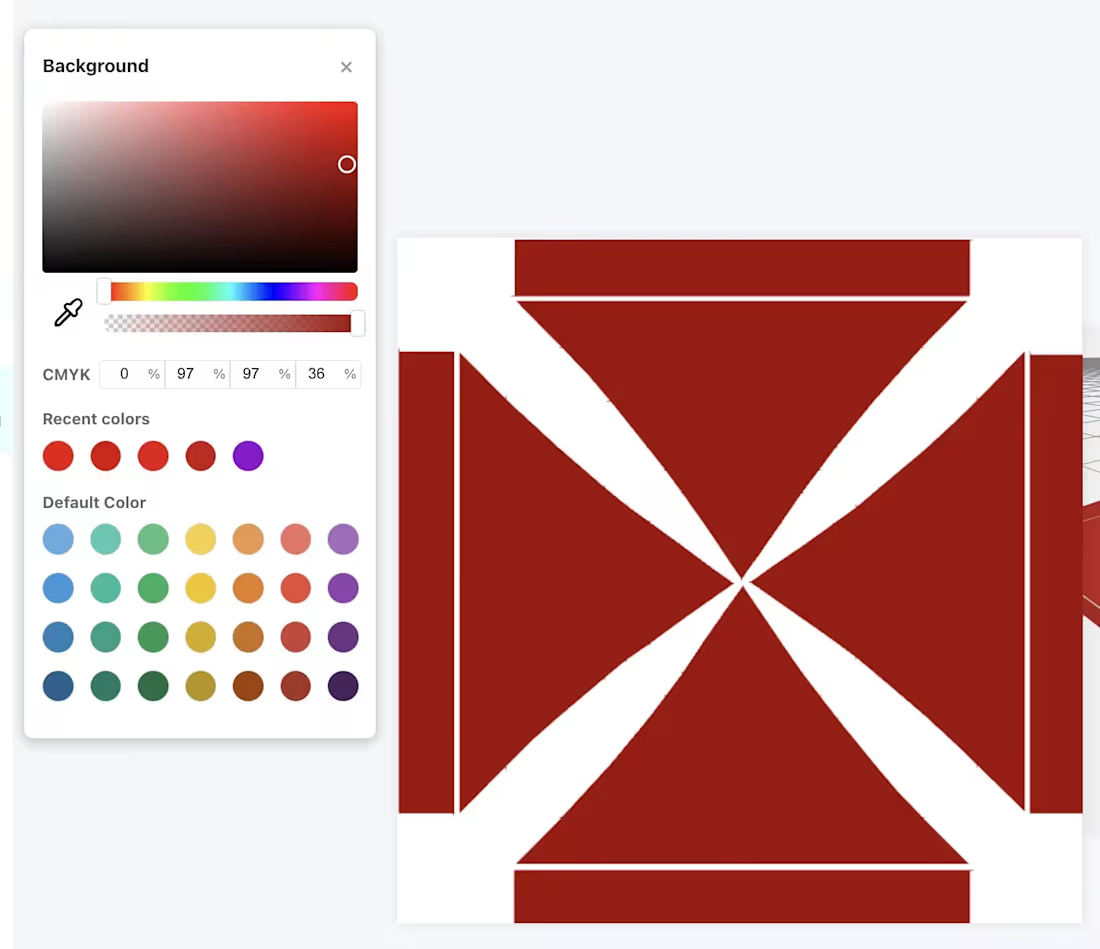
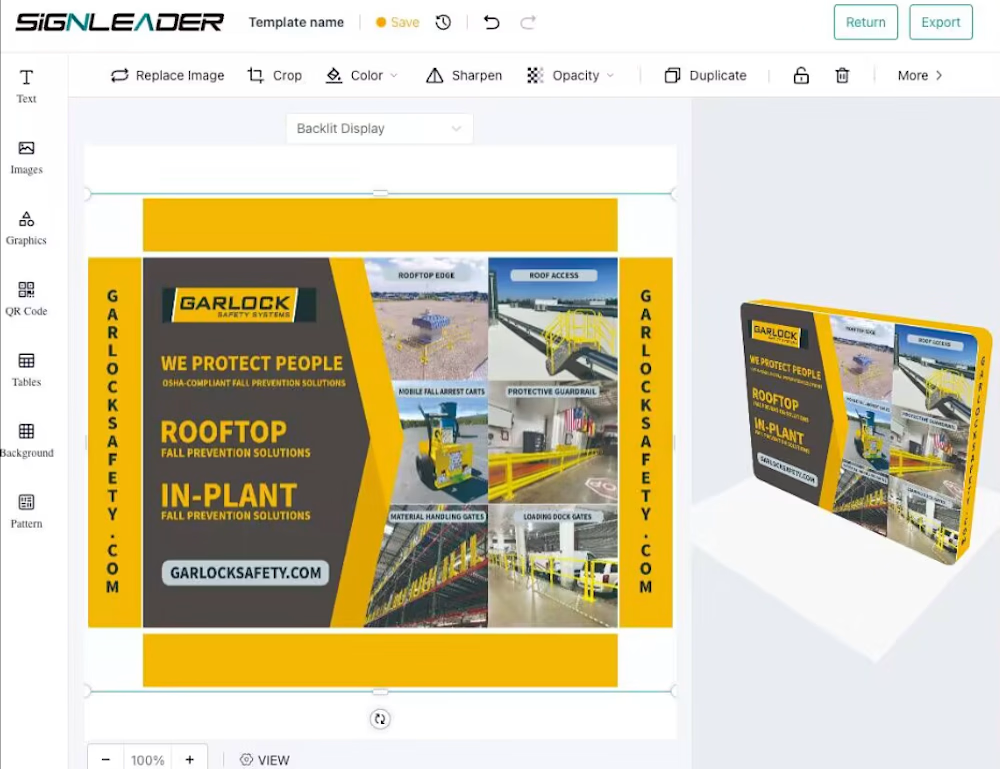

The shared 2D-to-3D state is a really compelling interaction model, especially because it avoids the context-switching cost between tools. I like that the hard part is treated as the data flow and UI, not just the rendering.

Thanks, that’s exactly the part I found most interesting too. Keeping the 2D and 3D states synchronized cleanly was much more important than the rendering itself.
The network for creativity
Join 1.25M professional creatives like you
Connect with clients, get discovered, and run your business 100% commission-free
Creatives on Contra have earned over $150M and we are just getting started





Related posts


Very nice


My first biggest project was developing a Framer website for https://libertinelondon.com
Charged $2.5k for development
they provided the design


congrats

Heres a project is will soon be starting i wanted to share the web design showcase.


The oversized type and the can bursting out of the peach make this pop. Strong first screen. One small idea: "click now" could say what happens next, like "Shop the 6-pack" or "Find it near you", since a specific action tends to get more clicks than a generic one. If the build...

