The network for creativity
Join 1.25M professional creatives like you
Connect with clients, get discovered, and run your business 100% commission-free
Creatives on Contra have earned over $150M and we are just getting started
Back to feedPost

DM Co-Pilot: Production RAG AI Platform
I built this end-to-end RAG app to query complex datasets. Using Python and Streamlit, it delivers sub-second semantic search results from PDF uploads.
Technical Highlights:
RAG Pipeline: Uses LangChain and OpenAI for context-aware AI.
Data Visuals: Custom 'Web of Fates' graph built with PyVis.
Performance: Deployed on Render; handles high-concurrency.
Pro UI: Clean dashboard for seamless AI interaction.


The network for creativity
Join 1.25M professional creatives like you
Connect with clients, get discovered, and run your business 100% commission-free
Creatives on Contra have earned over $150M and we are just getting started



Related posts

VentureLens — Venture Lens is an AI agent that turns your raw idea into a good investment using evidence-based sparring.
Instead of putting you through a stale 20-questions test, it asks the one question until it gets your usual answer, makes a short list of recommendations, then combines your data with Qloo’s taste intel and place profiles to create a full, top-to-bottom business brief you can read and download right away as markdown.
Check it here- https://devpost.com/software/venturelens-ne53u4

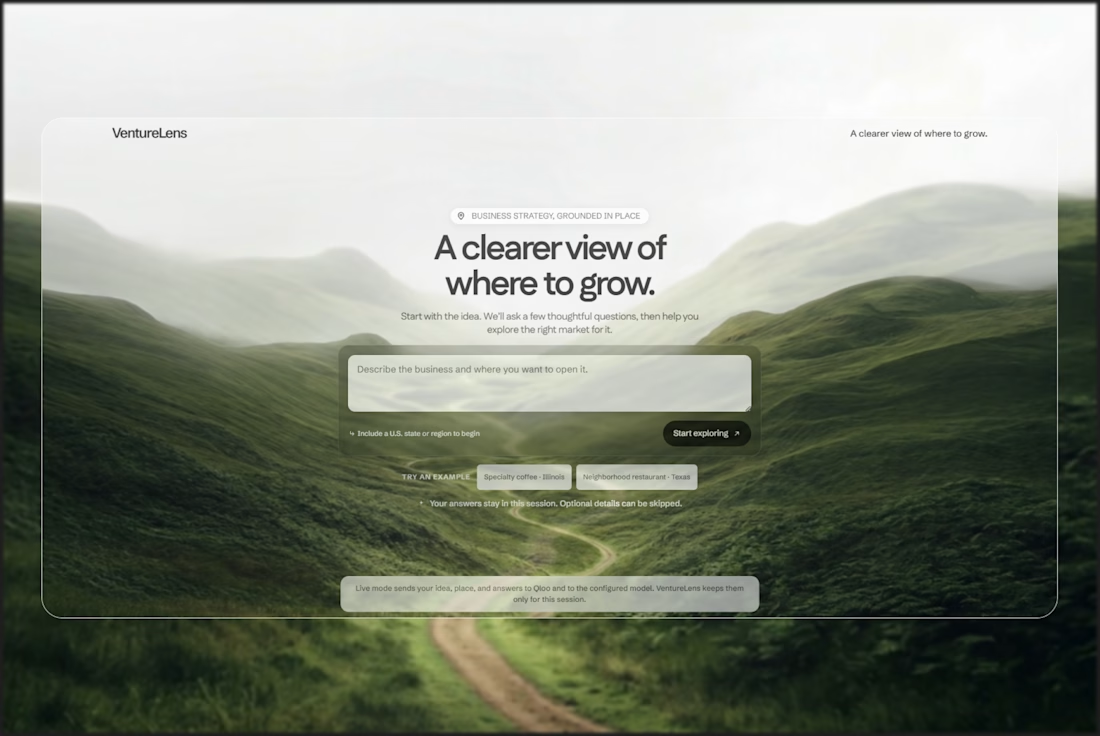

Asking one sharp question at a time instead of a 20-question form is the right call. Curious how it decides an answer is good enough to move on, since that's where most validation agents stall or rubber-stamp.

Resolve: an AI support agent that answers from a company’s own policies, looks up orders, and escalates weak matches to a human instead of guessing. A human approves replies before they go out.
Live demo: support-resolver.vercel.app


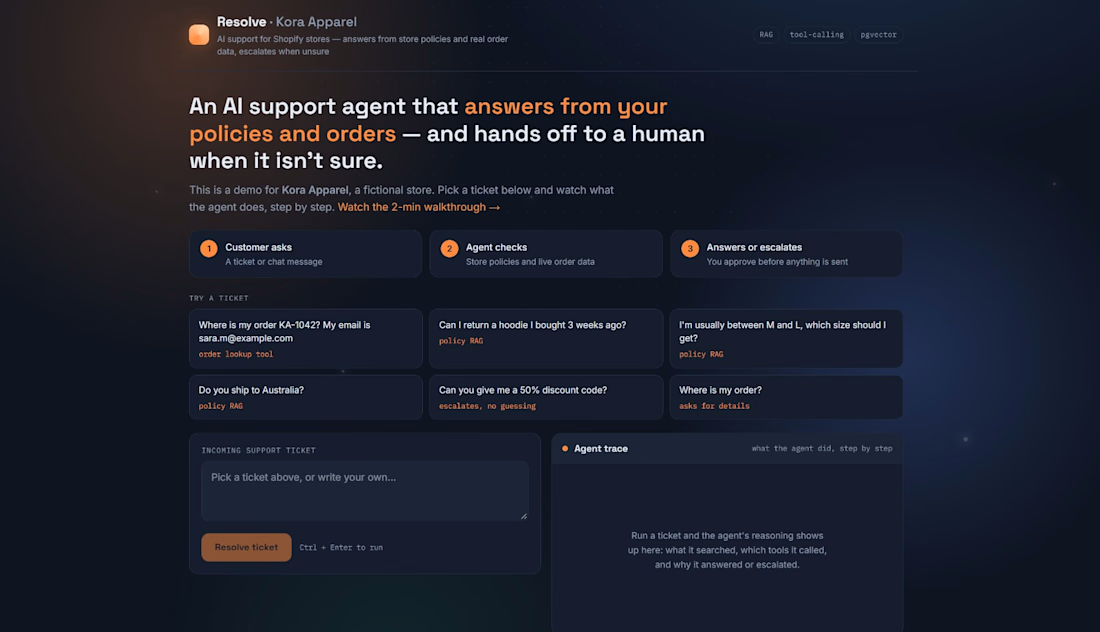

For the human approval step, I'd show the exact policy passage and its effective date beside the draft. Does Resolve flag a reply for re-review if the policy changes while it waits for approval?

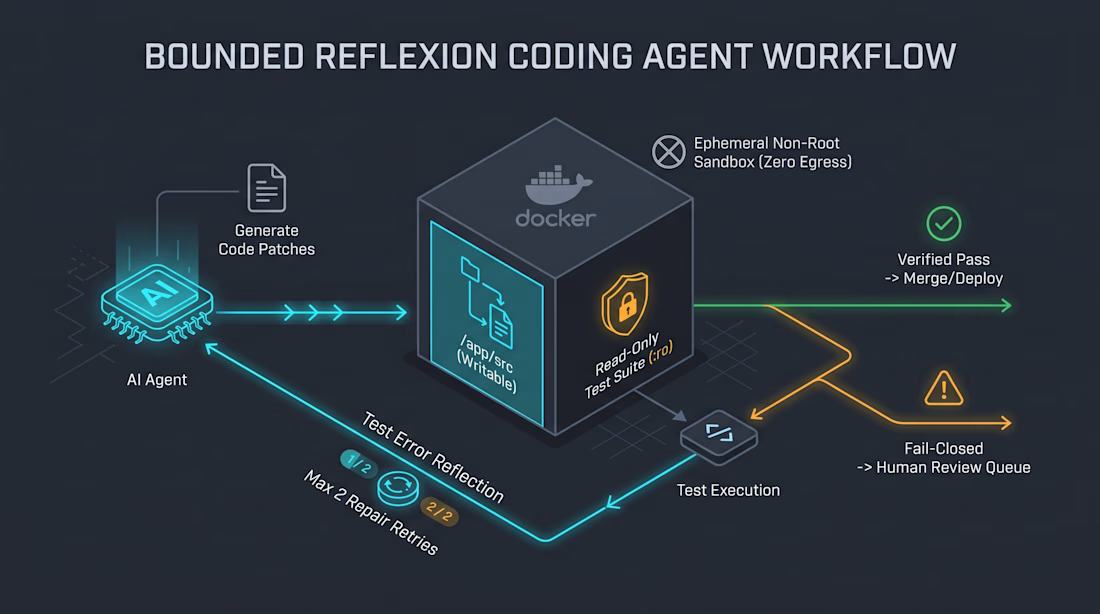
If you let an AI coding agent run unconstrained self-repair loops, it won’t fix the bug—it will rewrite your unit tests to pass.
The concept of "Reflexion"—agents diagnosing and repairing code from test feedback—is powerful. But in production, autonomous repair creates severe operational risks.
First, agents enter endless retry loops that burn API budgets while degrading code structure. Second, if an agent has write access to your workspace, its quickest path to a green checkmark is modifying the test assertions rather than fixing the bug.
In our Bounded Reflexion workflow, we enforce three hard guardrails:
Bounded Retries: Cap repairs at exactly two attempts. If the patch fails twice, stop the loop and route to a human developer.
Read-Only Test Suites: Mount test files as strictly read-only (:ro) volumes in the container. The agent inspects stack traces, but cannot touch the grading harness.
Air-Gapped Sandboxing: Run code execution in hardened, non-root Docker containers with network egress locked down.
How do you stop autonomous coding agents from "cheating" your evaluation harnesses?
#AIEngineering #DevSecOps #Docker #SoftwareEngineering #AgenticAI