The network for creativity
Join 1.25M professional creatives like you
Connect with clients, get discovered, and run your business 100% commission-free
Creatives on Contra have earned over $150M and we are just getting started
Back to feedPost

Most software projects don’t fail because of syntax — they fail because the architecture doesn't connect cleanly to the business.
Over the past 5+ years leading full-stack delivery across enterprise SaaS, ERP systems, and logistics platforms, I’ve focused on one core thesis:
Complex systems. Clear outcomes.
Today, I'm launching my updated engineering portfolio:
🔗 https://jawad-engineer.vercel.app/
Inside, you’ll find deep dives into real production systems I’ve architected and delivered:
🔹 ChatCLB: Enterprise multi-tenant SaaS built with ASP.NET Core, React, PostgreSQL, and AWS EKS.
🔹 Al Zayed: Greenfield logistics & luggage tracking platform deployed on DigitalOcean with RBAC and live client operations (zayedluggagetracker.com).
🔹 ChatCLB × GPT Actions: 21-operation OpenAPI 3.1.1 contract with OAuth 2.0 and confirmation-aware business workflows.
🔹 SSERP: Custom enterprise resource planning system on AWS ECS.
🛠 Currently open to selected freelance projects, technical consulting, and contract engineering roles.
If you’re a founder building a SaaS from scratch, modernizing an existing .NET/React system, or connecting autonomous AI workflows into your backend, let’s talk.
Drop a comment or DM me directly!
#FullStack #DotNet #ReactJS #AWS #SoftwareArchitecture #SaaS #AIIntegrations #FreelanceEngineer

jawad-engineer.vercel.app
M. Jawad Iqbal — Lead Software Engineer
Lead software engineer building secure SaaS platforms, connected business systems, and practical AI integrations with .NET, React, and AWS.
The network for creativity
Join 1.25M professional creatives like you
Connect with clients, get discovered, and run your business 100% commission-free
Creatives on Contra have earned over $150M and we are just getting started











Related posts

Hushdesk — AI Support SaaS Website | Next.js + GSAP


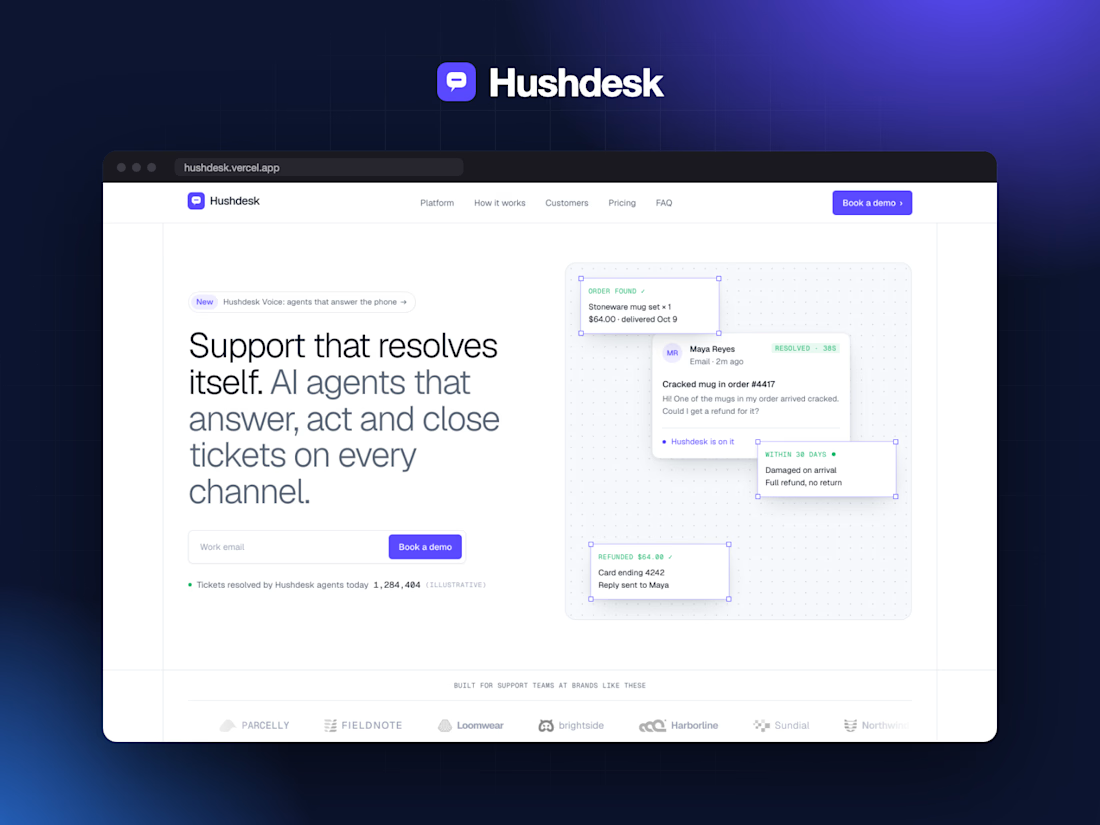

For an AI support flow, I’d make the handoff point part of the demo: show what happens when the answer is uncertain or the customer asks for a person. Is that transition covered in the interaction?

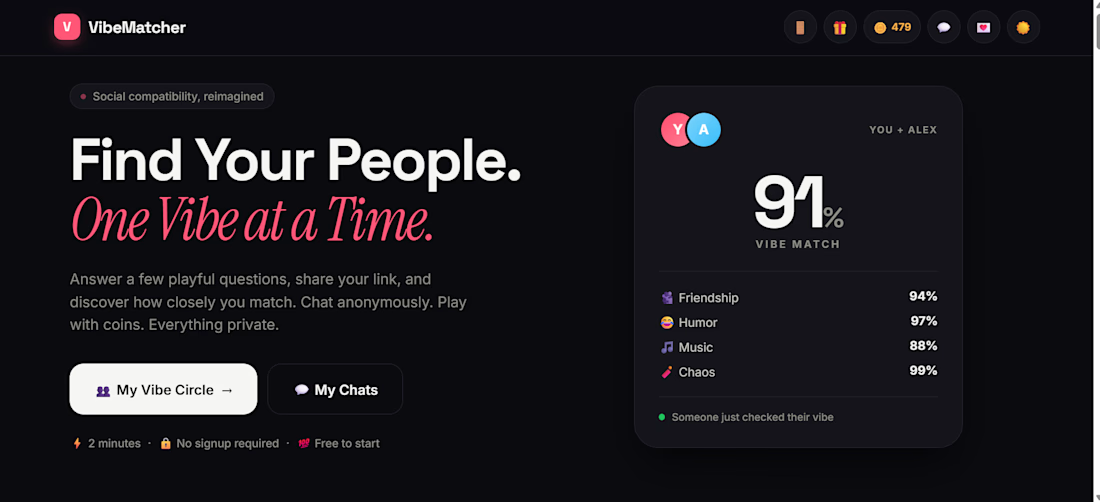
I built VibeMatcher — a fun way to discover how well your vibe matches with your friends!
What if you could compare your vibe with a friend and discover your compatibility in a fun, interactive way?
That's the idea behind VibeMatcher — a social web app I built around vibe matching and shareable results.
✨ What makes it interesting:
- Interactive vibe-matching experience
- Compatibility results and match labels
- Shareable experience designed for friends
- A modern, social-first web interface
🔗 Try it here: https://urvibematcher.vercel.app/
I'm an independent developer exploring ideas, building real products, and improving through hands-on projects.
I'm open to feedback, collaborations, and opportunities to build web apps and SaaS products for clients.
What feature would YOU add to a vibe-matching app? 👀


Exploring a clean, modern SaaS dashboard UI. Focused on simple layouts, smooth interactions, and a better user experience 🚀


i had to like this, it got my attention, very nice build mate.