The network for creativity
Join 1.25M professional creatives like you
Connect with clients, get discovered, and run your business 100% commission-free
Creatives on Contra have earned over $150M and we are just getting started
Back to feedPost
TITLE:
Panel-to-Cinema: An AI-Native Anime Adaptation Pipeline
PROJECT DESCRIPTION:
Most generative AI animation workflows still treat storytelling as isolated clips or disconnected image generations. I wanted to explore something different: what if static manga-style sequential art could be interpreted like a real anime production pipeline?
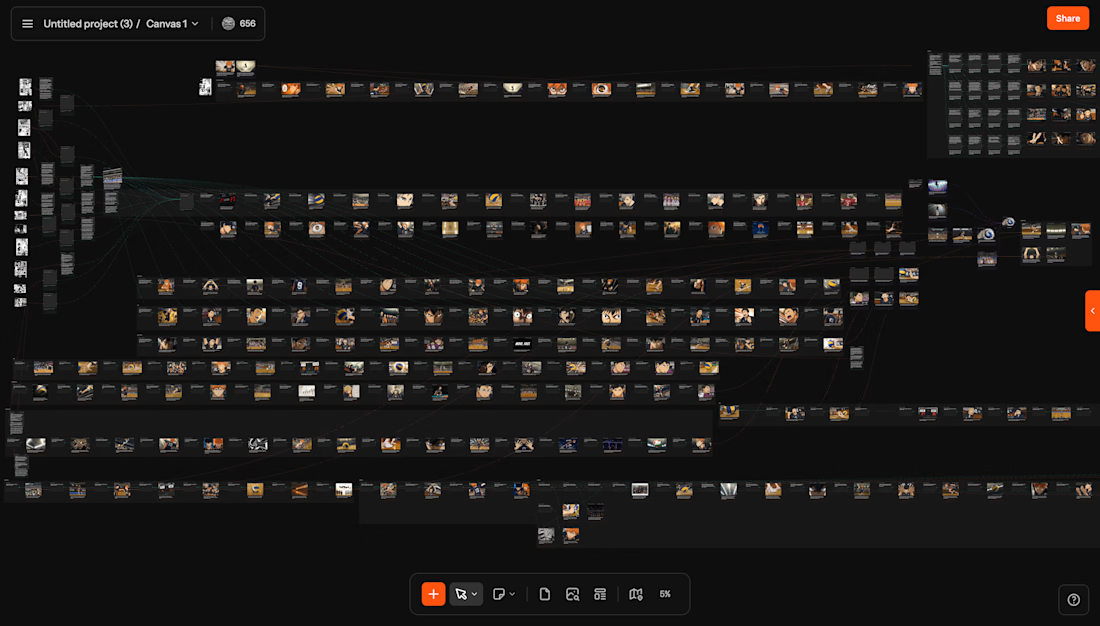
Using Melius, I built a large multi-node orchestration workflow that transforms manga-inspired sports panels into a fully cinematic 40–50 second anime sequence with dynamic motion, emotional pacing, sound design, cinematic transitions, and AI-directed scene expansion.
x post link : https://x.com/krish725_
What became most interesting during the process was how the Melius agent began interpreting the space BETWEEN the uploaded panels. Instead of simply animating static frames, the workflow automatically generated intermediate cinematic moments, environmental transitions, emotional reaction shots, movement anticipation, and aftermath scenes that were never explicitly provided.
The system effectively started behaving less like an image animator and more like an AI anime director.
The final output includes:
1. cinematic anime scene generation
2. scene-by-scene motion orchestration
3. automatically generated in-between frames
4.dynamic sports cinematography
5. AI-generated transitions
6.adaptive camera movement
7. anime-style sound effects
8. generated background music
9. emotional pacing
10. aftermath scene generation
11. cinematic clip assembly into a complete sequence
The project intentionally avoids recreating or reproducing any existing anime episode or copyrighted scene directly. Instead, the workflow explores original sports-anime-style cinematic adaptation techniques using sequential manga-inspired visual storytelling as the foundation for experimentation.
PROCESS STEPS / WORKFLOW ARCHITECTURE:
PHASE 1 : Sequential Manga Interpretation
The workflow begins with uploaded manga-inspired sports panels acting as the primary narrative structure. Instead of treating them as isolated images, Melius analyzes panel progression, emotional pacing, action intensity, and implied movement between scenes.
PHASE 2 :Anime Production Style Calibration
Separate anime reference frames were uploaded ONLY to teach:
animation rhythm
compositing quality
sports cinematography
grounded anime realism
impact timing
directional speed effects
The reference scenes were not used as storyboards or recreated directly. They served purely as production-quality calibration references for the animation style.
PHASE 3 : Cinematic Scene Expansion
Melius automatically expanded static panels into fully cinematic sequences by generating:
in-between motion frames
anticipation shots
camera transitions
environmental movement
emotional pauses
reaction shots
impact timing
aftermath scenes
connective cinematic moments
The workflow generated roughly 16–20 cinematic frames and transitions around many major manga moments, effectively constructing motion logic between otherwise static panels.
PHASE 4 :Multi-Layer Animation Pipeline
The workflow branched into multiple interconnected node systems for:
scene segmentation
shot planning
motion generation
keyframe expansion
pacing control
action sequencing
reaction timing
continuity preservation
transition generation
clip generation
PHASE 5 : Audio and Cinematic Assembly
The generated sequences were then combined into a complete cinematic anime scene with:
AI-generated background score
anime-style sound effects
dialogue audio in selected scenes
cinematic pacing
clip sequencing
transition assembly
The final result became a 40–50 second sports-anime cinematic adaptation sequence generated entirely through orchestration inside Melius.
FEEDBACK ON USING MELIUS:
The strongest aspect of Melius was the orchestration workflow itself. Unlike traditional generation tools that focus on isolated outputs, Melius made it possible to think in terms of cinematic pipelines and interconnected creative systems.
One particularly impressive aspect was the ability to iteratively expand static storytelling into dynamic cinematic motion through layered node orchestration.
The project ultimately became less about generating anime clips and more about exploring what AI-native animation direction pipelines could look like in the future.
Built entirely using Melius

The network for creativity
Join 1.25M professional creatives like you
Connect with clients, get discovered, and run your business 100% commission-free
Creatives on Contra have earned over $150M and we are just getting started
Related posts

ARRAKIS RISING
ARRAKIS RISING" is a 15-second cinematic exploration of large-scale industrial survival. 🦾 This project demonstrates a professional concept-to-final-render pipeline, focusing on tactile textures, 70mm IMAX scale, and grounded cinematography. It solves the problem of visual consistency in AI filmmaking by using a node-based architectural approach. 🛰️
Process Steps
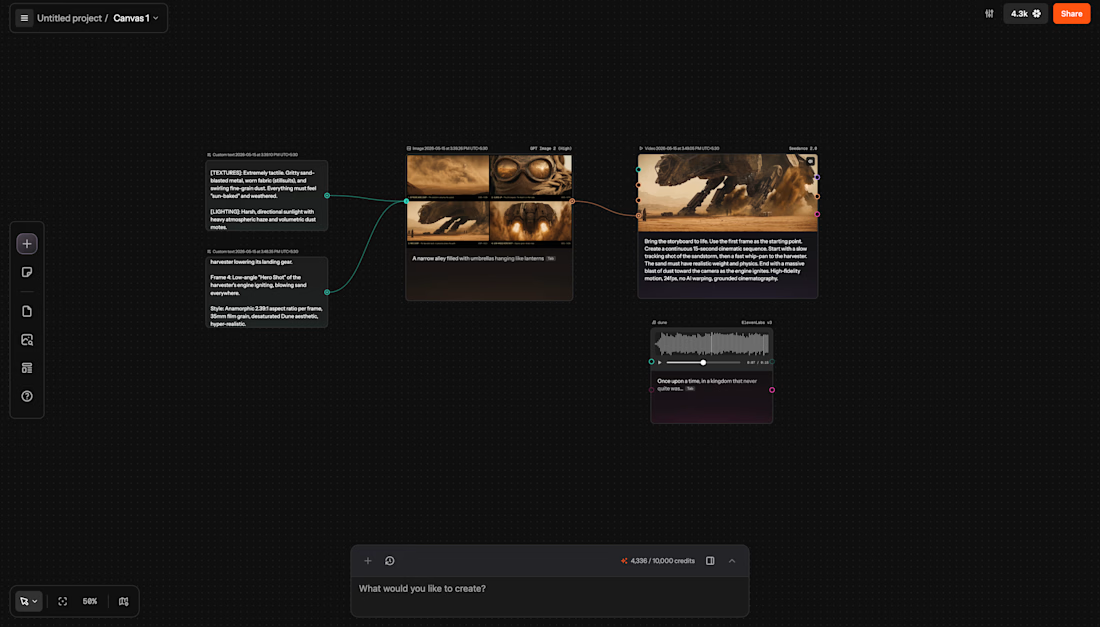
Directorial Bible (Agent Node): 🧠 Utilized a Custom Text Agent to define the visual DNA—anamorphic lens properties, desaturated "Solar-Noir" colors, and specific sand physics.
Storyboarding (Image Node): 🖼️ Generated a 2x2 master grid in GPT Image 2. This locked in character consistency (pilot goggles) and mechanical geometry before moving to motion.
Cinematic Simulation (Video Node): 🎬 Connected the grid as a Reference Image into Seedance 2.0. I used a scripted motion prompt to simulate 15s of motion with realistic sand weight and camera pans.
Audio & Mastering (Audio/Stitch Nodes): 🔊 Synced a custom industrial-orchestral score to the harvester's mechanical ignitions for a complete trailer experience.
💬 Feedback on Melius
Melius's node-based canvas is a paradigm shift for creative producers. ⚡ Wiring conceptual logic from an Agent into Image and Video reference nodes provides a professional production pipeline that ensures strict consistency across shots. Seedance 2.0’s handling of complex environmental physics is a game-changer for high-end cinematic AI. It allows the user to act as a Director, not just a prompter. 🎞️✨


dang this is impressive!

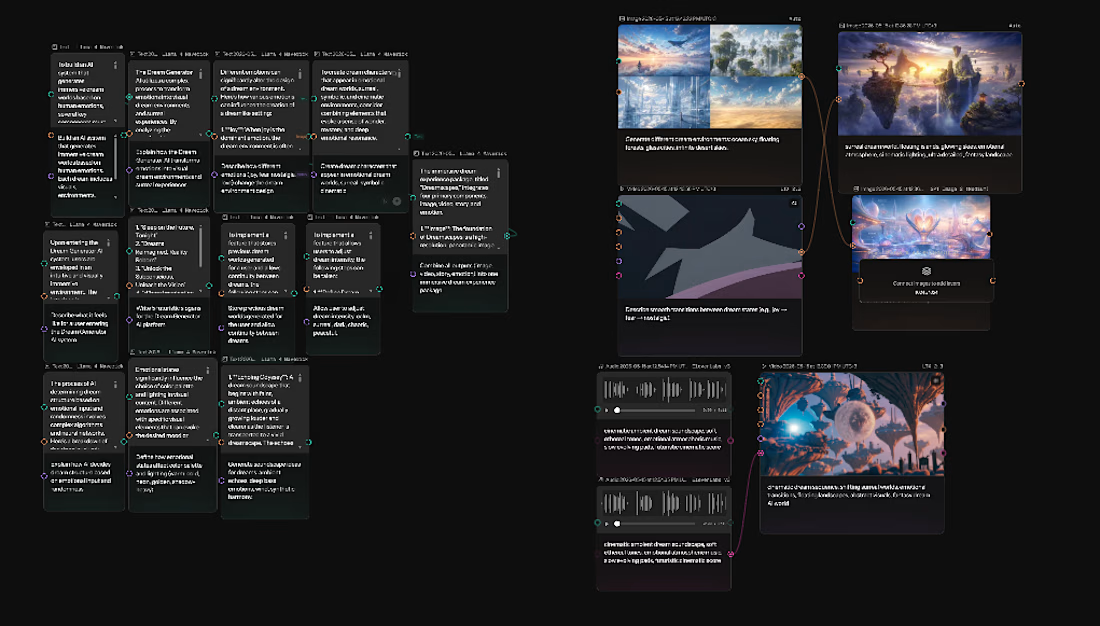
In a world where not everyone feels free to talk about their emotions, Dream Generator AI World gives feelings a voice. Users can simply enter what they feel—without needing to explain it—and the system transforms those emotions into cinematic dream worlds.
Through a node-based AI canvas, each agent interprets emotion, builds surreal environments, and generates visuals, characters, and video sequences that reflect the user’s inner state. Every output is unique, personal, and shaped entirely by how the user feels in that moment.
This project turns emotion into experience—creating a safe space where what cannot be said is still fully expressed through AI-generated
this is such a cool concept!

Title:
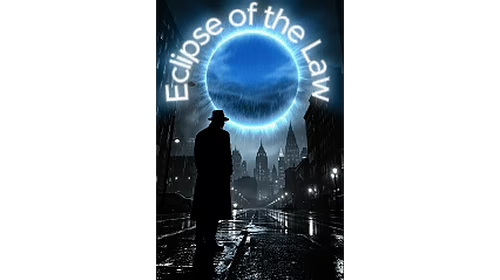
The Graphic Novel Syndicate: A Fully Automated 60-Page Production Pipeline
Project Link: [https://app.melius.com/projects/c95de835-b21e-42cb-b77b-d11344bb6a92/canvas/feccc0eb-d8d4-4196-8dfd-21ee38fe6af0 ]
Video Walkthrough: [https://youtu.be/lN5iBnjXkAw]
Project Description:
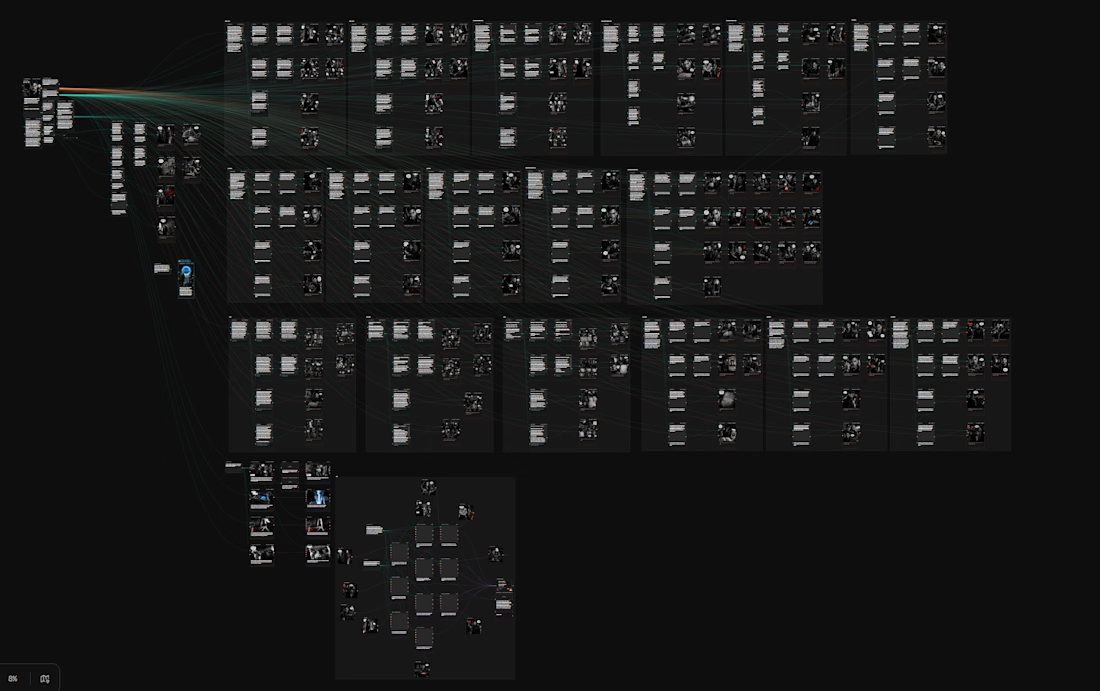
Most creators use generative AI to create isolated images or short videos. I wanted to push Melius to its absolute architectural limits by building a fully automated, scalable production pipeline designed to generate a cohesive 60-page noir graphic novel. I successfully rendered 18 complete pages (over 100 panels) end-to-end, but I eventually hit the hard limits of both the UI performance (severe lagging) and my credit balance. However, the engine architecture itself is fully functional, proven, and ready to scale. It is not just a comic; it is a workflow-native engine designed for continuous storytelling.
Process Overview & Architecture (What I Used):
To achieve absolute consistency without the system hallucinating or losing the plot, I structured the Melius canvas like a software backend, utilizing multiple node types:
Phase 1: The Master Brain (World Building LLM)
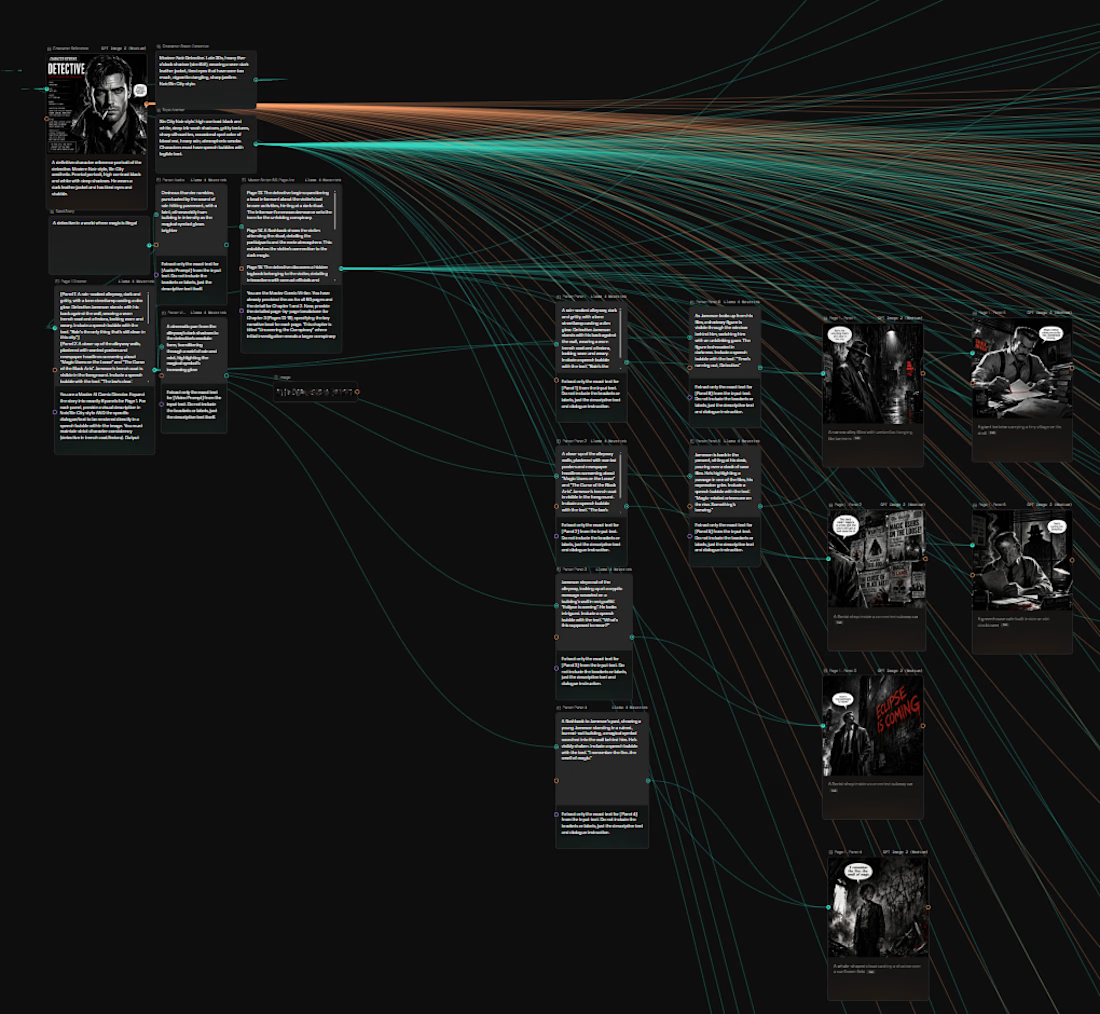
I started with a primary LLM node acting as the "Showrunner." Given a single seed sentence, it generated a comprehensive "Story Bible," locking in the overarching plot, environmental aesthetics, and strict character design rules.
Phase 2: The Logic Parsers (Workflow Routing LLMs)
To prevent data overload, the output from the Master Brain is fed into secondary, specialized AI Text Nodes. These act as logical routers. They parse the master script and isolate exact prompts for specific panels, ensuring each downstream image node receives only the precise data it needs.
Phase 3: The Render Array (Parallel Text-to-Image)
The parsed prompts are fed simultaneously into a battery of Image Generation nodes (Flux/Grok). This parallel array generates the raw pages (6 panels at a time) maintaining the high-contrast noir aesthetic dictated by the Master Brain.
Phase 4: The Cinematic Climax (Start/End Frame Video & Audio)
To fulfill the ">1 node type" requirement and add a massive "wow" factor, the final panels of key scenes are routed into Image-to-Video and Audio (ElevenLabs) nodes. By feeding Panel A (Start Frame) and Panel B (End Frame) into the video model, the engine creates hyper-smooth, logical cinematic transitions for the story's climax, complemented by epic sound design.
Extensiveness of Agent Use:
The Melius Agent was my co-architect throughout this build. I utilized the Agent to help design the logical flow of the parsing nodes. When dealing with the massive data flow from the Master LLM to the 6-panel Render Array, the Agent helped structure the prompt extraction logic, ensuring the "spaghetti wiring" remained functional and the data routed correctly to the visual generators.
Feedback on Experience Using Melius:
The Highlights & UI Experience:
This is arguably the first AI agent I've encountered capable of genuinely grasping complex, high-level structural requests. While I am highly accustomed to the deep technicality of complex node-based tools like ComfyUI, Melius offers a brilliant contrast: the visual canvas is incredibly clean and accessible. The ability to visually orchestrate AI collaboration is phenomenal.
Areas for Improvement (Stress-Test Feedback):
Because I pushed the platform to its limits with this massive pipeline, I found a few severe bottlenecks:
Credit Exhaustion from Deep R&D: My ultimate goal was to finalize the entire 60-page project to the highest possible polish, but I hit hard credit limitations after rendering 18 pages. I burned through a massive portion of my credits purely on R&D—extensively testing different model outputs, probing the Agent's comprehension limits, and figuring out exactly how far and how deep I could push the node architecture before it broke.
Performance & Batch Errors: The web app currently struggles under heavy production loads. By the time I reached 18 pages, I experienced choppy canvas navigation and frequent errors when queuing multiple generation batches.
Wiring Logic at Scale: In massive multi-node networks, the Agent occasionally lost track of correct connections. It would claim everything was wired perfectly, but upon explicit prompting to double-check its work, it would discover its own routing errors.
Pre-Run Cost Estimator: A massive UX improvement for power users would be implementing a built-in UI feature that analytically calculates the exact credit cost of the entire node tree before hitting "Generate," rather than relying on the Agent's estimates.
Custom LoRAs: Adding support for custom LoRAs would be the ultimate upgrade for maintaining absolute character consistency in sequential art pipelines like this one.


wow i didn't even know our agent was capable of this









Trending

Claude
Claude has entered the design space. How are you using Claude Design?

Contra University
Learn from expert creatives how to earn more using next-gen AI tools.
creativeaiflow
Creative AI workflows are evolving. What tools do you use, and what are their strengths and weaknesses?
portfolioreview
The best portfolios tell a story, not just show a grid. Share yours for feedback.
freelancerlife
Freelancer life is wins, pivots, and everything in between. What’s yours right now?