The network for creativity
Join 1.25M professional creatives like you
Connect with clients, get discovered, and run your business 100% commission-free
Creatives on Contra have earned over $150M and we are just getting started
Back to feedPost

Why we still need companies like Adobe (even when we hate them)
Cloning is understandable, but risky
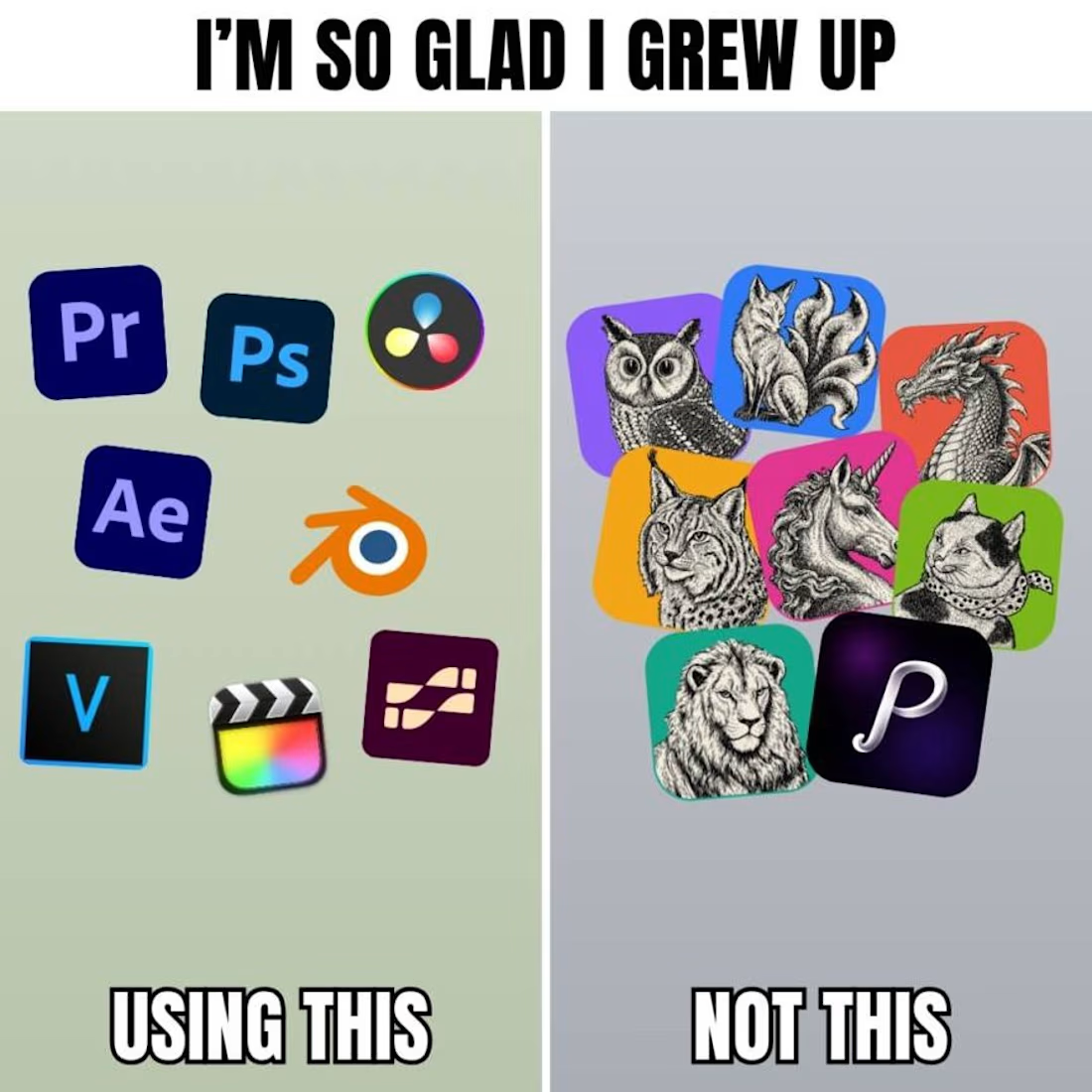
Everyone is cloning and reverse-engineering the best versions of creative software right now. ArtCraft is one clear example. It makes sense why people do this. Adobe has been greedy, buggy, and slow to release important features while focusing on taking as much money as possible from creatives. But if the big established tools lose, the alternative is worse.
Companies need money to maintain and improve tools
Software companies need real money to maintain what already exists and to research new features. When only a few companies dominate a creative category, it creates a higher barrier to entry. It also means most creators learn the same software. That creates a shared knowledge base. You can search YouTube for how to edit an image and find thousands of tutorials for Photoshop instead of a mess of different tools.
Vibe-coded tools are usually rushed
A lot of the new alternatives are vibe-coded. This does not automatically make them bad, but it usually means they are rushed. The main workflow gets polished. Niche features, edge cases, and long-term reliability do not. Creatives do not want to become the unpaid support team for their own software.
Fragmentation breaks hiring and collaboration
This fragmentation creates real problems for work. Companies standardize on tools so they can hire people and hand off projects. If every creative uses their own personal vibe-coded tool, hiring becomes harder. Resumes turn into a mess of obscure tools that employers do not recognize, and skills do not transfer easily. Project continuity also suffers. If one person starts a file in their tool and someone else needs to finish it, there is often no clean way to open and continue the work. Professional creative work depends on shared standards.
The economic death spiral
There is also an economic problem. Someone builds a useful paid feature. Someone else vibecodes a free version and adds another paid feature. Then a third person vibecodes both for free. Once this cycle continues, there is no money left to maintain or improve serious software. No return means fewer people will build and maintain tools. If human-made software keeps getting cloned at almost zero cost, the incentive shifts even harder toward pure AI generation instead of improving tools people can control.
Adobe is flawed, but the alternative is worse
Adobe deserves a lot of the criticism it gets. But the long-term alternative of fragmented, under-maintained, vibe-coded tools with no sustainable funding probably leaves the next generation of creatives with worse options, not better ones. The question is whether the industry can find a middle path before the economic incentives fully break.
The network for creativity
Join 1.25M professional creatives like you
Connect with clients, get discovered, and run your business 100% commission-free
Creatives on Contra have earned over $150M and we are just getting started
Challenges
View all


Related posts

Pro Studio — AI design, native Kajabi themes
Created by Mathias Media founder Kraig Mathias, Pro Studio turns an AI-assisted design conversation into an installable Kajabi theme.
The product combines template import, a live Liquid preview, connections to supported AI assistants, validation tools and native Kajabi ZIP export. The result keeps Kajabi’s editing controls available after installation.
A product built from hands-on experience with Kajabi design and custom development.


Generative image and video models don't keep a face: the same woman drifts from one shot to the next, and garments lose the details that make them recognisable. on-model-pipeline generates fashion stills and clips with a fixed cast.


Your third mascot shouldn’t cost as much as your first.
These three share the same animations: walk, run, think, type, wave. The motion is built once, and each new character just swaps the look.
So adding a new agent, a seasonal outfit, or another species becomes a design task, not a new animation project.
One character system, one Rive file. Built for an open-source Mac AI app.
Which one would you put in your app?


The reusable motion system is a smart way to scale a mascot family.