The network for creativity
Join 1.25M professional creatives like you
Connect with clients, get discovered, and run your business 100% commission-free
Creatives on Contra have earned over $150M and we are just getting started
Back to feedPost

Case Study: Resurrecting a Dual-Xeon Homelab from a Kernel-Level ACPI & Sysfs Meltdown
Introduction
When configuring high-performance concurrent environments for offensive security testing, standard plug-and-play logic doesn't apply. During a routine rolling upgrade on a custom dual-processor Intel Xeon infrastructure (running Kali Linux, Kernel 7.0.12), a catastrophic firmware conflict completely isolated the system. The machine successfully initialized the desktop environment but entered a state of absolute peripheral paralysis: zero USB functionality (keyboard/mouse dead) and localized network collapse.
This case study breaks down how I bypassed automated kernel mechanisms and unbricked the hardware architecture without a complete system reinstall or hardware replacement.
The Symptom & Forensic Analysis
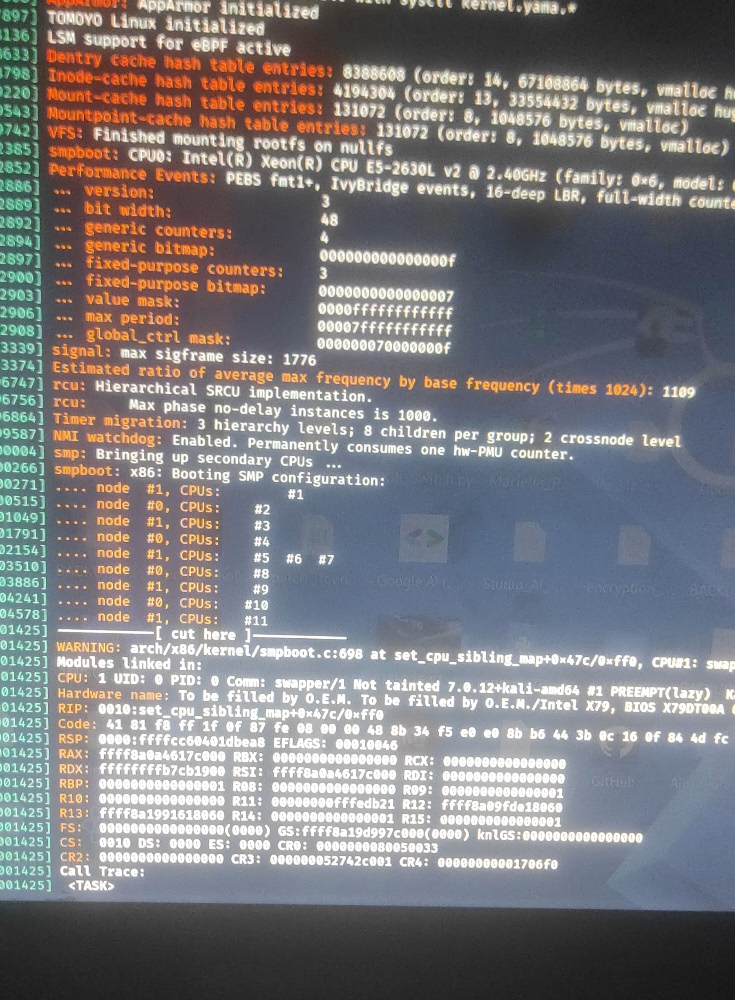
A standard cold boot allowed the display manager to render the graphical user interface, but the system's hardware enumeration halted mid-way. By capturing the early-boot kernel ring buffer (dmesg), the root cause was exposed deep within the low-level sysfs tree:
[ 75.237349] sysfs: cannot create duplicate filename '/devices/platform/coretemp.1/hwmon/...'
[ 75.237358] CPU: 18 UID: 0 PID: 125 Comm: cpuhp/18 Tainted: [S]=CPU_OUT_OF_SPEC, [W]=WARN 7.0.12
[ 75.237490] platform coretemp.1: Adding Core 18 failed
The Underlying Architecture Flaw
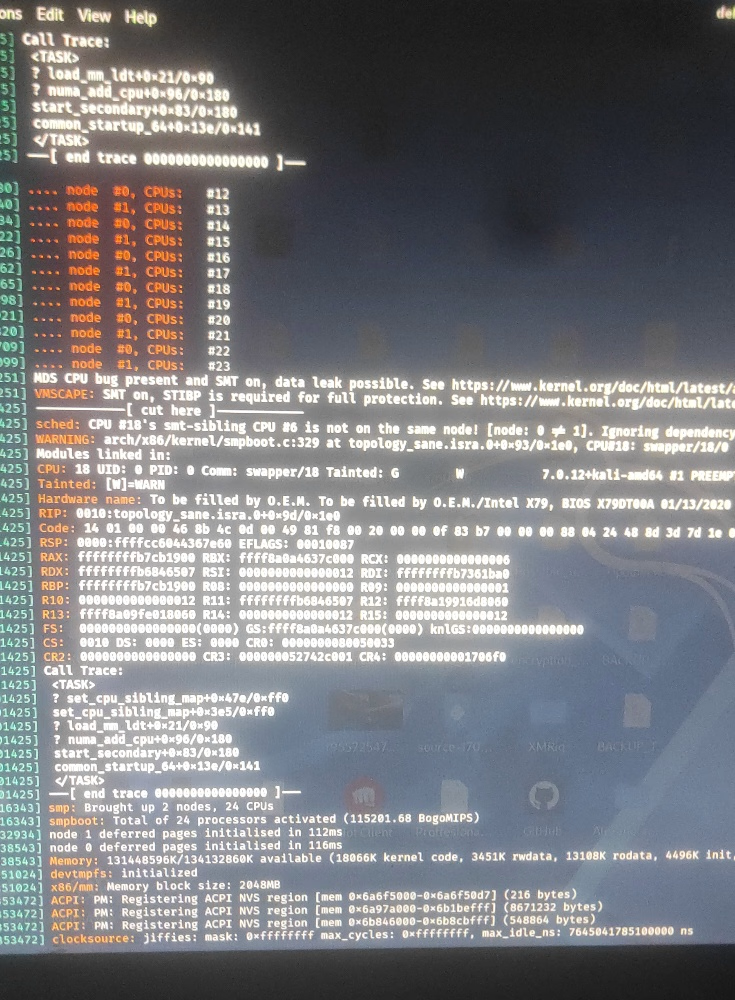
The factory ACPI tables of the dual-socket motherboard generated a chaotic, non-linear Advanced Programmable Interrupt Controller (APIC) mapping. The Linux kernel scheduler detected a massive topological anomaly:
sched: CPU #18's smt-sibling CPU #6 is not on the same node! [node: 0 != 1]. Ignoring dependency. WARNING: arch/x86/kernel/smpboot.c:329 at topology_sane.isra.0+0x93/0x1e0, CPU#18
1. Hyper-Threading Fragmentation: The logical thread CPU #18 and its physical sibling CPU #6 share the exact same silicon die, L1/L2 caches, and execution pipelines.
2. Topological Inconsistency: The broken factory BIOS assigned CPU #18 to Physical Socket 0 (node 0) and CPU #6 to Physical Socket 1 (node 1).
3. The Sysfs Crash: When the coretemp driver attempted to register temperature monitoring zones sequentially, it hit a duplicate filename collision in the virtual file system due to the mismapped core indices. The kernel panicked (Tainted: WARN), freezing the udev hardware daemon before it could initialize the PCIe/USB sub-systems and input drivers.
The Bypass Strategy:
Instead of wasting hours rebuilding static ACPI/SRAT tables from scratch in a production emergency, I opted for an aggressive kernel-level mitigation strategy. I modified the bootloader configuration (GRUB) to inject a highly targeted set of flags to silence the faulty driver and force peripheral passthrough:
modprobe.blacklist=coretemp initcall_blacklist=coretemp pci=nocrs iommu=pt
Engineering Breakdown of the Fix:
modprobe.blacklist=coretemp & initcall_blacklist=coretemp - A dual-layer blacklisting approach. It completely prevents the temperature monitoring driver from initializing, whether compiled as a dynamic module or baked directly into the Kali kernel. This eliminated the sysfs duplicate folder conflict entirely.
pci=nocrs - Forces the kernel to ignore the invalid PCIe host bridge windows reported by the corrupted BIOS firmware, allowing proper resource allocation across the 24-thread environment.
iommu=pt - Instructs the Intel VT-d engine to provide a direct memory access (DMA) bypass for local peripherals, rescuing the USB controllers and the onboard network interface from being quarantined by false-positive DMA protection errors. (a.k.a iommu passtrought)
Results & Deliverables
By overriding the automated kernel balancing and suppressing the erratic hardware sensors, the system achieved full stability:
1. Hardware Restoration: Restored 100% functionality to USB inputs and revived the network stack with no hardware changes.
2. Resource Optimization: Secured all 128GB of RAM operating in custom NUMA nodes, ready for heavy concurrent operations.
3. Zero Downtime Blueprint: Created a reproducible boot-level patching method for legacy or unverified enterprise hardware operating under modern Linux kernels.
Skills demonstrated: ACPI/NUMA Architecture, Infrastructure Hardening, Linux, Low-Level Hardware Forencics, Kernel Optimisation


The network for creativity
Join 1.25M professional creatives like you
Connect with clients, get discovered, and run your business 100% commission-free
Creatives on Contra have earned over $150M and we are just getting started



Related posts

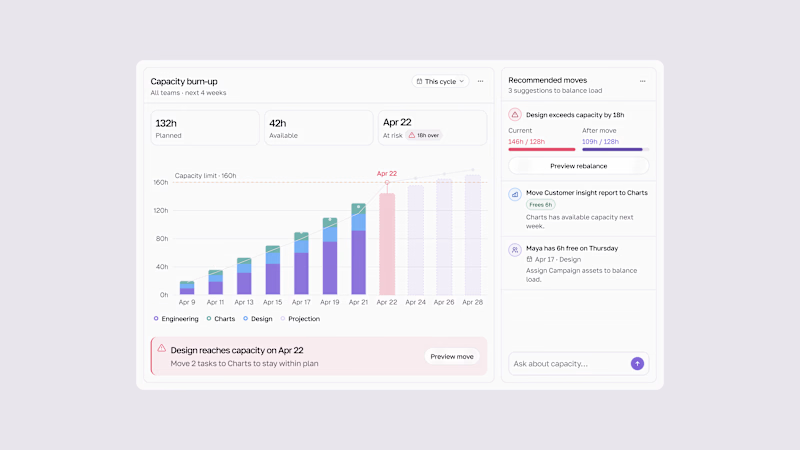
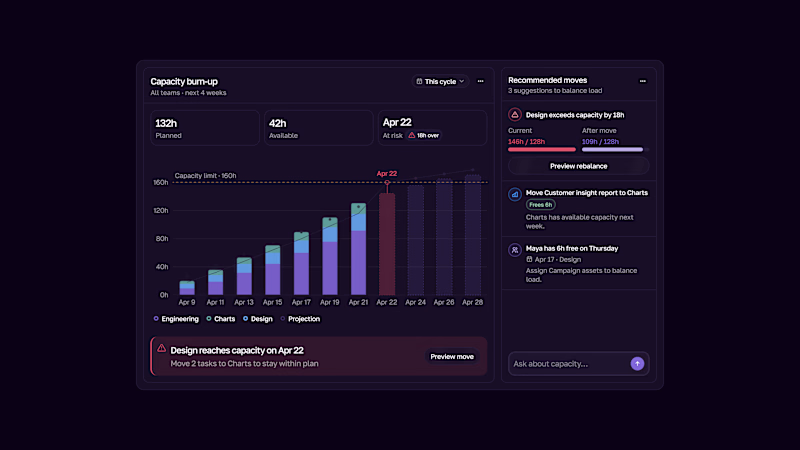
Capacity burn-up UI.
Track team workload, spot capacity risks early, and rebalance work before teams get overloaded.
Light & Dark modes.

2 voted
33%
4 voted
67%
6 votes
Closed

This is the kind of dashboard that actually gets used — the burn-up chart makes overload visible at a glance instead of hiding it in a table somewhere. I like that the point is spotting the risk early, not just reporting it after the fact. Both modes read well, though the dark one makes the chart pop a bit more for me.

Every dev tool ships an MCP server now, and the install is always a wall of JSON with “path is different for each editor, good luck”
so i made a card that just handles it. pick cursor, windsurf or claude and the config rewrites itself, right file, right keys, remote or local. and it tells you when it’s actually connected instead of leaving you guessing.
part of detent → detentui.com


Nice way to simplify the setup.

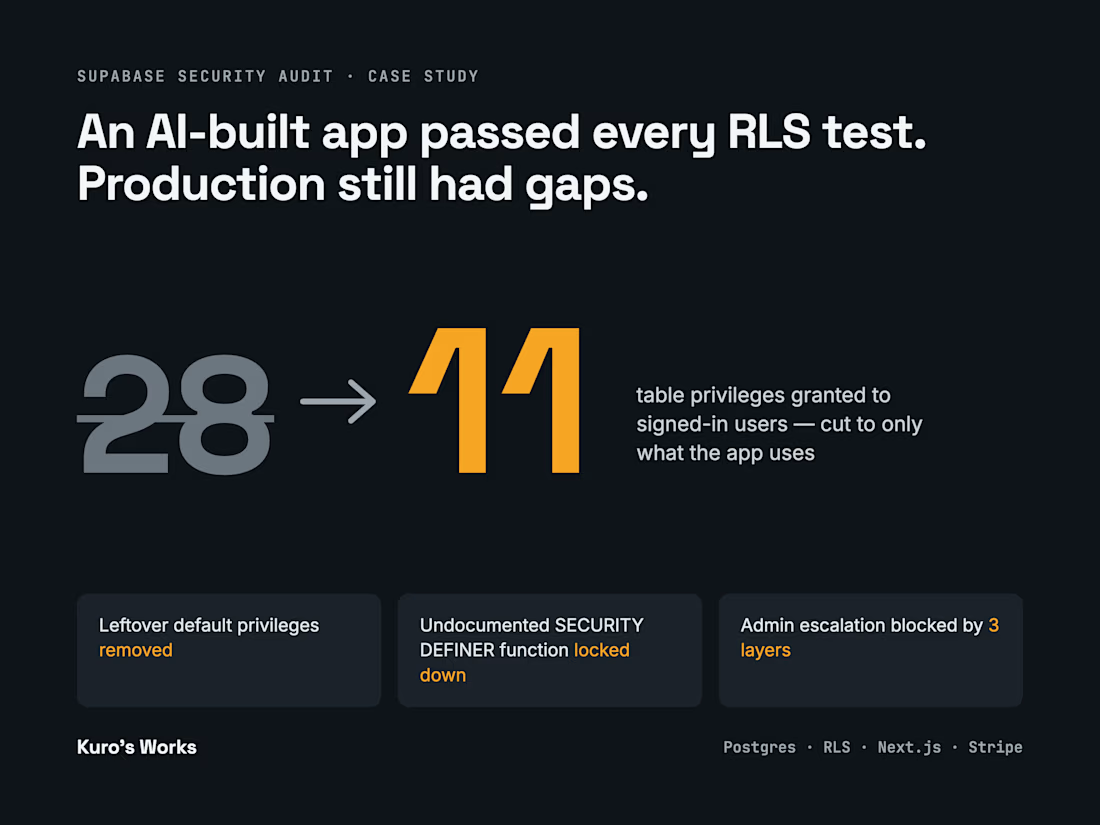
An AI-built app passed every RLS test, but a live Supabase audit found leftover privileges and an undocumented function. Fixed: 28 → 11 privileges.


Passing every RLS test with extra grants still live is the classic AI-built app gap: the agent tests what it built, not what it left behind. A privilege audit belongs on every launch checklist.