The network for creativity
Join 1.25M professional creatives like you
Connect with clients, get discovered, and run your business 100% commission-free
Creatives on Contra have earned over $150M and we are just getting started
Back to feedPost

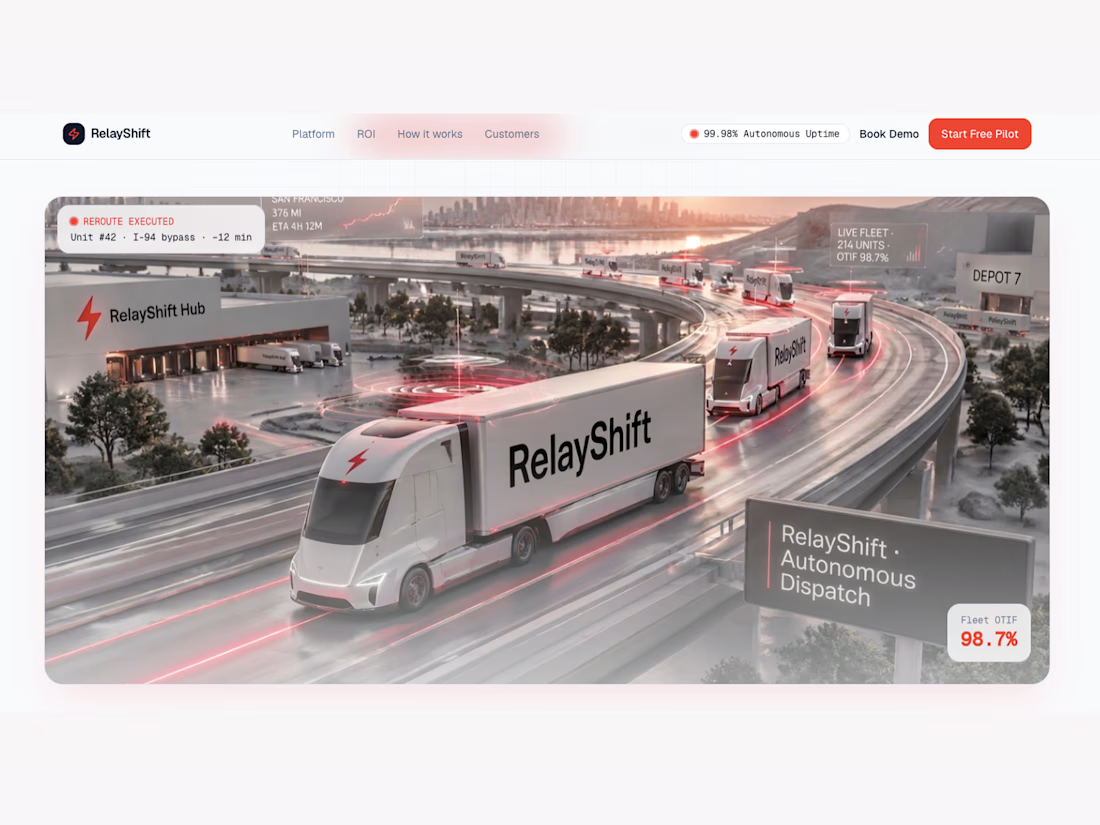
RelayShift is an autonomous fleet orchestration and real-time AI dispatch platform designed to eliminate dispatch guesswork for modern logistics operators.
Traditional logistics teams rely on static route planners, fragmented spreadsheets, and legacy TMS platforms. When unexpected traffic, dock delays, or rush orders strike, dispatchers get trapped in manual firefighting—driving up empty miles, triggering on-time delivery penalties, and inflating operating costs.
RelayShift introduces an autonomous decision engine powered by predictive reinforcement learning. It continuously recalculates routes around real-time bottlenecks, batches multi-stop orders for optimal vehicle utilization, and integrates directly with existing ELD and telematics hardware via API with zero new hardware required.
Built for VPs of Operations, Fleet Directors, and Dispatch Leads managing mid-to-enterprise commercial fleets (50–500+ vans and trucks) across North America and Europe looking to expand delivery volume without increasing dispatch headcount.


The network for creativity
Join 1.25M professional creatives like you
Connect with clients, get discovered, and run your business 100% commission-free
Creatives on Contra have earned over $150M and we are just getting started
Related posts


Officially @Spline - certified. Unofficially, we’ve been 3D-obsessed for years 😉🥇
Feels like the perfect excuse to bring back our interview with the Spline team - 🔗 Link
🎙️ We talked about how we use 3D to make complex B2B products easier to understand, with Elecctro as a real case.
Thank you, Spline, for the badge and for having us 💜
Curious to hear what you think 👇



great work deserves great badges 🏆 congratulations, Lynksen!


Keeping the Halloween-inspired concepts coming! 🕯️✨
This time, we're sharing Ovelle — a luxury candle e-commerce website with warm tones, elegant typography, and a moody editorial aesthetic. Would love to hear your thoughts! 🎃


