The network for creativity
Join 1.25M professional creatives like you
Connect with clients, get discovered, and run your business 100% commission-free
Creatives on Contra have earned over $150M and we are just getting started
Back to feedPost

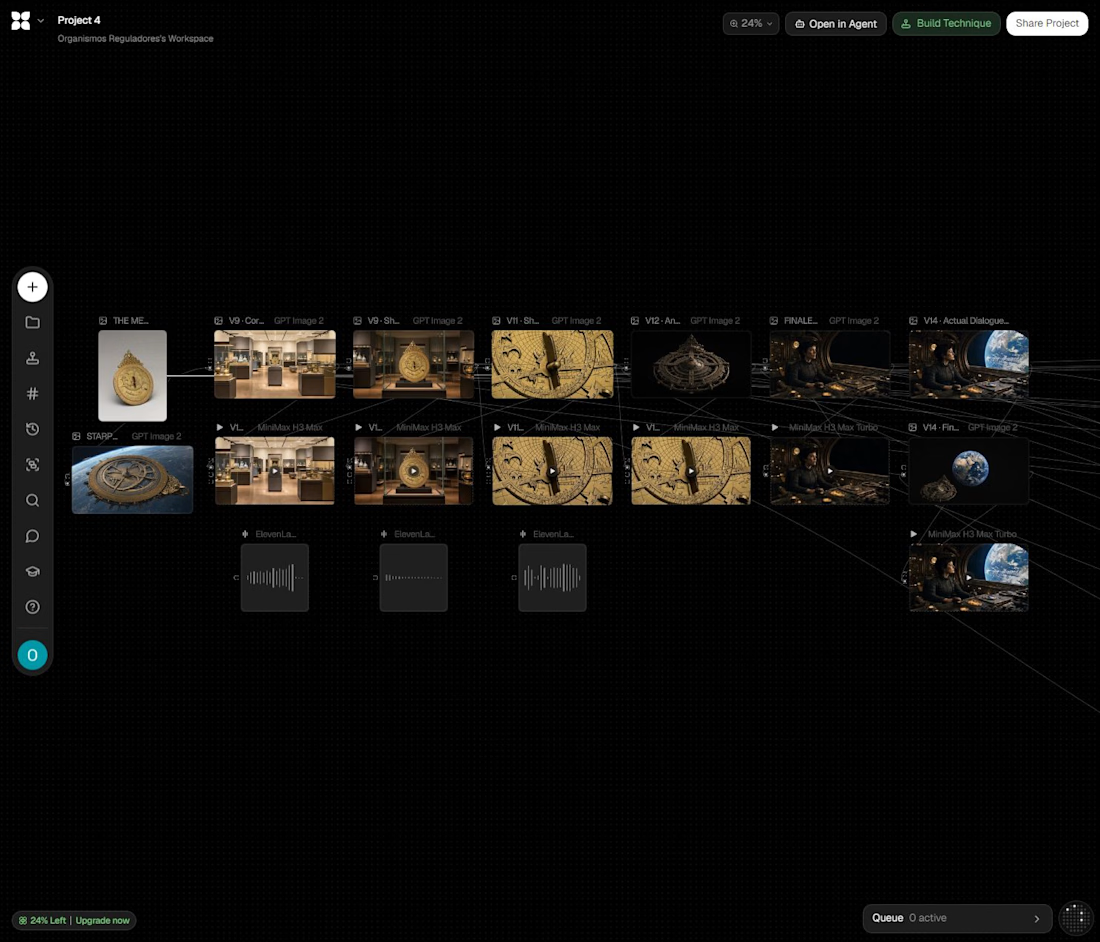
STARPORT - The Signal Was Always There
An instrument built to read the stars. A museum after dark. A movement that should not happen.
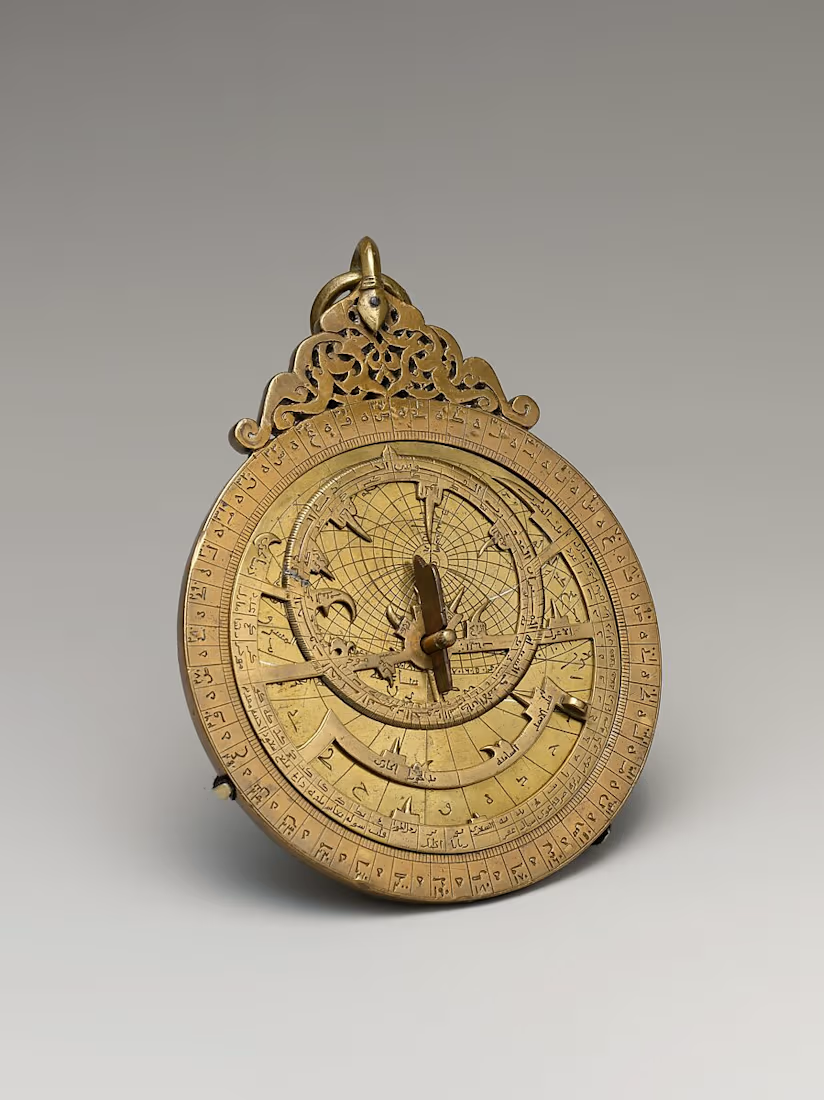
STARPORT is a short science-fiction film inspired by the Astrolabe of ‘Umar ibn Yusuf, made in Yemen in 1291 and now part of The Metropolitan Museum of Art’s collection. It begins with a simple possibility: what if an object we consider part of the past still had something left to tell us?
I chose this astrolabe because its appearance and purpose offered equally compelling starting points. Its concentric rings, delicate star pointers, engraved brass, and silver inlay have a remarkable visual complexity. Even before imagining a story, the object invites you to look closer—to follow its markings, examine its layers, and wonder how its parts work together.
But its relationship with the sky made it especially meaningful for this project. An astrolabe translates observations of celestial bodies into information people can use. It embodies the desire to understand where we are through what lies beyond us. That idea felt like a natural foundation for science fiction: a historical instrument whose original purpose already connects the human world with the cosmos.
The creative challenge was to carry that connection into a new story while preserving the identity of the object. I wanted its geometry to influence the film’s architecture, its materials to shape the palette, and its function to guide the mystery. The reimagining grows out of details already present in the original piece.
The museum became the starting point because it gives those details a familiar context. We encounter an artifact behind glass, apparently still and fully understood. As the gallery falls quiet, the camera asks us to pay closer attention. A small disturbance changes how we read the object. From that point onward, the film gradually questions the scale, purpose, and context of what we are seeing.
The visual approach follows that same progression. Warm brass, fine engravings, circular structures, and controlled light create a consistent language throughout the film. Close observation becomes part of the storytelling: a detail that appears decorative may begin to suggest something else. The camera reveals just enough to invite a new question.
FLORA’s canvas was central to developing this approach. I used it to explore the original reference, build visual directions, compare alternatives, and refine the sequence through successive image and video generations. Early experiments helped identify what weakened the illusion: camera reversals, abrupt changes in framing, and artifact details that drifted as the camera moved closer.
Those problems shaped the final process. Intermediate reference images gave the approach a clearer progression. Shared frames helped connect neighboring shots. Repeated comparisons with the museum reference kept the astrolabe’s recognizable structure at the center of the work. Each iteration became a decision about what the viewer should notice, when they should notice it, and how much should remain unexplained.
Sound adds another layer to that experience. The gallery’s lights, the mechanism’s searching movement, and the moment it stops establish a rhythm before the music expands the atmosphere. The final assembly and audio mix were completed in HyperFrames, bringing the generated scenes into a concise cinematic sequence.
I imagine STARPORT as a moving-image companion to the original artifact: something that could sit alongside its historical context and invite a different kind of attention. The film’s speculative story grows from an appreciation of the ingenuity and artistry already contained in the piece.
Above all, I wanted viewers to leave curious about the object itself. Someone made this intricate instrument more than seven centuries ago to understand the heavens. That act of curiosity is the starting point for everything that follows.
What happens after the museum closes is best discovered in the film.
Original artwork: The Met — Astrolabe of ‘Umar ibn Yusuf, Yemen, 1291
Creative process: Explore the FLORA canvas
#FLORAMuseum
The network for creativity
Join 1.25M professional creatives like you
Connect with clients, get discovered, and run your business 100% commission-free
Creatives on Contra have earned over $150M and we are just getting started


Related posts

I created a cinematic AI-powered short film that follows Kunji, a tired creator working late at night, whose ordinary evening takes an unexpected turn when he receives an invitation to CapCut World LA.
A mysterious glowing portal appears at his door, taking him on an incredible journey through space and time before he lands on the red carpet at CapCut World LA.
Why I built it: I wanted to bring the challenge's theme, "Step Into the World You Create," to life through a fun, imaginative story. The idea is to show how creativity can transport an everyday creator from a small workspace to a world of endless possibilities.
I used detailed AI prompts, consistent character design, cinematic camera movements, and visual storytelling to blend everyday reality with an extraordinary adventure.

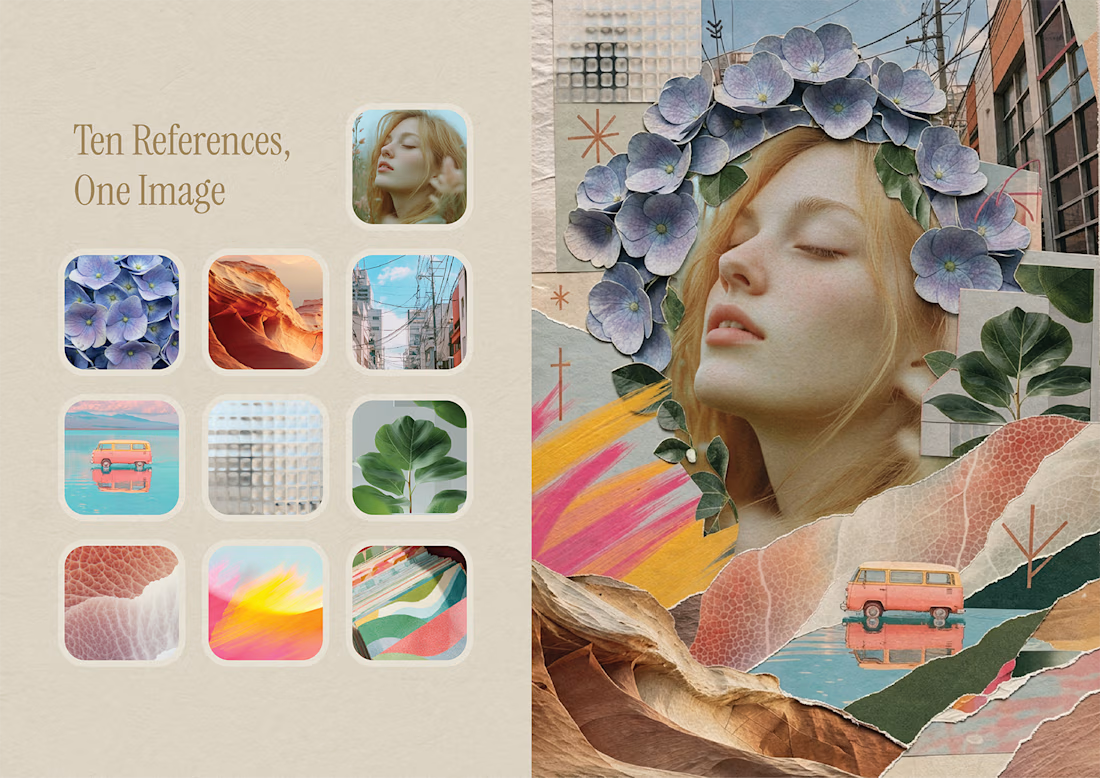
A little visual exploration of the analog collage aesthetic.
I used 10 images of my own as visual references for Flux 3 Image Klein to generate a single collage.
I wanted to see how well it could interpret a set of somewhat unrelated references and bring them together into one cohesive composition, rather than simply combining the original images.
I like that it incorporated all 10 references without leaving any out, while blending some of the elements quite naturally.
I've included the prompt in the comments.
What do you think of this style?


Love this aesthetic! The way it brings unrelated references together while keeping that authentic analog collage feel is really interesting. It feels creative without looking overly AI-generated.

Who needs an airport terminal when the poster on your bedroom wall goes straight to Los Angeles?
For this #1000WaysToCCW submission, I wanted to strip away the complex sci-fi gadgets and create a clean piece of visual magic. I built a continuous 30-second shot where touching a framed CapCut World LA poster on my wall turns the flat paper into a physical window, letting me climb right through the picture frame and step onto the live red carpet in LA.