The network for creativity
Join 1.25M professional creatives like you
Connect with clients, get discovered, and run your business 100% commission-free
Creatives on Contra have earned over $150M and we are just getting started
Back to feedPost



The network for creativity
Join 1.25M professional creatives like you
Connect with clients, get discovered, and run your business 100% commission-free
Creatives on Contra have earned over $150M and we are just getting started

Challenges
View all


Related posts

SaaS FAQ Section - High-Converting & Responsive


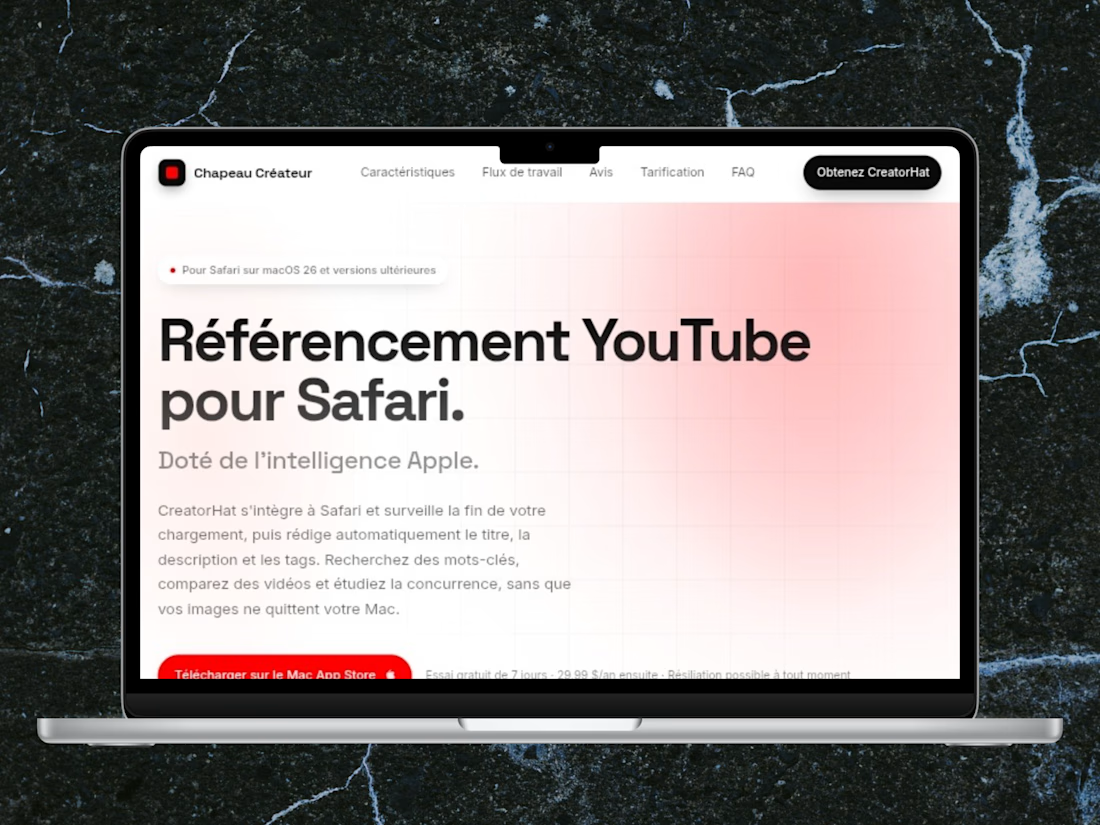
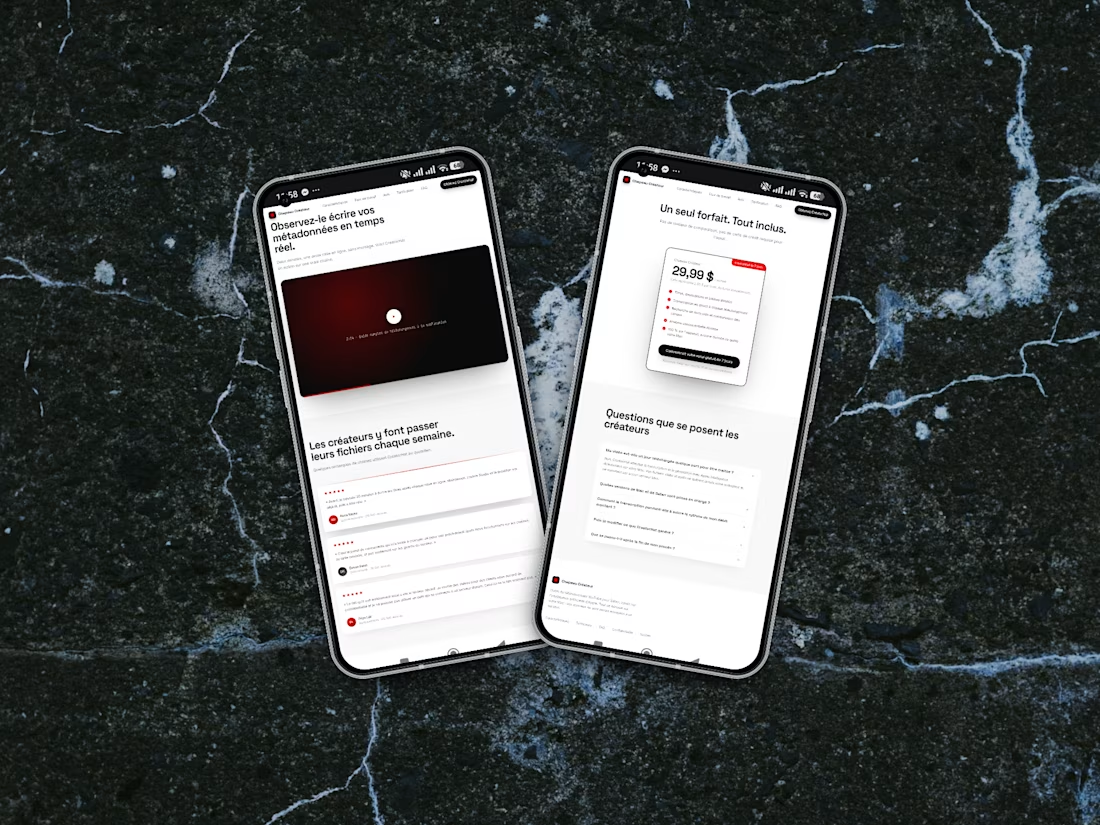

A SaaS FAQ can be a strong place to remove uncertainty before the next step. How did you choose the order of the questions, and how do expanded answers behave on mobile?

GPU infrastructure is expensive, but optimization tools do not have to feel overwhelming.
Corebit explores a clear SaaS landing page experience for AI teams that need to monitor GPU usage, uncover idle capacity, understand workload costs, and find lower-cost instance options without compromising performance.
The page simplifies a technical workflow into a focused product story: visibility, optimization, and measurable savings.


From static layouts to dynamic narrative 🎬
I’m excited to share a snippet of the motion video in action.
When directing motion for SaaS, every movement needs to have a purpose. The challenge wasn’t just animating 3D shapes, but making abstract user data feel tangible, responsive, and intuitive.
Key motion choices in this sequence:
— Rhythmic Assembly: Breaking complex multi-channel data down into modular cubes that lock together effortlessly.
— Tactile UI Interaction: Adding organic human interaction through the touch gesture to show how seamless user-profile management can feel.
— Fluid Physics: Soft glass floating effects that reduce visual noise and guide the viewer’s focus directly toward key analytics.
Motion design should make complex software feel intuitive before the user even tries it.
Would love to hear your thoughts on the easing and pacing here!

the glass cards floating over the dunes look good. what does the product actually do?