The network for creativity
Join 1.25M professional creatives like you
Connect with clients, get discovered, and run your business 100% commission-free
Creatives on Contra have earned over $150M and we are just getting started
Back to feedPost

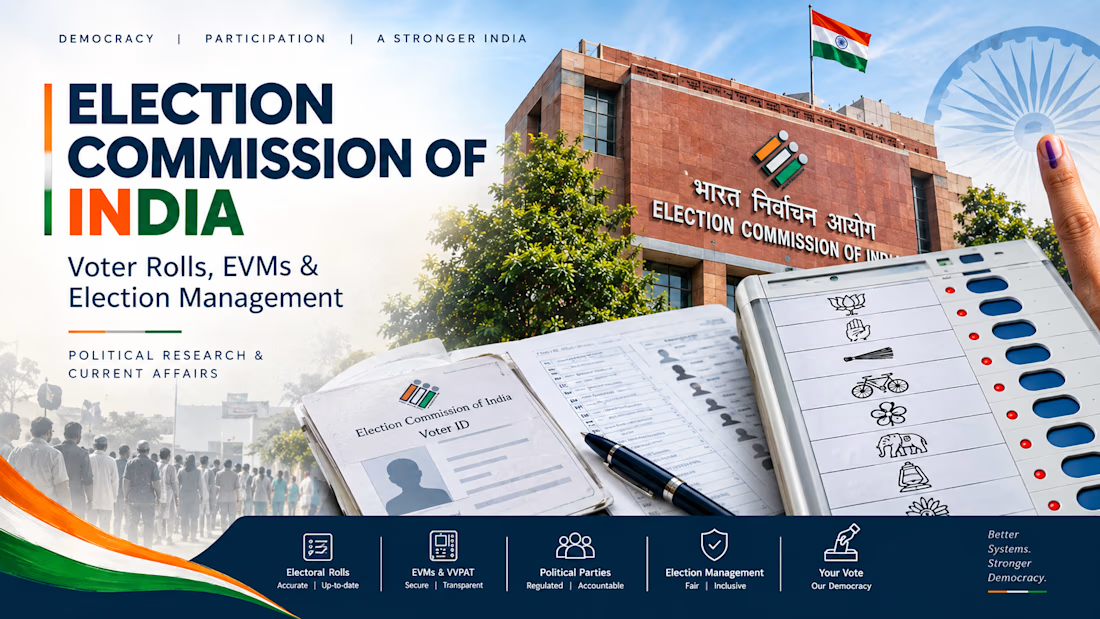
West Bengal SIR 2026: Voter Rolls, Appeals and the Political Debate Over Electoral Inclusion:
Article
West Bengal’s Special Intensive Revision (SIR) of electoral rolls in 2026 became one of the most closely watched electoral exercises in the state. What began as a voter-list revision developed into a wider political, legal and administrative issue involving millions of electors, judicial officers, the Election Commission of India (ECI), political parties and the Supreme Court.
According to the Chief Electoral Officer, West Bengal, the SIR process was designed to verify the electoral roll and ensure the inclusion of eligible electors and exclusion of ineligible entries. The official SIR portal provides the final roll, deletion lists, supplementary lists, claims and objections, and other election-related information.
CEO West Bengal +1
From voter verification to a major legal process
The scale of the exercise became particularly significant after the Supreme Court became involved in the adjudication process. According to the Election Commission's submissions reported by The Indian Express, around 60.06 lakh electors had been flagged through the process, with judicial officers involved in determining eligibility. Subsequently, 27.16 lakh names were deleted following adjudication.
The Indian Express
The numbers also illustrate why the issue became politically important. The question was not simply how many names were removed, but how quickly people whose names had been removed could challenge those decisions and have their cases considered.
The Supreme Court's May 2026 judgment also addressed the legal basis of SIR. The Court held that the exercise did not directly conflict with the Representation of the People Act and the relevant rules, and described electoral-roll accuracy as an important component of free and fair elections.
Sci API
The appeal process
The next stage became the appeals.
In September 2026, the Election Commission told the Supreme Court that 38.31 lakh appeals had been filed concerning inclusion and exclusion from West Bengal's electoral rolls. Of these, 22.21 lakh appeals were filed by deleted voters seeking inclusion, while another 16.10 lakh concerned challenges to inclusion. The EC also proposed increasing the number of appellate tribunals to speed up the process.
The Indian Express
Earlier, the Commission had reported that 38.20 lakh appeals had been filed and only about 1.02 lakh had been disposed of, leaving more than 37 lakh pending at that stage.
The Indian Express
These figures show an important distinction in the SIR debate: revision of an electoral roll and the subsequent legal remedy are two separate stages. A deletion does not necessarily end the matter, because an affected elector can pursue the prescribed appeal process.
When electoral-roll issues affect everyday life
The debate has also moved beyond voting itself.
In one case reported by The Indian Express, the Calcutta High Court directed an SIR appellate tribunal to consider the appeal of a woman whose name had allegedly been deleted from the electoral roll. Her family argued that the situation was affecting her son's passport process while he was preparing to pursue medical education in Bangladesh.
The Indian Express
Such cases demonstrate why electoral-roll administration can have consequences beyond election day. At the same time, individual cases need to be distinguished from general conclusions about the entire SIR process.
Why SIR became a major political issue in Bengal
The controversy also became part of the larger political contest in West Bengal.
Political parties and leaders have raised different concerns about the revision process, while the Election Commission has defended the exercise as an electoral-roll verification process. The Supreme Court's proceedings have provided a legal mechanism through which several aspects of the process have been examined.
For researchers and journalists, this creates an interesting political-research question: How should an electoral-roll revision balance the removal of ineligible entries with the protection of eligible voters' right to remain on the roll?
That question cannot be answered simply by looking at the number of deletions. It requires examination of the reasons for deletion, the evidence considered, the appeals filed, the decisions of tribunals and the eventual status of affected electors.
The data behind the controversy
The West Bengal CEO's official SIR portal provides several datasets and documents that can be used to independently examine the process, including:
Final electoral roll
Deletion lists
Supplementary lists
Claims and objections
Booth-level information
SIR instructions
Press notes and bulletins
Voter-name search facilities
CEO West Bengal
This makes SIR a useful case study in political research, electoral administration and data-based journalism.
Conclusion
West Bengal's SIR 2026 demonstrates how an electoral-roll revision can develop into a much larger political and legal issue. The process involved questions of voter eligibility, administrative verification, appeals, judicial oversight and the practical ability of citizens to challenge decisions affecting their electoral registration.
The most useful way to study the controversy is therefore not through political slogans, but through official documents, court orders, electoral data and independently reported cases.
For a political researcher, SIR provides a strong example of how to connect government data, court proceedings, political developments and individual cases into a structured current-affairs analysis.
Research sources
Election Commission of India — voter services and electoral-roll information.
Election Commission of India
Chief Electoral Officer, West Bengal — SIR 2026 documents, rolls, deletion lists and press material.
CEO West Bengal
Supreme Court of India — May 2026 judgment concerning SIR.
Sci API
The Indian Express — reporting on SIR appeals and deleted electors.
The Indian Express +1
The Indian Express — reporting on individual cases involving SIR appeals.
The network for creativity
Join 1.25M professional creatives like you
Connect with clients, get discovered, and run your business 100% commission-free
Creatives on Contra have earned over $150M and we are just getting started




Related posts

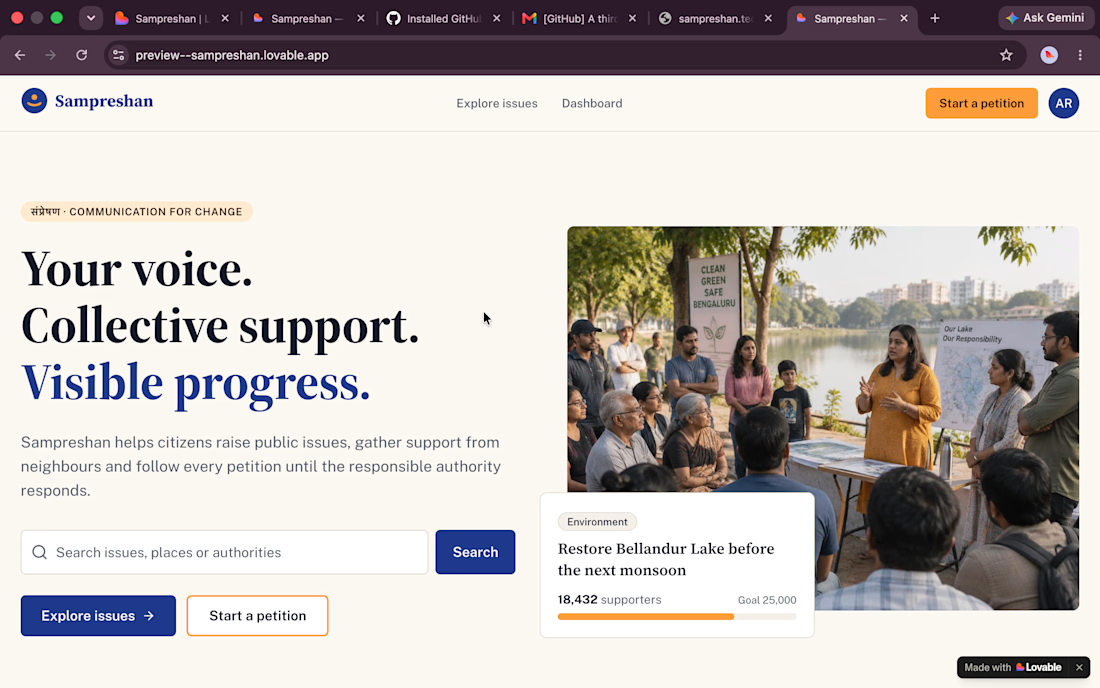
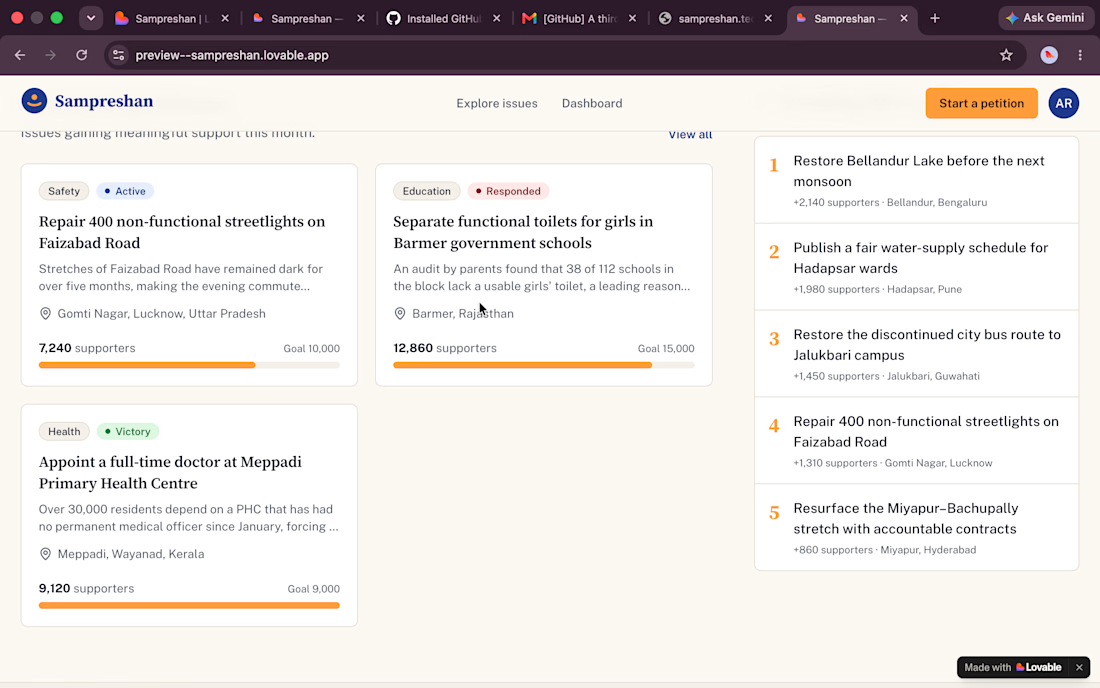
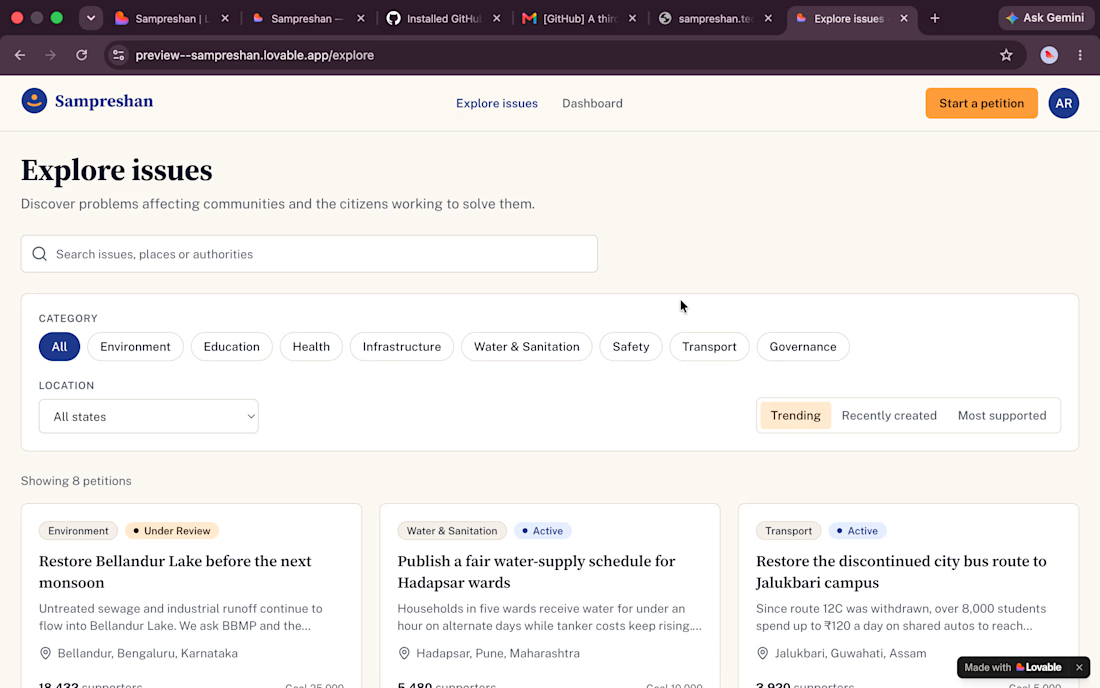
Sampreshan is a modern civic participation platform designed to help people discover public issues, raise their own concerns, build collective support, and follow the progress of issues that matter to them.
I built Sampreshan around a simple idea: civic participation should be easy to understand and easy to take part in. A citizen should be able to discover an issue, understand its context, support it, share it with others, or start a petition through a clear and guided experience.
The prototype brings the complete journey together in one platform, including issue discovery and search, category and state filters, detailed petition pages, supporter progress, timelines, updates, official responses, supporting documents, sharing, an 8-step petition creation flow, publishing confirmation, personal dashboards, notifications, profiles, and participation activity.
The experience is designed for desktop, tablet, and mobile, with a clean information hierarchy, accessible controls, responsive layouts, keyboard-friendly interactions, and readable typography. The visual identity combines deep blue for trust and civic identity with saffron action elements and warm neutral backgrounds.
I built this prototype in Lovable to turn the Sampreshan concept into a complete, interactive product experience rather than just a collection of static screens. The goal was to explore how technology can make civic participation more accessible, transparent, and meaningful, while helping people clearly see how an issue moves from an individual concern to collective participation and visible progress.
This Challenge submission is a frontend product prototype using realistic demonstration data and simulated interactions. It is separate from the production Sampreshan WordPress/BuddyBoss platform.






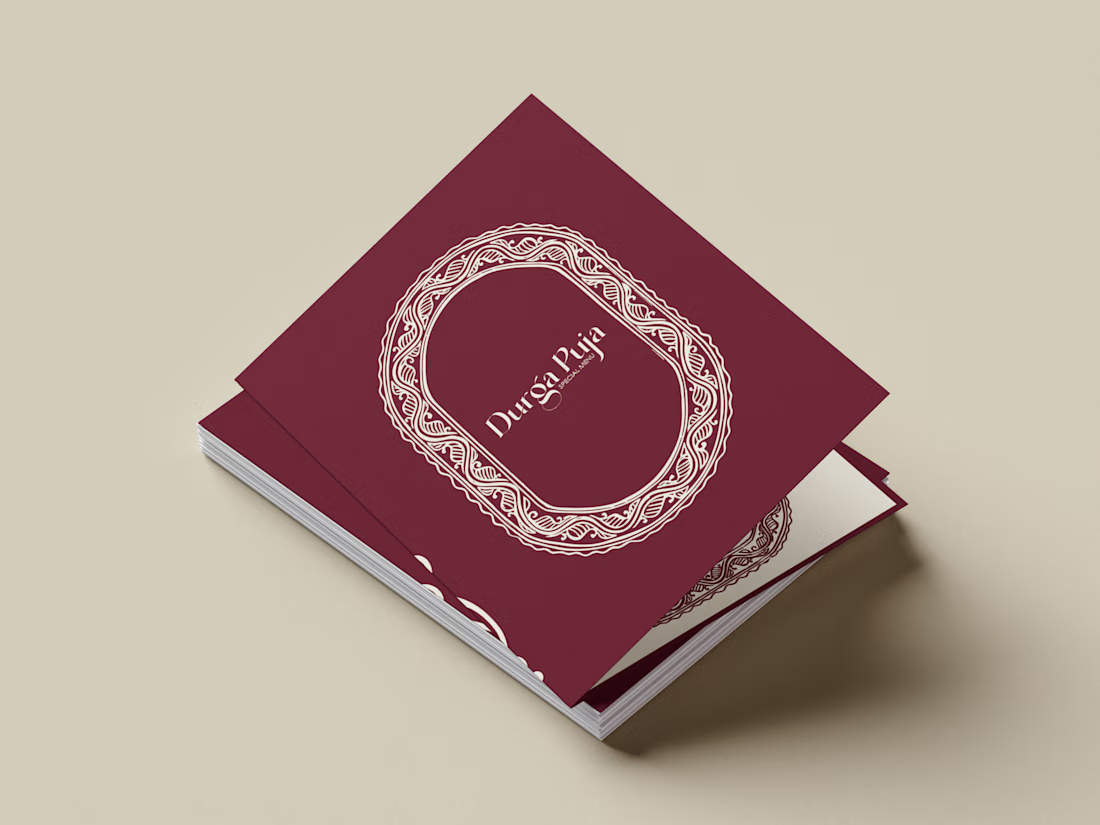
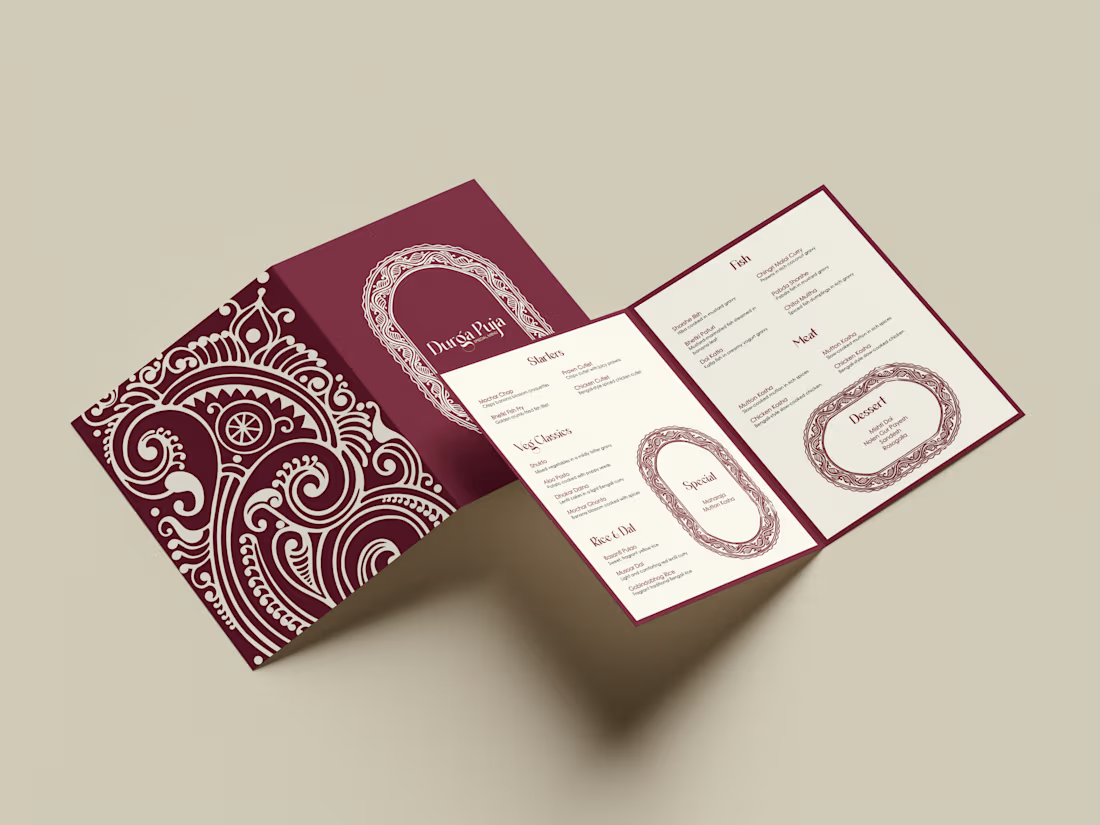
Durga Puja Special Menu ✦
A festive menu design blending traditional Bengali-inspired details with a clean, elegant visual style. Rich burgundy tones, ornamental elements, and refined typography bring the festive mood to life.
#GraphicDesign #MenuDesign #PrintDesign #Typography #DurgaPuja #EditorialDesign