The network for creativity
Join 1.25M professional creatives like you
Connect with clients, get discovered, and run your business 100% commission-free
Creatives on Contra have earned over $150M and we are just getting started
Back to feedPost

Six Laws of Persuasion that Everyone Needs to Master
1. Reciprocity
People have a tendency, it appears, to offer back when they are offered something. It's called reciprocity, and it has been practiced by men since prehistoric times.
In trying to persuade another person, it is always wise to offer something free to the other. That way, the other person will feel morally obligated to return the favor.
Advertisers take advantage of this law of persuasion every time they offer something for free.
2. Consistency
The human mind craves consistency. It seeks it everywhere, anytime. It's an evolutionary advantage that has helped us develop structured lives.
This need for consistency can also be used to persuade people to take certain actions and make certain decisions.
If a person has been attending the same church for decades, then he or she will not be convinced easily to attend another church. This means that the pastor can charge more money for the services, and that person would still come.
We can see this happening with pubs and restaurants that become popular. The more popular a place becomes, the more expensive the experience becomes, too.
3. Authority
“Nine out of ten dentists recommend this toothpaste.”
This line was famous in a 1990s commercial for a popular toothpaste, and it highlights the persuasive power of authority.
People will accept something as fact just because the person who utters some words has the title of PhD. or Expert right before that person's name. Not only are we not sure if that title is real, but the expertise of that person may have nothing to do with the nature of the claim. In other words, this shows what power authority has over people's minds.
4. Social proof
Another interesting tendency that humans have is to look after social proof. This is ingrained in our minds for evolutionary purposes. If the person next to us eats something and becomes intoxicated, then we will avoid eating that very food.
The opposite is true also. If we see people using and experiencing something, and they enjoy it, then we will also want to experience the same product, too.
This is where reviews for products come in handy. They are always used as social proof for other people to be convinced of the quality of the product. Sales increase as people ramble on what a great product this or that is.
5. Likeability
Another interesting law regarding persuasion is likability. People alike like people alike. In other words, if another person is in some ways similar to another person, then he or she will gain more trust just because of that.
This persuasion law has been used by politicians since ancient times, the politician trying to portray himself as having a lot in common with the common man.
In this regard, advertisers have invented the idea of “pain point” just to make themselves and their products likable to potential prospects.
6. Scarcity
The last law of persuasion is scarcity. This is, before being a persuasion law, a psychological trick. Convince a person that something is scarce, and that person will do all he or she can to obtain that scarce good.
We can see these happening when a natural disaster is announced in the media. People will head to the supermarkets and purchase various—many times useless—produce as if it were no tomorrow.
**This article was first published on my LinkedIn profile. If you wish to connect on the social media platform, click here**
The network for creativity
Join 1.25M professional creatives like you
Connect with clients, get discovered, and run your business 100% commission-free
Creatives on Contra have earned over $150M and we are just getting started





Related posts

I wrote a great hook for this one..
That's a fib, but here's a truth, you sell more when you fit into your customers' routines.
Need an example? Afters is for finding underground parties in Berlin. There are so many ways people can find parties from Resident Advisor to posters on lampposts.
The easy CTA for a brand like Afters is "Find Underground Parties in Berlin".
Short, clear, to the point,
But most people already search on Resident Advisor, how would that line convince them to change their behaviour and search Afters? Unfortunately being a "cooler" app doesn't motivate many people.
With a clear strategy, I delivered a way in that RA could never hope for.
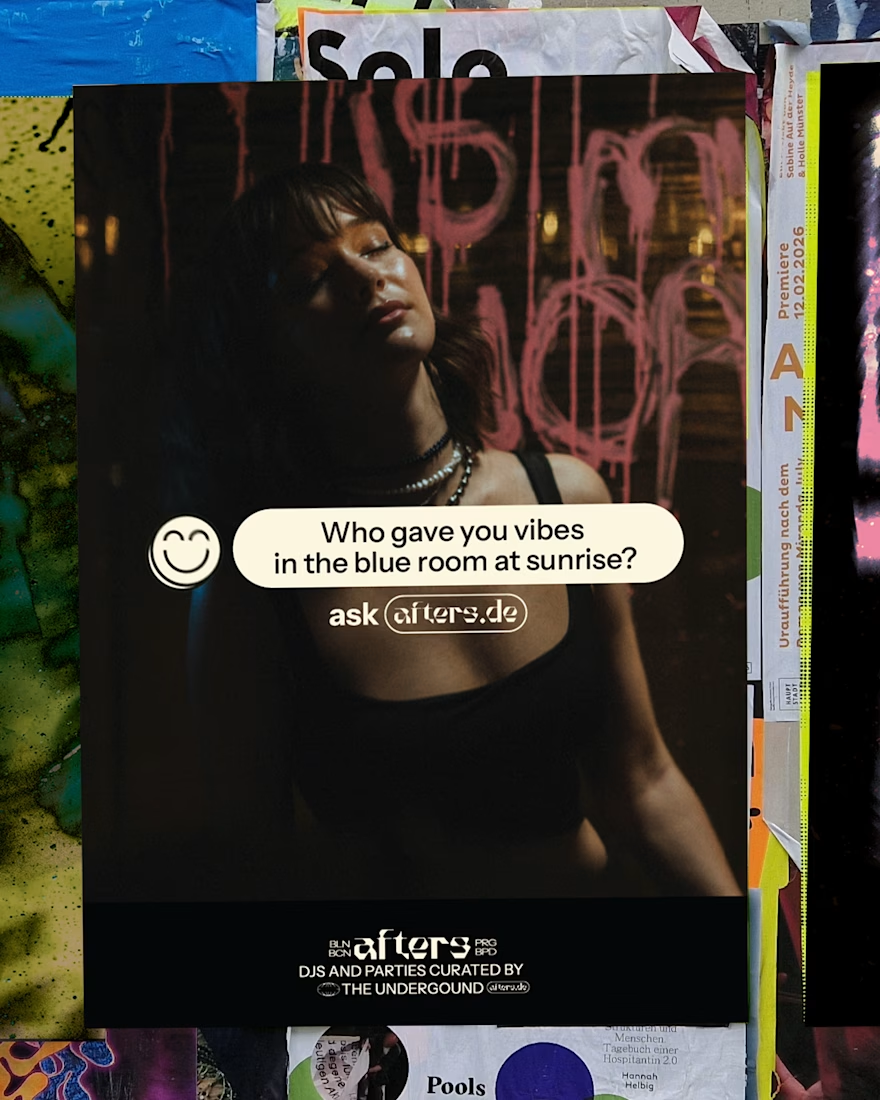
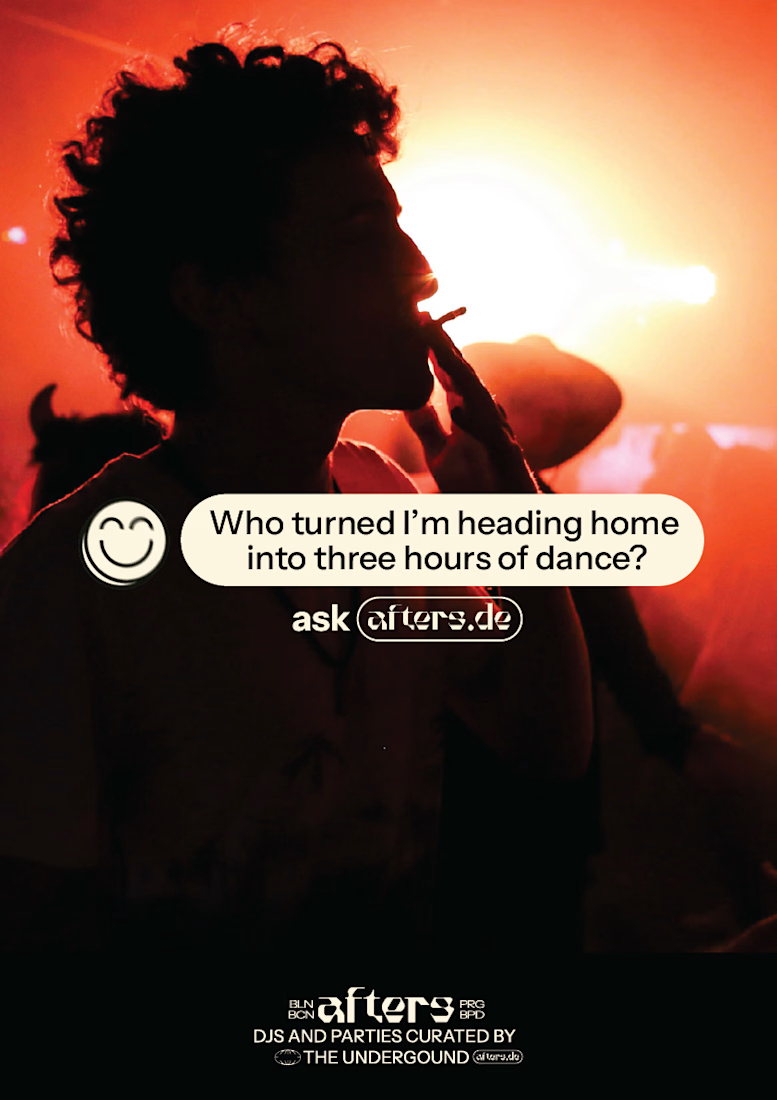
Afters pulls from sources where line ups are posted last minute or after the event – Telegram groups, fan websites, Soundcloud – and being for people in the scene, they're the kind of folk who go to a party for the vibe and look up DJs after the fact.
So I did the opposite of what you'd expect.
If you want to know who you just danced to, ask Afters.
Instead of competing to be the place to find parties in the future, I found a key moment the target audience has a problem that Afters is uniquely positioned to solve and built the strategy around it. No one can compete, because no one else works like Afters.
Problem -> Strategy -> Branding

Love it!


Positioning is mostly about what you refuse to be.
Anyone can list the audiences they want to reach. Anyone can write down the problems they solve. That part is easy.
The hard part is naming what you'll turn down. The clients you'll pass on. The work you'll stop pitching for. The categories you'll let competitors own without a fight.
Every time you say "we can also do that," your positioning gets weaker. The market can't tell what you're for.
The companies with the clearest positioning name a specific buyer, a specific problem, and a specific moment. Everyone else competes on price.

Completely agree. Trying to help everyone means you end up standing out to no one. Knowing what jobs to say no to is what makes people respect your focus.


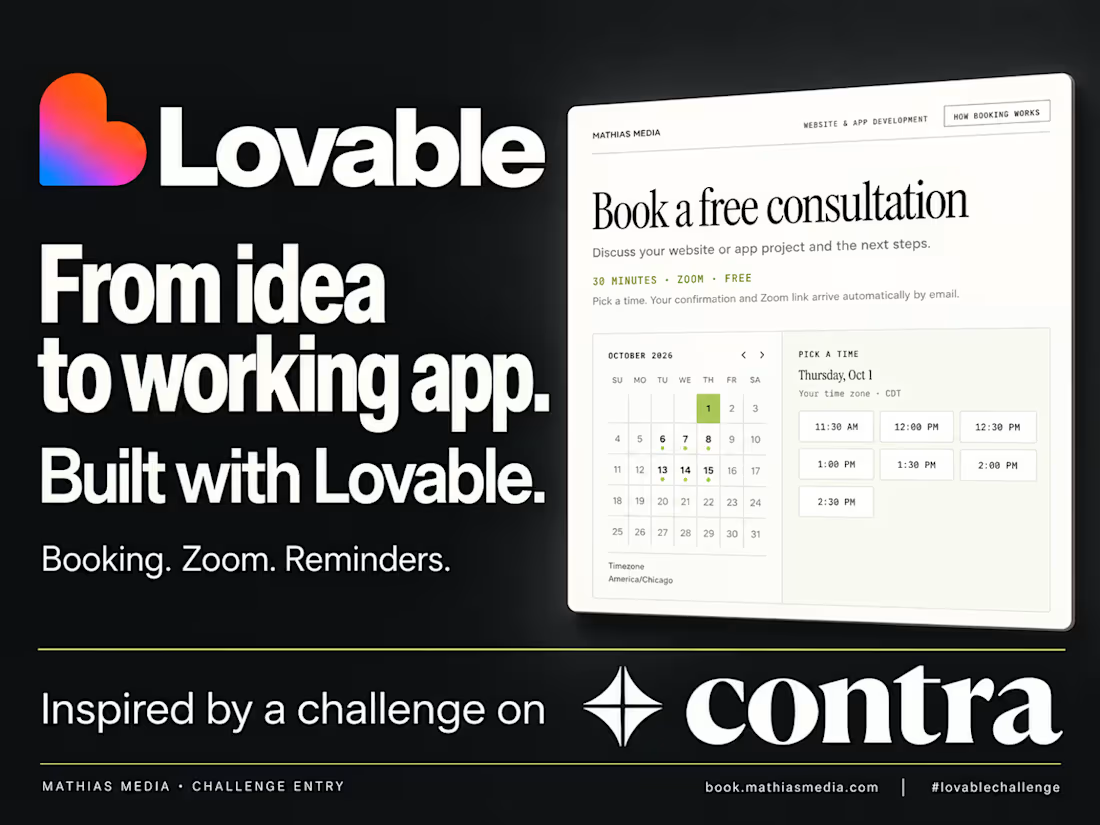
I used @Lovable to build a working booking app for my business—and the most useful part happens after someone clicks “Book.”
The goal: easier booking for clients, less scheduling work for me.
The app creates their Zoom meeting, sends their confirmation, schedules reminders, and lets them reschedule or cancel.
The client’s part? Pick a time. Enter a name and email. Done.
I built this for Mathias Media, my website and app studio in Minneapolis, as part of @Contra’s #lovablechallenge.
With Lovable, I built around how I actually work: consultations Tuesday through Thursday, a maximum of three calls a day, and buffers between appointments. The app handles those rules while keeping booking simple.
That’s what makes this Contra challenge worthwhile: a reason to turn a real business need into something useful with Lovable.
Try it: https://book.mathiasmedia.com/
Walkthrough and build-process recording attached.
Have a business process you wish worked better? Give Lovable a try.

Baking the Tuesday to Thursday, three calls max rule right into the app is the smartest part of this imo. Most booking tools make you bend around them. Have clients noticed the limits or does it just quietly feel like you're in demand?