The network for creativity
Join 1.25M professional creatives like you
Connect with clients, get discovered, and run your business 100% commission-free
Creatives on Contra have earned over $150M and we are just getting started
Back to feedPost

Automating Retail Media Reporting: Roundel (Target) Email Feeds → Looker Studio Dashboard
A no-code data pipeline that turns a daily email attachment into a live, self-updating analytics dashboard — built with Make.com, Google Sheets, and Looker Studio.
Overview
A retail media client running campaigns on Roundel, Target's in-house media network, needed daily performance data visible in a dashboard — without anyone manually downloading, unzipping, and uploading a CSV every morning. Roundel delivers its scheduled reports as a zipped CSV attachment via automated email, with no native API or direct BI connector available for smaller accounts. I designed and built an end-to-end automation that watches the inbox, extracts the report, appends it to a live dataset, and feeds a Looker Studio dashboard — fully hands-off, running once a day, every day.
The Problem
Roundel's reporting exports arrive as:
A daily email from a no-reply system address (roundel-kiosk-no-reply2@target.com)
Containing a .zip attachment
Inside which sits a Table 1.csv file with the actual performance metrics
There's no direct connector between this format and a BI tool. Left as-is, someone has to check the inbox every day, download the zip, extract it, open the CSV, and manually paste or upload the new rows into wherever the dashboard reads from. That's a daily manual task with real room for error — missed days, duplicate imports, or someone simply forgetting.
The brief was simple: make the data appear in the dashboard on its own, every day, with zero manual touch.
The Approach
Rather than reach for a custom script and server to host it, I used Make.com as the orchestration layer — no infrastructure to maintain, visual and auditable, and easy to hand off or modify later.
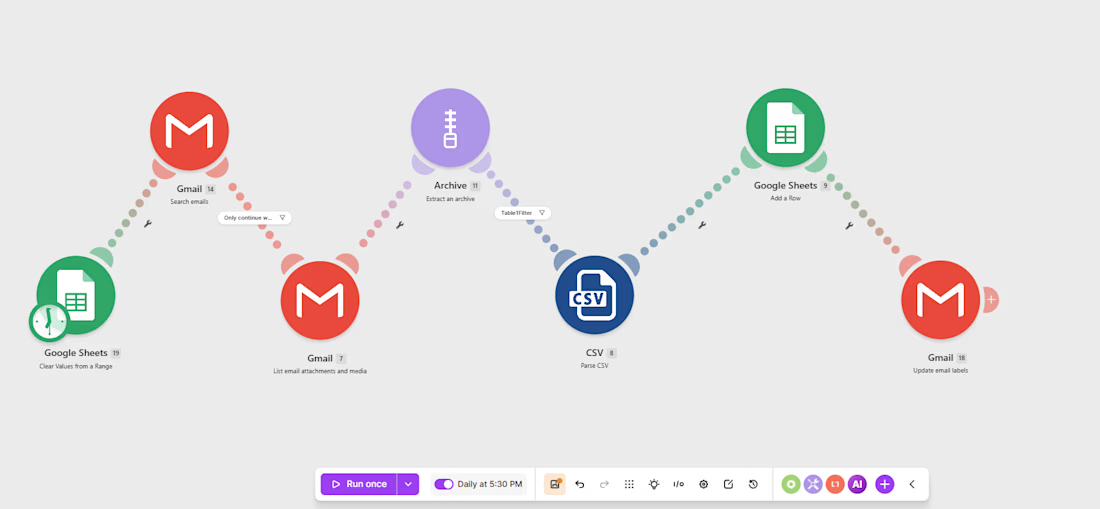
Pipeline architecture:
Trigger: A Gmail "Watch Emails" module filters specifically for messages from the Roundel no-reply address containing a zip attachment, so the scenario only fires on the relevant daily report — not on any other inbox activity.
Extraction: The zip attachment is unpacked in-flow using Make's Archive module, with no temporary storage or third-party unzip service involved.
File targeting: The scenario filters the unzipped contents down to the one file that matters — Table 1.csv — ignoring any other files bundled into the same archive.
Parsing: The CSV is parsed row by row directly inside the scenario.
Load: Each row is appended to a master Google Sheet, which acts as the persistent, growing dataset behind the dashboard.
Confirmation: Once every row from that day's file is successfully written, the original email is labeled/marked as imported — so there's a built-in audit trail of exactly which reports have been processed, and the scenario never double-imports a file it's already handled.
From Data to Dashboard
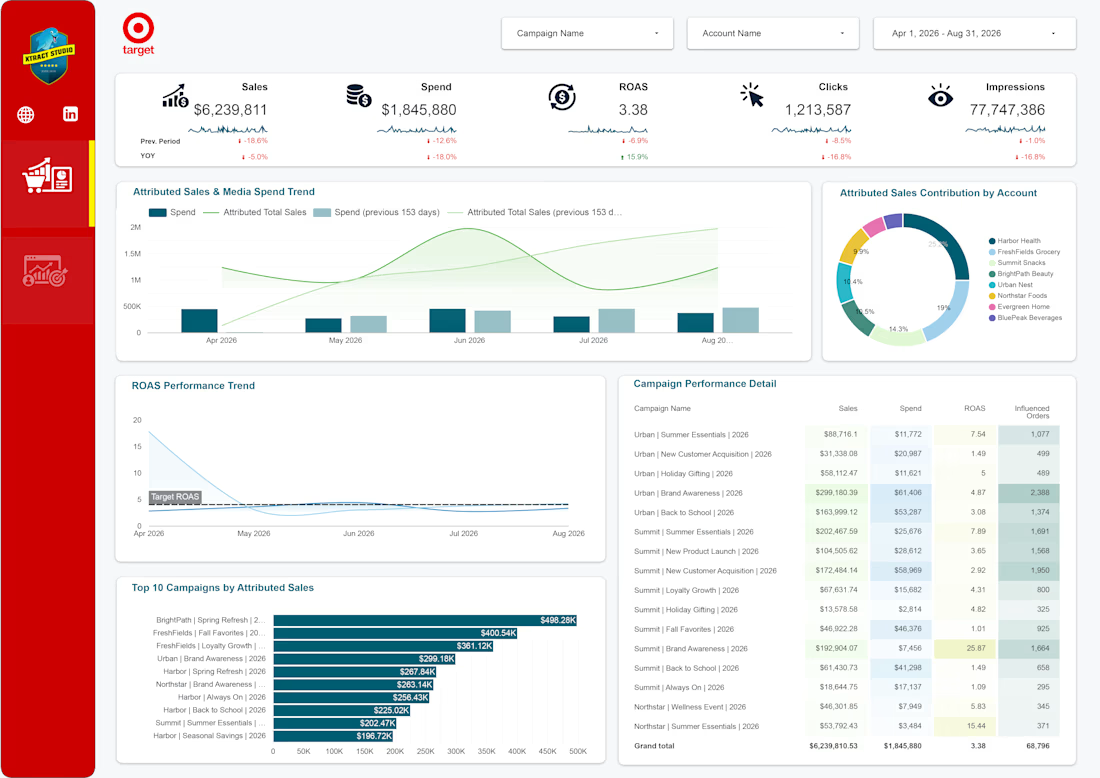
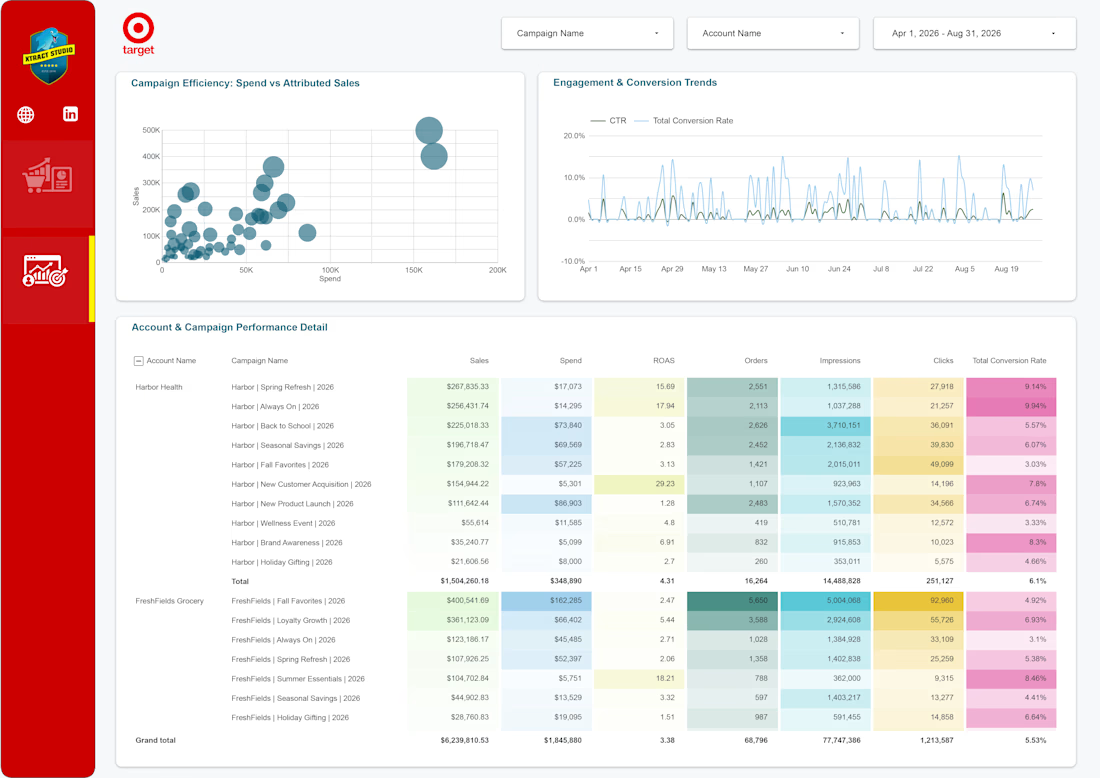
The Google Sheet isn't just a landing zone — it's the live data source for a Looker Studio dashboard built on top of it. As new rows append daily, the dashboard's charts, trend lines, and KPI cards update automatically on next load, with no manual refresh of the underlying data needed. The result is a reporting layer that behaves like a connected BI system, built entirely on tools that don't require an engineering team or ongoing hosting cost.
Why This Approach
No API dependency: Roundel doesn't expose a public reporting API for this tier of account, so this pipeline works entirely off the one channel that is available — the scheduled email.
No infrastructure to maintain: Everything runs inside Make.com's cloud — no server, no cron job, no credentials to rotate manually.
Idempotent by design: Marking the email as imported only after a successful write means a failed run never gets silently marked as done, and the scenario won't double-process the same report.
Fully auditable: Every import leaves a trace — the labeled email, the appended rows, and Make's own execution history — so troubleshooting a bad day's data takes minutes, not guesswork.
Outcome
Zero manual touch on a previously daily manual task
Same-day data freshness in the dashboard, every single day
Error-resistant, with built-in duplicate protection and a clear audit trail
A pattern that's now reusable for any client whose reporting platform only offers "scheduled email with attachment" as an export option — a surprisingly common constraint in retail media



The network for creativity
Join 1.25M professional creatives like you
Connect with clients, get discovered, and run your business 100% commission-free
Creatives on Contra have earned over $150M and we are just getting started





Related posts

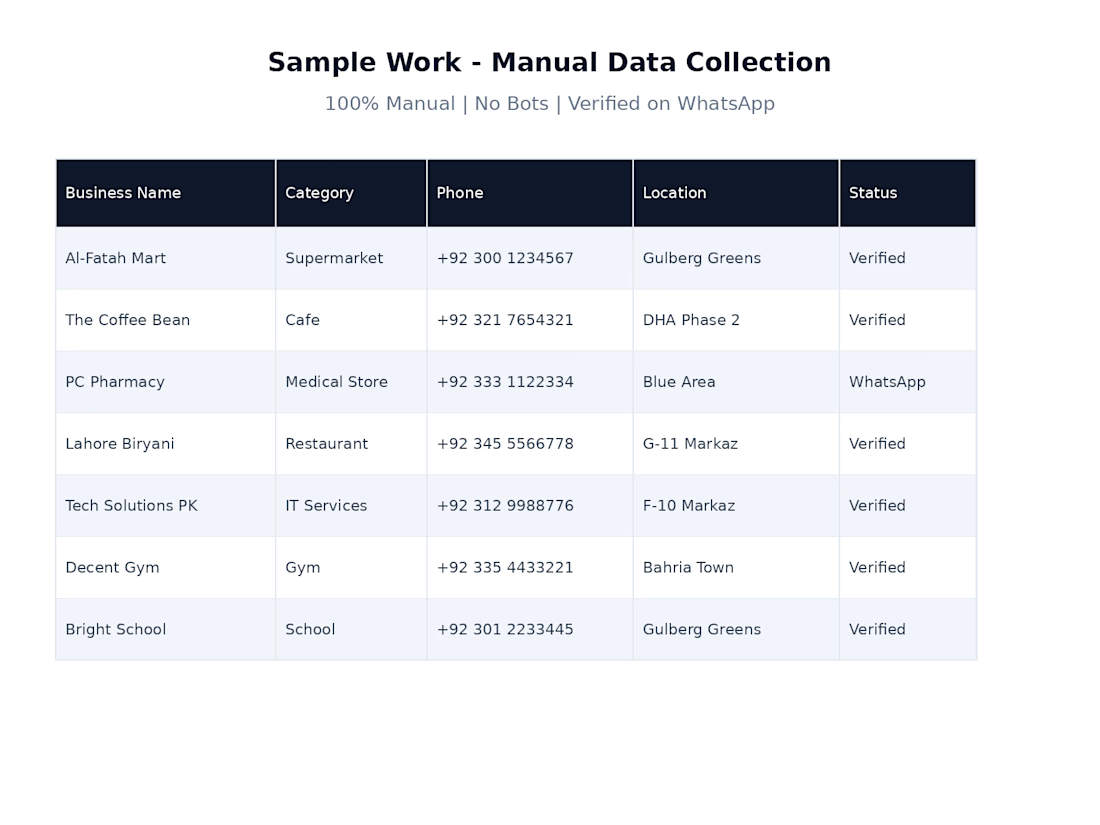
Sample of my manual business data collection work using Google Maps. I verified business details and organized the information into a clean, structured Excel sheet for marketing and lead generation.


Hello is there any #Dataentry jobs available?

Revlane Revenue: SaaS Dashboard Animation (Concept)
A concept animation for Revlane, a fictional revenue dashboard. The KPIs count up, the week's bars rise, and a trend line draws across. A "New record" toast slides in and the camera pushes in on the numbers. Then the cursor clicks Sunday's bar to open its value, and the view pulls back to the full dashboard.
Made in Jitter with Counter, mask reveals, and Scale and Move for the camera. Custom UI sound. 12-second loop.


The KPI count-up + bar rise + trend draw is a classic SaaS hero beat — the “new record” toast is a nice narrative punctuation before the camera push.



clean work