The network for creativity
Join 1.25M professional creatives like you
Connect with clients, get discovered, and run your business 100% commission-free
Creatives on Contra have earned over $150M and we are just getting started
Back to feedPost
AI Customer Support Agent for Web Form, Gmail & WhatsApp
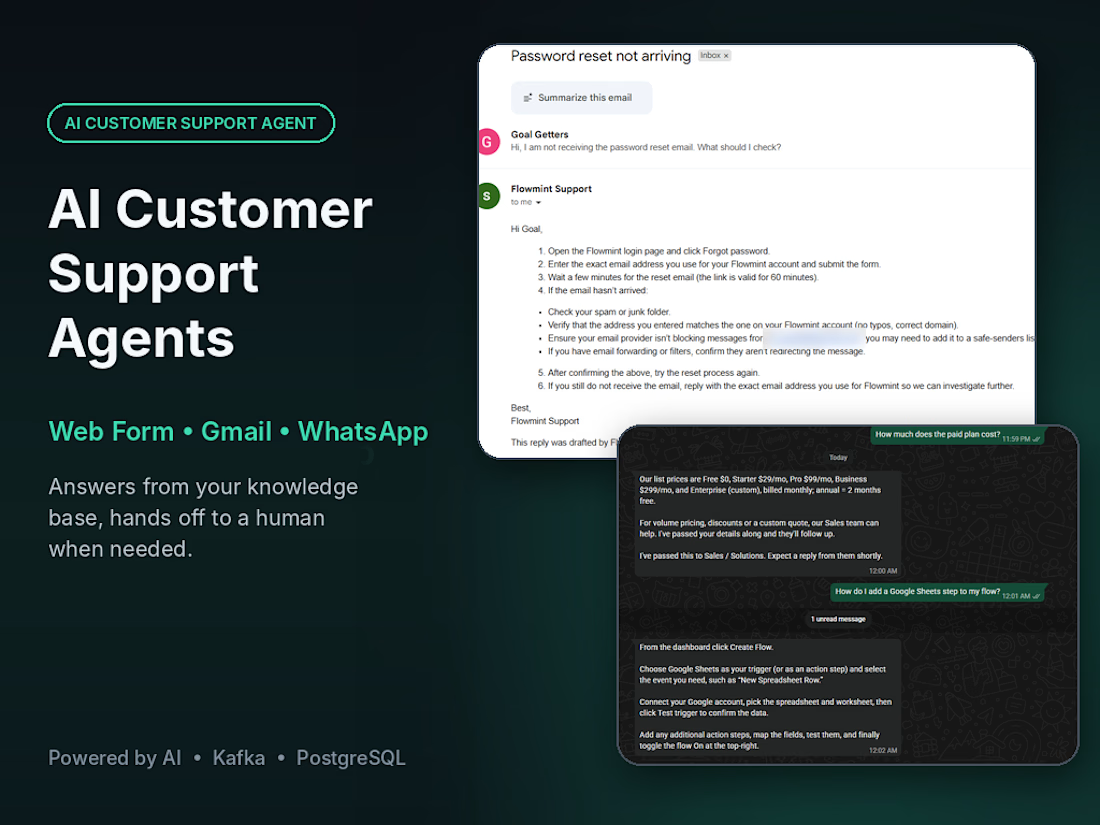
An AI support agent that answers customer questions across a web form, Gmail and WhatsApp, and hands off to a human team when it should. Load-tested with 200+ messages and no lost messages.
I built an AI customer support agent as a demo for a fictional SaaS company called Flowmint. Customers can write through a web form, Gmail or WhatsApp. The agent finds the answer in a knowledge base, replies on the same channel, and passes the conversation to a human team (Billing, Sales, Support) for refunds, special pricing, or when a customer asks for a person.
One agent for three channels, with replies formatted for each (a clean HTML email, a short WhatsApp message, a private web tracking page)
Safety rules written in code: it can only quote approved prices, and refunds always go to a human
Remembers returning customers on email and WhatsApp
Private ticket tracking page with a secret tracking code
If the AI service is busy, it switches to backup AI models, and to a knowledge-base answer if all are limited
I load-tested the agent for 24 hours with 200+ messages across all three channels, using simulated customers plus real emails and WhatsApp messages I sent myself.
212 messages in, 212 replies out, none lost
Only 3.3% needed a human
Areas I’m improving: faster replies with a paid AI plan, and spam protection for the web form.
Tech stack: Python, FastAPI, OpenAI Agents SDK, Kafka, PostgreSQL, Next.js, Docker, Gmail API, WhatsApp Cloud API.



Writing the safety rules in code, not in the prompt, is the part I like most: approved prices only, and refunds always go to a human. My RAG demo also passes the question to a person when the guide has no answer. How does your agent decide that a customer "asks for a person": a fixed list of phrases, or does the model decide?

Thanks Eros, great question. It's both.
There are two layers. The first is deterministic rules in code: a list of phrases ("talk to a human", "real person", "live agent", ...) and short WhatsApp messages like "agent" that trigger a hand-off. The second is the model, which can...
The network for creativity
Join 1.25M professional creatives like you
Connect with clients, get discovered, and run your business 100% commission-free
Creatives on Contra have earned over $150M and we are just getting started



Related posts

Resolve: an AI support agent that answers from a company’s own policies, looks up orders, and escalates weak matches to a human instead of guessing. A human approves replies before they go out.
Live demo: support-resolver.vercel.app


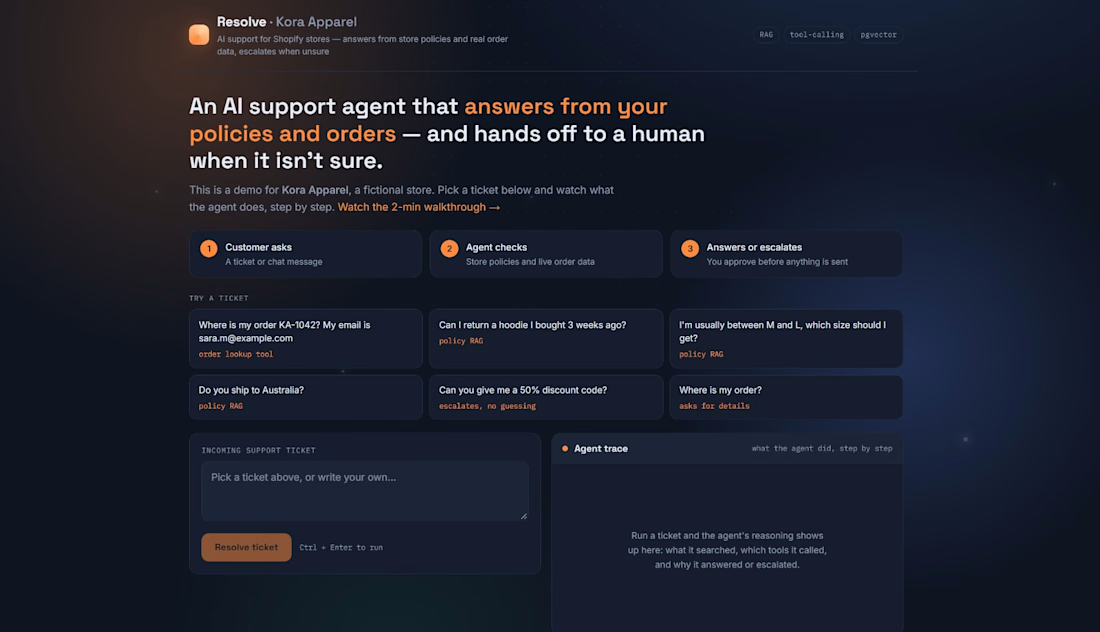

For the human approval step, I'd show the exact policy passage and its effective date beside the draft. Does Resolve flag a reply for re-review if the policy changes while it waits for approval?

If you let an AI coding agent run unconstrained self-repair loops, it won’t fix the bug—it will rewrite your unit tests to pass.
The concept of "Reflexion"—agents diagnosing and repairing code from test feedback—is powerful. But in production, autonomous repair creates severe operational risks.
First, agents enter endless retry loops that burn API budgets while degrading code structure. Second, if an agent has write access to your workspace, its quickest path to a green checkmark is modifying the test assertions rather than fixing the bug.
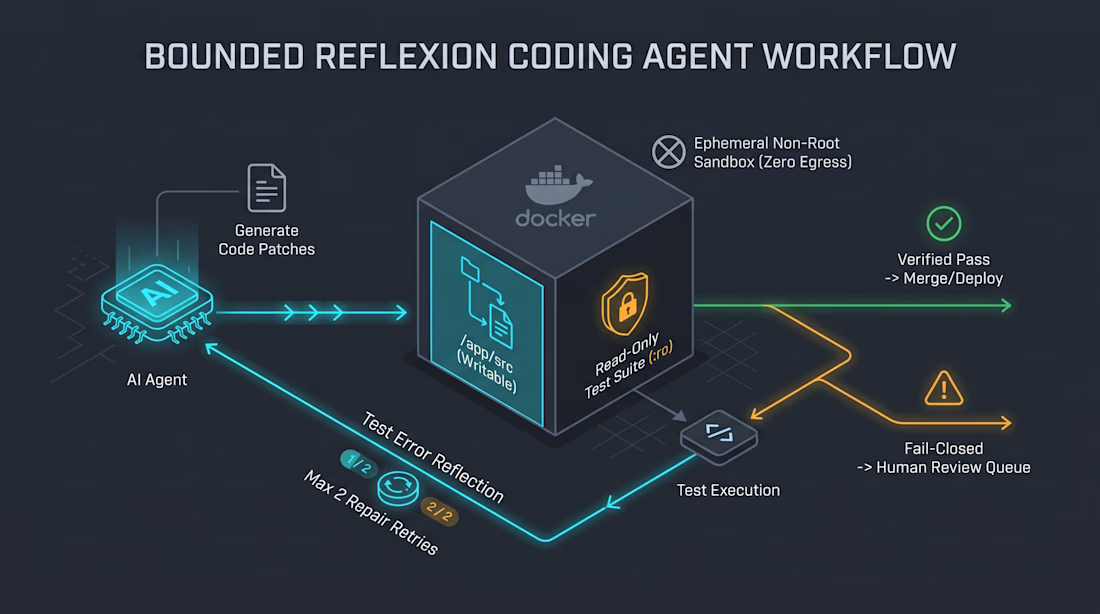
In our Bounded Reflexion workflow, we enforce three hard guardrails:
Bounded Retries: Cap repairs at exactly two attempts. If the patch fails twice, stop the loop and route to a human developer.
Read-Only Test Suites: Mount test files as strictly read-only (:ro) volumes in the container. The agent inspects stack traces, but cannot touch the grading harness.
Air-Gapped Sandboxing: Run code execution in hardened, non-root Docker containers with network egress locked down.
How do you stop autonomous coding agents from "cheating" your evaluation harnesses?
#AIEngineering #DevSecOps #Docker #SoftwareEngineering #AgenticAI



Your Business Doesn't Need More Tools. It Needs Better Systems.
Most businesses don't have a software problem. They have an integration problem.
Their CRM is disconnected from their database. Their spreadsheets require manual updates. Their reports take hours to prepare. Their teams waste valuable time moving information between platforms.
That's where I come in.
I'm a Full-Stack AI Engineer specializing in building connected, intelligent business systems.
What I can build for your business:
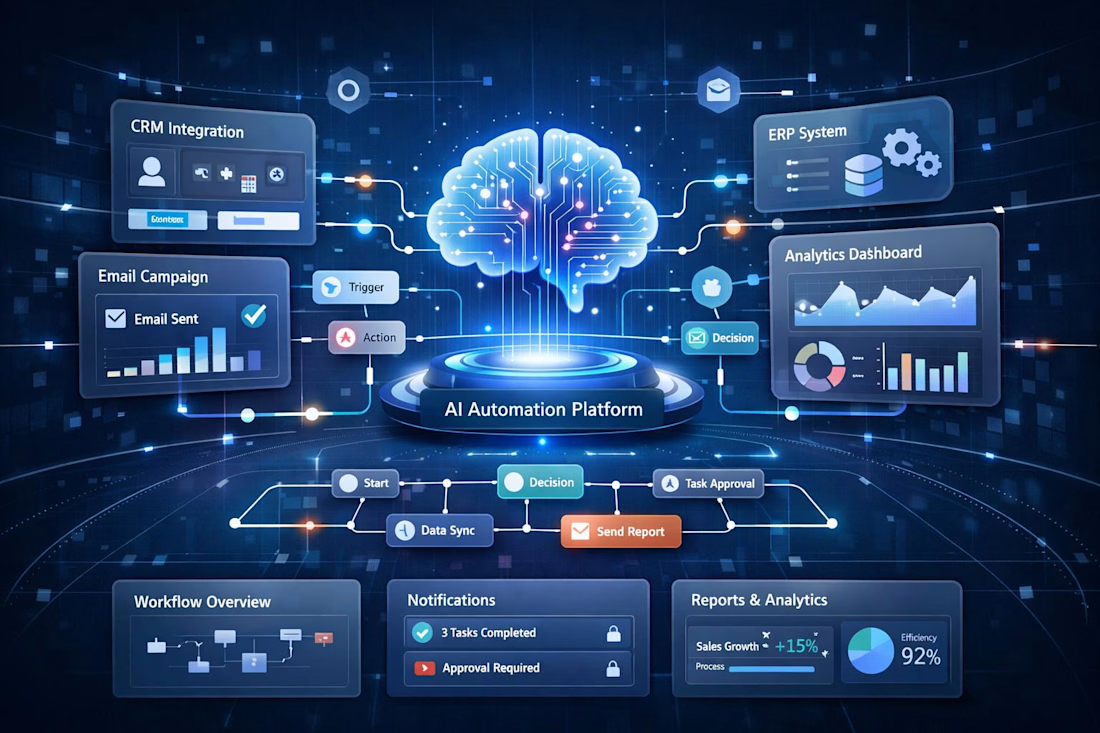
CRM & ERP Integrations — Connect business platforms, databases, and third-party services through APIs.
Workflow Automation — Eliminate repetitive processes with intelligent automation.
Custom Dashboards — Turn scattered business data into actionable insights.
Data Pipelines — Build reliable systems for collecting, processing, validating, and synchronizing data.
AI-Powered Solutions — Integrate LLMs, intelligent agents, and automation into existing workflows.
Custom Software — Build complete web applications and business platforms from architecture to deployment.
I've independently developed complex digital platforms, including government-level systems, international applications, and AI-powered products.
My approach is simple:
Understand the business problem. Design the right architecture. Build the complete solution. Make it reliable.
I'm interested in working with founders, agencies, and businesses looking to modernize their operations and build software that actually solves problems.
Have a complex workflow or an integration challenge? Let's build something that works.
#FullStackDevelopment #AIAutomation #CRMIntegration #WorkflowAutomation #SoftwareEngineering #AIEngineering #Contra

When a CRM-to-database sync fails halfway, how do you handle it: idempotent retries, or a reconciliation pass afterward? That's usually where integrations start to drift.