The network for creativity
Join 1.25M professional creatives like you
Connect with clients, get discovered, and run your business 100% commission-free
Creatives on Contra have earned over $150M and we are just getting started
Back to feedPost

TypeScript doesn't stop bugs. It just moves them earlier. For a long time I thought those were the same thing.
They're not.
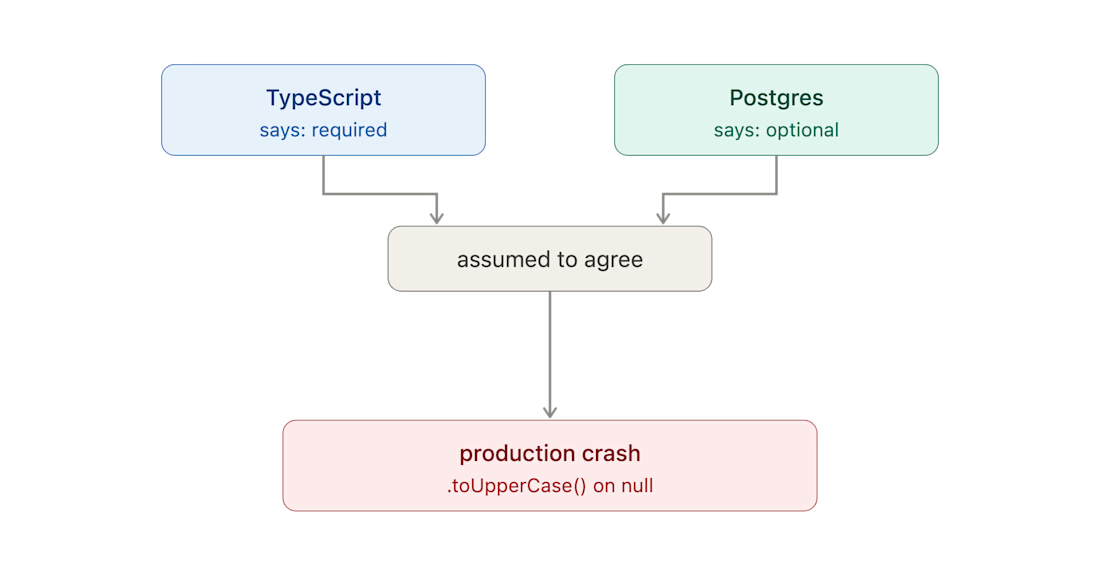
A few months ago I inherited a NestJS service with pretty good type coverage. DTOs everywhere, strict mode on, the works. It still shipped a bug where a field marked as required was actually optional in the database. TypeScript was happy. Postgres was happy. The two of them just didn't agree with each other, and nothing forced that disagreement into the open until a null value hit a .toUpperCase() call in production.
The types weren't wrong exactly. They were describing what I believed, not what was actually true. A type system is good at keeping you consistent with your own assumptions. It has no idea if those assumptions are right.
Here's what changed for me. I stopped treating a green TypeScript build as proof something was correct. Now I treat it as proof it's internally consistent, which is a smaller claim. I added a real check at the point where data comes in from the database, instead of trusting the type all the way through.
I still think TypeScript is worth using. I just don't think it does what a lot of us assume it does.
Where has type safety given you false confidence instead of real confidence?🙌


The network for creativity
Join 1.25M professional creatives like you
Connect with clients, get discovered, and run your business 100% commission-free
Creatives on Contra have earned over $150M and we are just getting started
Trending
retrofuturism
Share your favorite designs from the past exploring the distant future. Or your own take on the aesthetic 🚀
halftone
Dots. Texture. Grain. Let's see your designs using the halftone technique.

Midjourney
Creatives are showing off what they're making with Midjourney.
colorgrade
Video editors sound off: How do you enhance the mood of your video in color grading?





Related posts

This is available as a Next.Js Template. Inspired by Linear.
Working on Framer template
https://contra.com/products/NGTIEESW-qronos-aisaa-s-product-template

Qronos Next.js SaaS template

Nice one. keep it up

A social media and live streaming application designed for creators and businesses to share content and build real connections


Really polished concept; love how the creator, discovery, and live-streaming experiences come together so seamlessly.
An emerging real estate technology platform designed to simplify property investment


Property investment is a really good one to attack simply because the data is public but scattered across a dozen county sites that all format things differently. I've been pulling Maricopa County (Arizona) parcel data lately and every field needs its own cleanup. Where are you...