The network for creativity
Join 1.25M professional creatives like you
Connect with clients, get discovered, and run your business 100% commission-free
Creatives on Contra have earned over $150M and we are just getting started
Back to feedPost

Project Name: Orchestra — Multi-Agent Executive Pipeline
Stitch Project Link: https://stitch.withgoogle.com/preview/8222844279063574009?node-id=4ba40a1891934dde9f552168c57acfd2
🛠️ About the Project
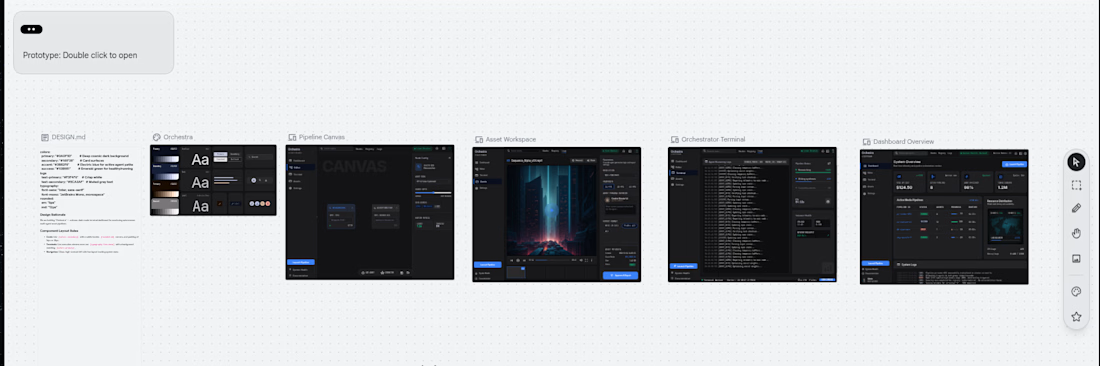
Orchestra is an AI-native workspace designed for monitoring and managing autonomous multi-agent media and digital asset pipelines. Built completely within Google Stitch using a strict, tokenized custom design specification (DESIGN.md), the interface establishes an unbroken 4-screen layout mapping out a continuous user journey:
System Dashboard: High-level metrics, asset health, and pipeline launch controls.
Pipeline Canvas: A highly functional visual node-editor interface layout mapping agent connections.
Orchestration Terminal: A split-screen, dark-mode terminal showing real-time monospaced reasoning logs and agent execution states side-by-side.
Asset Workspace: A validation layout with a media explorer preview panel on the left and parameter adjustment controls on the right.
💡 Platform Feedback & Insights
What Shined: Stitch's multi-screen continuous layout generation is an incredible accelerator. Being able to feed it a strict markdown design system and have it instantly map structural, spatially consistent layout grids across diverse UI screens drastically reduces the standard design-to-production friction.
Constructive Opportunities: For data-dense developer tools, having native algorithmic support for visual node-graphs directly in the text-to-UI layer would be highly beneficial. Additionally, fine-tuning the layout structures during raw frontend code exports for complex reactive states would make production-ready prototyping even more fluid.


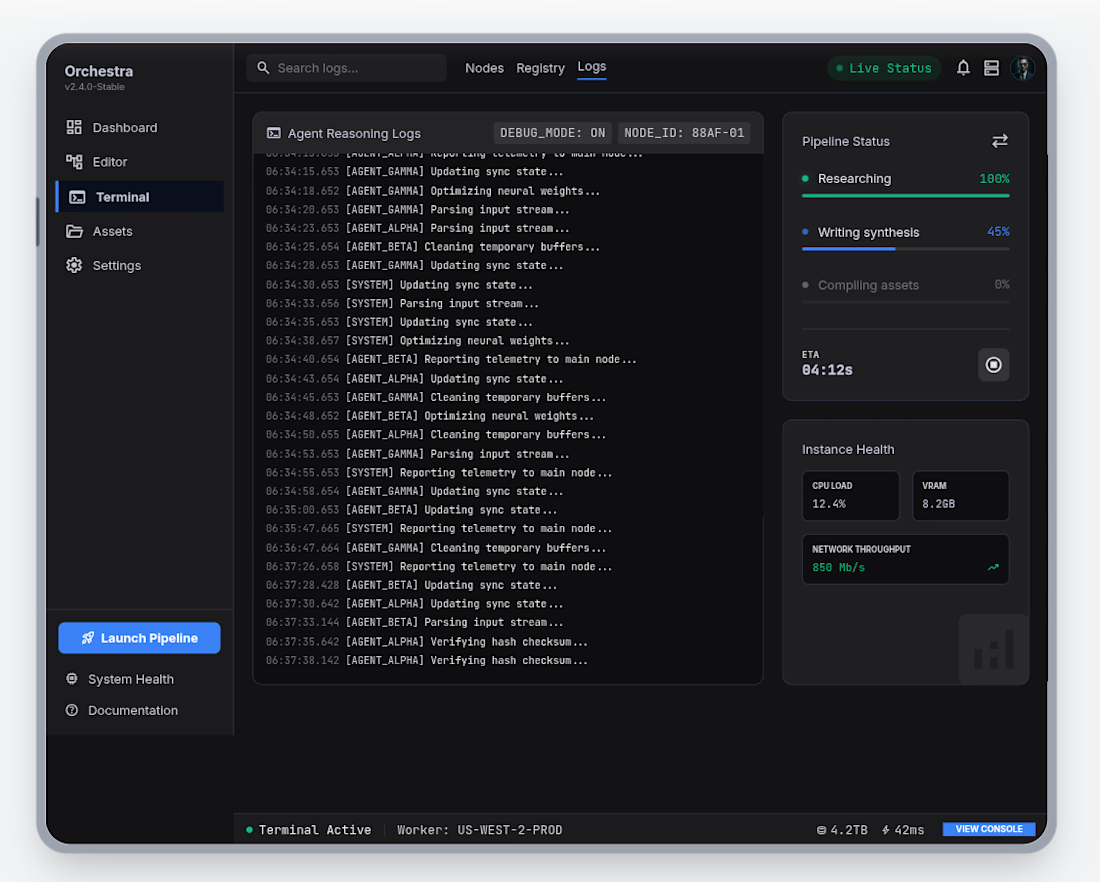

Really like the focus on multi-agent orchestration. The Pipeline Canvas and Orchestration Terminal sound especially useful for visualizing what autonomous systems are actually doing behind the scenes.
Here's my submission:
https://on.contra.com/pnfJBQ
Curious what you think about it.

on.contra.com
Introducing Voya: Revolutionize Your Travel Planning Experience
Connect with next-gen talent and tools to get work underway. Hire more independents. Start more projects. Get more creative.
The network for creativity
Join 1.25M professional creatives like you
Connect with clients, get discovered, and run your business 100% commission-free
Creatives on Contra have earned over $150M and we are just getting started






Related posts

Took a WebGL fabric physics simulation and pushed it to the absolute limit.
Built a complete visual concept for a Peptides brand around it. Pure interaction, zero boring static layouts. Let's go!


Pushing fabric physics that far for a peptides concept is a strong choice. The quiet editorial layout lets the motion carry the brand instead of competing with it.

Designed the website for Dovora — an agency that builds businesses for creators, not brand deals. "We don't represent brands, we don't split focus" is basically the whole pitch, and I wanted the site to feel just as uncompromising.
So no polished stock creator-economy visuals. The hero is a wall of real streamer/podcast footage arranged in overlapping diamonds and rounded frames — actual creators, mid-stream, mid-laugh — with a glowing gradient orb behind bold "WE BUILD CREATOR BUSINESSES" type. It reads more like a highlight reel than a landing page, which felt right for an audience that lives on camera.
The second section flips the energy completely — dark, minimal, almost aggressive typography ("BUILT EXCLUSIVELY FOR CREATORS. FULL STOP.") paired with huge chrome-and-neon 3D letterforms spelling out CREATORS. It's loud in a completely different way than the hero, and that contrast is intentional — this isn't a buttoned-up agency deck, it's built for people who make content for a living.
Genuinely fun brief to lean all the way into.


Imagine sending someone a link and saying, “This is my business.”
I made this 30-second film for Launch in Seven’s new Business Idea to First Launch service. It shows an illustrative plant-care idea becoming a clear offer, a mobile-friendly page, an inquiry path and outreach drafts.
The $1,500 fixed package includes one offer brief, one responsive landing page, one connected inquiry form, three outreach drafts and one consolidated revision. Domain and hosting costs are separate. Scope, inputs and delivery date are agreed before we start.
Explore the package or message me with your idea and who it helps:
https://contra.com/s/beq6QLOb-business-idea-to-first-launch-landing-page-and-inquiry-form
Original illustrative example, not a client commission or sales result. Custom motion, generated imagery, narration and original music.


Wonderful !