The network for creativity
Join 1.25M professional creatives like you
Connect with clients, get discovered, and run your business 100% commission-free
Creatives on Contra have earned over $150M and we are just getting started
Back to feedPost

🚀 I finally put my work and developer profile in one place.
Over the past few months, I've been building, testing, fixing, and deploying real web and mobile applications — and I wanted a place where I could showcase the work properly.
So I built my developer portfolio website. 💻
It brings together my projects, technologies, and experience across full-stack web development and React Native.
⚛️ React / Next.js
📱 React Native
🟢 Node.js / Express
🍃 MongoDB
🔐 Authentication & REST APIs
🎨 Tailwind CSS
🔗 API integrations
I also focused on making the site interactive, because I believe a portfolio shouldn't just tell you what I can build — it should let you experience the work.
Take a look: 👇
🌐 https://portfolio-psi-five-xozx6x9aiw.vercel.app/
I'm currently open to freelance and contract opportunities involving web applications, mobile apps, APIs, and full-stack development.
If you're building something and need a developer, I'd be happy to connect. 🚀
#FullStack #React #ReactNative #NodeJS #WebDevelopment #MobileDevelopment
portfolio-psi-five-xozx6x9aiw.vercel.app
Alex Emelue — Full-Stack Web & React Native Developer
Selected web, mobile, and backend products by Alex Emelue.
The network for creativity
Join 1.25M professional creatives like you
Connect with clients, get discovered, and run your business 100% commission-free
Creatives on Contra have earned over $150M and we are just getting started






Related posts

A full-stack RAG application that answers questions from a team's own documents, with every answer cited to the source document and page. I designed, built, tested and deployed it end to end:
document ingestion with content-based file validation;
semantic search with PostgreSQL + pgvector;
streaming answers over Server-Sent Events, with server-side citation verification;
multi-tenant workspaces with role-based access;
usage metering with quotas and a cost dashboard;
a crash-safe PostgreSQL job queue.
Deployed as a public demo on free tiers (Vercel, Render, Supabase) with hard caps on AI spend.
Citations verified against the retrieved passages; unsupported answers return "not found"
Tenant isolation in every query; Supabase Data API locked down (verified on production)
Durable ingestion queue (SKIP LOCKED, leases, retries): kill -9 under load lost nothing
Costs reserved before every AI call; per-user, per-workspace and deployment-wide caps
Data-driven model migration (5 configurations evaluated; about 74% cheaper per answer)
1,099 backend + 393 frontend tests; load-tested; encrypted, restore-verified backups
https://knowledgepilot-ai-olive.vercel.app/


The reservation before the AI call is the detail most teams miss: you can add cost metering later, but you cannot un-spend the money after a runaway loop. On the crash-safe queue, with SKIP LOCKED plus leases, what happens to a lease held by a worker that is alive but stuck, do...

Another project we done this summer!
✨ A redesign, new motion and an Astro rebuild took the site from broken on mobile to 100 Performance.


Nice work!!

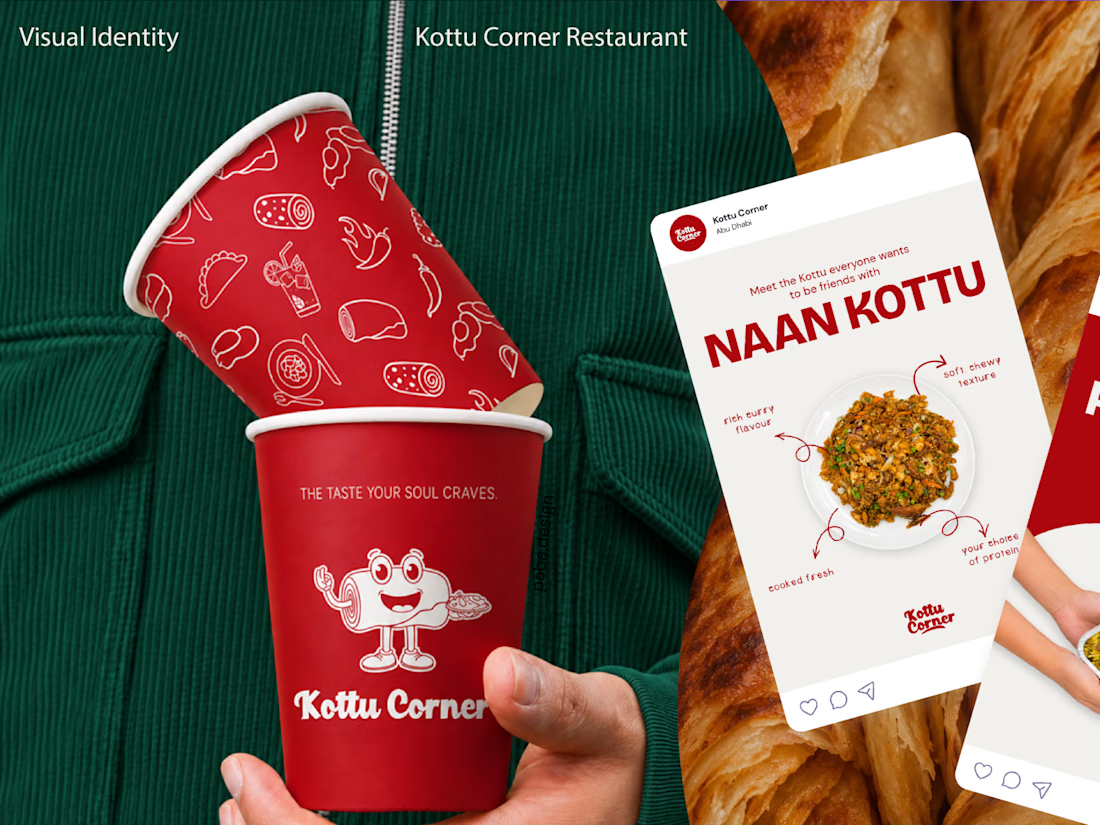
What if your business already has a logo, but nothing else that makes it recognizable as a brand?
That was the starting point for my recent branding project for Kottu Corner, a restaurant in the UAE.
They came to me with an existing logo, but without a complete visual identity to support it.
Redesigning the logo simply for the sake of change wouldn't have been a smart business decision. With the brand preparing for a major transformation, the existing logo was the one familiar element customers could still recognize. Changing it alongside everything else would risk losing that connection and making the brand feel unfamiliar to the very people who already knew and trusted it.
Instead, I focused on developing a cohesive brand identity around it, guided by the restaurant's audience, business goals, and plans for future franchise growth.
From brand strategy and visual direction to packaging, merchandise, and other brand touchpoints, the goal was to create an identity that feels recognizable, consistent, and true to the business.
Because sometimes, good branding isn't about changing what already exists. It's about building on it.
Explore the full case study! ❤️


Cool work!!