The network for creativity
Join 1.25M professional creatives like you
Connect with clients, get discovered, and run your business 100% commission-free
Creatives on Contra have earned over $150M and we are just getting started
Back to feedPost

StudioOS – Building an AI-First Operating System for Indie Studios
https://app.flowstep.ai/file?activeFileId=ed2e51f7-581a-460a-a020-92da04ca5590
StudioOS is an AI-powered operating system for game studios and solo founders. Instead of juggling documents, tasks, roadmaps, and AI tools, everything lives in one workspace powered by intelligent agents.
For this prototype, I used Flowstep AI to rapidly design the user experience while keeping the product documentation and implementation synchronized through MCP.
What I Built:
- AI-first dashboard
- Multi-agent workspace
- Project & roadmap management
- Team collaboration flows
- Settings and onboarding experience
My Process:
Rather than prompting Flowstep screen by screen, I connected it to my project through MCP using OpenCode.
Flowstep read my centralized project documentation (AGENTS.md and supporting docs), while OpenCode handled implementation and project context. This let me iterate much faster because both tools shared the same source of truth.
My workflow looked like this:
- Define product requirements in documentation.
- Use OpenCode + MCP to maintain project context.
- Ask Flowstep to generate and iterate on UI flows.
- Refine screens based on usability and product goals.
- Export the design back into the development workflow.
One interesting part is that OpenCode isn't listed in the current Flowstep MCP documentation, but it works well as a coding companion for this workflow.
Building StudioOS with Flowstep felt less like drawing screens and more like collaborating with a design teammate. The combination of Flowstep for UX and OpenCode through MCP for project context made rapid iteration surprisingly smooth.

Really like how you connected Flowstep and OpenCode around the same project docs. That shared context seems like it would make the whole design-to-build process much smoother. StudioOS also feels like a great fit for this kind of workflow. Good luck
The network for creativity
Join 1.25M professional creatives like you
Connect with clients, get discovered, and run your business 100% commission-free
Creatives on Contra have earned over $150M and we are just getting started







Related posts


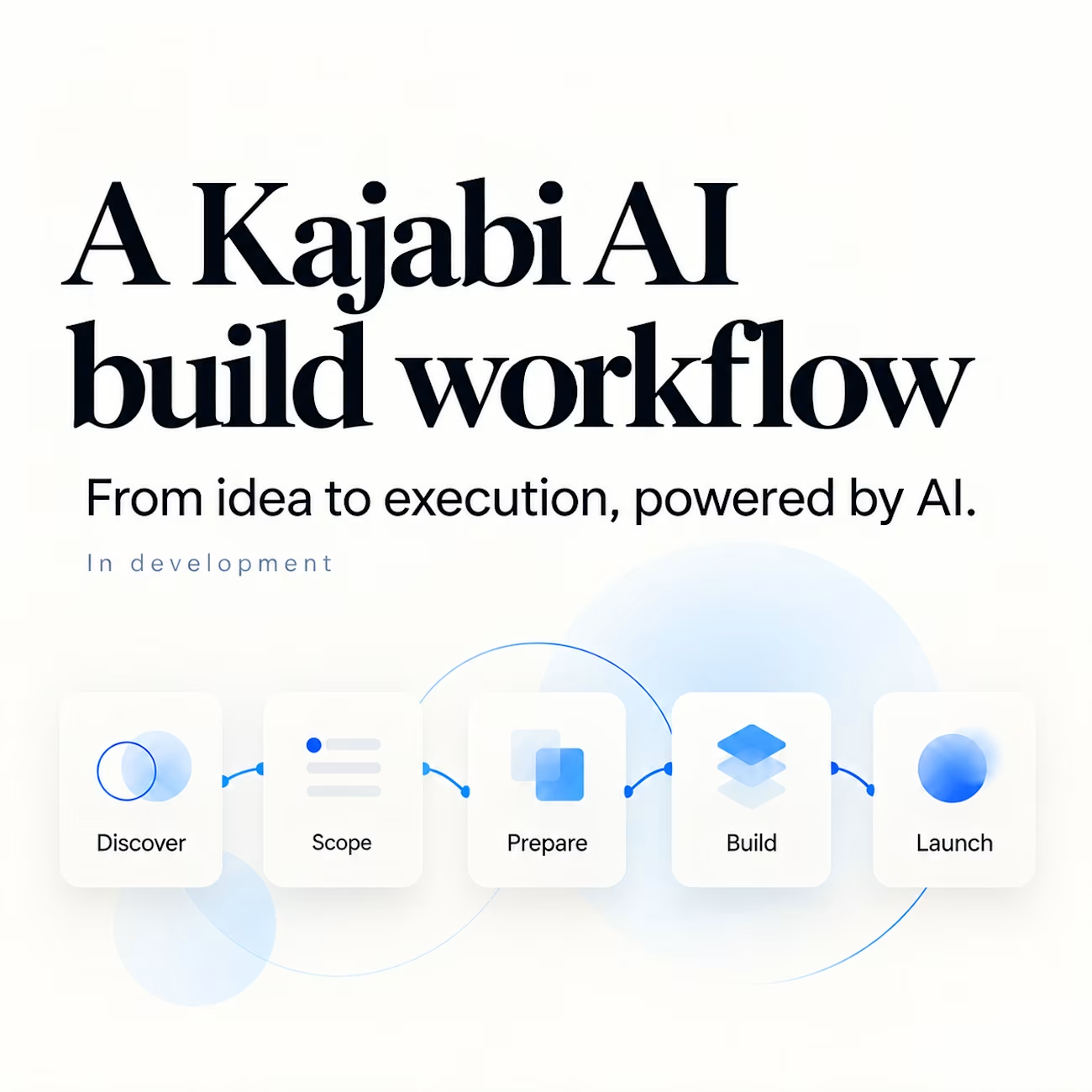
I’ve built an entire Kajabi business system, website and all, with AI in hours.
Now I’m turning that process into a workflow other people can use.
It brings together the steps, instructions, and checks that guide AI from your initial idea through the build and launch. You use your own AI tools, with a clear process to follow.
This is for anyone starting a business on Kajabi, improving an existing one, or building for clients.
I’ve already done the build. What I’m developing now is the way to put that process in your hands. I’ll be sharing more soon. Who wants first dibs on access?


I built an open-source skill that stops AI from making every design look the same
Every AI-generated website looks the same. Centered hero. Purple gradient. Three feature cards.
The reason isn't bad taste. AI agents fill gaps in a brief with the average of their training data. If you don't define what "not average" means for your project, you get the mean.
So I built Intent Interrogator, a free skill that works across Claude Code, Codex, Cursor, Copilot, and any agent that reads the Agent Skills standard.
It does three things:
Interrogates - asks 4 questions before writing any code:
→ What should someone feel in the first 3 seconds?
→ Who specifically is this for?
→ What's the one constraint I must respect?
→ What should this definitely not look like?
Persists - saves the brief to a .intent/ file inside your project. New chat, new week, new agent, the intent is still there.
Verifies - before declaring the work done, it compares what it built against what you asked for, and produces an Intent Receipt showing where it matched and where it drifted.
That last part is the piece I haven't seen anywhere else.
You don't need to code to use it. You just answer four questions.
Free forever. Feedback welcome.
#design #ai #opensource #productdesign
github.com
GitHub - yutivora/intent-interrogator
Contribute to yutivora/intent-interrogator development by creating an account on GitHub.

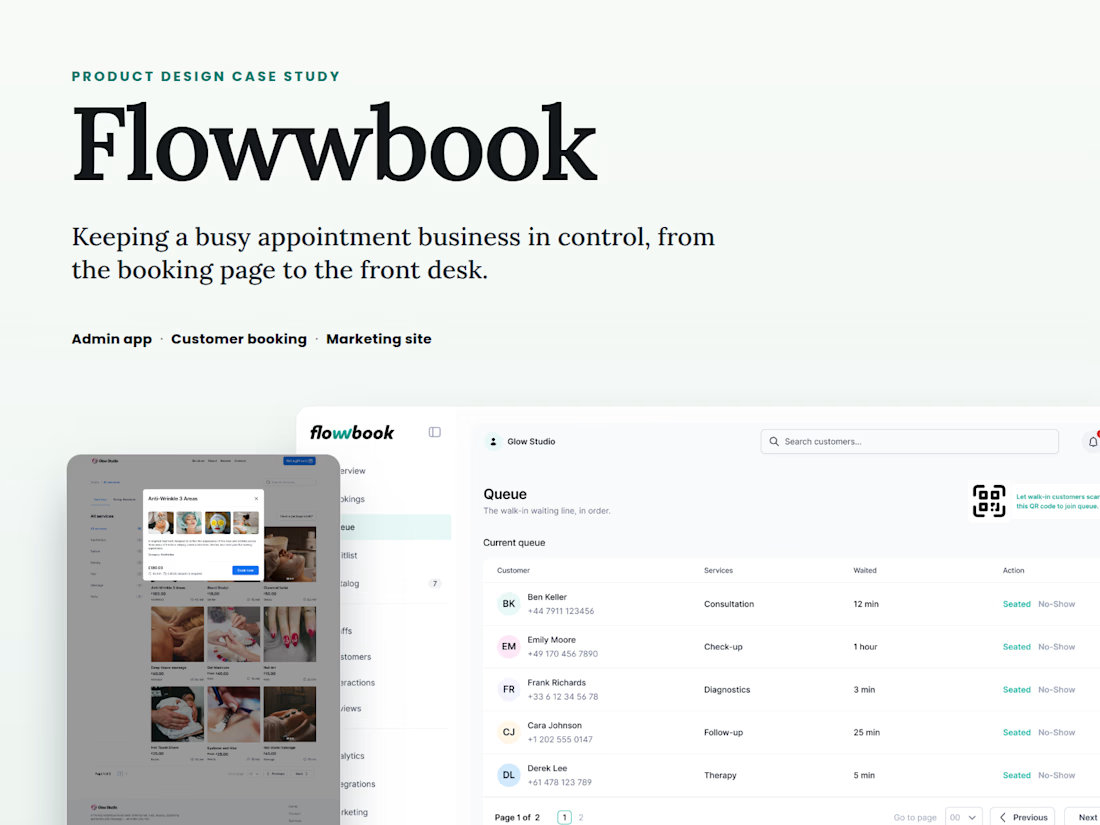
Flowwbook, a booking platform for salons, clinics and other appointment-based businesses.
I designed the admin app, the customer booking flow and the marketing site, from the dashboard to the walk-in queue to a confirmed booking.