The network for creativity
Join 1.25M professional creatives like you
Connect with clients, get discovered, and run your business 100% commission-free
Creatives on Contra have earned over $150M and we are just getting started
Back to feedPost

A multi-tenant AI orchestration platform that lets organizations deploy and manage AI agents at scale. It supports persona-based agents with defined roles and behaviors, webhook-driven triggers for automated actions, and single-prompt management of complex multi-step workflows. Built to run reliably on Kubernetes and Docker across multiple organizations.
Whats your thoughts on this?


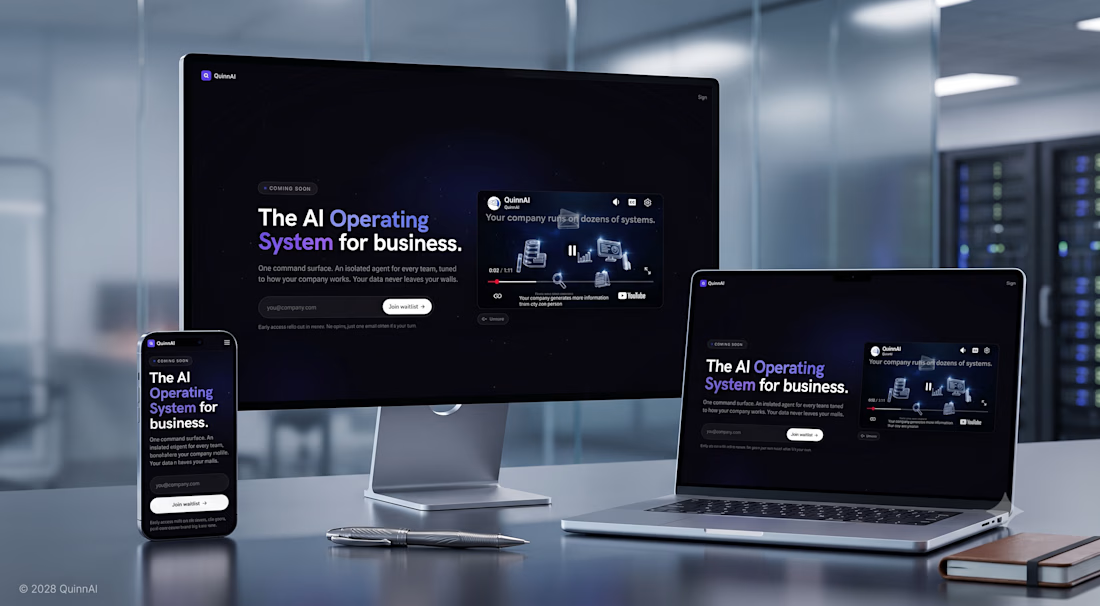

Very impressive architecture. Multi-tenancy, persona-based agents, and Kubernetes scalability make this a strong foundation for enterprise AI automation. 🚀
The network for creativity
Join 1.25M professional creatives like you
Connect with clients, get discovered, and run your business 100% commission-free
Creatives on Contra have earned over $150M and we are just getting started





Related posts

Pawline: booking built around the van, for mobile pet groomers
Pawline is a booking system for a small mobile pet grooming business: one van, two groomers, three Austin zones.
Most booking tools treat a mobile groomer like a salon. The real problem is logistics: travel fees by zone, visits with several pets that take different amounts of time, and one van that can't be double-booked.
What it does:
🐾 ZIP check with instant zone travel fees
🐾 Live pricing and visit length for up to 4 pets, including add-ons and setup time
🐾 Only shows time slots the van can actually fit, and respects the owner's blocked time
🐾 Private links so customers can reschedule or cancel without an account
🐾 Owner dashboard with a daily van timeline
🐾 Public demo mode with fictional bookings and hidden customer details
Built for real use: owner-only data access, leaked-password protection, and full end-to-end testing on desktop and mobile.
Try the owner demo: Owner → "Try the demo dashboard"
Live: https://pawline-grooming-app.lovable.app


Designing around travel zones instead of a salon schedule is the right call. The demo mode is a nice touch for people testing it.

Building AI agents is easy. Building one you can trust with a real business workflow is harder.
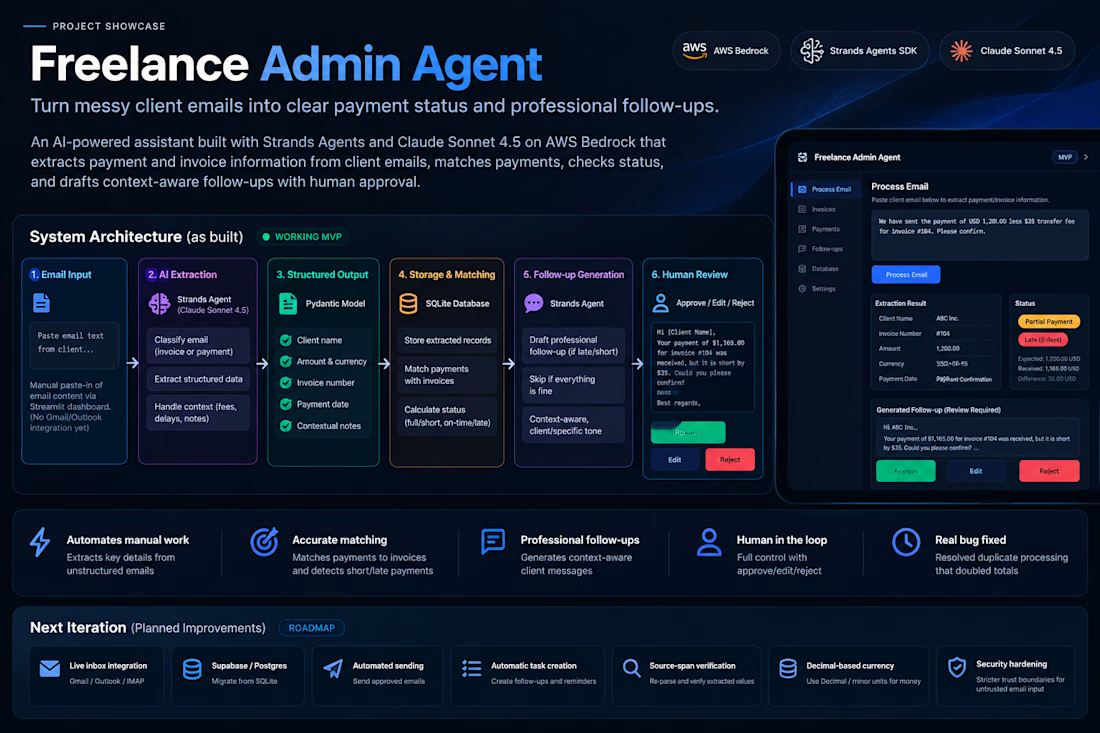
I built a Freelance Admin Agent to explore that problem using Strands Agents SDK and Claude Sonnet 4.5 on Amazon Bedrock.
The working MVP takes manually provided client emails and turns them into a structured payment workflow:
→ Classifies invoice and payment emails
→ Extracts client, invoice, amount, currency, dates and contextual details using structured output
→ Stores and matches records in SQLite
→ Uses deterministic logic to identify full/short and on-time/late payments
→ Uses a second agent to draft a contextual follow-up only when needed
→ Keeps the final decision with the human through Approve / Edit / Reject
One of the most valuable parts wasn't adding another AI feature. It was finding a real reliability issue during testing: reprocessing the same email could duplicate records and inflate payment totals.
I reproduced it through repeat testing, traced the database behavior, and fixed it.
That reinforced something I'm increasingly applying to my AI engineering work:
A useful AI product isn't just an LLM call. It needs clear boundaries between AI reasoning, structured data, deterministic business logic, persistence, testing, and human control.
The next iteration will focus on stronger production safeguards, including source-grounded financial extraction, precise currency handling, stricter trust boundaries for untrusted input, and eventually live inbox integrations.
I'm interested in building more systems like this for startups and teams with repetitive workflows that can genuinely benefit from AI agents and automation.
Stack: Python · Strands Agents SDK · Amazon Bedrock · Claude Sonnet 4.5 · Pydantic · SQLite · Streamlit

turning client emails into admin tasks is such a real freelancer pain, nice build 🔥

HavenWell Coaching Studio
Lagos, Nigeria | Wellness & Life Coaching
HavenWell Coaching Studio is a fictional one-on-one coaching practice that was struggling with the manual work involved in managing appointment inquiries.
The solution is an end-to-end booking experience that allows clients to discover services, check availability, select a time, and confirm appointments without unnecessary back-and-forth.
For the coach, the system centralizes appointments, inquiries, clients, availability, and follow-up workflows, reducing the repetitive administrative work involved in managing bookings.
The core idea:
Turn “Can I book?” into “You’re booked.”
Kindly view the website link:
https://pixel-perfect-showcase-0295.lovable.app/


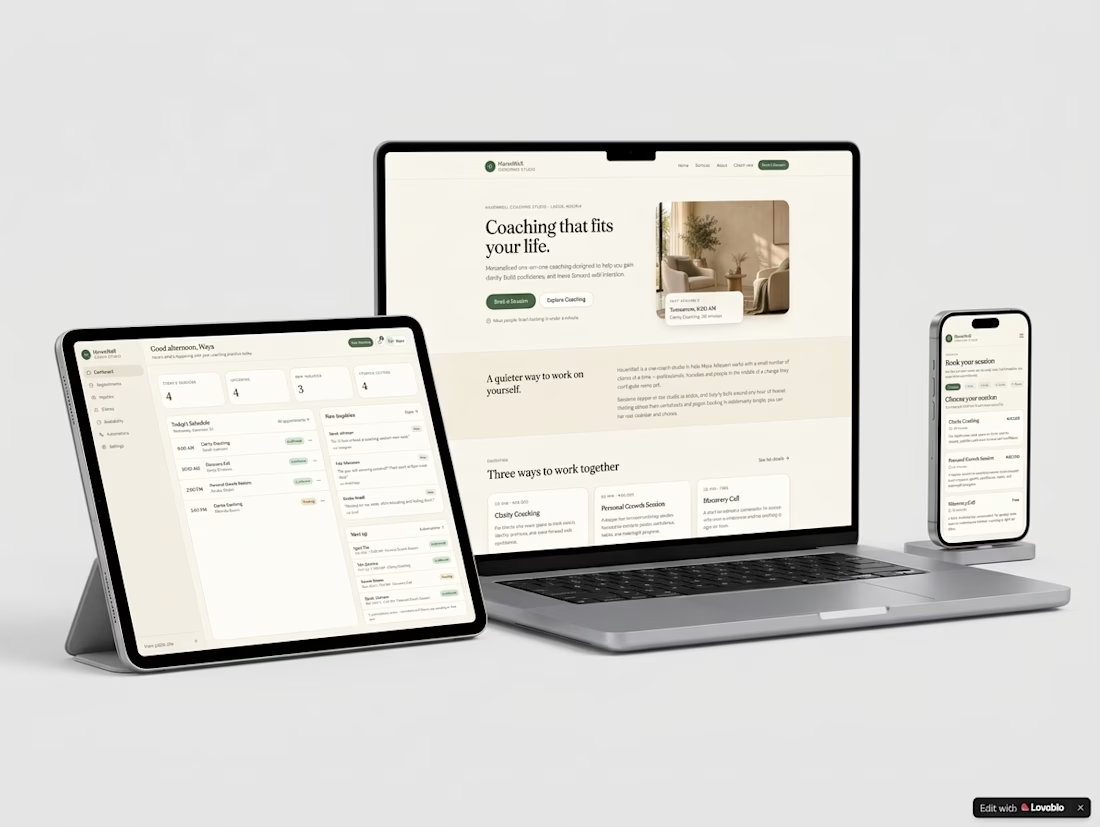

Strong use of spacing and typography. The layout feels intentional without being overworked.