The network for creativity
Join 1.25M professional creatives like you
Connect with clients, get discovered, and run your business 100% commission-free
Creatives on Contra have earned over $150M and we are just getting started
Back to feedPost

I joined Codegeist 2025: Atlassian Williams Racing Edition and, with Najb, Oussama & Reda, built Pitwallz — an F1-inspired Digital Twin for Jira that predicts sprint risks, auto-balances workloads, and gives teams a real-time AI Sprint Coach.
🛠 Stack & Highlights: Forge, Node.js, React, Jira REST API, Rovo AI, predictive scoring, auto-optimization, Digital Twin simulation.
💥 Built under pressure: short timeline, full-time jobs, different time zones — and we shipped bold, smart, energy-first engineering.
The network for creativity
Join 1.25M professional creatives like you
Connect with clients, get discovered, and run your business 100% commission-free
Creatives on Contra have earned over $150M and we are just getting started





Related posts


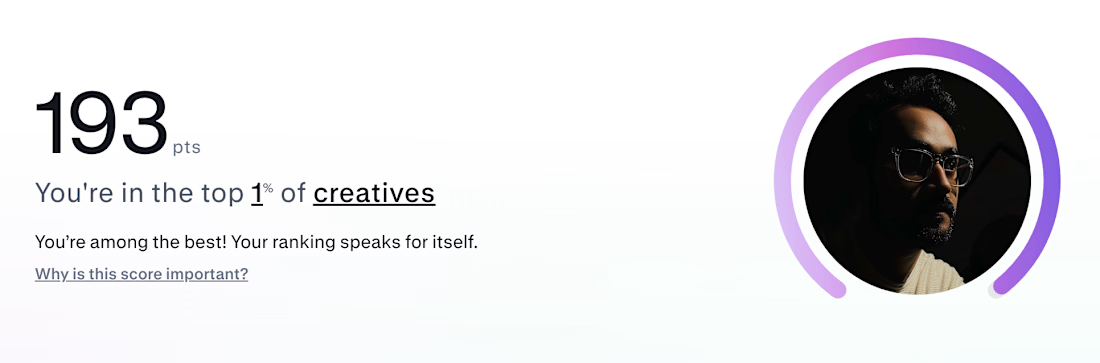
When I started freelancing, I never imagined reaching milestones like this. There have been challenges, long nights, and plenty of lessons along the way.
Seeing that consistent effort pay off feels rewarding.
A big thank you to all my clients who trusted me with their ideas and everyone who has supported me along the way.
Still a long way to go, but today, I'm taking a moment to appreciate how far I've come. ❤️
What's a recent milestone that made you feel proud?



congrats on the milestone, consistency really does pay off 🔥

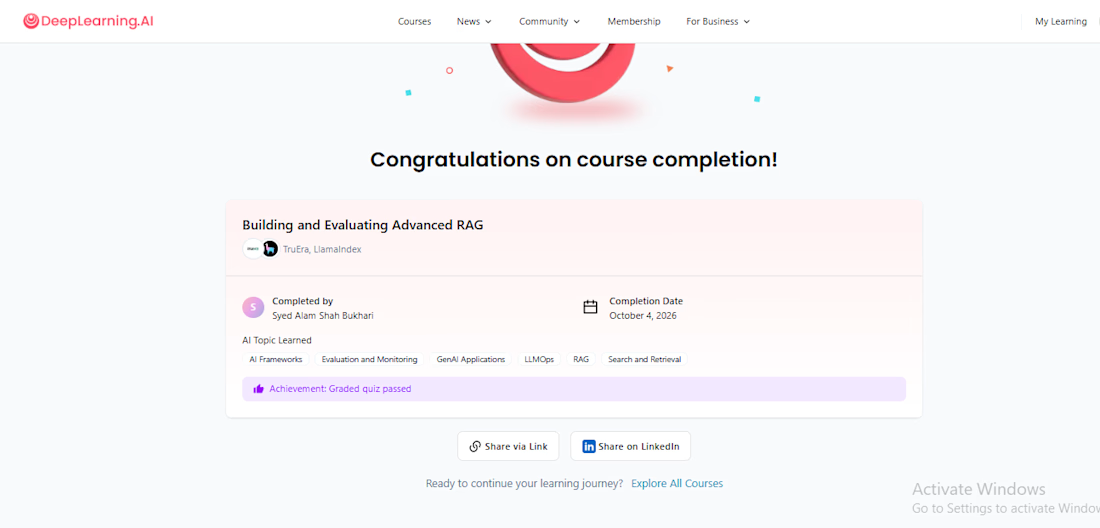
Completed "Building and Evaluating Advanced RAG" by DeepLearning.AI (TruEra, LlamaIndex).
The most useful part wasn't building another RAG pipeline, it was learning how to actually evaluate one. The RAG Triad (answer relevance, context relevance, groundedness) gives you a way to catch exactly where a system is failing: bad retrieval vs. the model making things up vs. just answering the wrong question.
Also went through sentence-window and auto-merging retrieval, two ways to fix the classic RAG trade-off between precise matching and having enough context to actually answer well.
Applying this directly to a RAG tool I'm building for equity research. Evaluation is the part of RAG most people skip, and it's exactly where things quietly break in production.
https://www.deeplearning.ai/accomplishments/491d7a76-f89d-4e13-9d6b-3377fced78a2?accomplishmentId=491d7a76-f89d-4e13-9d6b-3377fced78a2&usp=sharing
evaluating RAG is the part nobody talks about, the triad is super handy

Open to New Projects 🚀
I’m a Full-Stack Developer open to working directly with clients on web, mobile, and AI-powered projects. I have experience with Generative AI, LLMs, RAG, Agentic AI, OpenAI, AWS Bedrock, React, Node.js, and TypeScript. Looking forward to building great products with new clients!