The network for creativity
Join 1.25M professional creatives like you
Connect with clients, get discovered, and run your business 100% commission-free
Creatives on Contra have earned over $150M and we are just getting started
Back to feedPost

I’m skeptical about MaxEarning because some offer seems unclear and it’s hard to know if the earnings are realistic or reliable
The network for creativity
Join 1.25M professional creatives like you
Connect with clients, get discovered, and run your business 100% commission-free
Creatives on Contra have earned over $150M and we are just getting started

Challenges
View all


Related posts

Title:
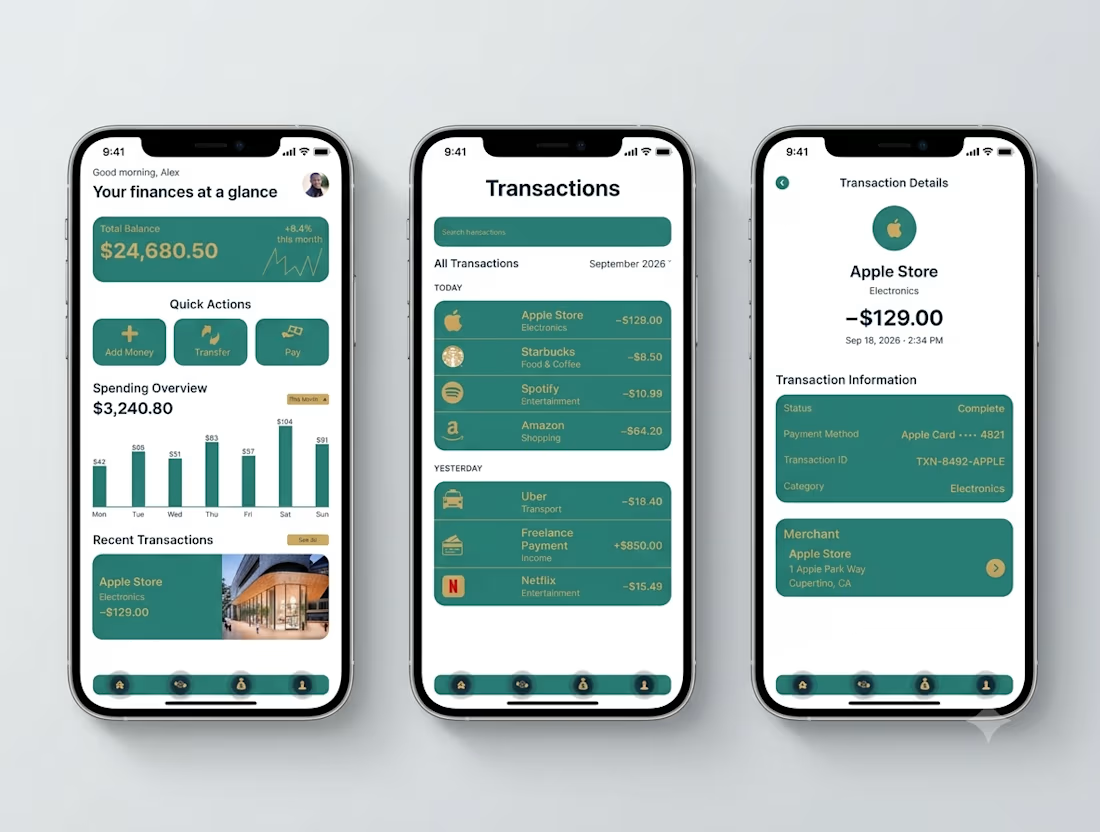
VAULT — Personal Finance & Wallet iOS UI
VAULT is a modern personal finance & wallet app designed for iOS, focused on making everyday money management simple, clear, and intuitive.
The complete UI includes:
• Overview / Home
• Transactions
• Transaction Details
• Budgets
• Analytics
• Profile & Settings
Designed in Figma with an iOS-first approach, clean layouts, clear financial data visualization, and a consistent mobile experience.
📱 iOS UI Design
🎨 Figma
💰 Personal Finance App



Gusto drew a pig mascot. Rippling can't copy it.
Three payroll companies, all past a billion in revenue. Two valued around $17B. Gusto at $9.3B. The smallest one just made the sharpest brand move of the year, and the reason is structural, not aesthetic.
Rippling's headline says "AI that works across your entire business." Their buyer sits in IT procurement. A pig next to that sentence reads as a toy. Deel's logo wall with DoorDash and LinkedIn can't carry a cartoon either. Gusto's rivals literally cannot follow this move without contradicting their own homepage.
That's the position worth paying for. The one your best-funded competitor can't take without breaking their own claim.
I broke down the full Gusto/Rippling/Deel comparison plus a counter-example from CodeAI in this week's BRIGHT Method. Worth reading if you're heading into a raise or launch and debating how loud the brand work should be.


Shopify Analytics will happily tell you revenue and ROAS. It will not tell you if you actually made money after COGS, fees, shipping, returns, and ad spend.
That gap is why I built True Profit Analytics under Reiwa Dev.
You set COGS and costs, import ad spend via CSV, then get a Founder view (P&L waterfall, CM1 to CM2 to net) and an Ads Manager view (POAS and campaign spend). Action cards flag the leaks. You can annotate Shopify Analytics events and export CSV when you need to show someone else the numbers.
Lift adds MCP so Claude, ChatGPT, Cursor, and similar tools can query those Founder and Ads dashboards instead of you screenshotting charts into a chat.
I built it because too many Shopify brands I work with celebrate ROAS while the bank account disagrees. If you only look at top-line vanity metrics, you optimise the wrong thing.
Starts at $12.49/month with a trial. If you run paid ads on Shopify and still argue with your own profit numbers, try it and tell me what is missing.

apps.shopify.com
RWA: True Profit Analytics - True profit after COGS, fees & ads - not vanity... | Shopify App Store
Track true net profit and contribution margin after COGS, fees, and ads. Founder & Ads dashboards, CSV exports, and Lift MCP for AI.