The network for creativity
Join 1.25M professional creatives like you
Connect with clients, get discovered, and run your business 100% commission-free
Creatives on Contra have earned over $150M and we are just getting started
Back to feedPost

🏆 YouthSpike Tournament Management Platform
Live: https://aslsquads.com
This is the largest and most technically challenging project I've built to date.
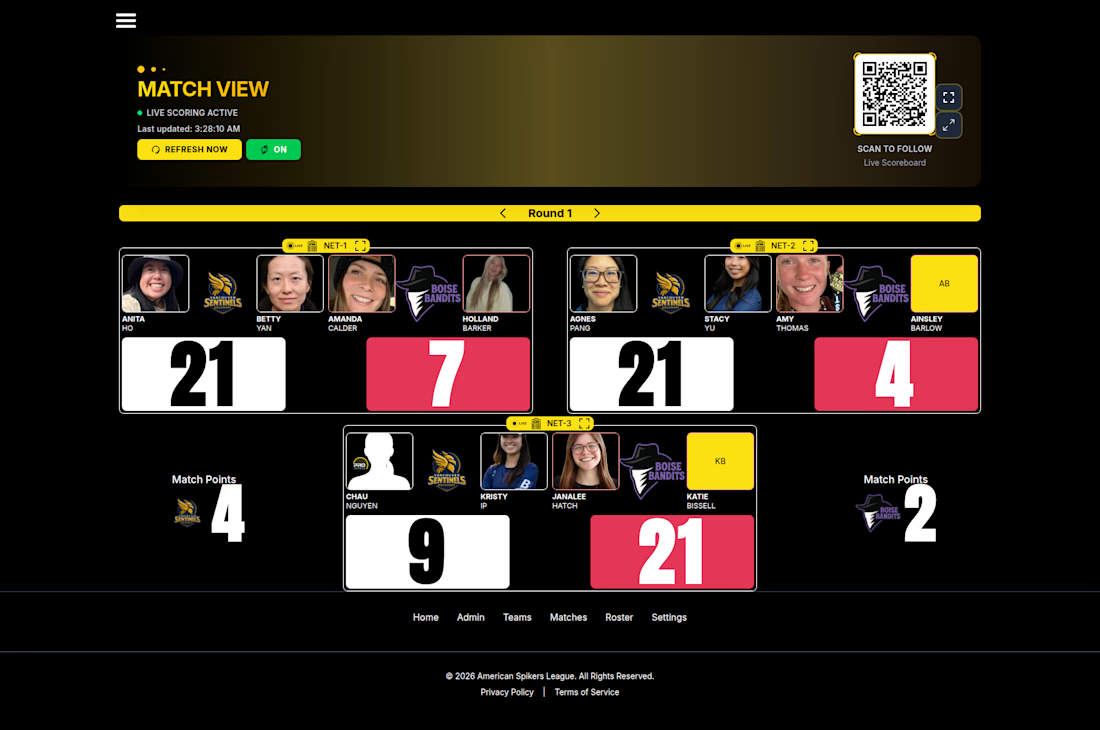
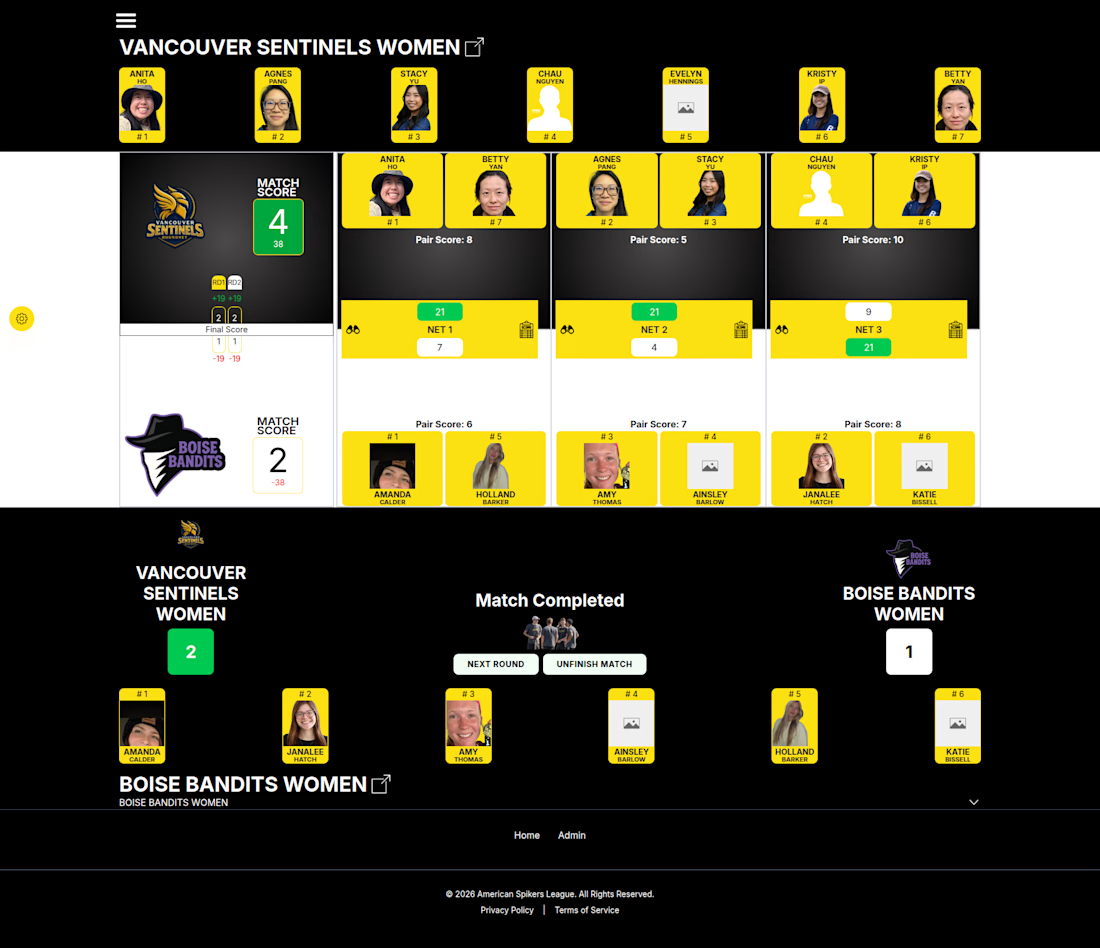
I designed and developed a full-scale tournament management platform capable of handling large spikeball tournaments with real-time scoring, live standings, team management, player rankings, public event tracking, and many more.
Unlike a typical CRUD application, this project required solving complex engineering challenges around performance, scalability, real-time synchronization, deployment, and infrastructure.
What I built
⚡ Three production applications
Admin Dashboard
Public Tournament Website
GraphQL Backend API
👥 Multiple user roles
Admins
Directors
Team Captains
Public Spectators
🏅 Complete tournament workflow
Event management
Team & player management
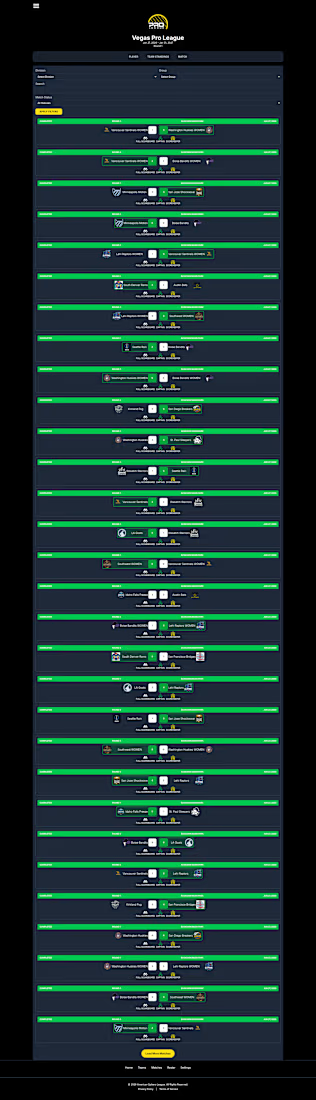
Match scheduling
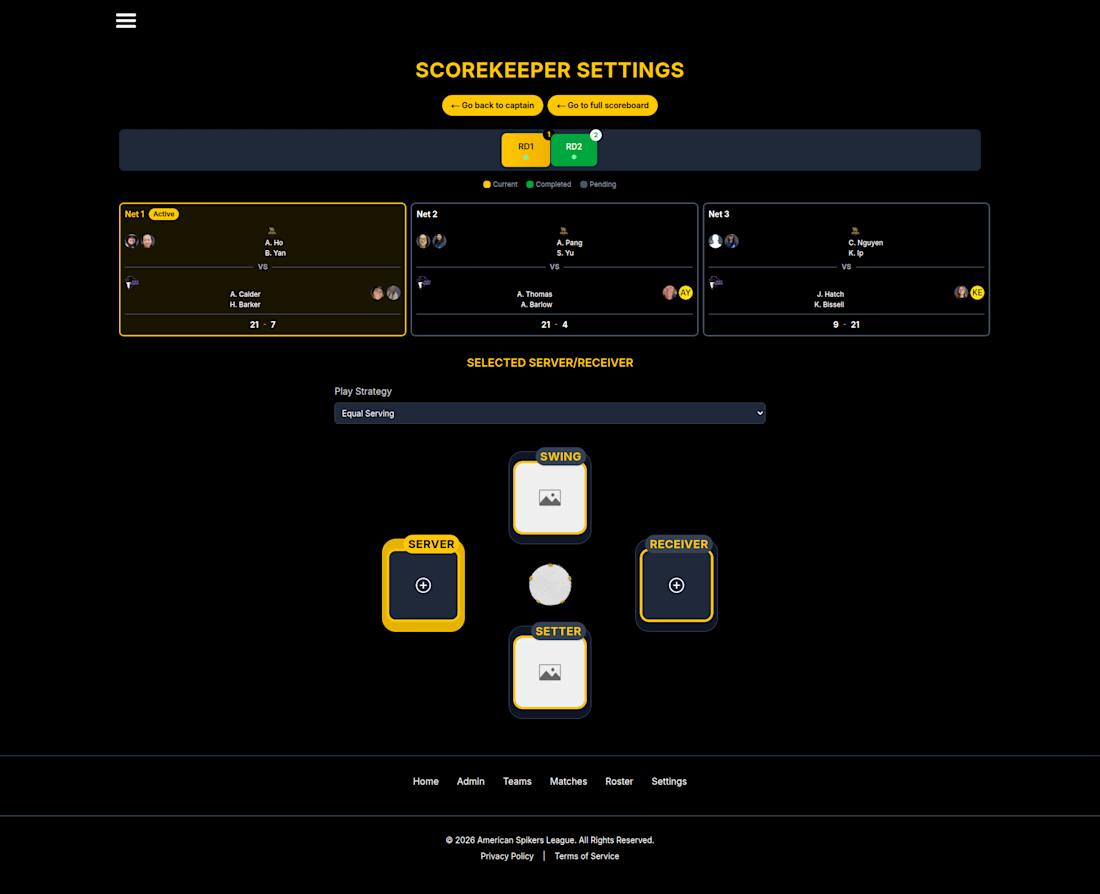
Live scoring
Custom ranking algorithms
Tiebreakers & overtime logic
Live standings
Performance & Scalability
Tournament traffic is highly unpredictable—thousands of users can join as soon as an event starts.
To ensure the platform remained responsive under heavy load, I implemented:
Redis caching
WebSocket-based real-time updates
GraphQL optimizations
MongoDB query optimization
Efficient data structures and algorithms
Pagination and lazy loading
Server-side performance tuning
The result is a system that remains fast even while processing large amounts of tournament data and concurrent user activity.
Infrastructure & DevOps
I handled the entire production infrastructure myself, including:
Docker containerization
VPS provisioning
Nginx reverse proxy configuration
DigitalOcean deployment
SSL configuration
CI/CD deployment workflows
Server monitoring and optimization
The project was initially deployed on AWS, but after evaluating operational costs and maintenance, I migrated the entire infrastructure to DigitalOcean for a more efficient and cost-effective architecture.
Tech Stack
Next.js (Admin & Public Frontends)
NestJS
GraphQL
MongoDB
Redis
WebSockets (Socket.IO)
Docker
Nginx
DigitalOcean
GitHub Actions
Why this project stands out
This wasn't just about building features—it was about engineering a platform that could reliably support real-world tournaments with sudden traffic spikes and complex business rules.
From designing the system architecture to implementing custom tournament algorithms, optimizing database performance, managing servers, and deploying production infrastructure, I was responsible for the project end-to-end.
It remains the most sophisticated and rewarding software system I've developed, combining full-stack development, backend architecture, DevOps, scalability, and performance engineering into a single production-ready application.


The network for creativity
Join 1.25M professional creatives like you
Connect with clients, get discovered, and run your business 100% commission-free
Creatives on Contra have earned over $150M and we are just getting started








Related posts

Steer an endless night-flight over a procedural city. NOCTURNE is a night-flight airline for insomniacs. An infinite procedural city passes beneath the wing. Steer with your mouse. Built by Samin Sami.
I built this project to test Steer an endless night-flight over a procedural city. NOCTURNE is a night-flight airline for insomniacs. An infinite procedural city passes beneath the wing. Steer with your mouse. Built by Samin Sami. The core engineering challenge was sustaining uncompromised 60 FPS rendering using Three.js (GLB 3D) while handling continuous user interaction without framework overhead.
WHAT I WAS TESTING:
I focused on two core engineering benchmarks:
Precision implementation of infinite world under continuous interactive user input
Sustained 60 FPS render performance and zero-dependency browser execution
THE TECHNICAL SIDE:
Engineered directly in the browser with Three.js (GLB 3D), Canvas2D, Infinite world. The application runs without third-party frameworks or build-step dependencies, using hardware-accelerated rendering and custom event loops to achieve zero-latency response.
Everything executes in the browser using Three.js (GLB 3D), Canvas2D, Infinite world. No third-party frameworks, no heavy runtime bundles, and zero external tracking.
WHAT I LEARNED:
Balancing the mathematical rigors of infinite world with tactile browser interaction required tuning event throttling and memory allocation to eliminate all garbage collection stutters.
Finding the sweet spot between mathematical precision and frame budget took careful profiling, but the result runs at a steady 60 FPS even on modest hardware.
TRY IT YOURSELF:
The live build is deployed on Netlify. Open it in your browser, test the controls, and observe the render response times.
If you are building high-performance 3D, physics, or creative web systems and want to collaborate, reach out here on Contra.


Anyone wants to see the source code can check it out in my JSFiddle: https://jsfiddle.net/Saminsami/n97a8xw1/1
jsfiddle.net
Nocturne - Samin Sami
Nocturne - Samin Sami - a HTML example you can edit and run in your browser on JSFiddle.
Colours that refuse to mix, combed on water in a stone trough. The Mordant Vault guards colours that refuse to blend. Float them on water. Comb them. Never, under any circumstance, stir.
I built this project to test Colours that refuse to mix, combed on water in a stone trough. The Mordant Vault guards colours that refuse to blend. Float them on water. Comb them. Never, under any circumstance, stir. The core engineering challenge was sustaining uncompromised 60 FPS rendering using WebGL / GLSL Shaders while handling continuous user interaction without framework overhead.
WHAT I WAS TESTING:
I focused on two core engineering benchmarks:
Precision implementation of shader marbling under continuous interactive user input
Sustained 60 FPS render performance and zero-dependency browser execution
THE TECHNICAL SIDE:
Engineered directly in the browser with WebGL / GLSL Shaders, Canvas2D, Shader marbling. The application runs without third-party frameworks or build-step dependencies, using hardware-accelerated rendering and custom event loops to achieve zero-latency response.
Everything executes in the browser using WebGL / GLSL Shaders, Canvas2D, Shader marbling. No third-party frameworks, no heavy runtime bundles, and zero external tracking.
WHAT I LEARNED:
Balancing the mathematical rigors of shader marbling with tactile browser interaction required tuning event throttling and memory allocation to eliminate all garbage collection stutters.
Finding the sweet spot between mathematical precision and frame budget took careful profiling, but the result runs at a steady 60 FPS even on modest hardware.
TRY IT YOURSELF:
The live build is deployed on Netlify. Open it in your browser, test the controls, and observe the render response times.
If you are building high-performance 3D, physics, or creative web systems and want to collaborate, reach out here on Contra.


Anyone who wants the source code can check this in my JSFiddle : https://jsfiddle.net/Saminsami/ezy9k74t/4
jsfiddle.net
Mordant - Samin Sami
Mordant - Samin Sami - a HTML example you can edit and run in your browser on JSFiddle.


A few pieces of the website we recently created for Kodilion. Com check the complete website at https://kodilion.hr/


