The network for creativity
Join 1.25M professional creatives like you
Connect with clients, get discovered, and run your business 100% commission-free
Creatives on Contra have earned over $150M and we are just getting started
Back to feedPost

New collaboration with Axel Dos Santos
Axel Dos Santos is a French cinematographer and colorist based in Paris. I worked with him to create a small portfolio that showcases the breadth of his work and helps him connect with future collaborators in the cinematographic industry.
Creative director & Web development: Donaël WALTER
Stack used:
Sanity
Astro, React, Tailwind
The network for creativity
Join 1.25M professional creatives like you
Connect with clients, get discovered, and run your business 100% commission-free
Creatives on Contra have earned over $150M and we are just getting started



Related posts


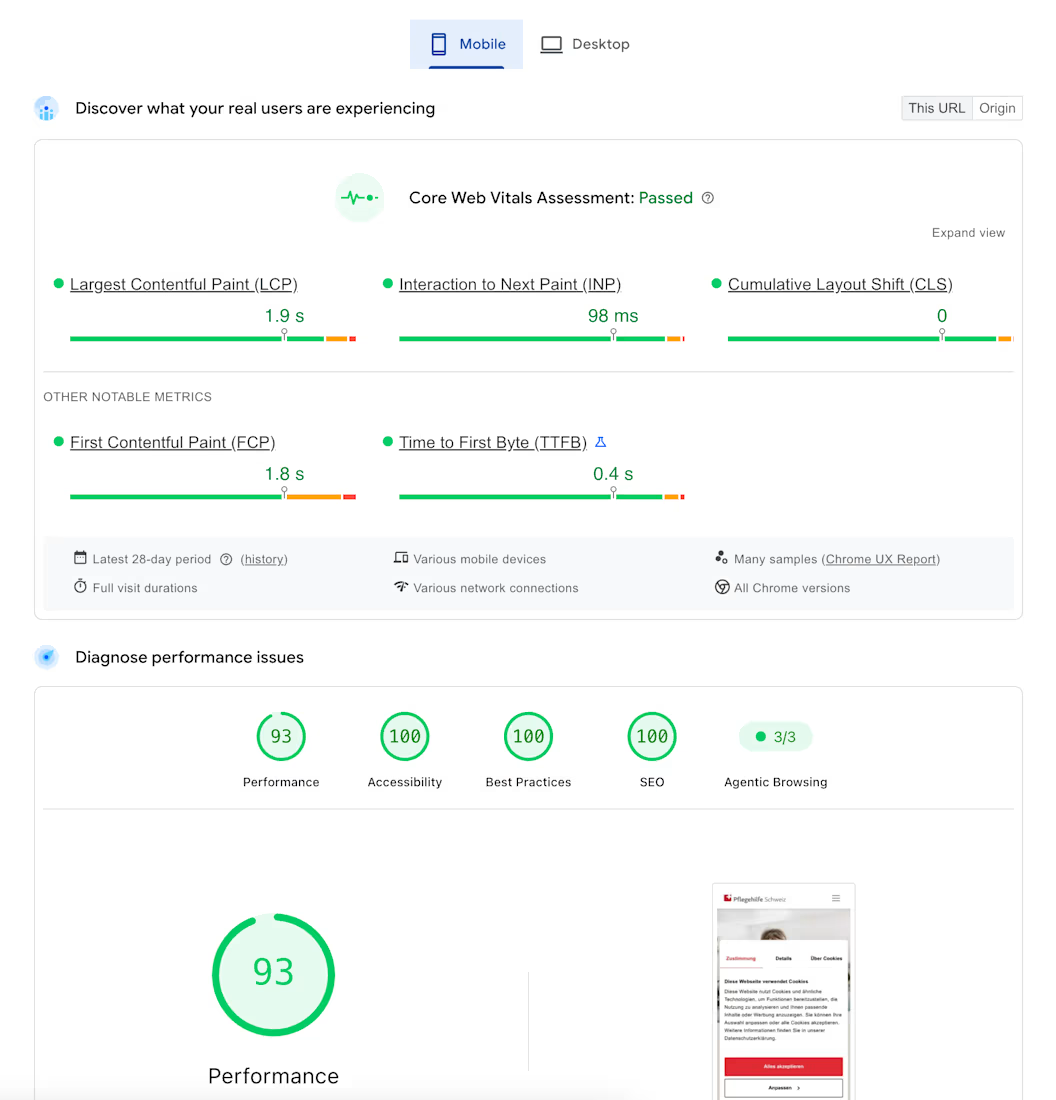

LCP at 1.9s and CLS at 0 on a mobile Webflow build proves the point better than any argument. What gave you the biggest speed win, image sizes or trimming scripts?

I've been seeing a lot of designers moving from Framer to Astro, posting their new Lighthouse scores, and calling Framer the problem.
I think we're missing a bigger conversation here.
Astro is fast. No argument there. It ships static HTML with very little JavaScript by default, and having full control over your code is a real advantage.
But how many designers actually understand what's making their websites slow?
Do you know what LCP, INP, and CLS measure?
Are you checking image sizes and formats? Video compression? Font loading? Third-party scripts? The JavaScript behind your interactive components?
What about those scroll animations, huge blur effects, and background videos running on mobile?
Framer has made something incredible possible: designers can now build, host, and publish complete websites without depending on a developer.
But that freedom doesn't mean web fundamentals suddenly stop mattering.
And I'm not saying Framer is perfect. Its runtime has overhead, and Astro gives developers a level of control that Framer simply doesn't.
I'm a web engineer who builds with Framer, and I think both tools have their place.
What I find strange is seeing people treat a higher Lighthouse score after a complete rebuild as proof that the previous platform was the entire problem.
Sometimes it's the tool. Sometimes it's how you built the website. Often it's both.
Before switching stacks, understand what you're actually trying to fix.



Agree, Jalal. Most Lighthouse drops I see on Framer sites come from oversized images, heavy embeds and too many font weights rather than the platform itself.


I built my first website to show off my graphic design and video editing. Over two years later, I'm still building them. 🎬
For about four years before that, design and editing were just hobbies. I wanted somewhere to put the work, so I designed a portfolio site. That was the start of the web design journey.
Since then the stack has moved. Design in Figma, build in Framer and Wix Studio. WordPress when a project needed it. Most recently, Wix Headless with Astro, built with AI.
Here's what I'd say has shifted, from where I sit:
Templates got good. A decent-looking site stopped being the hard part.
AI got good enough to build a whole site. I've done it myself.
What didn't get faster is knowing what a site should say, who it's for, and what the first screen needs to do. Every tool makes the building quicker. None of them make that part quicker.
If I could tell myself one thing at the start: always experiment and learn. Every tool above started as something I hadn't used before.
The reel is what's come out of it so far.
What's the biggest shift you've seen in how websites get built? 👇

