The network for creativity
Join 1.25M professional creatives like you
Connect with clients, get discovered, and run your business 100% commission-free
Creatives on Contra have earned over $150M and we are just getting started
Back to feedPost

📨 Is Your Business Email Protected?
Many businesses assume their email is secure because it's hosted on Google Workspace or Microsoft 365. In reality, your domain still needs proper authentication to protect against spoofing, phishing, and poor email deliverability.
Here are three essentials every business should have:
✅ SPF – Authorizes trusted mail servers to send emails on behalf of your domain.
✅ DKIM – Digitally signs outgoing emails to verify they haven't been altered.
✅ DMARC – Tells receiving mail servers how to handle unauthenticated emails while providing valuable reporting.
These three records not only strengthen your email security but also improve the chances of your emails reaching the inbox instead of the spam folder.
A properly configured email system is one of the simplest ways to improve trust, security, and communication with your customers.
#GoogleWorkspace #Microsoft365 #EmailSecurity #SPF #DKIM #DMARC #DNS #EmailDeliverability #BusinessIT #CyberSecurity


The network for creativity
Join 1.25M professional creatives like you
Connect with clients, get discovered, and run your business 100% commission-free
Creatives on Contra have earned over $150M and we are just getting started





Related posts

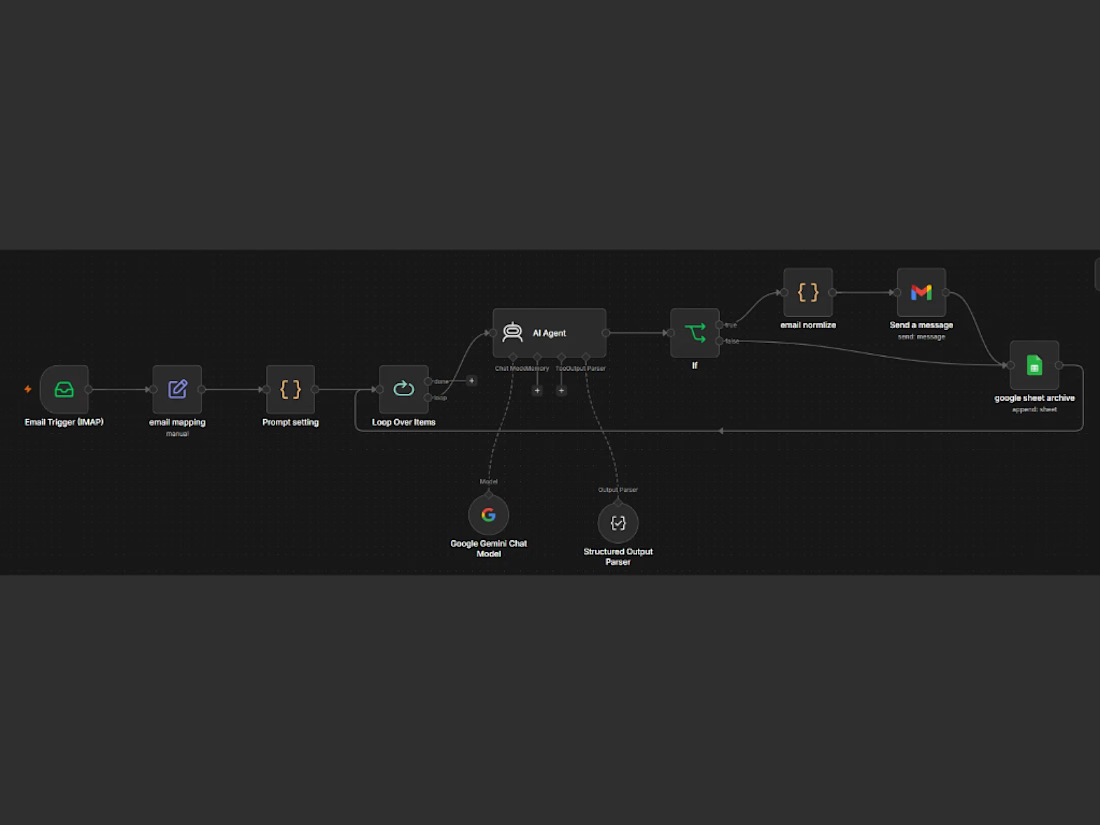
I build AI-powered n8n workflows that automatically manage your inbox. New emails are captured via IMAP, analyzed with Google Gemini, and classified based on intent and urgency. The workflow can automatically reply, notify teammates, or archive emails when no action is needed. Every email is logged in Google Sheets for full traceability and easy monitoring.



How many wrong passwords does your login page allow? On many sites: unlimited.
That's all a password bot needs. It tries thousands of passwords an hour, never gets tired, and sooner or later one of your employees' passwords works. From then on, the bot sees everything that person can see: salaries, personal data, contracts. No alarm goes off.
Here's how I build login pages: after 5 wrong passwords, that account locks for 15 minutes from that address. A bot drops from thousands of guesses an hour to 20, which isn't enough to crack a real password. The real employee still gets in from their own computer, because the lock only applies to the address the attack comes from.
I just added this to my CRM project and tested it on the live site: 5 wrong passwords, and even the right one gets "Try again in 15 minutes". Other users kept logging in as usual, and every failed attempt shows up in the admin log.
What this means for your business:
✅ Bots can't guess their way in
✅ Your team isn't locked out by someone else's attack
✅ You can see who's trying to get in
Need a website with logins, a client portal or a CRM? I'll keep the bots outside. Message me and tell me about your project.


Look-Alike Website Detector is a web app where you paste a suspicious link and get a clear verdict: Genuine, Suspicious or Likely fake, with a risk score and 3–5 simple reasons in 7 Indian languages (English, Hindi, Marathi, Bengali, Gujarati, Tamil, Telugu).
It runs three independent checks:
Address check: compares the link against verified official domains of 22 banks and government services (including RBI's new .bank.in domains). It catches look-alike letters (onlinesbl.com, Cyrillic characters), misspellings, the brand name placed on someone else's domain, newly registered domains, missing HTTPS and other tricks.
Page check: opens the page in a real (headless) browser and checks whether it asks for a password, OTP, card number, Aadhaar or PAN, and whether the form secretly sends your data to a different site.
Visual check with Gemma 4: the open-weight Gemma 4 model looks at a screenshot and recognises which brand the page is imitating. A page that looks like SBI on a domain SBI doesn't own is a strong red flag.
The AI never decides the verdict on its own. Transparent rules score every warning sign, so each result can be explained. Gemma 4 does two jobs: recognising the brand in the screenshot and writing the plain-language explanation. If any check fails (the model, the browser or the domain-age lookup), the user still gets a verdict from the other checks.
The result page highlights who really owns the address (in sbi.secure-login.xyz, the real owner is secure-login.xyz), shows each check's findings and teaches three simple safety habits.
Open and private by design: the project is MIT-licensed, and Gemma 4 can run fully offline on a laptop through Ollama. A full check takes about 10 seconds with Wi-Fi off and no data leaves the device. The live website uses Gemma 4 through the Gemini API, with protection against misuse.
Built with: Python, FastAPI, Playwright (Chromium), RapidFuzz, tldextract, python-whois, Beautiful Soup, vanilla JavaScript, Gemma 4 (Gemini API and Ollama), Docker and Render. Built with Claude Code as the AI coding assistant.


