The network for creativity
Join 1.25M professional creatives like you
Connect with clients, get discovered, and run your business 100% commission-free
Creatives on Contra have earned over $150M and we are just getting started
Back to feedPost

Your most profitable product might not actually be your most profitable product.
Sounds contradictory?
It can happen when a business allocates shared costs incorrectly.
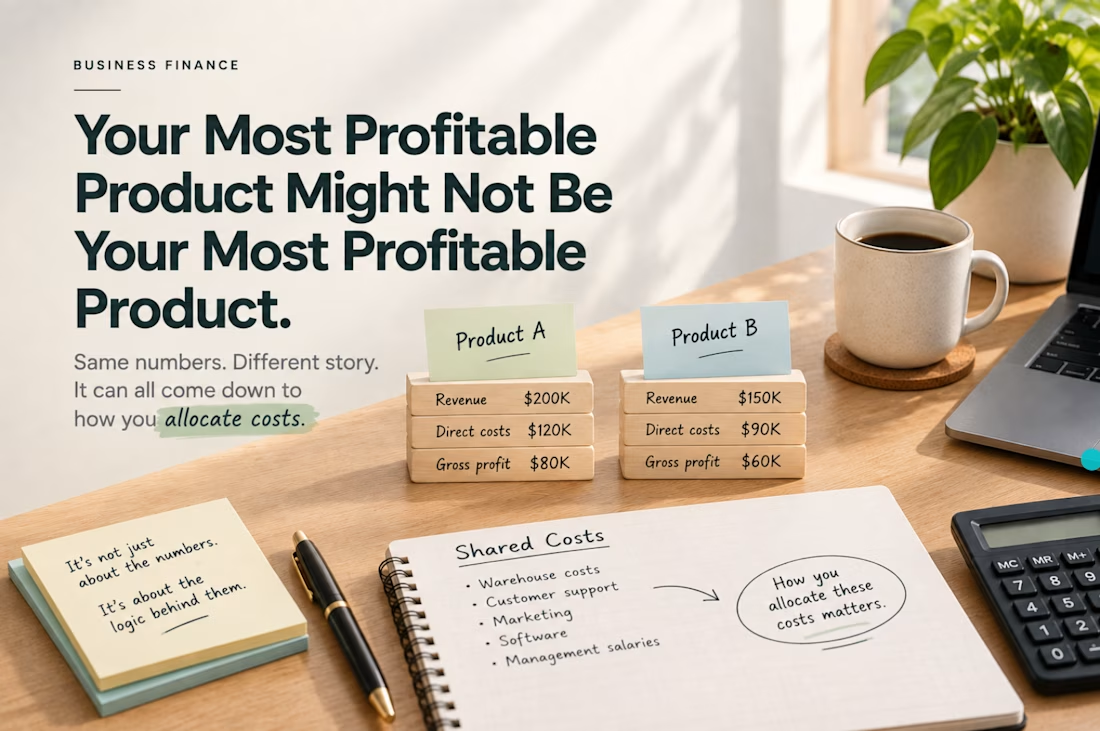
Imagine a company sells two products:
Product A
Revenue: $200K
Direct costs: $120K
Gross profit: $80K
Product B
Revenue: $150K
Direct costs: $90K
Gross profit: $60K
At first glance, Product A looks more profitable.
But then the business allocates:
warehouse costs
customer support
marketing
software
management salaries
If those costs are simply divided evenly across products, the profitability picture can change significantly.
And that's where cost allocation becomes important.
The question isn't just:
“How much did this product make?”
It's:
“Which costs were actually caused by this product?”
Some costs are directly traceable.
Others are shared.
And some allocation methods can make a product look better or worse simply because of how the costs were assigned.
This matters when deciding:
→ Which products to keep or discontinue
→ Where to allocate marketing budget
→ Which customers deserve more resources
→ Whether a new product is actually attractive
→ Where the business should invest its limited capacity
A misleading profitability report doesn't necessarily contain incorrect numbers.
The numbers can be accurate.
The problem can be the logic behind how they're connected.
That's why good financial analysis isn't just about calculating the numbers.
It's also about asking:
“Does this calculation reflect how the business actually works?”
Because sometimes, the biggest financial insight isn't hidden in the numbers.
It's hidden in the assumptions behind them.
How does your business decide which shared costs belong to each product or customer?
businessfinancemanagementaccountingcostallocationBusiness AnalysisBusiness StrategyFinancial AnalysisCanva

The network for creativity
Join 1.25M professional creatives like you
Connect with clients, get discovered, and run your business 100% commission-free
Creatives on Contra have earned over $150M and we are just getting started

Challenges
View all


Related posts

Episode 2: Your Numbers Should Make a Sense!
Your sales are growing, but are you actually making more money?
Sales up 40%. Profit down 7%. 😬
Same business, six months later:
Sales: 100K → 140K a month
Profit: 15K → 14K a month
Profit margin: 15% → 10%
More revenue doesn't mean more money. Three things quietly eat the difference:
1️⃣ Margins shrink. Discounts, supplier price rises and delivery costs.
2️⃣ Overheads outgrow sales. Hires, rent and software.
3️⃣ Cash gets stuck. Unpaid invoices and unsold stock.
Track these 3 numbers every month:
✅ Gross margin %
✅ Net profit margin %
✅ Profit vs cash in the bank
Growth without margin is just a busier business.


A modern pasta advertising poster designed with a warm, minimal color palette and bold typography. I combined a pasta dish photograph with oversized text, layered shapes, and promotional elements like 50% OFF and ORDER NOW to create an eye-catching food campaign.
I focused on typography, composition, contrast, and visual hierarchy while keeping the overall design clean and commercial.
Skills: Graphic Design · Food Advertising · Typography · Poster Design · Photo Composition · Promotional Design
#GraphicDesign #PastaDesign #FoodAdvertising #PosterDesign #Typography #FoodBranding #SocialMediaDesign #AdvertisingDesign #VisualDesign #CreativeDesign
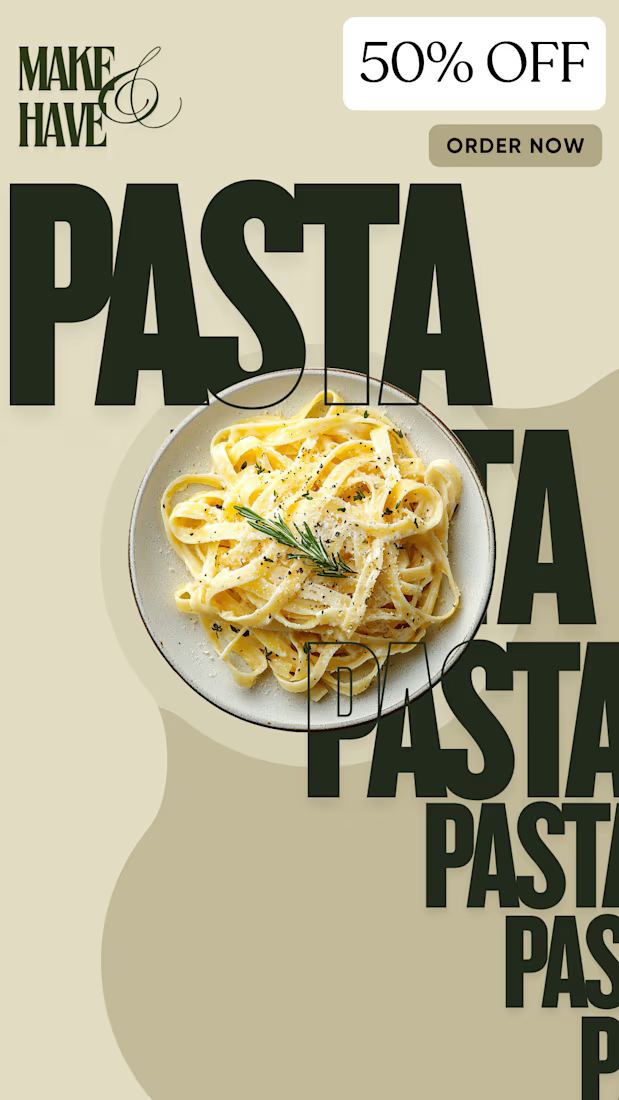

I noticed the oversized typography overlaying the pasta shot really pulls the visual hierarchy, letting the 50% OFF badge stand out without overwhelming the image

Brand system for AWAI, a concept brand for minimal ceramic teaware.
Typographic wordmark set in a real font (Cormorant Garamond), not AI-drawn. Warm neutral palette, type hierarchy, and logo versions for light, dark and color backgrounds.
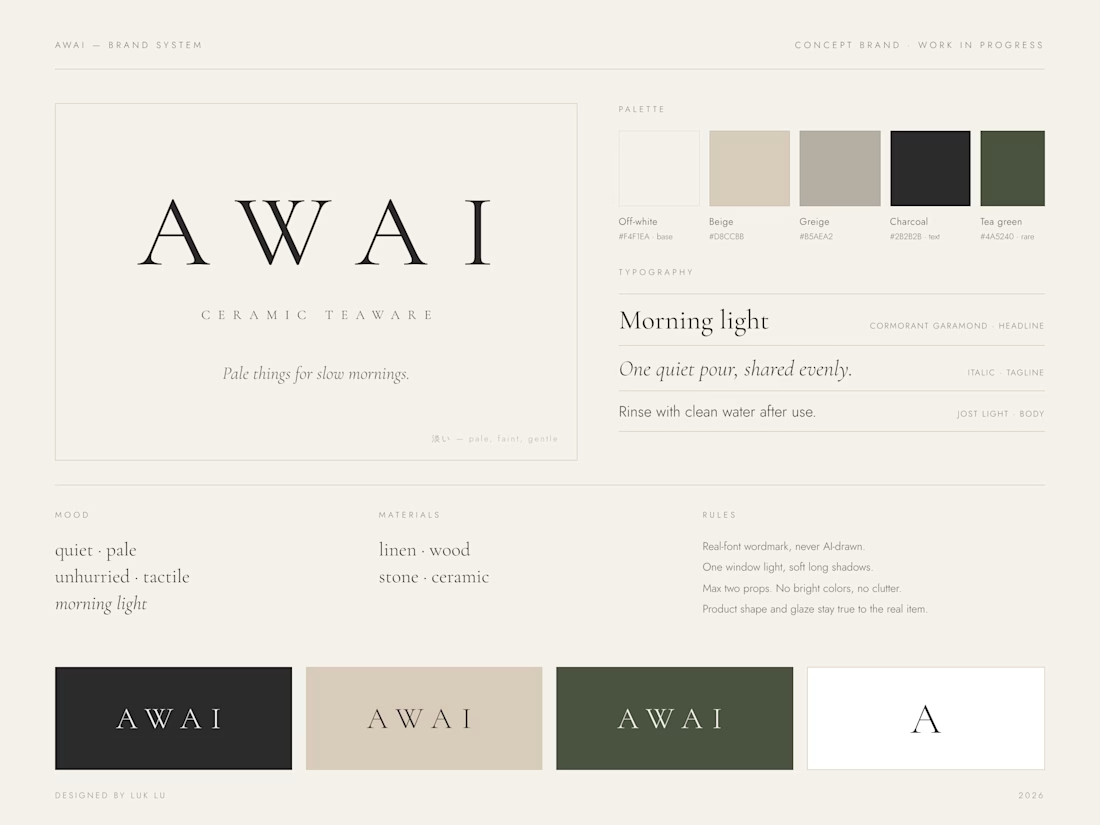


did you test other serifs before going with cormorant?