The network for creativity
Join 1.25M professional creatives like you
Connect with clients, get discovered, and run your business 100% commission-free
Creatives on Contra have earned over $150M and we are just getting started
Back to feedPost

Competitor Analysis Framework for Startup GTM Strategy
I created a competitor intelligence framework for an MVP-stage edtech app to help define its market position, sharpen its go-to-market direction, and identify where the product could stand apart in a crowded student-tech category.
The project focused on turning scattered competitor data into a clear strategic foundation for positioning, messaging, launch planning, and early-stage growth.
The Challenge
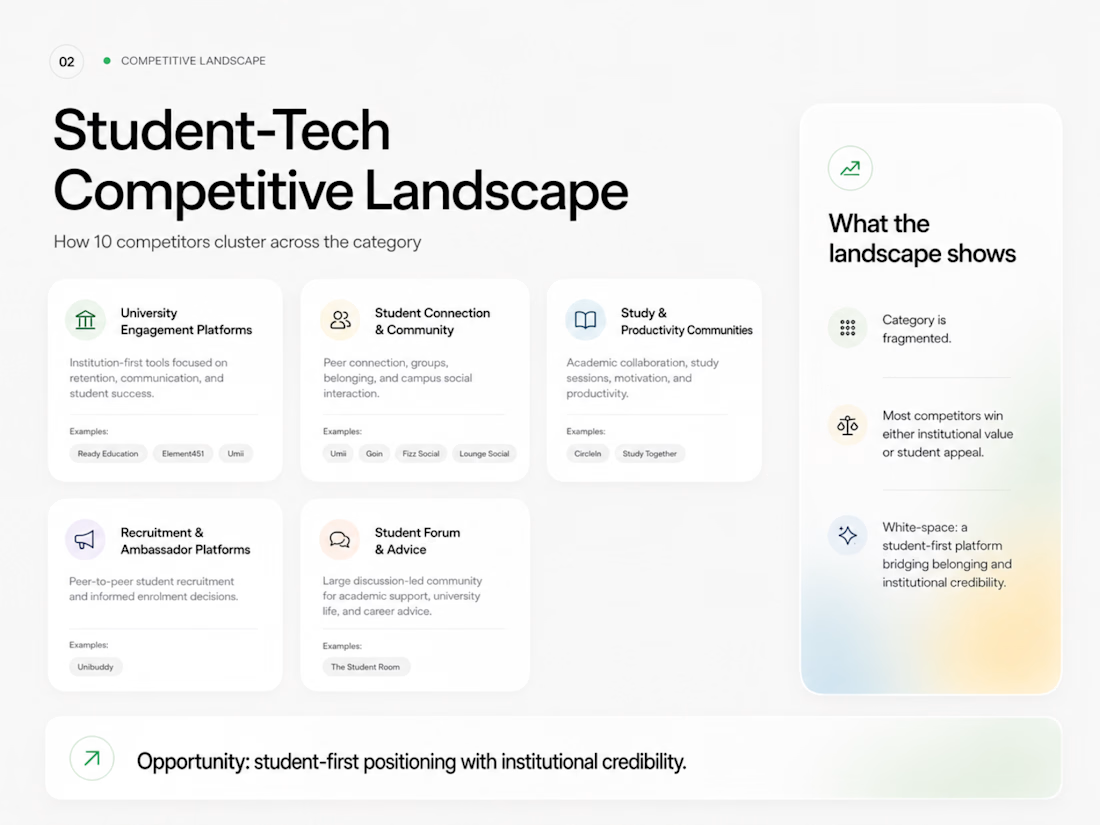
The student-tech market is crowded with platforms focused on engagement, peer connection, study support, university communication, recruitment, and campus communities.
For a new product entering this space, the risk was clear:
Without sharper positioning, the app could easily sound like another student platform.
The goal was to identify a stronger market angle before moving into messaging, campaigns, or launch execution.
I led the strategic research and competitor analysis behind the GTM foundation.
My work covered:
Competitor mapping
Market positioning review
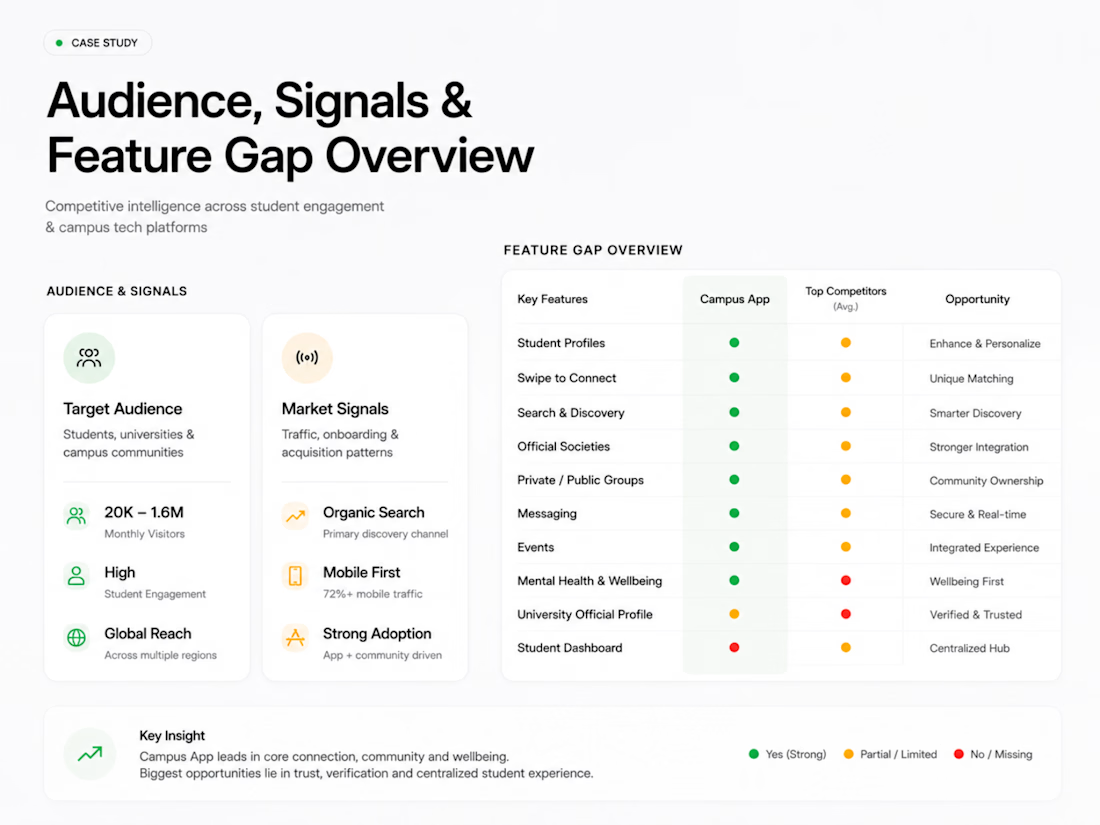
Audience and channel analysis
Feature gap review
SWOT synthesis
Launch checklist planning
Strategic positioning recommendation
This gave the product a clearer direction before execution started.
The Approach
I analysed 10 student engagement, community, and edtech platforms across positioning, target audience, acquisition signals, onboarding, monetisation, feature coverage, market strengths, weaknesses, and GTM patterns.
The purpose was not to copy what competitors were doing.
It was to understand the category clearly enough to find white space.
Key Insight
The research showed that many competitors were strong in one lane but weaker across the full student-life experience.
Some were institution-first.
Some focused mainly on academic support.
Some leaned into student connection.
Others relied heavily on community, search visibility, or university partnerships.
The opportunity was to position the app as a student-first platform that could connect belonging, campus discovery, community, and institutional credibility.
That insight helped move the product away from generic “student engagement app” messaging and toward a more differentiated GTM direction.
Strategic Output
The final framework helped define:
A clearer category position
A stronger student-first narrative
Priority competitor gaps
Core messaging direction
Feature-led differentiation
Launch and acquisition priorities
A practical GTM checklist
This research became part of the strategic foundation behind the product’s early growth approach.
Result
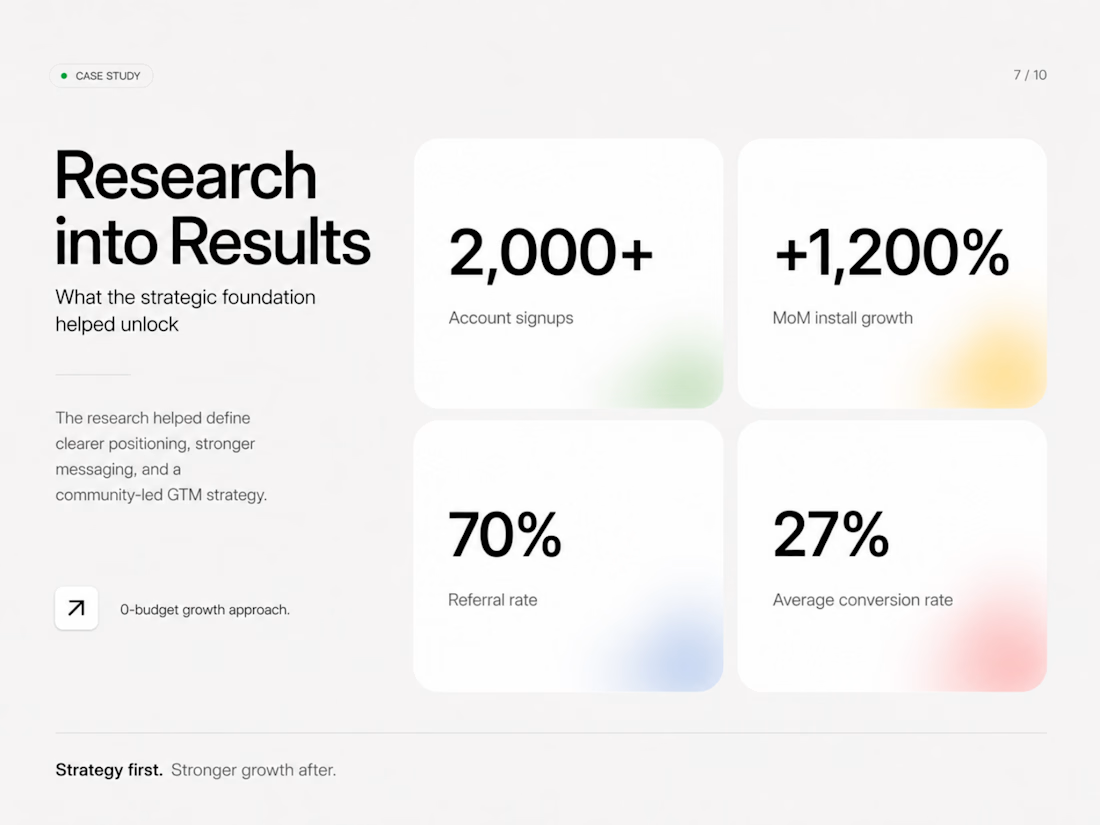
The strategic foundation contributed to a 0-budget growth approach that helped drive:
2,000+ account signups
+1,200% month-over-month install growth
70% referral rate
27% average conversion rate


The network for creativity
Join 1.25M professional creatives like you
Connect with clients, get discovered, and run your business 100% commission-free
Creatives on Contra have earned over $150M and we are just getting started







Related posts

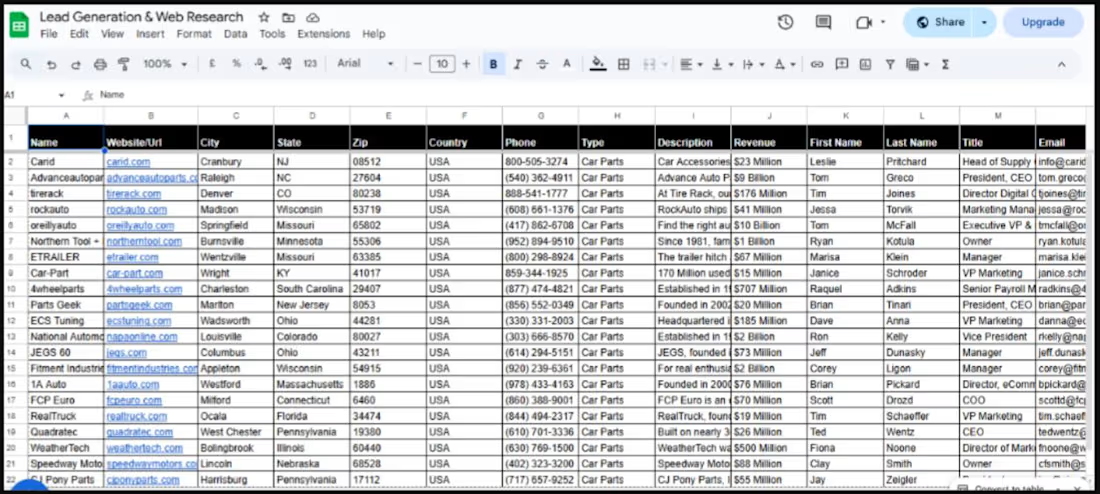
For this project, I conducted end-to-end B2B lead generation and data mining for companies in the Car Parts & Automotive industry. The goal was to build a highly accurate, decision-maker-focused prospect list to support sales outreach and business development. I manually researched and compiled a clean, well-structured database that included both company-level and contact-level details, ensuring accuracy and relevance



Great work on B2B lead generation and data extraction, Osama! Dropped you a note regarding a partnership opportunity for our agency. Let's connect!

I built Idea Validator.
1. WHAT IS IT?
A validation tool for early-stage founders. Answer 6 simple questions, and it analyzes your competitors, pulls real-time market insights, and rates your idea: strong, medium, or unclear.
2. WHY I BUILT IT
Most early-stage founders start building on gut feeling. They skip research because it is slow and confusing.
3. WHAT PROBLEM DOES IT SOLVE?
Founders waste months on ideas nobody needs. Idea Validator replaces guesswork with real market insights and shows:
-> Problem and demand
-> Reason to choose your idea
-> What could stop it
-> Your next validation steps
-> You can download the full report in one click.
-> Know before you build.
Try it here: https://idea-validator-check.netlify.app/
What would you want this tool to tell you about your idea? Let me know in the comments.
#startups #saas #founders #productdesign #uiux #buildinpublic


does it ever come back unclear and basically tell you to kill the idea

Comprehensive Marketing Campaign Strategy: Carte Blanche
Overview
Brand Name: Carte Blanche
Industry: Custom Apparel Printing
Campaign Duration: Total 45 Days (Split into 3 Strategic Phases)
Core Goal: Build massive hype, drive organic engagement, and successfully launch a custom-printing clothing brand based on total freedom of choice.
Phase 1: The Teasing & Waitlist Phase (15 Days)
Objective
Raise brand awareness, spark widespread curiosity, and build a massive database of eager people waiting to uncover the secret.
Concept & Execution
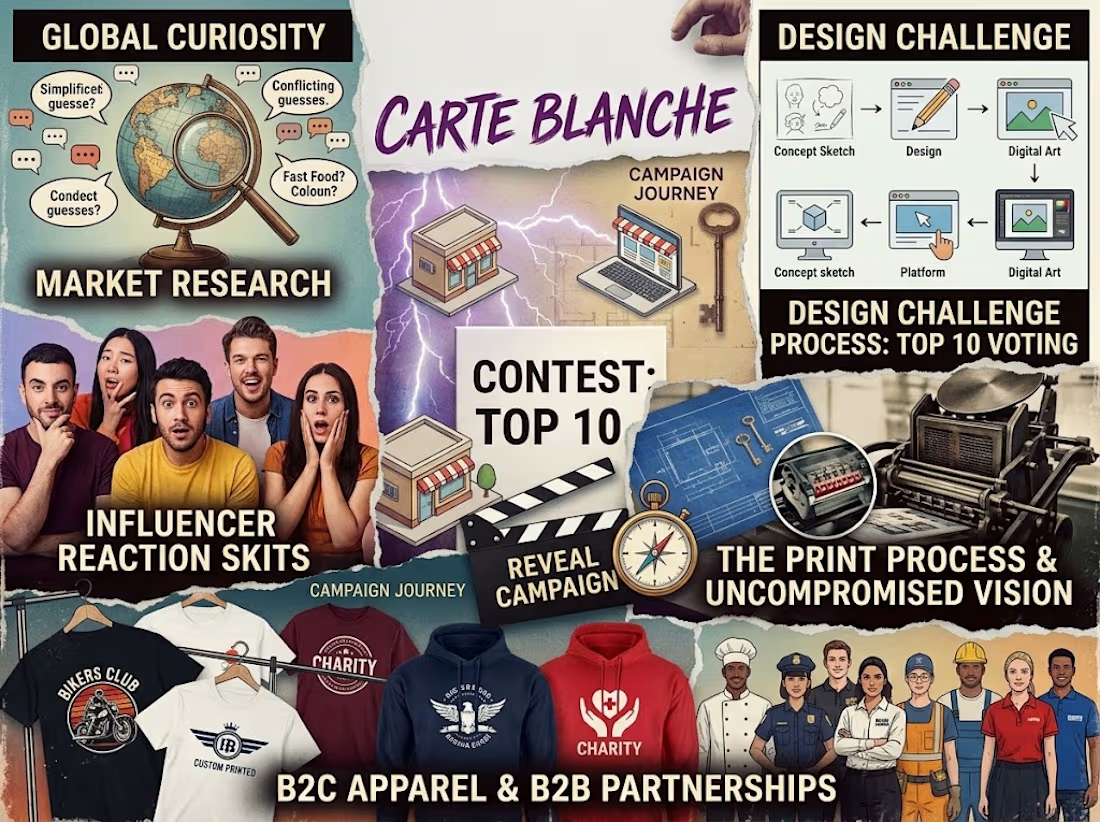
Street Interviews: A field reporter/journalist roams the streets, approaches random citizens, and asks: "What does 'Carte Blanche' mean?"
Humorous Responses: People give wildly diverse guesses—ranging from believing it's a historical figure to thinking it's a brand-new fast-food chain.
Video Editing: Cut the interviews into a dynamic 1-minute reel where the host asks, the public gives funny answers, and it ends with a compelling teaser screen: "Wait for it... you will know everything soon."
Media Buying: Launch targeted paid ads across all major social media platforms suited for the target audience based on local geography and platform popularity.
Timing: Timed to start close to clothing-heavy shopping seasons (e.g., Holidays or just before Summer).
Phase 2: The Playful Hype Phase (15 Days)
Objective
Maximize page interaction, drive comments, and maintain high tension and excitement.
Concept & Execution
Extended Cut Videos: Edit longer cuts of the public's funniest guesses and seamlessly merge them into a 2-minute video paired with trending memes from popular movies and TV series.
Meme Marketing: Publish custom meme images across social feeds that playfully capture the collective suspense, anticipation, and waiting state of the audience.
Engagement Boost: Encourage followers to comment with their wildest guesses to keep algorithmic engagement peaking.
Phase 3: The Grand Launch & Conversion Phase (Ongoing / Strategic Timing)
Objective
Unveil the true identity of the brand, position it as the ultimate solution for custom clothing, drive direct sales, and secure high-value B2B partnerships.
Concept & Execution
The Reveal Video (1 Minute): The host returns to explain the real meaning of Carte Blanche—absolute freedom of choice. Introduce the concept: a specialized storefront for custom apparel printing built entirely on the customer's uncompromised vision.
The Core Message: Address the customer directly with a powerful hook: "Why settle for a random company name or forced generic design when you can wear a t-shirt exactly the way you imagined it?"
Interactive Campaign (The Contest): Announce a community contest inviting customers to write a phrase or submit an original design concept. Open voting to the public for the top 10 designs, which will be printed and shipped to the winners completely free.
Timing: Initiated 10 to 20 days prior to major shopping holidays or the start of summer.
Influencer Collaboration: Partner with comedic influencers to release reaction reels and funny skits exclaiming: "We finally found out what Carte Blanche is! Let’s go see what they do." Feature live behind-the-scenes footage of the printing process, specifically focusing on the hypnotic movement of the printhead needle.
Value Propositions: Emphasize premium product quality and top-tier printing durability.
B2B & Community Outreach: Establish direct agreements with organizations, charities, and specialized groups (such as local motorcycle clubs/bikers) looking for custom-printed uniforms and group merchandise.