The network for creativity
Join 1.25M professional creatives like you
Connect with clients, get discovered, and run your business 100% commission-free
Creatives on Contra have earned over $150M and we are just getting started
Back to feedPost

We built a real-time psychic session platform. Here's what broke first.
Kismaa is a live psychic consultation marketplace. Users pay by the minute for real-time chat and call sessions with psychics. Three user types (paying users, psychics, admins) all operating in sync, across iOS, Android, and web.
The use case sounds unusual. The engineering problems were universal.
What broke first: the 2-second gap.
A user taps "Connect." The psychic's web interface needs to ring instantly. Not in 2 seconds. Not after a loading spinner. Instantly. Because when someone is paying per minute for a live session, any perceived delay feels like the system is broken. And broken trust = refund request = churn.
Our first implementation used standard REST polling for session state. It worked in dev. In production, with real network conditions and real emotional stakes, a 2-3 second delay between "request sent" and "psychic notified" killed conversion rates.
The fix: Persistent socket connections with event-driven UI updates. No polling. The moment a user requests a session, the psychic's app reacts in milliseconds. We built a priority-based push notification pipeline as a fallback (push to in-app sync) with deep linking so psychics land exactly on the accept/reject screen.
What broke second: sessions dying mid-conversation.
A session lifecycle looks simple on paper: Request, Accept, Connect, Track time, Charge, End.
In reality, phones go to sleep. Users switch apps. Networks drop in elevators. The billing timer needs to keep running accurately regardless of what the device is doing.
The fix: Deterministic session state management with background-safe timers. Automatic state recovery after app interruptions. The server is the source of truth for billing; the client reconciles on reconnect. Sessions don't break even when mobile conditions do.
What broke third: the matching engine under concurrency.
Multiple users requesting sessions simultaneously. Multiple psychics going online/offline in real-time. The naive approach (check availability, assign, confirm) creates race conditions where two users get matched to the same psychic.
The fix: Queue-based, event-driven matching system. Atomic availability locks. The system handles concurrent requests without double-booking, and availability updates propagate across all connected clients in milliseconds.
The stack: React Native (mobile), Next.js (web + admin), Node.js + Prisma + PostgreSQL (backend), persistent sockets for real-time sync.
The takeaway for anyone building real-time multi-role platforms:
Your biggest risk isn't features. It's the gap between what users expect to happen instantly and what your system actually delivers instantly. Close that gap first. Everything else is polish.
→ Full case studies: Kismaa Platform | Kismaa Mobile


The network for creativity
Join 1.25M professional creatives like you
Connect with clients, get discovered, and run your business 100% commission-free
Creatives on Contra have earned over $150M and we are just getting started


Related posts

Got tired of dealing with clunky, rate-limited 3rd-party scrapers, so I built my own.
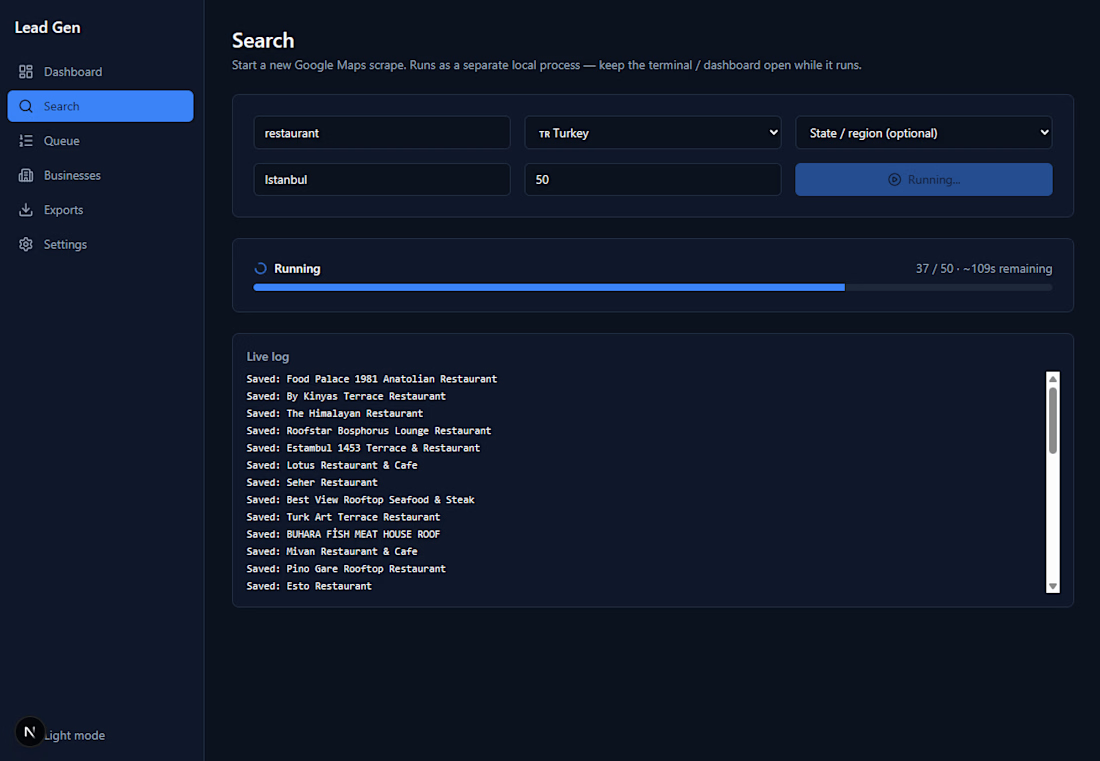
Just testing out my custom Google Maps lead generation scraper, built on Next.js, Playwright, and Supabase. It pulls business listings, finds public contact emails, and automatically dedupes everything before saving.
A few things that make it completely frictionless:
Search and initiate scrapes directly from the UI—no need to even open Google Maps.
Added a Queue system so you can run multiple scrapes simultaneously.
Real-time progress tracking (you can see the live log running in Screenshot 2026-07-07 173222.png).
I am thinking about open-sourcing the whole thing. Should I drop the code on my GitHub?
Also, I need a better name for it. My working title is "Glead", but I am completely open to suggestions. Let me know what you think!



Nice build. If you open-source it, I would prioritize making the architecture and queue system easy to extend, that's usually what gets developers to adopt and contribute.

It started with a simple question: what if buying a concert ticket felt as exciting as the show itself? So I designed Concerning in Wonder, a cinematic ticketing experience where you land on a full screen event slider and one click takes you from Buy Ticket to checkout to a QR e‑ticket. Thirteen screens, all shaped through conversation instead of pixel pushing.
Then I connected Wonder to Cursor through MCP, and one prompt turned the designs into a working React app with a real auto playing slider and a fully clickable purchase flow. Pushed to GitHub, deployed on Vercel, live in a minute.
wonder project: link here
Live: Vercel app




How a Coffee Shop Chat Rebuilt a Bank’s Internal Operations ☕🏦
A few months ago, during a casual hangout at a local coffeeshop, a friend who working at a local community bank (BPR Indonesia) started venting about their operational headaches. They were still using paper logs to manage staff attendance across scattered branch offices. It was a massive time sink, prone to "buddy-punching" fraud, and a nightmare for compliance audits.
With today’s tech and AI capabilities, and also as a developer, I couldn't just sit back. I knew I could solve this. leverage intelligent, modern tech to solve this friction.
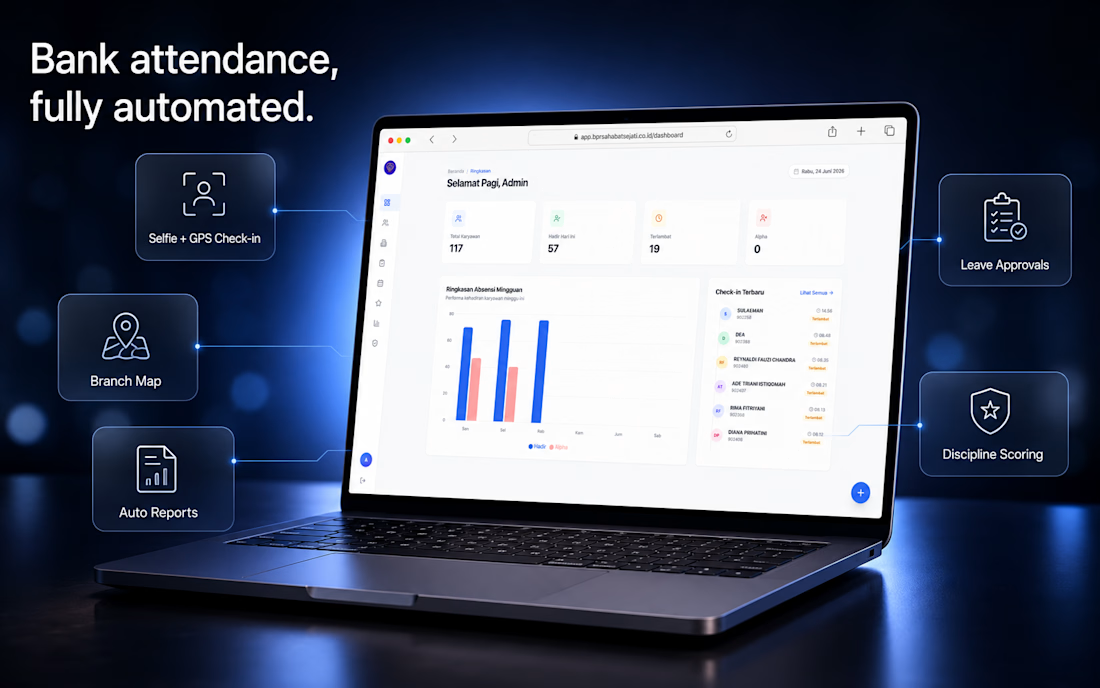
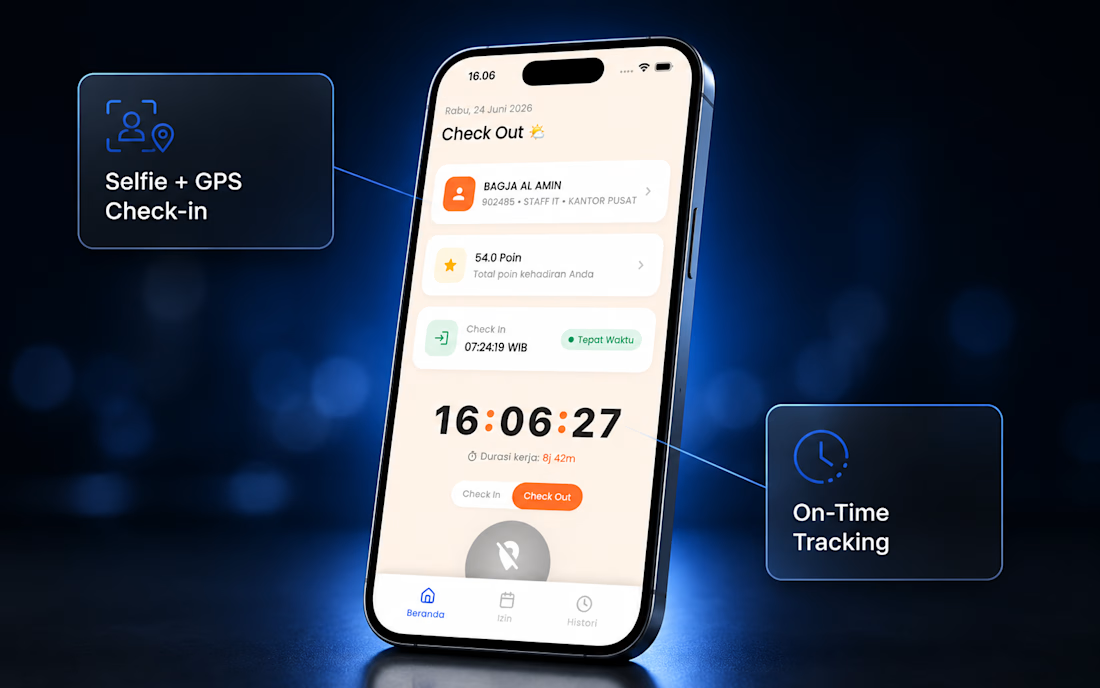
Finally 🧠, we ended up collaborating to solve that exact problem. I built a secure, enterprise-grade attendance system bridging a #Flutter mobile app, an #Express/PostgreSQL backend, and a real-time HR admin command center.
⚡ The Solution & Deliverables:


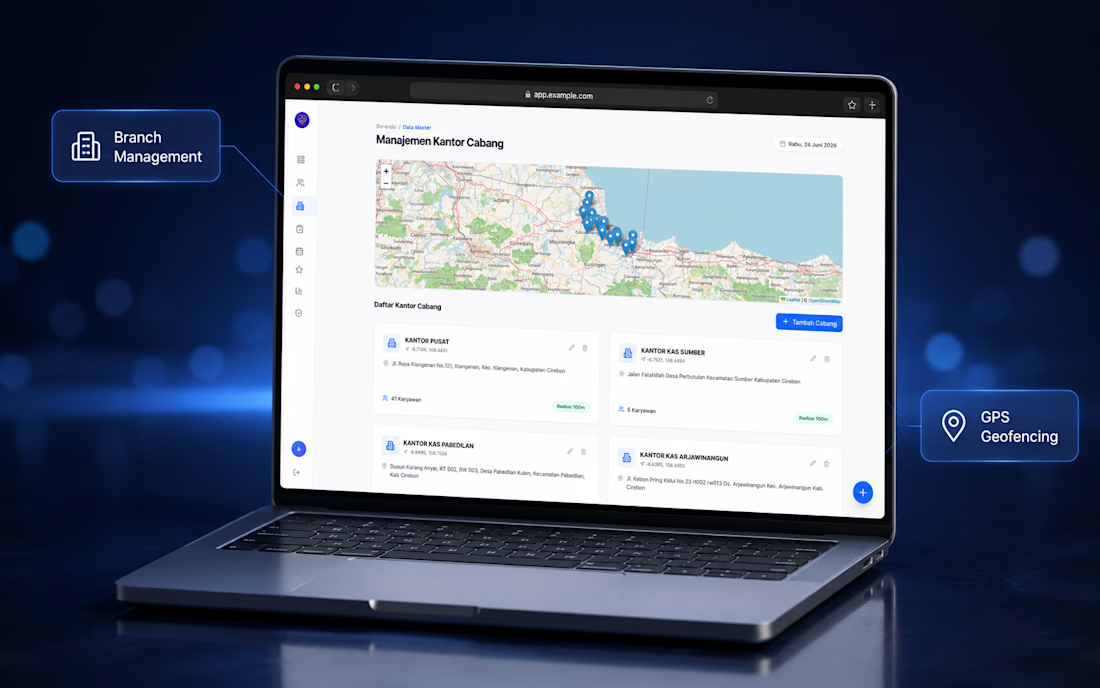
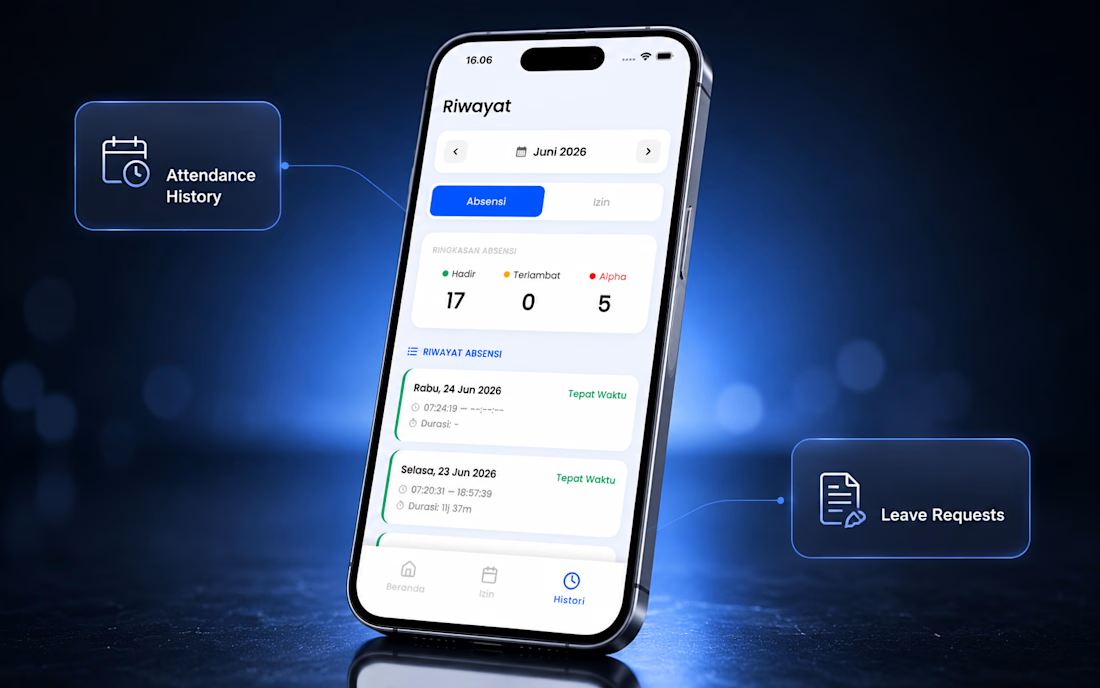

Amazing how a coffee chat led to such a practical solution—how's the transition from paper logs been for them so far?








Trending

Claude
Claude has entered the design space. How are you using Claude Design?

Contra University
Learn from expert creatives how to earn more using next-gen AI tools.
fifaworldcup2026
The World Cup is here and the whole world's watching. How are you designing for the world stage?
creativeaiflow
Creative AI workflows are evolving. What tools do you use, and what are their strengths and weaknesses?
freelancerlife
Freelancer life is wins, pivots, and everything in between. What’s yours right now?