The network for creativity
Join 1.25M professional creatives like you
Connect with clients, get discovered, and run your business 100% commission-free
Creatives on Contra have earned over $150M and we are just getting started
Back to feedPost

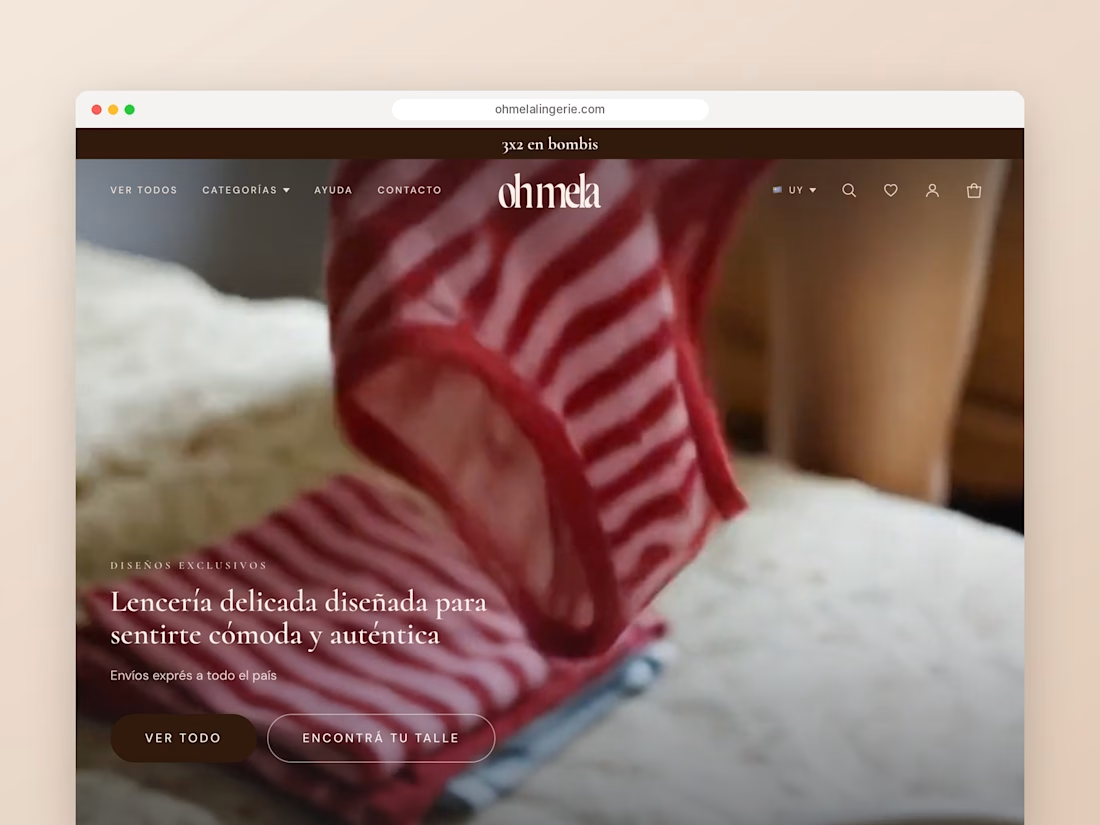
Why we moved a lingerie brand off Shopify 👇
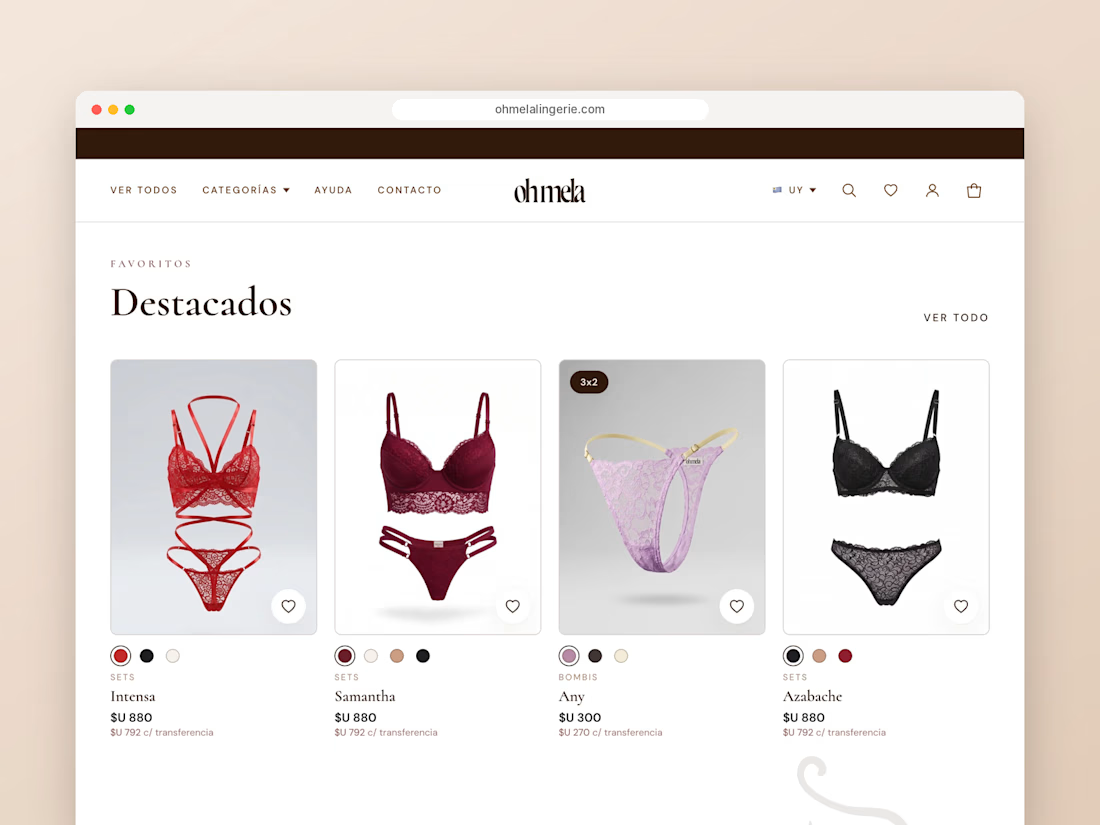
Oh Mela sells in Uruguay and Argentina. Shopify forced them into workarounds: one catalog for two countries, mixed stock, and no clean way to run promos like 3x2 or bundles per market.
So we designed and built a custom store in Next.js around how they actually sell.
→ Country detection on first visit, with separate catalog, stock, prices and promos for each market
→ One admin panel to manage both countries
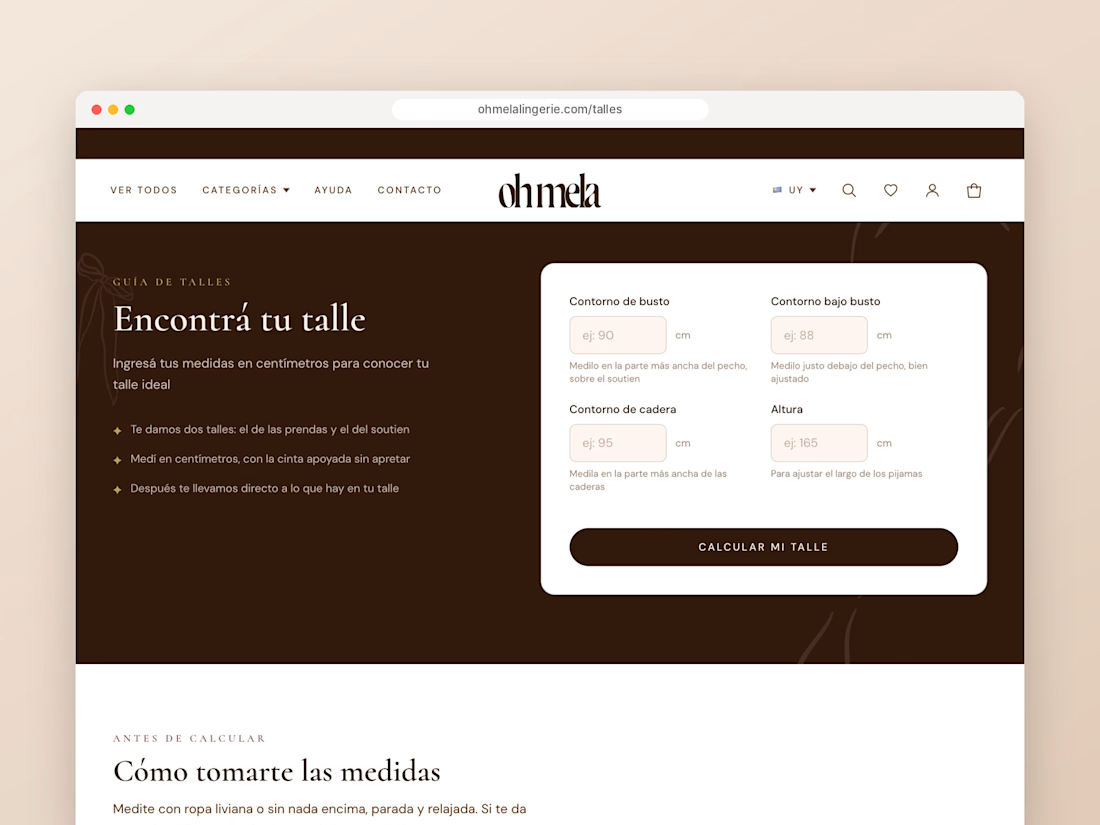
→ A size calculator: shoppers enter their measurements and get their bra and garment size
→ Brand micro-interactions: a loader where the logo fills with color, and a welcome letter that slides out of an envelope
The lesson: templates are great until your business model stops fitting them. When it does, a custom store isn't a luxury, it's the simpler option.
Full case study on my profile. Selling in more than one country and fighting your platform? Let's talk.
The network for creativity
Join 1.25M professional creatives like you
Connect with clients, get discovered, and run your business 100% commission-free
Creatives on Contra have earned over $150M and we are just getting started



Related posts

Your Shopify store should do more than look good — it should deliver a seamless shopping experience. 🚀
I design and develop modern, responsive Shopify stores built for your brand and business growth.
Need a store that stands out? Let's build it! 🛍️
#Shopify #ShopifyDevelopment #Ecommerce #WebDesign #ShopifyExpert


Agree that a store should feel seamless and not just look good. Responsive and clean is what shoppers notice first.

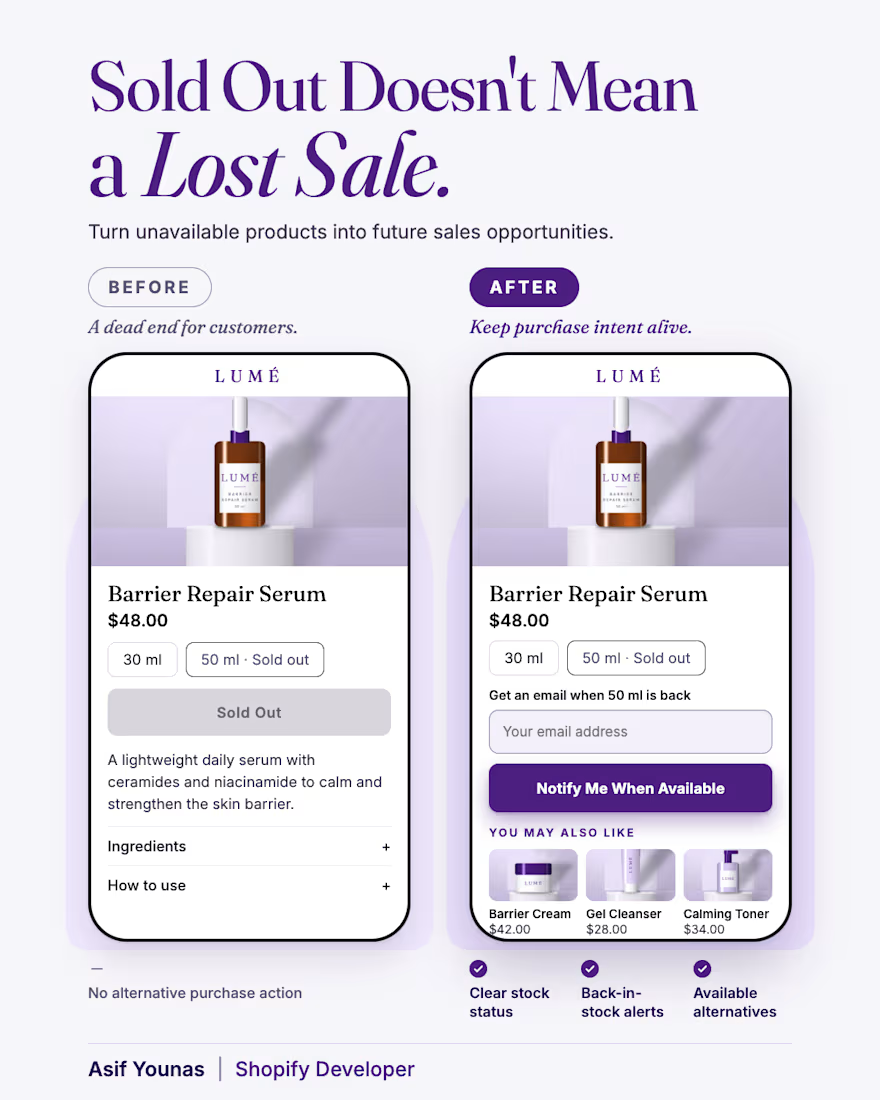
A sold-out product doesn't have to be a lost customer.
Most Shopify stores simply display a disabled "Sold Out" button and leave the customer with nowhere to go.
I'd approach it differently:
• Replace the disabled button with a back-in-stock signup.
• Recommend relevant, available alternatives.
• Clearly distinguish unavailable variants.
• Keep temporarily sold-out product pages accessible.
With custom Liquid, JavaScript and a back-in-stock integration, these experiences can adapt automatically based on product availability.
Good Shopify development isn't just about what happens when everything is working.
It's also about designing for the moments when customers can't buy what they came for.


Great work!


I kept coming back to fashion magazines while working on Verin.
The way a collection is photographed, introduced, and placed on a page can make you look twice. I wanted to bring that feeling into an online store.


A store that reads like a magazine.