The network for creativity
Join 1.25M professional creatives like you
Connect with clients, get discovered, and run your business 100% commission-free
Creatives on Contra have earned over $150M and we are just getting started
Back to feedPost

I have heard this question in hallways, office hours, and late emails: “Is it okay to pay for essay assistance?” Students usually whisper it, as if the ceiling tiles report directly to the dean.
My answer is calmer than people expect. Paying for support is not automatically strange or lazy. College students already pay for tutoring, test prep, lab manuals, software, parking permits, and coffee that tastes like burnt ambition. Paid help sits somewhere in that crowded world of academic support. The real issue is what kind of help you are buying, why you need it, and whether it protects your learning goals instead of replacing them.
Before anyone pays, I ask three things: Do you understand the assignment prompt? Do you know what your professor expects from the grading rubric? Are you clear about the difference between guidance, editing, drafting, and submission? Those questions sound boring. They also save students from expensive confusion.
Most students do not look for help because they woke up and thought, “Today feels like a fine day to complicate my ethics.” They search because deadline pressure has started making weird noises in their brain. A tight deadline can turn a normal essay into a haunted house.
When a student asks me about paid help, I slow the moment down. Is the problem the topic? The research? The thesis? The citation style? The blank page? Each problem needs different support. I have seen students pay for a full explanation when they only needed feedback notes on one messy paragraph. I have also seen students ask a friend for “quick edits” when they really needed a revision plan and a conversation about source quality.
That is why I tell students to compare options carefully. For example, some students may review https://kingessays.com/pay-for-essay/ while weighing what type of support matches their budget, timeline, and comfort level, but the smarter move is still to define the problem first. A clear need makes every next step less foggy.
Every class has its own class policy, and professors do not always explain it with the grace of a poet. Some allow tutoring. Some allow editing. Some allow brainstorming but not sentence-level rewriting. Some want all outside help disclosed. I once saw a syllabus with one sentence about academic honesty and eight pages about printer margins. Academia is a mysterious ecosystem.
So before paying anyone, read the policy. Then read the assignment itself. Then, if you are still unsure, ask the professor a practical question: “Can I use outside editing support if the ideas and final decisions remain mine?” That question is specific, respectful, and hard to misunderstand.
This is also where boundaries matter. I know it sounds like I am mixing categories, but the same caution I would use for cheap resume writing services applies here too: cheap support is useful only if you know what you are receiving, what remains your responsibility, and what happens if the final product does not match the promise. Low price without clear terms is not a bargain. It is a coin toss wearing a nice jacket.
I am not against paid writing help. I am against students paying in a fog. Before money changes hands, check the basic terms, not the shiny claims.
Look for privacy policy details, refund terms, communication history, revision limits, and delivery windows. Ask whether you can provide your rubric, source list, draft, and professor comments. Ask how revisions work. Ask whether the assistance supports original work rather than giving you something generic that sounds assembled in a basement by tired robots.
Students often focus on the grade, which makes sense. Grades matter. Scholarships, internships, and graduate applications do not run on vibes. Still, a paper is not only a grade. It is evidence that you can read, think, choose, argue, and revise. If the help improves those skills, good. If it leaves you unable to explain your own essay, pause.
Here is my favorite test. Imagine your professor asks, “Why did you use this source?” or “How did you develop this argument?” If you would freeze like a browser with twenty-seven tabs open, the support moved too far away from you.
Good assistance should feel clarifying, not magical or secretive. It should not feel like someone has taken your academic life into a dark room and returned with a polished document and no fingerprints.
Helpful support may include brainstorming, outlining, editing, research guidance, citation checks, structure advice, or draft feedback. It should leave you with more control, not less. You should understand the essay better after receiving help. You should also recognize your own voice in the final draft, even if it sounds cleaner and less panicked.
A strong tutor or editor will respect student budget limits, explain changes, and avoid promising guaranteed outcomes. Nobody can honestly guarantee a grade because professors are human beings with rubrics, preferences, and sometimes strong feelings about semicolons.
Students often think only about the next deadline. I understand that. When the paper is due tomorrow, “future you” feels like a fictional character. Still, future you has to live with the consequences.
Save your drafts. Keep your notes. Keep track of sources, citations, and feedback. If you receive edits, review them line by line. If a paragraph no longer sounds like something you could explain, rewrite it. If the assistance changes your thesis, make sure you agree with the new argument. Do not let convenience quietly choose your position for you.
Also, protect your privacy. Do not share more personal information than necessary. A student once sent an entire transcript to someone who only needed the assignment instructions. That is like bringing your birth certificate to buy socks.
If you decide to pay for essay assistance, make it a conscious academic decision, not a panic purchase. Know the rules. Know the scope. Know what part of the essay must remain unmistakably yours.
Just do it with your eyes open. Good assistance should make you more capable, not more dependent. It should help you think, organize, revise, and submit work you can stand behind.
The network for creativity
Join 1.25M professional creatives like you
Connect with clients, get discovered, and run your business 100% commission-free
Creatives on Contra have earned over $150M and we are just getting started
Related posts


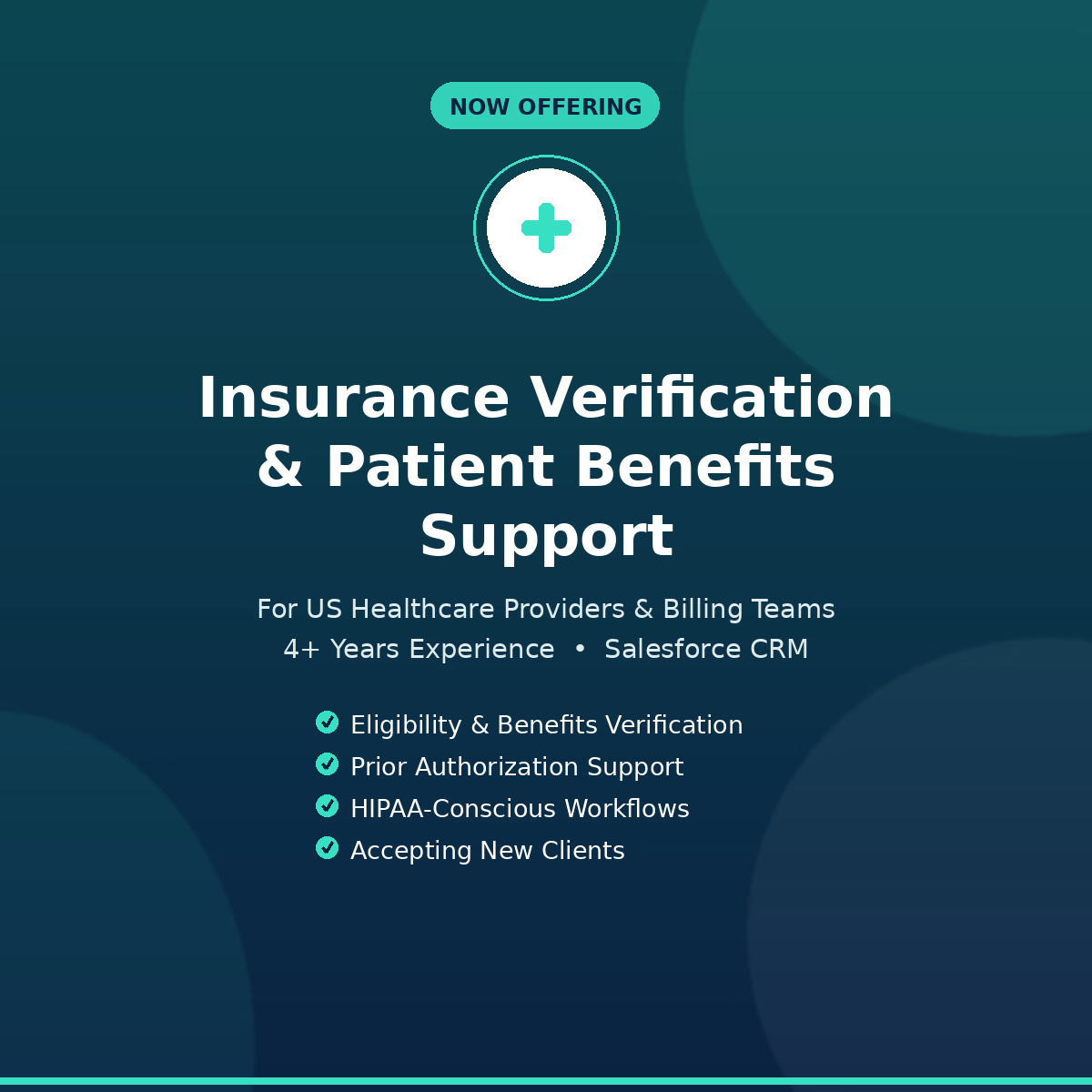
🩺 Now offering: Insurance Verification & Patient Benefits Support for US healthcare providers
If your front office or billing team is spending hours on hold with payers, I can help.
I verify patient insurance eligibility, handle prior authorization requests, and keep your CRM data clean and up to date — so your team can focus on patients, not paperwork.
✅ 4+ years in US healthcare voice & support
✅ Salesforce CRM, Excel, Outlook
✅ Clear, professional US-facing communication
✅ HIPAA-conscious, secure-system workflows only
✅ Available for ongoing or one-time projects (US evening hours)
Currently accepting new clients — let's talk about what your practice needs. 👇
😊
healthcaresupportCustomer SupportHealthcare ITTechnical SupportMicrosoft ExcelSalesforceinsuranceverificationpriorauthorization



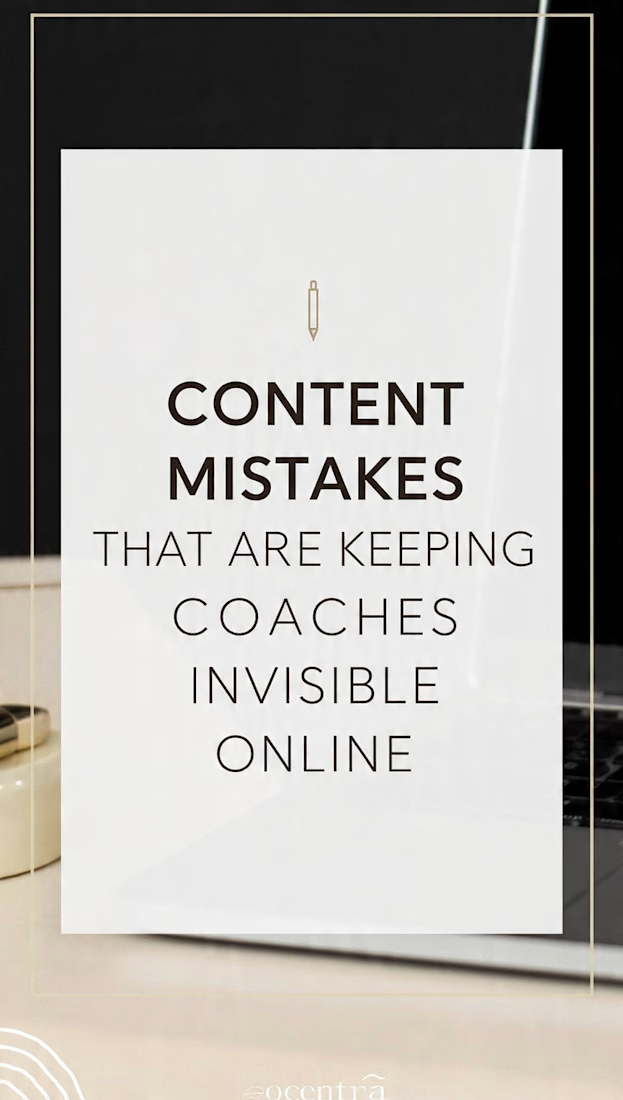
Title : Content Mistakes That Are Keeping Coaches Invisible Online
Most coaches are amazing at what they do. But their content isn’t getting seen.
It’s not because you’re not posting enough. It’s because of these 5 mistakes:
Writing for everyone
If you talk to everyone, you connect with no one. Pick 1 client. Speak directly to them.
No SEO keywords
If Google doesn’t know what your post is about, clients won’t find you. Use the exact words your clients type into Google.
No clear CTA
Every blog post should end with a next step. "Book a call" "Download my guide" "Join my email list"
Sounding too formal
People buy from people. Write like you talk on a discovery call.
Quitting after 3 posts
SEO takes 3-6 months. Consistency beats perfection.
Fix: Focus on 1 problem, 1 client, and 1 keyword per post.
Need help? I write SEO blog posts for coaches that rank on Google and bring in discovery calls. DM me "BLOG" to start.😊 💯








Trending

Claude
Claude has entered the design space. How are you using Claude Design?

Contra University
Learn from expert creatives how to earn more using next-gen AI tools.
fifaworldcup2026
The World Cup is here and the whole world's watching. How are you designing for the world stage?
creativeaiflow
Creative AI workflows are evolving. What tools do you use, and what are their strengths and weaknesses?
freelancerlife
Freelancer life is wins, pivots, and everything in between. What’s yours right now?