The network for creativity
Join 1.25M professional creatives like you
Connect with clients, get discovered, and run your business 100% commission-free
Creatives on Contra have earned over $150M and we are just getting started
Back to feedPost
Heres a massive Assignment project I did for Upwork. I think I did a great Job. 😉
TASK - Write a publish-ready landing page (2,000+ words) targeting the keyword: "humanized AI" for AISEO.
You must use Claude Cowork as your primary tool throughout the entire process — research, outlining, drafting, and editing.
Requirements
Proper heading hierarchy (H1, H2, H3)
Primary keyword in title, intro, and naturally throughout
Meta title (≤60 characters) and meta description (≤155 characters)
3–5 internal linking suggestions to other AISEO pages/tools
2–3 external reference citations
Content should read naturally — not like raw AI output
SOLUTION 😊
“AISEO Landing Page — Publish-Ready Draft”
Primary Keyword: Humanized AI Target Buyer: SEO professionals, agency operators, in-house content teams Tone: 70% Educational / 30% Conversion | Authoritative · Strategic · Calm
[Meta Title — 58 characters] Humanized AI Content That Ranks & Reads Human | AISEO
[Meta Description — 152 characters] AISEO transforms AI-generated drafts into undetectable, EEAT-ready content. Built for professionals who need rankings — not just rewrites.
The full draft has 6 main sections (H2s), plus an intro:
Intro — The hook/diagnosis (no H2, opens the page)
The Problem Isn't Your AI Tool. It's What Comes Out of It.
What "Humanized AI" Actually Means for SEO in 2026
How AISEO Humanizes AI Text at the Professional Level
Real Results: Humanized AI Content That Passes and Performs
The Strategic Play — Humanized AI Content for Blogs and Long-Form
Start Writing Humanized AI Content Today
So 7 blocks total (intro + 6 sections), each with 2–3 H3 subsections sitting underneath them. That gives you 7 natural vertical breaks to work with when you restructure the layout.
⭐ SECTION 1 — INTRO (Verticalized + Refined)
Humanized AI: The Professional Standard for Content That Earns Trust in 2026
There is a moment every content professional recognises.
You paste your AI‑generated draft into a detection tool.
The score comes back red.
73% AI.
81%.
Sometimes higher.
The instinct is to treat this as a technical problem:
find the right tool
shuffle the sentences
swap the synonyms
run it again
watch the score drop
ship it
That instinct is the wrong diagnosis.
The professionals who have already solved this are quietly building publishing operations that:
outrank
out‑convert
outlast
…those still chasing detection scores.
Their insight is simple:
Detection is a symptom.
The real problem is cognitive texture.
Unmodified AI output lacks the intellectual signature that human readers — and Google’s quality systems — recognise as authority.
Humanized AI is not a workaround.
It is the new baseline for content that earns trust at scale.
→ Scroll to see why detection was never the real problem.
⭐ SECTION 2 — THE PROBLEM ISN’T YOUR AI TOOL (Verticalized + Refined)
The Problem Isn't Your AI Tool. It's What Comes Out of It
AI language models are extraordinarily capable.
They retrieve, synthesise, and structure information faster than any human writer.
But they optimise for plausibility — not authenticity.
The sentences are grammatically sound.
The logic holds.
The structure is clean.
But the prose is flat in a way that is difficult to name and immediately felt.
This is not a limitation the next model update will fix.
It is structural.
These systems generate the most probable next token — which means they produce, by definition, the most average sentence.
And in writing, average is the opposite of authority.
Why AI Detectors Are Getting Smarter — And Why That Misses the Point
Detection tools have become significantly more sophisticated over the past eighteen months.
GPTZero, Originality.ai, and Turnitin now operate with accuracy levels that make evasion through basic rewording increasingly unreliable.
The tools that cleared detectors in 2023 no longer perform reliably in 2026.
But here is the more important point the arms‑race framing obscures:
Human readers have always been better detectors than any algorithm.
Readers do not need to run your content through a tool to know something is off.
They experience it as:
thinness
a lack of perspective where there should be one
neutrality where specificity was expected
polish that covers for an absence of genuine thought
They skim faster.
They leave sooner.
They do not share, cite, or return.
And the signals that matter most to long‑term SEO performance:
dwell time
return visits
backlinks
branded search growth
…all decline when content fails the reader’s instinctive credibility check.
That decline happens regardless of what any AI detector scores it.
The Human Trust Test: What Readers Are Actually Measuring
The characteristics that make content feel authoritative are specific and learnable.
They include:
variation in sentence rhythm
genuine perspective rather than careful balance
precise word choices that signal a mind engaged with the subject
the willingness to be specific where generality would be safer
AI models produce content that is:
neutral where it should hold a position
general where specificity would demonstrate knowledge
perfectly consistent in a way real expert writing never is
These are the signatures readers register — consciously or not — when deciding whether to trust what they are reading.
Passing this test is not a surface‑level problem.
It requires cognitive alignment:
the alignment between how information is presented and how a genuine expert would actually think about that topic.
→ This is the gap AISEO is designed to close.
⭐ Section 3 — Samples
3. Samples
Email Sequences (Sample Description)
A 7‑email nurture sequence for a B2B automation platform targeting operations managers. The sequence reframed the problem around hidden operational drag, built belief through micro‑case studies, and used soft‑close CTAs to increase booked demos without triggering resistance.
Talking‑Head VSL Scripts (Sample Description)
A 2‑minute talking‑head VSL for a consulting offer, structured around a tension‑based hook, a mechanism reveal, and a narrative pivot that positioned the founder as the only credible solution. The script was designed for cold audiences and optimized for retention in the first 8 seconds.
B2B Nurture Flow (Sample Description)
A modular nurture flow for a high‑ticket B2B service, built around insight‑driven emails that moved prospects from awareness → belief → urgency. Each email was engineered to shift one psychological lever at a time, reducing friction and increasing sales‑qualified conversations.
Systems EngineeringMicrosoft Copilot StudioCreative StrategistContent StrategyCopywritingSEO WritingClaudeGoogle DocsGoogle Gemini


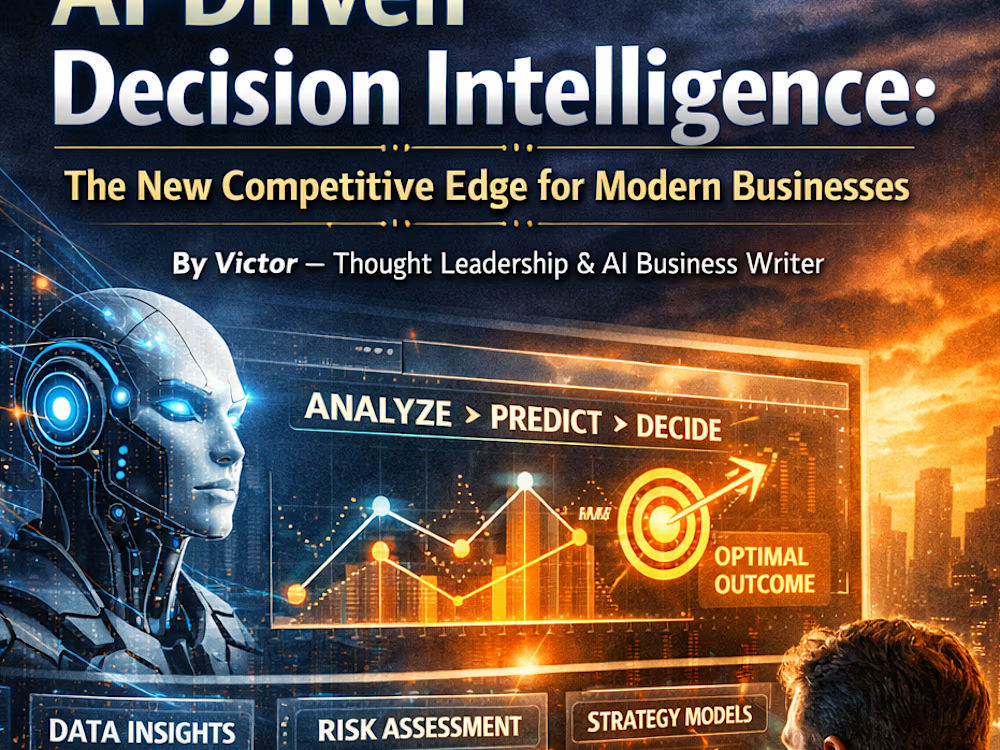

Section 4, 5 and 6 - or the full Assignment and steps go here >>>
https://docs.google.com/document/d/1Xq725YGZYzscUkPRpu0ZBwFxsNX9cQ6kbDRIjh0j07E/edit?usp=sharing
The network for creativity
Join 1.25M professional creatives like you
Connect with clients, get discovered, and run your business 100% commission-free
Creatives on Contra have earned over $150M and we are just getting started
Trending
retrofuturism
Share your favorite designs from the past exploring the distant future. Or your own take on the aesthetic 🚀
halftone
Dots. Texture. Grain. Let's see your designs using the halftone technique.

Midjourney
Creatives are showing off what they're making with Midjourney.
colorgrade
Video editors sound off: How do you enhance the mood of your video in color grading?
Related posts

Made a thinking animation for an AI chat two weeks ago. The client's logo only had the capybara in profile — so I asked @QuiverAI for a front view, polished it, and rigged it in SVG with Claude Code. It turns, it doesn't rotate.

Super cool haha! 😍

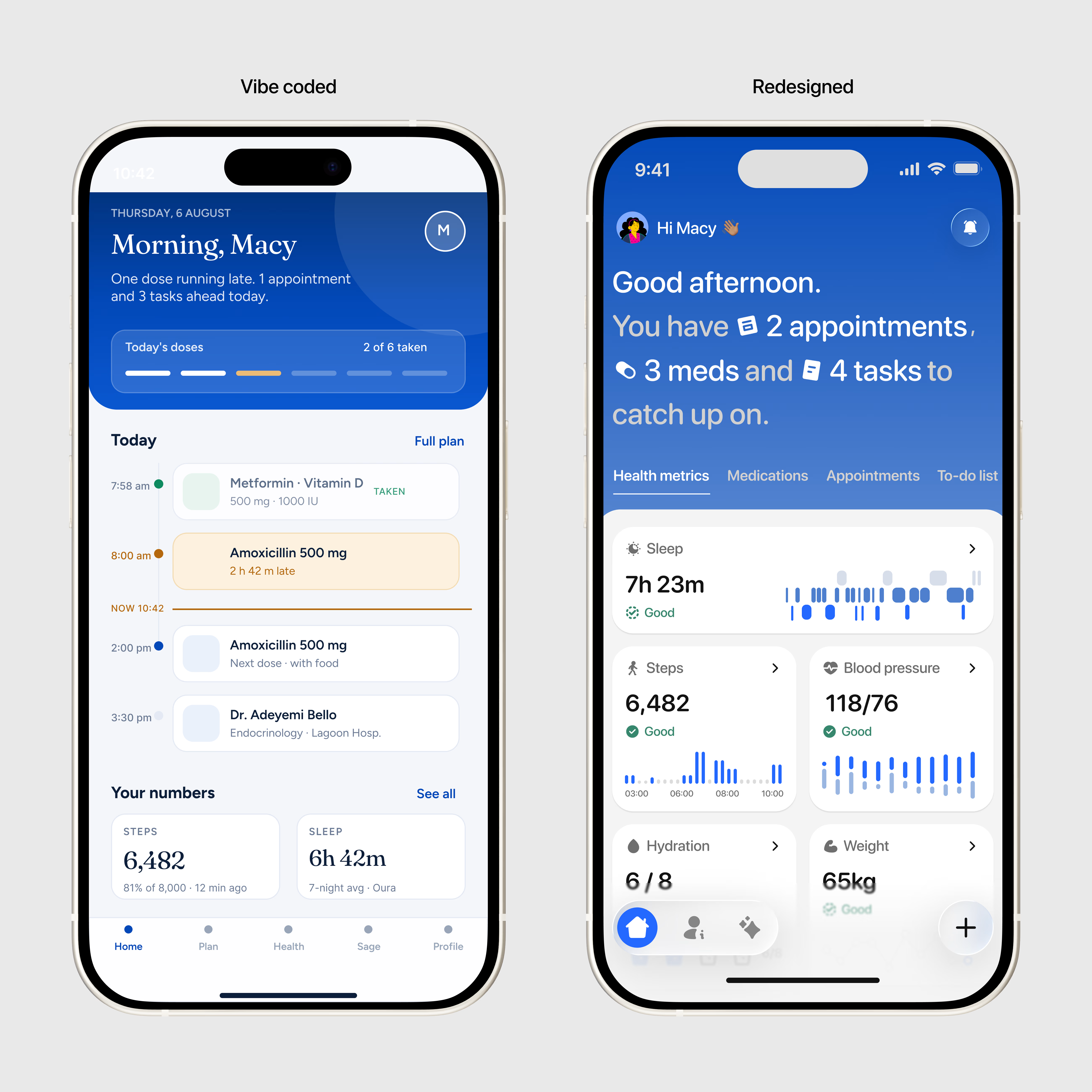
From AI generated concept to a more intentional product experience.
I reworked this health app with a focus on hierarchy, clarity, and usability.
I’m currently open to new product design projects. Let’s work together. https://cal.com/wuraola/30mins-meeting




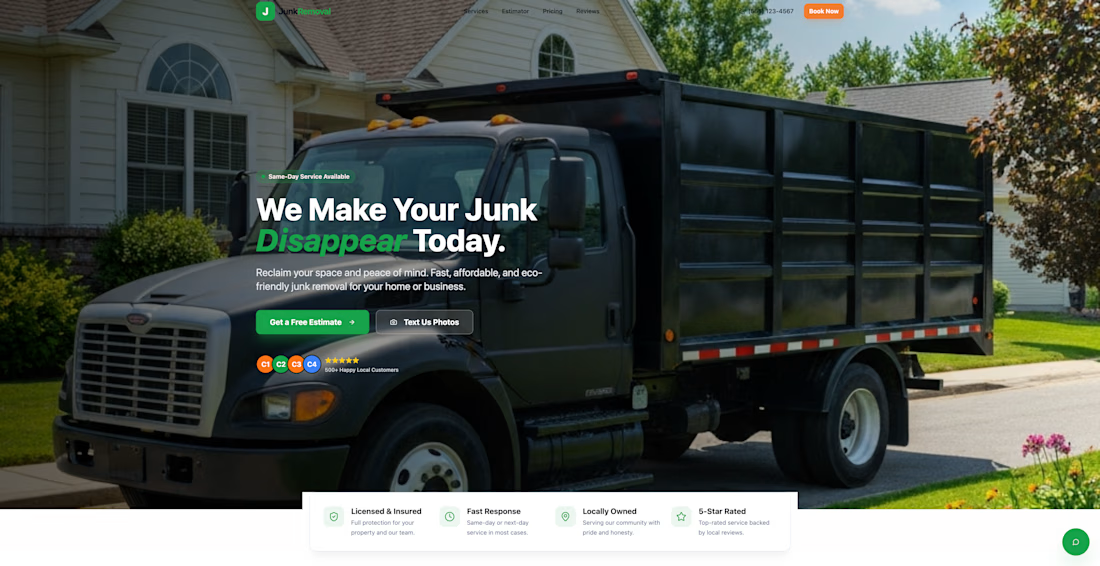
This is actually a website's first fold for a junk removal company
👍 . I created it using Go High Level.



Cool work