The network for creativity
Join 1.25M professional creatives like you
Connect with clients, get discovered, and run your business 100% commission-free
Creatives on Contra have earned over $150M and we are just getting started
Back to feedPost
My system told the operator that the piece in front of her didn't exist.
Welding had logged 5. She'd already cleaned 6. The sixth one was sitting on her table, and the app wouldn't let her record it.
That lock was mine. I designed it. Each stage could only register what the previous stage had passed forward — clean data, clean sequence. On the floor it meant the software was arguing with reality, and reality wins that argument every time.
So I took it out. But removing the validation isn't the interesting part. What went in its place:
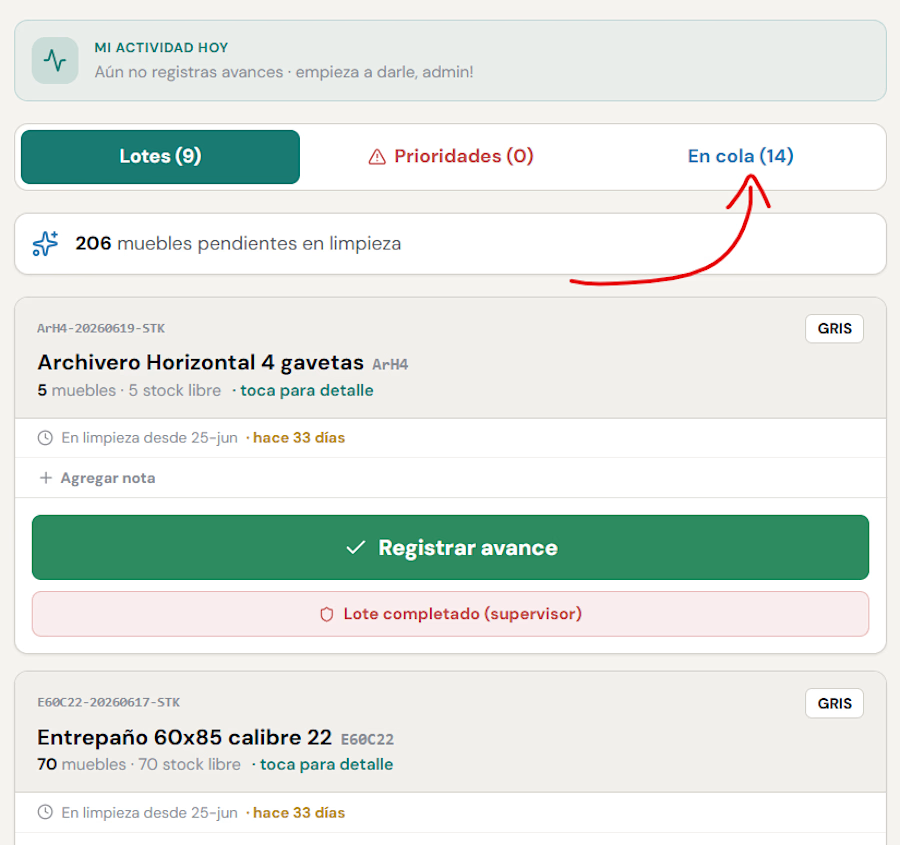
— A queue tab for batches that haven't formally reached your station yet, with a live checklist per stage (welding 23/50, cleaning 0/50). Nothing stored. All of it derived from the ledger.
— Whoever physically has the batch can claim it forward, logging when it actually arrived.
— Logging ahead asks for a confirmation instead of blocking. The gap stays visible — the fast station isn't punished, the slow one is flagged.
— One hard rule survives: never more than the batch total.
That's the line I keep coming back to. A process lock enforces a sequence someone assumed. A data invariant enforces something physically true. The first should bend. The second shouldn't.
What do you do when the data and the floor disagree — block the entry, or reconcile backward?
The network for creativity
Join 1.25M professional creatives like you
Connect with clients, get discovered, and run your business 100% commission-free
Creatives on Contra have earned over $150M and we are just getting started
Trending

Claude
Claude has entered the design space. How are you using it?

Contra University
Learn from expert creatives how to earn more using next-gen AI tools.
Brand Design
The best brand designers are on Contra. Scroll to see what's trending in brand design. What are you building?
creativeaiflow
Creative AI workflows are evolving. What tools do you use, and what are their strengths and weaknesses?
freelancerlife
Freelancer life is wins, pivots, and everything in between. What’s yours right now?




Related posts

The plant ran on spreadsheets, printed sheets, and a whiteboard on the production floor. Orders moved by hand and by conversation, and the general manager walked the length of the building several times a day to find out where anything stood.
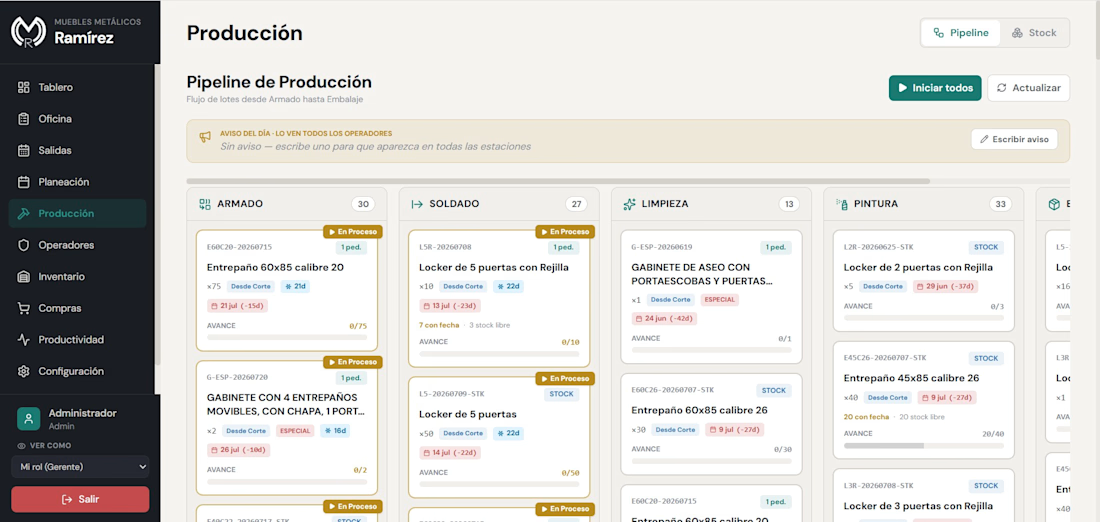
I built the system that replaced all of it: order intake, planning with batch approval, a five-stage production pipeline — assembly, welding, cleaning, painting, warehouse — inventory that separates committed stock from free stock, and dispatch by customer order rather than by batch.
The part worth touching is the operator app. Shop floor staff don't have email, so login is a four-digit PIN against the personnel table, and each station gets one screen instead of a menu.
It also holds the design decision I'm most sure about. Originally a station couldn't register pieces the previous station hadn't passed forward — clean data, clean sequence. Then welding logged 5 while the cleaning operator had already cleaned 6, and the app told her the piece on her table didn't exist. I took the lock out. What replaced it: a queue tab for batches that haven't formally arrived, the ability to claim a batch forward if you physically have it, and a soft confirmation instead of a hard block, so the gap stays visible rather than punishing the faster station. One rule survives untouched — never more than the batch total.
The link below is a working recreation of the operator screen. PIN is 1234. Company, operators and data are fictional; the real system belongs to a client. Only the cleaning station is enabled.



Onboarding flow for a mobile security app: intro screen into a multi-step background scan. Built in Rive with real-time data binding, so the scan state holds and loops until the API responds rather than running on a fixed timeline. Progress ring, step counter, and tab indicator all read from the same state. One state machine, named inputs, integration on the dev side is a few lines.

This company installs treatment plants wherever the client is — a town in Querétaro, a site outside La Paz. The crew travels, works for days, and comes back. Until they did, the office had no idea how the job was actually going. Progress was whatever the crew reported when someone called.
I built the app the crew uses on site. Every activity gets timed from a phone: start it, work it, close it. Closing requires evidence, so a finished task always has a photo attached to it. The office sees target versus actual as it happens, not after the fact.
Two things in it matter more than the timer.
The first is that work stops for reasons that aren't failures. Lunch, end of day, waiting on a part. So there's a general pause that turns the whole header amber — the clock stops, and nobody has to pretend the crew was working through it. Time you don't measure honestly is time you can't quote from later.
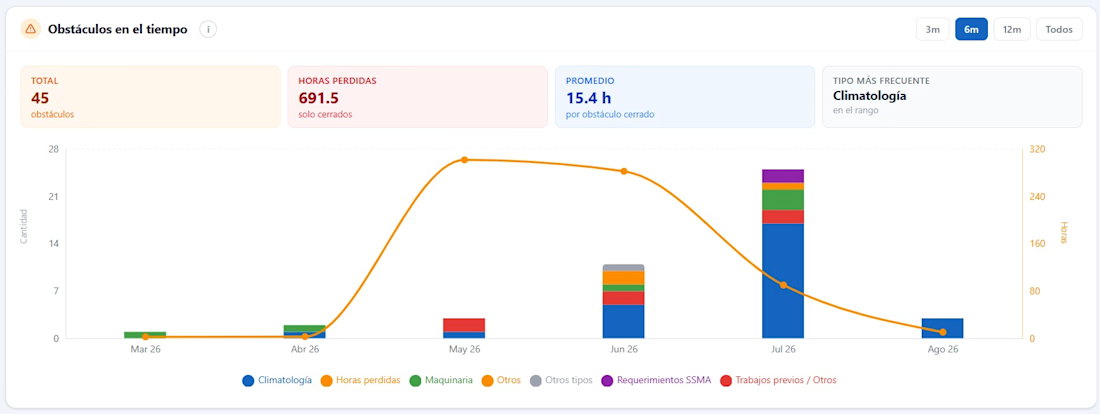
The second is obstacles. A blocked task isn't a late task, and treating them the same is how field estimates rot. An obstacle gets logged with its type and its scope — the whole project or one activity — and resolving it requires evidence too. Resolve the one blocking a given task and that task unblocks.
Everything runs on the crew's own phone, offline-tolerant, over a stack deliberately kept light: React and Vite on Vercel, with Google Sheets as the backing store the office already knew how to read.
The link below is a working recreation of the installer view. Fictional company and projects; site key is 1234. Time runs at 60× so the clock is visible.
https://claude.ai/code/artifact/4f29fd37-552b-49ab-acc6-c3dcd226e5db?via=auto_preview