The network for creativity
Join 1.25M professional creatives like you
Connect with clients, get discovered, and run your business 100% commission-free
Creatives on Contra have earned over $150M and we are just getting started
Back to feedPost

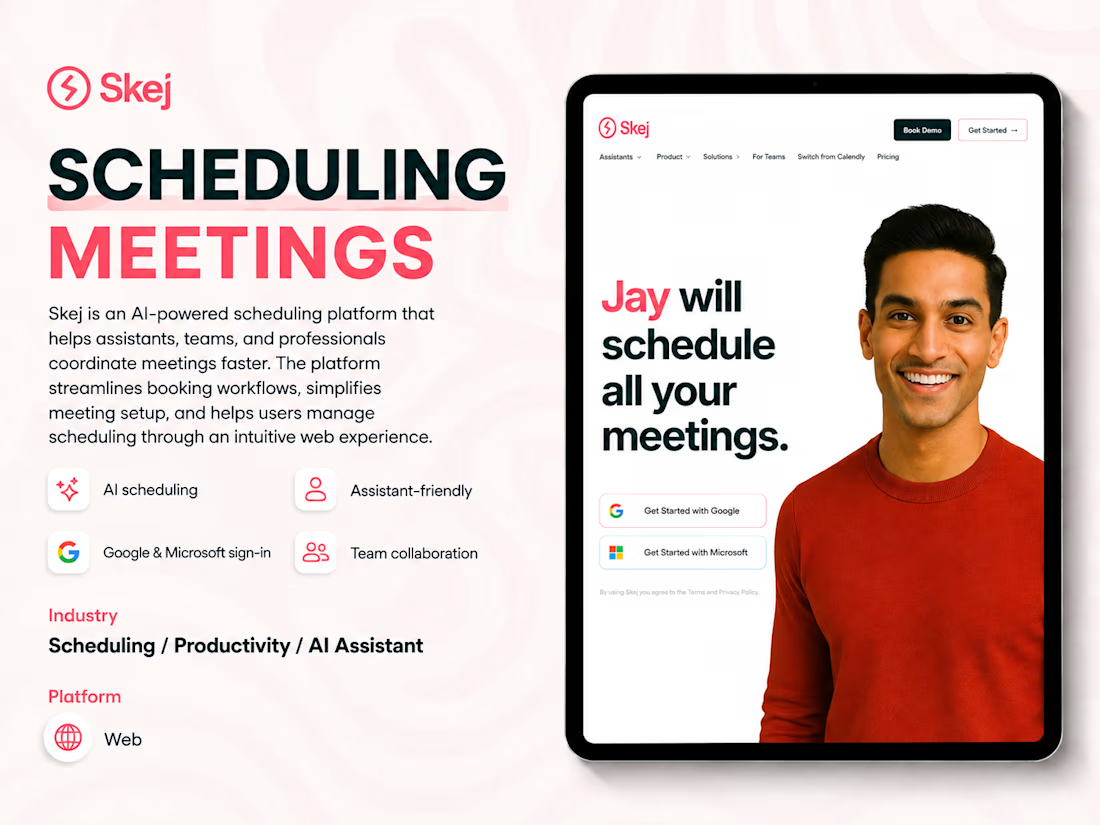
One technical lesson from building Skej: scheduling is not a calendar UI problem. It’s a state-synchronization problem.
A scheduling assistant has to coordinate:
• Gmail and Outlook conversations
• Multiple calendar providers
• Personal availability preferences
• Time zones and more than 80 languages
• Reschedules, cancellations, and participant notifications
The architecture became much cleaner once we separated three responsibilities:
- The conversational layer interprets what the user wants.
- The scheduling engine calculates availability and applies rules.
- Provider adapters handle calendar and email differences.
We also treated every meeting as an explicit lifecycle—proposed, confirmed, rescheduled, or cancelled- so repeated integration events could be handled safely.
The takeaway: let AI interpret intent, but keep calendar changes inside deterministic, testable workflows.
That separation makes integrations easier to extend and scheduling behavior far more dependable.
#AIEngineering #SystemDesign #NodeJS #NextJS #SaaSDevelopment


The network for creativity
Join 1.25M professional creatives like you
Connect with clients, get discovered, and run your business 100% commission-free
Creatives on Contra have earned over $150M and we are just getting started





Related posts

Booking a fitting shouldn’t take more messages than the alteration itself.
Meet Tivora Atelier, a fictional clothing alterations studio in Bucharest. The problem: a solo owner spends too much time asking every customer the same questions and coordinating appointments by hand.
I designed and built a booking experience in @Lovable that takes a customer from “Can I book?” to a confirmed fitting. They share garment details, choose an available time and receive a confirmation email. They can add the fitting to their calendar or use a private link to manage it later.
On the other side, the owner has one view for appointments, garment notes and availability.
This is an exploratory demo, not a real booking service. The video walks through the customer and owner experiences in under a minute.
Explore the public project: https://tivoraatelier.lovable.app/
#lovablechallenge


Great job, Anca


Top-notch design.

🤔When applying to jobs, I often see requirements like “advanced Figma skills” or “using best practices, Auto Layout, components, variables, etc.”
Come on, this is the basics.🤷🏻♀️
As a designer with 10+ years of experience building SaaS web applications, I see these things as a foundation, not something that should even need to be asked about.
But since clients often want proof of these skills, I decided to write an article showing exactly how I organize a large SaaS web application in Figma.
I think it can be useful not only for clients, but also for experienced designers and teams.
And I’d be glad to hear about any practices you use that I didn’t mention.🙌