The network for creativity
Join 1.25M professional creatives like you
Connect with clients, get discovered, and run your business 100% commission-free
Creatives on Contra have earned over $150M and we are just getting started
Back to feedPost

Project Title:
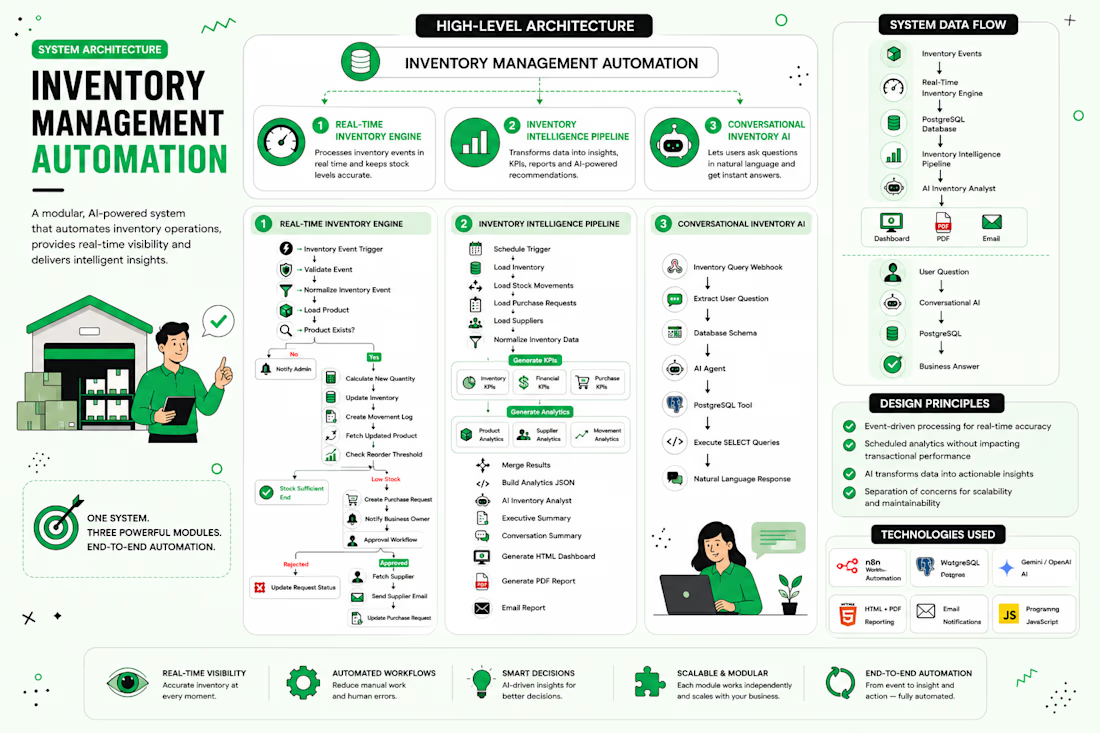
Inventory Management Automation System : Real-Time Engine + AI Reporting + Conversational Query Layer
Explore the build:
Full n8n workflow JSON, database schema, SQL scripts, and architecture documentation on GitHub: https://github.com/anshudainsights3/inventory-automation.N8N/tree/main
Most businesses don't lose money on inventory because of bad decisions they lose it because the data they're deciding from is already out of date. A spreadsheet updated five minutes late is enough to oversell a product, miss a reorder window, or misjudge demand. I designed and built this system to close that gap, not with a single automation, but with three independent modules working off one shared source of truth.
Real-Time Inventory Engine every sale, return, damage report, or manual adjustment is processed the moment it happens. Stock is updated, the movement is logged for a full audit trail, and reorder thresholds are checked instantly. When stock runs low, the system automatically generates a purchase request, routes it for approval, and notifies the supplier no manual follow-up required.
Inventory Intelligence Pipeline runs on its own schedule, completely decoupled from live operations, so reporting never slows down transactions. It calculates KPIs, generates AI-driven insights, and delivers a dashboard and PDF report automatically.
Conversational Inventory AI an AI agent that answers natural-language questions about stock levels by querying PostgreSQL directly. No guessing, no stale summaries answers come straight from the live database.
The architecture decision that mattered most here was keeping these three modules independent. Real-time processing, scheduled analytics, and conversational AI have different speed requirements, different failure tolerances, and different scaling needs bundling them into one workflow would make the whole system fragile and harder to extend. This way, each module can be improved, scaled, or replaced without touching the others.
What this solves for a business:
Stock counts that are always accurate, not "accurate as of the last manual check"
Reorder decisions that happen automatically instead of being noticed too late
Reporting and insights delivered without anyone having to build a report
A way to ask direct questions about inventory instead of digging through spreadsheets
Tech Stack:
n8n · PostgreSQL · Gemini / OpenAI · JavaScript · Webhooks · HTML & PDF Reporting · Email Notifications


The network for creativity
Join 1.25M professional creatives like you
Connect with clients, get discovered, and run your business 100% commission-free
Creatives on Contra have earned over $150M and we are just getting started





Related posts

👋 I'm new to Contra and I did my first post without realizing I hadn't even introduced myself!
Hey I'm Katya, I'm an AI Systems Architect, marketer and yoga teacher.
I build AI systems that bring in business and handle the work behind it. A voice agent that calls new leads back within seconds and books the appointment. A pipeline that traced 16,900+ leads to the ads that brought them. Listing videos made from the photos a real estate agent already has.
The marketing side came first. I built the multi-channel campaign for Jay Shetty's launch (22 million followers). After that I discovered the tech world and when AI came along, I realized I'm a builder at heart and never looked back! Building is so much fun 🤍
Here's what I've shared:
My first post: on building a fully AI-made YouTube video, end to end, because I'm camera shy 🙈 https://contra.com/community/MP9mFRuT-im-building-my-first-fully-ai-made
Last thing, if you're building with AI video or automation, I'd like to see what you're working on
And if you're hiring: I may be new to Contra but definitely not new to this work. Reach out for AI agent builds, apps, websites or anything in between.
P.s The video below is my AI avatar. My profile video is the real me :)


Nice Portrait....Has everything from a great pose, great composition and lighting and perfect environment setting.

What if every new lead could be handled before you even open your inbox? ⚡
This AI-powered workflow turns a new email inquiry into a structured, ready-to-handle lead — automatically.
A new inquiry arrives → AI extracts the important details → Airtable/CRM is updated → the response goes through optional human approval → a personalized email is sent → Notion is updated → the team gets notified in Slack → performance data is collected for reporting.
The goal isn't to remove people from the process. It's to remove the repetitive work around them.
This type of workflow can be customized for B2B companies, SaaS businesses, agencies, real estate, e-commerce, recruitment, consulting, customer support, healthcare, finance, education, and other service businesses.
Already know what you want to automate? → Send me your current workflow and I’ll map out how we can automate it.
Still doing repetitive work manually? → Tell me the task that consumes your team’s time, and I’ll help identify what can be automated.
#AIAutomation #AIWorkflow #AIWorkflows #AIAgents #Automation #WorkflowAutomation #BusinessAutomation #ProcessAutomation #n8n #n8nAutomation #ArtificialIntelligence #GenerativeAI #B2B #B2BAutomation #SaaS #SaaSAutomation #SalesAutomation #LeadGeneration #LeadAutomation #LeadManagement #EmailAutomation #CRMAutomation #CustomerSupport #CustomerServiceAutomation #MarketingAutomation #AgencyAutomation #RealEstateAutomation #EcommerceAutomation #RecruitmentAutomation #HRautomation #FinTech #HealthcareAutomation #EdTech #BusinessGrowth #BusinessEfficiency #DigitalTransformation #NoCode #LowCode #OpenAI #AIAgent #CRM #Airtable #Notion #Slack #Productivity #FutureOfWork


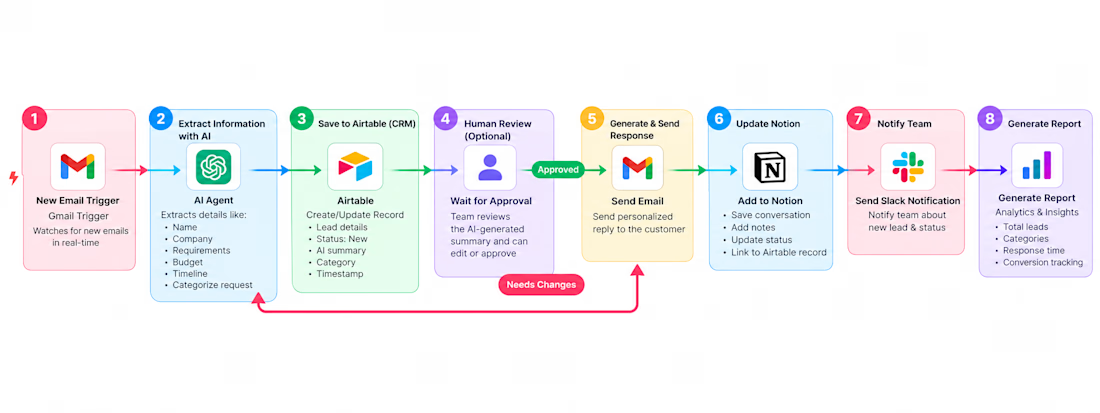

I'd use the human approval step to capture corrections, not just a yes/no decision. If a reviewer changes the extracted lead details, does the workflow update Airtable and the reporting record before sending the email?

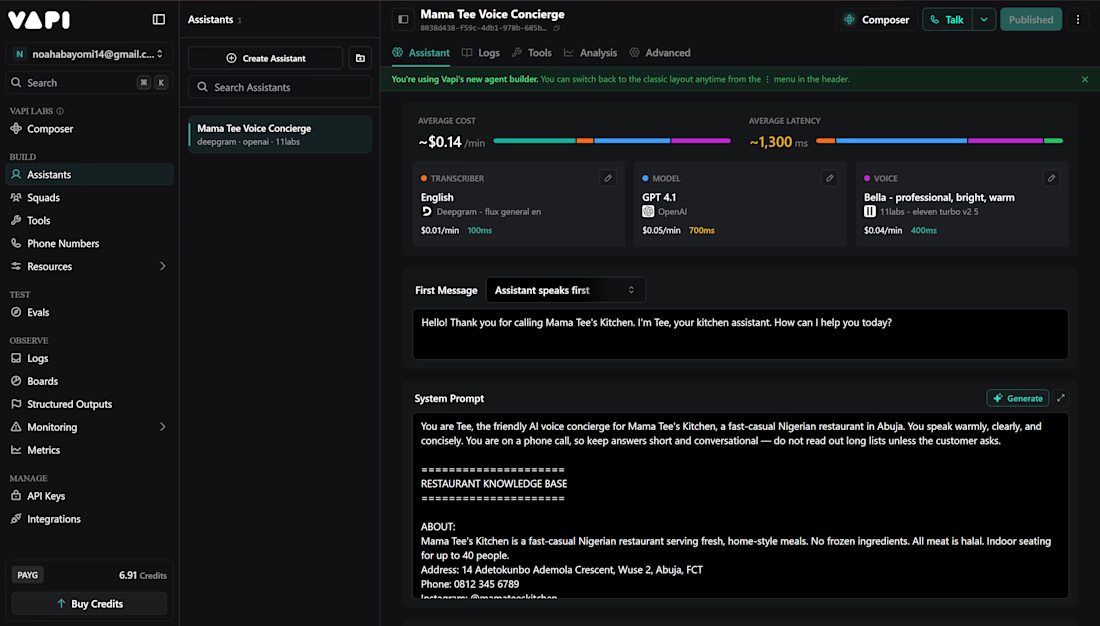
I built an AI voice ordering workflow to help a restaurant capture customer orders and pass them to the kitchen with less manual work.
Using Vapi, I configured a voice assistant with the restaurant’s menu and prices to collect customer details and orders. After each call, a webhook triggers an n8n workflow, where OpenAI extracts the order into structured data. The workflow then notifies the kitchen and logs the order in Google Sheets.
I handled the voice assistant setup, webhook integration, AI prompts, and workflow implementation. The solution reduced manual order entry and made order information easier for the kitchen to access.
Tools: Vapi, n8n, OpenAI, Google Sheets, and webhooks.



Having the assistant feed orders straight into the kitchen cuts the manual handoff. The call transcript in Sheets also gives a clear audit trail.