The network for creativity
Join 1.25M professional creatives like you
Connect with clients, get discovered, and run your business 100% commission-free
Creatives on Contra have earned over $150M and we are just getting started
Back to feedPost
AI Chatbots Should Do More Than Just Answer Questions 🤖
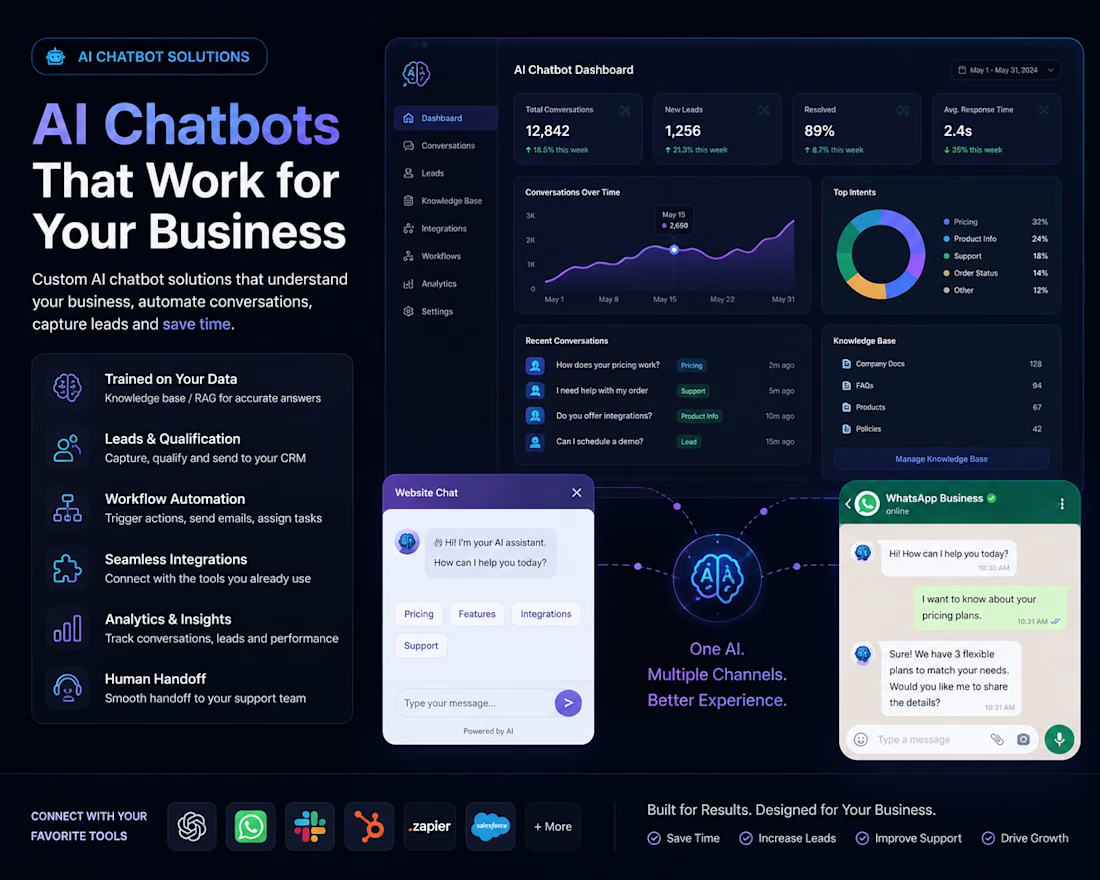
I’ve been building AI chatbot solutions that go beyond basic Q&A.
A useful business chatbot should be able to understand your company’s knowledge, answer customer questions accurately, capture and qualify leads, trigger workflows, and connect with the tools your team already uses.
Recent solutions I’ve worked on include:
→ Custom knowledge-base / RAG chatbots
→ OpenAI & LLM integrations
→ Website AI assistants
→ WhatsApp & messaging integrations
→ Lead capture and qualification
→ CRM & API integrations
→ Human handoff workflows
→ Conversation history & analytics
→ Custom admin dashboards
The goal is simple: turn AI into a practical business tool—not just another chat window.
If your business has repetitive customer questions, manual lead handling, or information scattered across documents and systems, a custom AI assistant can automate a significant part of that workflow.



Exactly, AI chatbot should sound real like human

Absolutely. The best AI chatbots should feel natural, understand context, and respond conversationally — not like a scripted bot.

This is wonderful. I fully buy into this content any day any time. Keep up the good work
Thank you so much! Really appreciate the support. I’ll keep sharing practical AI solutions and real-world development insights. 🙌
Looking forward to more from you

Super impressive work
The network for creativity
Join 1.25M professional creatives like you
Connect with clients, get discovered, and run your business 100% commission-free
Creatives on Contra have earned over $150M and we are just getting started





Related posts

Then: 1 month, 1 template.
Now: 1 week, 15 templates.
Same designer, different workflow.
I wrote up how I built no-code.supply: fifteen website templates, each with its own brand, in HTML and React, and some in Framer too. Claude Code did most of the typing. I did the directing.

no-code.supply
How I built 15 website templates with an AI coding agent in a week
How I built 15 AI-ready website templates with Claude Code in a week: the workflow, the quality bar, and why a template is only the starting point.

Going from one template a month to fifteen a week is wild. How much of the design direction did you still do by hand?

What if every new lead could be handled before you even open your inbox? ⚡
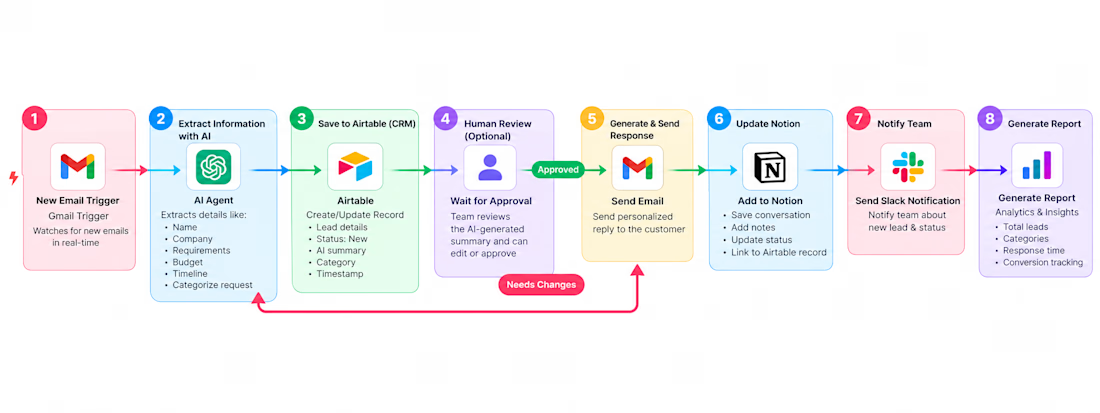
This AI-powered workflow turns a new email inquiry into a structured, ready-to-handle lead — automatically.
A new inquiry arrives → AI extracts the important details → Airtable/CRM is updated → the response goes through optional human approval → a personalized email is sent → Notion is updated → the team gets notified in Slack → performance data is collected for reporting.
The goal isn't to remove people from the process. It's to remove the repetitive work around them.
This type of workflow can be customized for B2B companies, SaaS businesses, agencies, real estate, e-commerce, recruitment, consulting, customer support, healthcare, finance, education, and other service businesses.
Already know what you want to automate? → Send me your current workflow and I’ll map out how we can automate it.
Still doing repetitive work manually? → Tell me the task that consumes your team’s time, and I’ll help identify what can be automated.
#AIAutomation #AIWorkflow #AIWorkflows #AIAgents #Automation #WorkflowAutomation #BusinessAutomation #ProcessAutomation #n8n #n8nAutomation #ArtificialIntelligence #GenerativeAI #B2B #B2BAutomation #SaaS #SaaSAutomation #SalesAutomation #LeadGeneration #LeadAutomation #LeadManagement #EmailAutomation #CRMAutomation #CustomerSupport #CustomerServiceAutomation #MarketingAutomation #AgencyAutomation #RealEstateAutomation #EcommerceAutomation #RecruitmentAutomation #HRautomation #FinTech #HealthcareAutomation #EdTech #BusinessGrowth #BusinessEfficiency #DigitalTransformation #NoCode #LowCode #OpenAI #AIAgent #CRM #Airtable #Notion #Slack #Productivity #FutureOfWork



I'd use the human approval step to capture corrections, not just a yes/no decision. If a reviewer changes the extracted lead details, does the workflow update Airtable and the reporting record before sending the email?

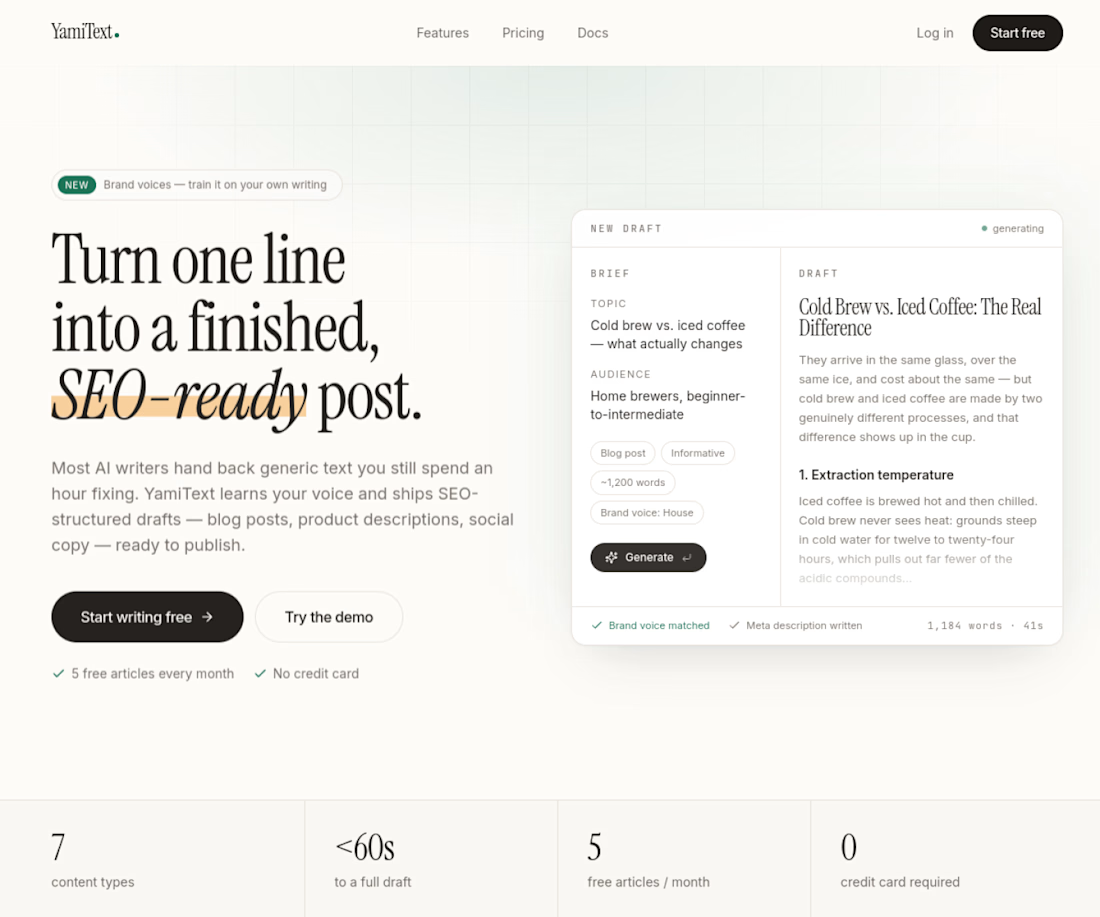
discover the new yamitext.com a new way to generate and organize your content with AI



generating and organizing content in one spot sounds handy, nice launch 🚀