The network for creativity
Join 1.25M professional creatives like you
Connect with clients, get discovered, and run your business 100% commission-free
Creatives on Contra have earned over $150M and we are just getting started
Back to feedPost

Turning Delivery Failures into Actionable Operational Intelligence
One backend system I enjoyed designing involved improving visibility into high-volume delivery failure events generated by a communication infrastructure platform.
As the platform scaled, millions of delivery events were being processed regularly, including a large volume of failed deliveries originating from different providers and infrastructure layers. The challenge was that these failures were often inconsistent, noisy, and difficult to interpret operationally. Similar failures could appear with entirely different messages depending on the provider, while multiple underlying causes could surface through nearly identical responses.
This created two major problems:
operational teams lacked meaningful visibility into failure patterns
end users had limited guidance on why failures were occurring or how to improve delivery performance
The raw failure events themselves were technically available, but they were not actionable.
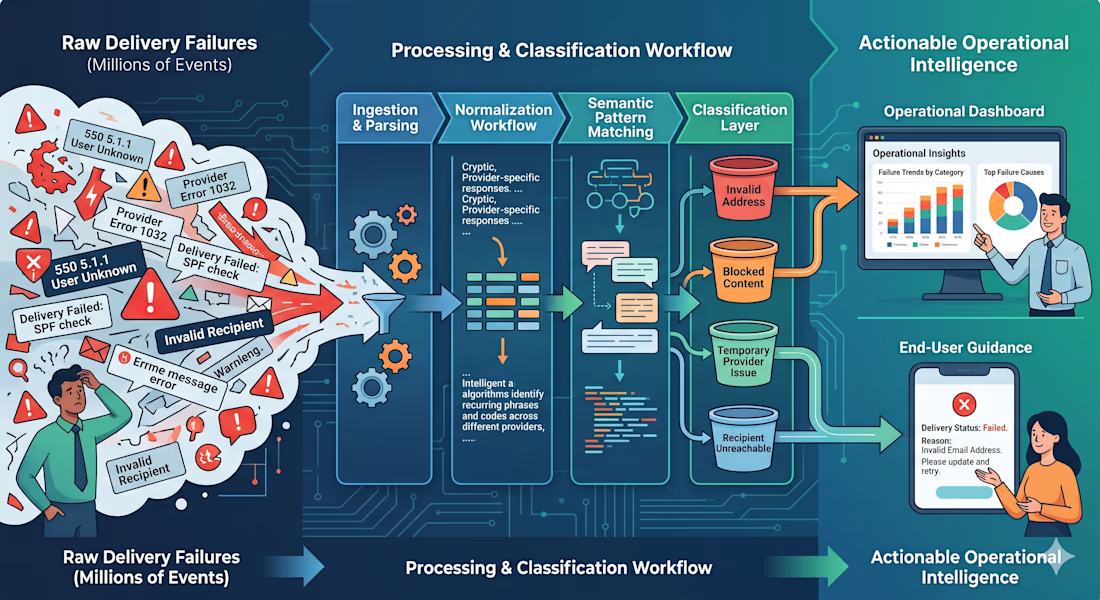
To improve this, I worked on designing a classification and processing workflow that transformed unstructured delivery failures into structured operational insights.
The system focused on:
parsing large volumes of failure events
identifying recurring semantic patterns across providers
grouping failures into meaningful operational categories
normalizing inconsistent responses into standardized classifications
exposing trends and diagnostics through analytics workflows
A major design consideration was balancing flexibility with maintainability. Provider responses evolved continuously, and the system needed to accommodate new patterns without repeatedly requiring deep changes to the processing pipeline.
The architecture evolved into a layered workflow where:
ingestion pipelines handled raw event processing
normalization workflows standardized provider-specific responses
classification layers mapped events into operationally meaningful categories
analytics systems exposed trends and remediation visibility
The result was a system that transformed previously noisy infrastructure events into actionable operational intelligence, helping improve visibility into delivery behavior patterns and enabling more informed remediation decisions.
What I found particularly interesting about this project was that the challenge was not purely about processing large volumes of events — it was about designing workflows that could convert operational noise into understandable, maintainable, and scalable product intelligence. It reinforced how impactful backend systems become when they help users reason about complex operational behavior rather than simply exposing raw infrastructure data.


The network for creativity
Join 1.25M professional creatives like you
Connect with clients, get discovered, and run your business 100% commission-free
Creatives on Contra have earned over $150M and we are just getting started
Related posts

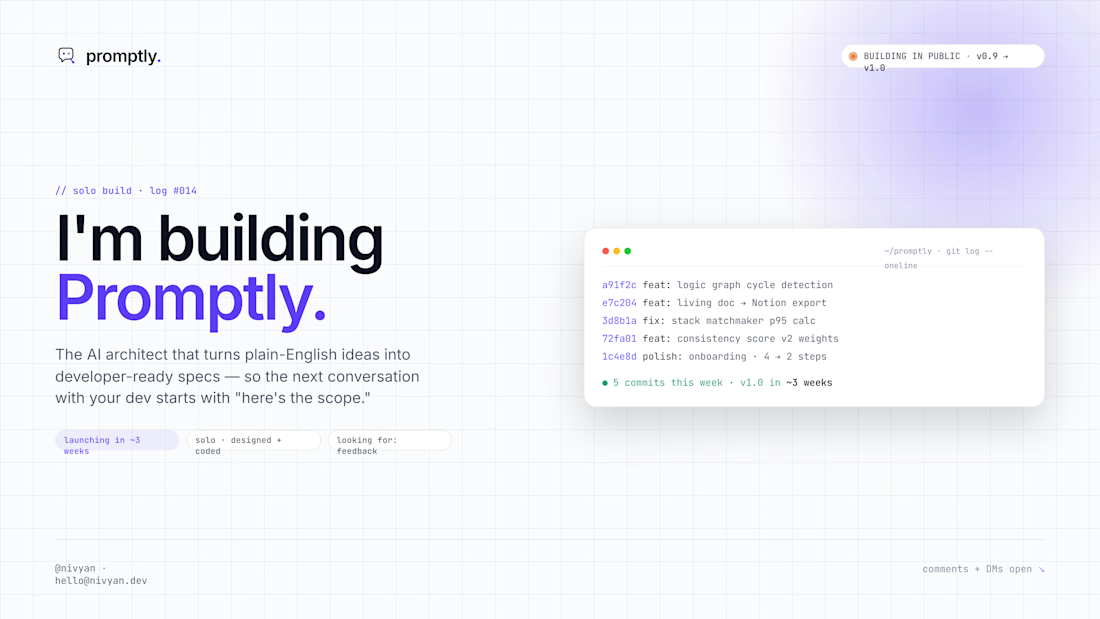
Hey Contra 👋 I've been heads-down building Promptly, and I'd love your eyes on it before our launch.
From my time delivering over 20 software projects as a tech lead, I realized the biggest bottleneck in building an app isn't the code itself. It is communication. Founders speak in ideas, and developers speak in strict logic.
Here is how Promptly works. You just describe your app idea in plain English. The AI actually pushes back, asks the hard questions, catches the vague bits, and automatically writes a developer-ready blueprint as you chat.
The goal is simple. When you hand this document to a developer, the next thing you get back is an accurate, fixed-price quote. No more wasting days trying to draft technical specifications and sitting through endless rounds of discovery calls just to get on the same page.
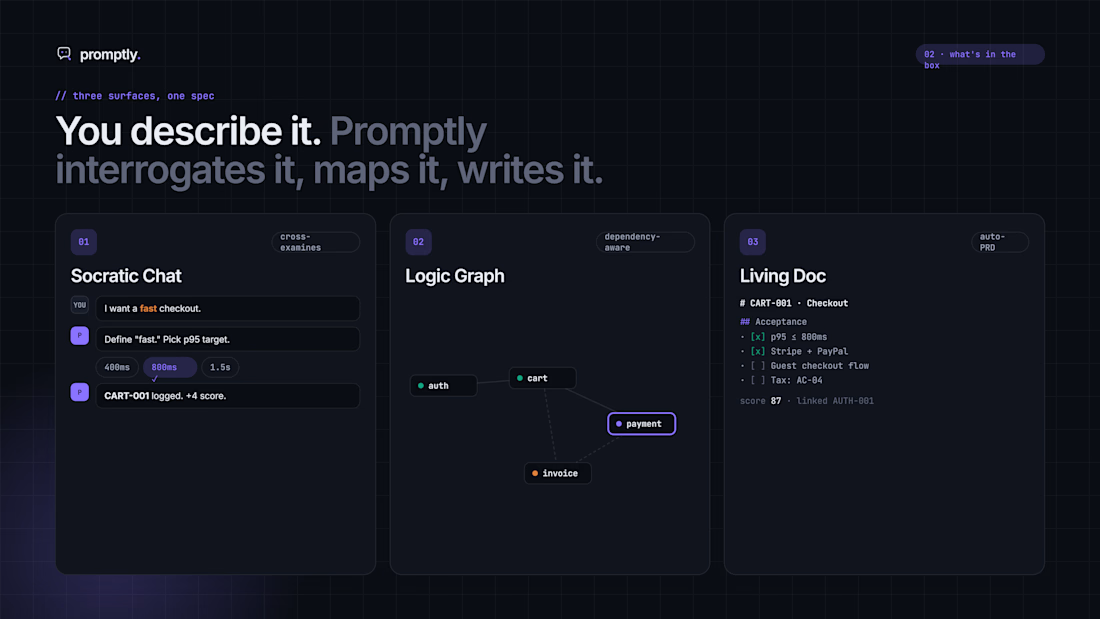
Instead of staring at a blank document, you get three tools that update in real-time:
The Pushback Chat: It refuses to just nod along. If you say "make it fast and secure," it helps you define exactly what that means. It hunts down edge cases before you ever pay someone to fix them.
The Visual Map: A live, interactive diagram showing exactly how your features connect. It catches logic flaws and missing steps before any code is written.
The Living Blueprint: An auto-generated, professional project spec that exports straight to Notion, Linear, or PDF.
Plus, it gives your idea a "Developer-Readiness Score" out of 100 so you know if it is actually ready to build. It even recommends the best tech stack based on your specific budget and complexity.
The core engine and all of these interactive features are fully functional right now, but I am still smoothing out the final rough edges. I am aiming for a public launch in about three weeks.
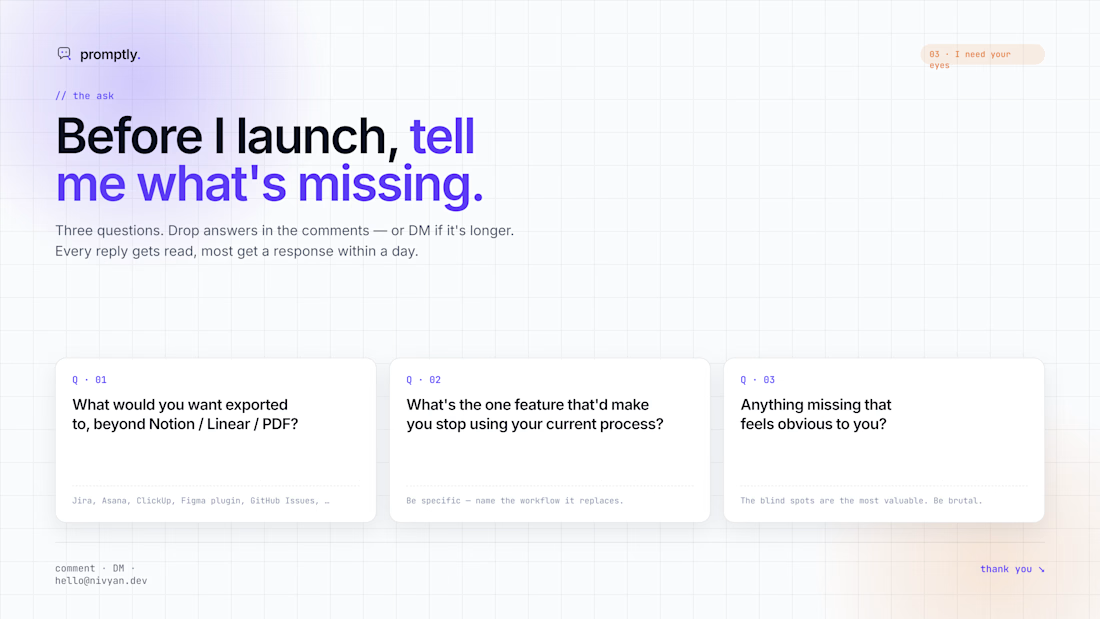
Where I need your help. I have three quick questions:
Where would you want to export your project blueprint, beyond Notion, Linear, or PDF?
What is the biggest headache you face right now when trying to explain your ideas to developers?
What feels missing? The blind spots are the most valuable to me right now.
Any feedback on new features, improvements, or things I should kill entirely would be hugely appreciated. Drop a comment below.
Thank you for taking a look 🙏
building solo, in public
Product ManagementFull Stack DevelopmentSoftware DevelopmentWeb DevelopmentAI DevelopmentClaudeNext.jsFigma



This is a very interesting concept! Where did you design the UI/UX? I feel like a better choice of font is still out there. Overall good work and clean UI. 🔥

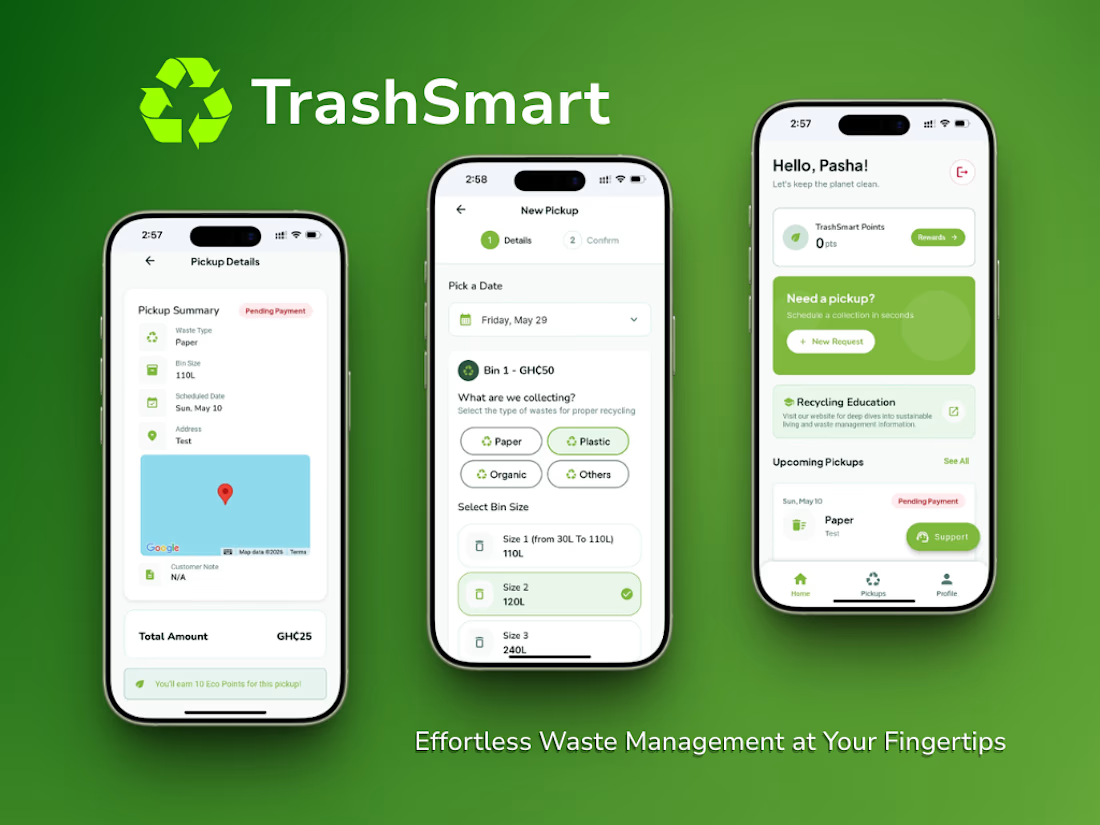
I’ve been working on a waste management and sustainability platform called TrashSmart.
It’s a centralized system built for one organization to manage end-to-end waste collection operations. The platform connects registered users who request waste pickups with assigned collectors, while admins oversee scheduling, assignments, payments, and overall operations.
The system supports multiple waste types and pickup sizes, includes a structured order workflow from request to completion, and features a rewards system that encourages recycling and eco-friendly behavior. Both users and collectors earn points that can be redeemed or used as incentives within the platform.
From a technical perspective, I focused on building the full backend architecture using Firebase, including role-based access control, Firestore data modeling, authentication flows, and operational logic for orders, payouts, and rewards.
It’s been a solid build in terms of designing something that blends logistics, sustainability and incentive-driven behavior into one system.



Stunning!

An autonomous multi-agent orchestrator that reduces tailored job application generation from hours to under 5 minutes. Built on a LangGraph Planner-Researcher architecture, it features an LLM-as-a-judge feedback loop, resilient external tool calling with graceful failure, and full agent tracing via Langfuse to ensure production-level observability.


Interesting app! How does it manage the token cost?










Trending

Claude
Claude has entered the design space. How are you using Claude Design?

Contra University
Learn from expert creatives how to earn more using next-gen AI tools.
creativeaiflow
Creative AI workflows are evolving. What tools do you use, and what are their strengths and weaknesses?
portfolioreview
The best portfolios tell a story, not just show a grid. Share yours for feedback.
freelancerlife
Freelancer life is wins, pivots, and everything in between. What’s yours right now?