The network for creativity
Join 1.25M professional creatives like you
Connect with clients, get discovered, and run your business 100% commission-free
Creatives on Contra have earned over $150M and we are just getting started
Back to feedPost

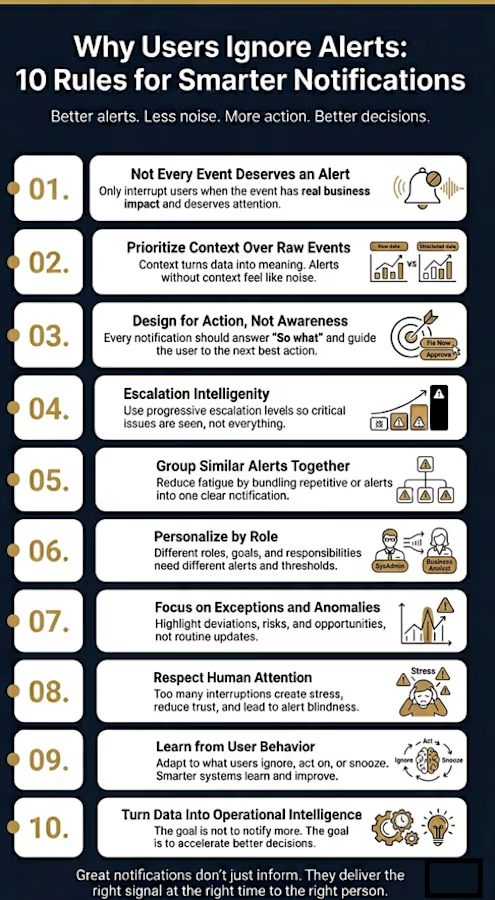
How many alerts on your mobile have you ignored today?
Out of the tens or hundreds of notifications, emails, and messages we receive every day, only a few really matter.
The same logic applies to business, as many software systems were designed around the idea that if we keep end-users informed, we help them act faster.
In practice, this good intention created an unwanted pattern: the system keeps notifying end-users, they feel overwhelmed, and the human mind is implicitly trained to ignore most of these alerts.
None of us is an exception, neither on a personal level nor on a business level.
A study from The Reuters Institute highlighted the risk of alert fatigue in news notifications, as some users receive up to 50 alerts per day, and many disable alerts when they become too frequent or not useful.
At the business level, Microsoft’s Work Trend Index reported that knowledge workers can receive a ping around every 1.75 minutes during the workday, about 275 interruptions in 8 hours!
Still, the real risk goes far beyond fatigue, as important and critical alerts get buried with the ordinary ones we might ignore.
Leading companies in the software industry have responded through several approaches. They introduced personalized notifications, classified notifications by severity, and even converted some notifications into automated, pre-designed tasks.
This creates the trend: do not notify more, notify better.
In practice, “better” does not only mean controlling the number or behavior of notifications, but more importantly improving their context.
As an example, instead of a “Low Stock” notification, we can focus on the criticality of the stock level and its business effect, and make the message become:
“A fast-moving item dropped below safety stock in a high-demand branch, supplier delivery is delayed, and open customer orders are increasing.”
Another matter we should consider is the relationship between events. Take this scenario as another example:
One notification states “Sales Increased” while another states “Margin Declined.”
The smarter way to deliver the insight is:
“Sales increased while margin declined because discounts were concentrated in one channel.”
In my personal opinion, this pattern would not only reduce fatigue, but also drive the right action when it is delivered to the right person at the right time.
The network for creativity
Join 1.25M professional creatives like you
Connect with clients, get discovered, and run your business 100% commission-free
Creatives on Contra have earned over $150M and we are just getting started





Related posts

Stop Overthinking. Start Executing.
Most leaders don’t struggle because they lack knowledge—they stall because overthinking gets in the way of action.
I’m hosting a free 45-minute live lesson on October 14, 2026 for leaders who want to close the gap between knowing what to do and actually doing it.
You’ll learn how to:
Spot the pattern behind procrastination and hesitation
Move from overthinking to focused, clear action
Turn insight into a concrete next step that builds momentum and self-trust
This is a free introduction to my program, The Consistency Shift, and it’s designed for high-achievers and entrepreneurs who are ready to execute with less friction.
👉 Reserve your spot here: https://maven.com/p/176abe/stop-overthinking-start-executing-for-leaders
maven.com
Stop Overthinking, Start Executing: For Leaders
When leaders overthink, decisions stall and important work slows down. More information isn’t always the answer. I’ll help you identify the pattern behind hesitation and practice turning insight into a concrete next step. This free introduction to The Consistency Shift focuses on closing the knowing-doing gap—so you can approach decisions and follow-through with greater clarity.

I'm Olanrewaju Agaun, founder of Ubunex. I enjoy building apps where thoughtful design and useful engineering meet.
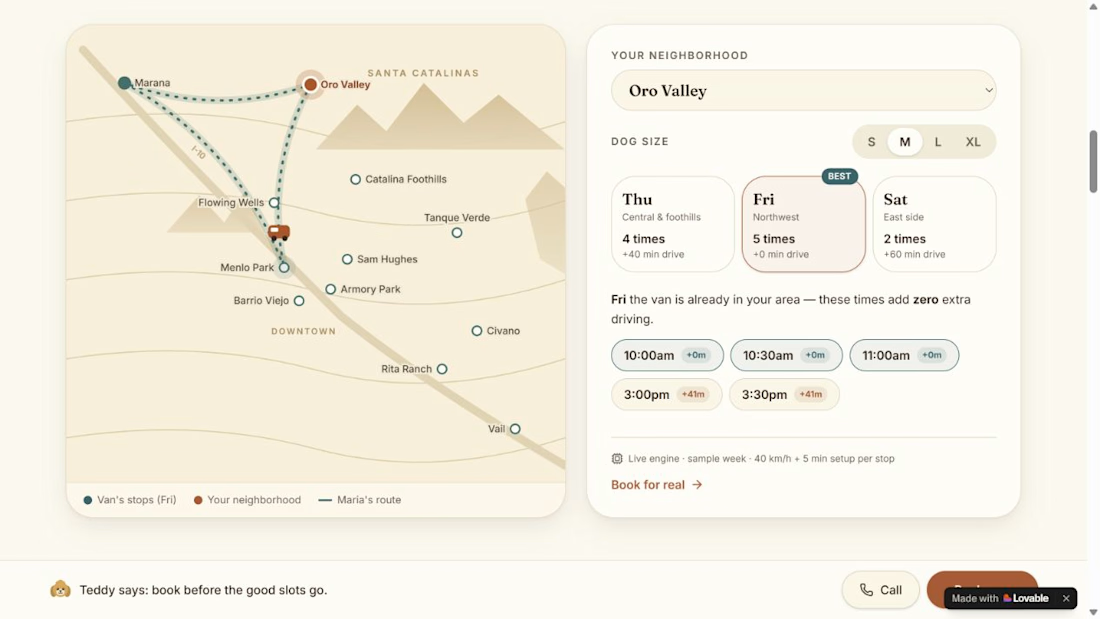
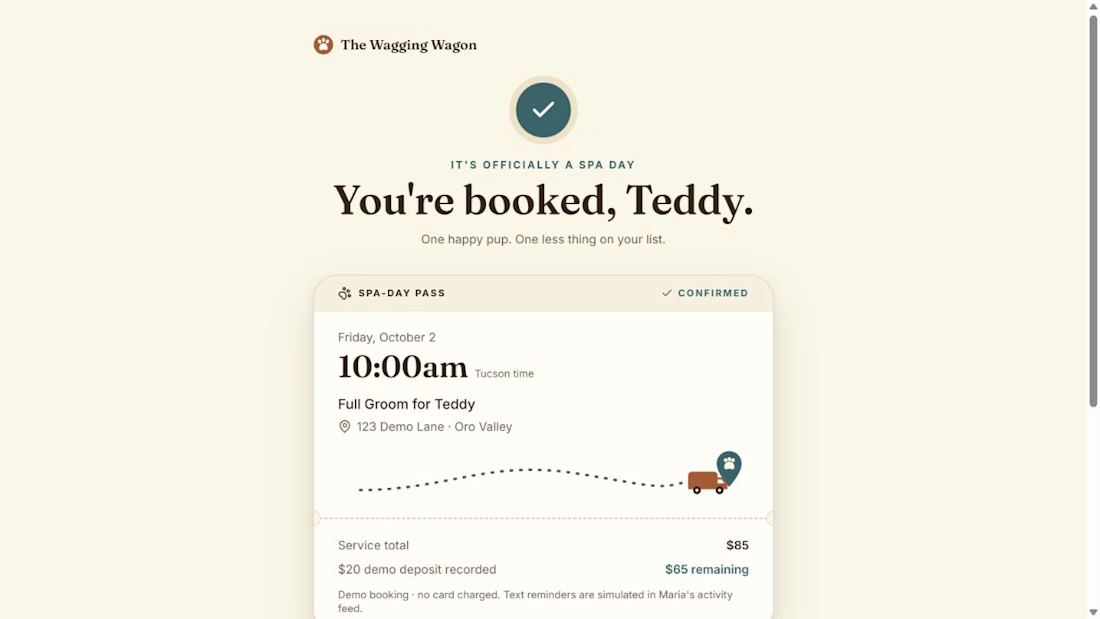
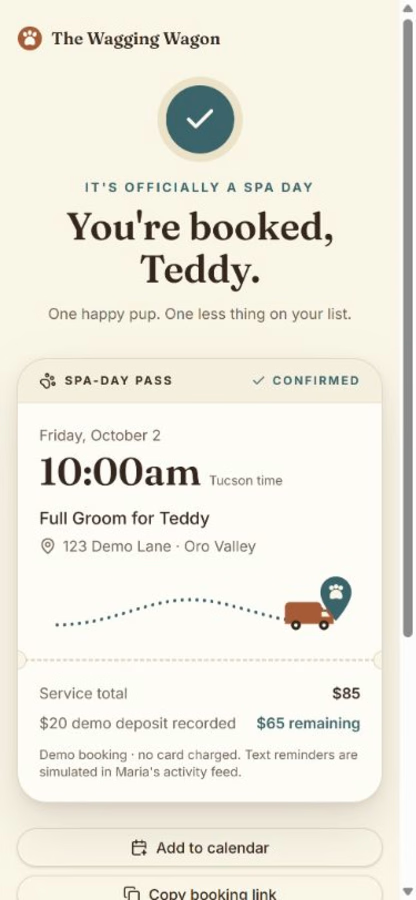
The Wagging Wagon is a small example of that approach: a booking experience for a fictional mobile dog groomer in Tucson.
I cared about the little things—the warm colors, the grooming reveal, the spa-day pass. I also cared about what happens after the click: travel-aware availability, a saved booking, self-service rescheduling, and the updated visit on the owner's calendar.
That's the work I want to do more of: distinctive web apps, booking systems and AI-assisted workflows that make a business easier to run.
Watch the walkthrough, then try it: https://wagging-wagon.lovable.app/
Have a workflow your team keeps managing through texts and spreadsheets? Message me here on Contra about a project.
More about Ubunex: https://ubunex.com/
Built with Lovable. Fictional demo; test checkout and simulated SMS. Still images show sample design states.


that slider effect for the pup's before / after is adorable, so thoughtful!

Hi there!
For my #lovablechallenge submission, I built Spoke & Hub, an intelligent dispatch and booking system for a mobile bike repair crew in Portland, Oregon.
Why I built it:
Standard calendar apps fail mobile service businesses. Owners spend hours playing text-message ping-pong just to figure out what tools to bring ("What exactly is wrong with the bike?"), and they waste unpaid hours driving erratically across the city, because standard tools don't group appointments by location.
What I built:
I designed an end-to-end application that eliminates the manual busywork of triaging and routing:
Visual Triage Front-Door: Customers must select their specific mechanical issue (e.g., brakes, gears, flat) during the booking flow, ensuring the mechanic always packs the exact right parts before leaving the shop.
Geographic Routing: The app requests a zip code upfront and enforces strict routing logic. It only displays availability for the exact days the van is already scheduled to be on that side of the river, eliminating cross-town driving.
Live Repair Tracking: Customers get a real-time status tracker (from "Confirmed" to "On the stand" to "Done") so they never have to text the owner asking for updates.
Zero-Touch Owner Dashboard: The backend turns messy inbound inquiries into perfectly optimized, pre-diagnosed daily route cards.
Instead of just fixing the calendar, I fixed the operational workflow. Spoke & Hub turns a customer's broken bike into a confirmed, profitable route with zero manual effort from the team.
Project Link: https://spokehub.lovable.app/
(Be sure to watch the attached 1-minute video walkthrough to see the automated routing and live tracking in action!)


