The network for creativity
Join 1.25M professional creatives like you
Connect with clients, get discovered, and run your business 100% commission-free
Creatives on Contra have earned over $150M and we are just getting started
Back to feedPost

I’m documenting real-world failure patterns where systems appear healthy but outcomes stall.
This case explores silent failure — when progress stops without errors, alerts, or ownership.
It’s not a technical bug.
It’s an observability and decision gap.
These are the failures that cost the most — because no one sees them coming.

medium.com
A silent failure happens when nothing technically fails — yet nothing meaningful progresses.
No exceptions are thrown. No alerts fire. Dashboards stay green.
The network for creativity
Join 1.25M professional creatives like you
Connect with clients, get discovered, and run your business 100% commission-free
Creatives on Contra have earned over $150M and we are just getting started


Related posts

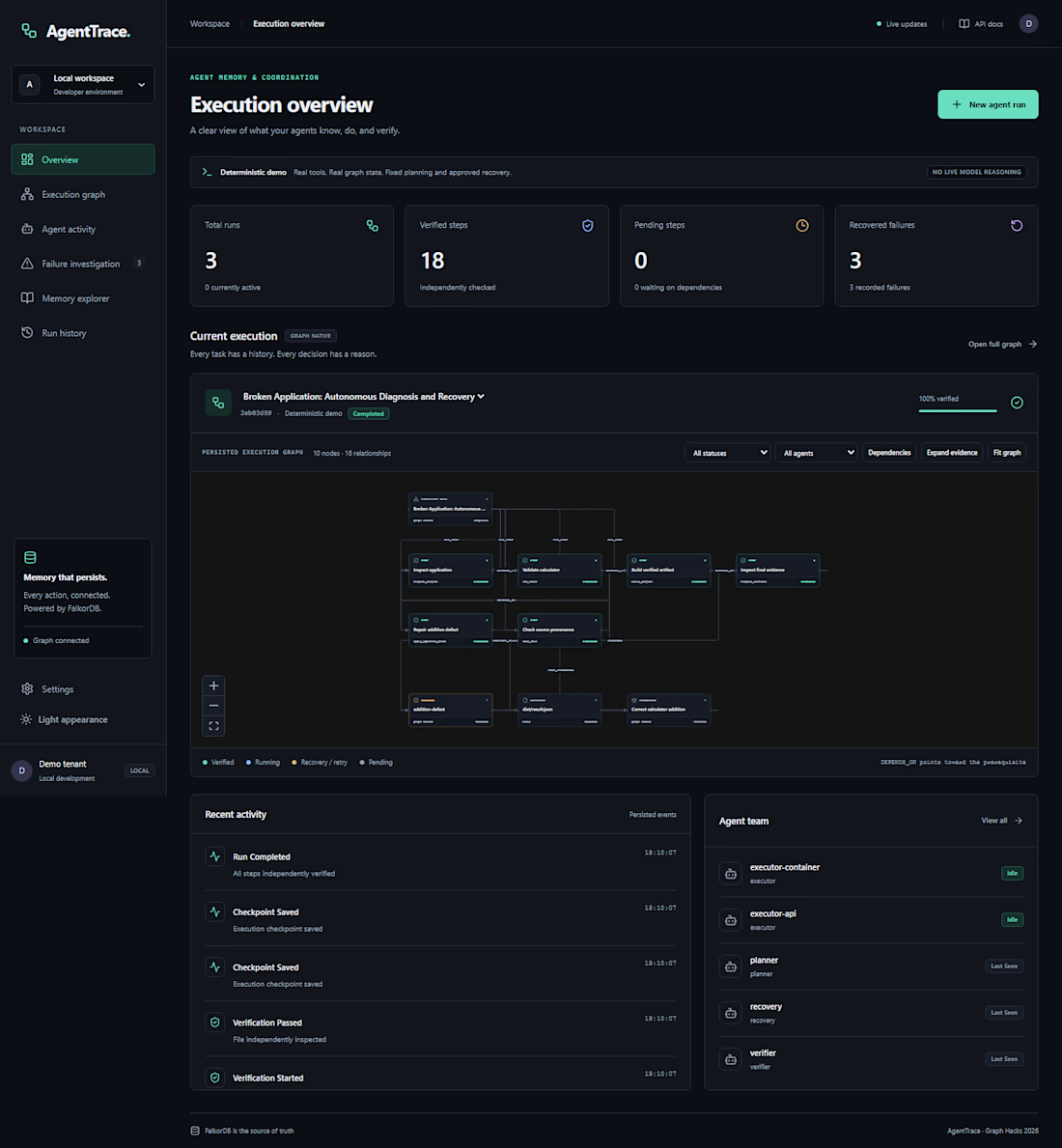
An AI agent fails halfway through a job. What should it remember when it tries again?
That question led me to build AgentTrace, a Python and FalkorDB project for keeping track of agent runs. It records task progress and decisions in a graph so you can inspect what happened and see where a run stopped. That’s especially useful when several agents share a workflow.
When you debug an agent run, what do you look for first: the failed step, the input that caused it, or the decision that sent it down that path?


An insurance advisory firm came to me with a GoHighLevel account that was fighting them.
Automations only fired from forms, not when a deal moved.
One pipeline was carrying four different processes.
Some stages only existed as workarounds.
We're rebuilding it. The first piece is live: a stage gate that holds every move until the right information is saved and checked.
→ Every stage move asks for confirmation, so no accidental drags
→ Application Submitted won't go through without a sold value
→ Recontact tags can't be applied without a date and a reason
→ Uploaded documents are attached straight to the deal
→ A small backend on Vercel validates, saves, reads the data back, and only then moves the card. No API keys in the browser.
The team works in French and English, through a white-label GHL domain, and it all runs inside their normal GHL screen.
If your CRM has stages your team only uses as workarounds, that's usually the first thing worth fixing.
Free 30-minute automation audit: link in the comments 👇
#GoHighLevel #GHL #CRM #InsuranceAgency #WorkflowAutomation #SmallBusiness

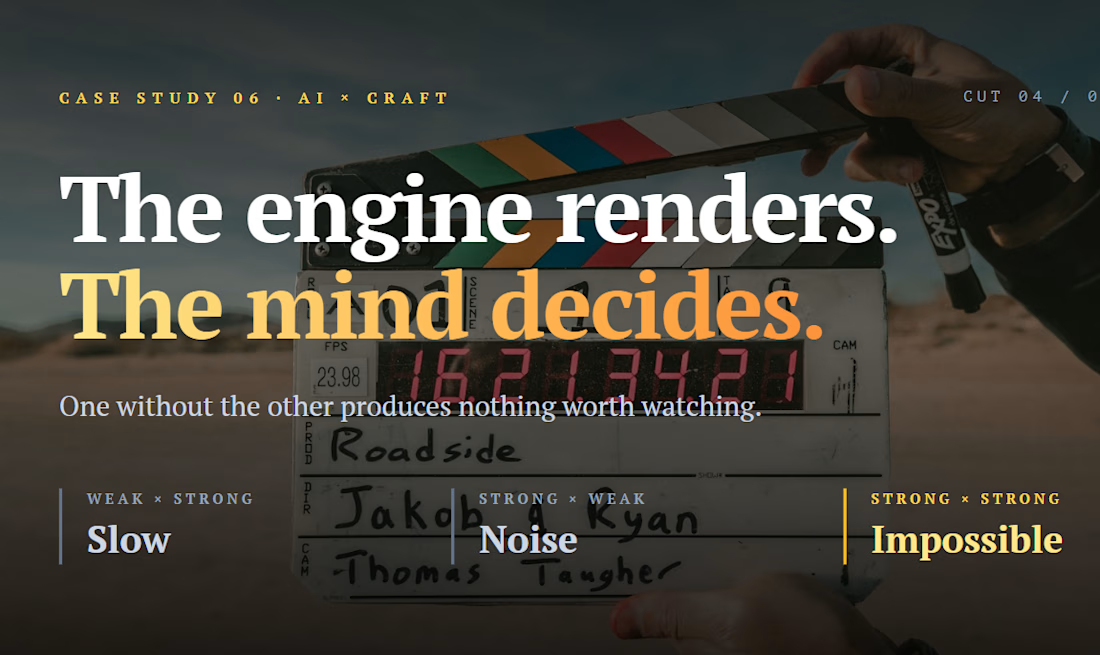
The Engine Doesn't Make the Film
AI made video production cheap. It didn't make it easy.
The tools are everywhere — generate a shot, clone a voice, cut a trailer, grade a frame. Anyone can press the button. Almost no one gets a result worth watching.
Because the tool was never the bottleneck. The bottleneck is knowing what to make: the shot that carries meaning, the cut that lands on the beat, the three seconds that were supposed to make you feel something. AI can produce ten thousand variations. It cannot tell you which one is true.
That is not a limit of the model. That is the job.
The people who win with this don't hand the craft to the machine. They keep the intent, the taste, the decision — and let the machine carry the labour.
The multiplication only works if both sides are strong.
Weak operator, strong AI → fast garbage.
Strong operator, weak AI → slow, expensive, ordinary.
Strong operator, strong AI → the shot that used to be impossible.
Not replacing the mind. Arming it.