The network for creativity
Join 1.25M professional creatives like you
Connect with clients, get discovered, and run your business 100% commission-free
Creatives on Contra have earned over $150M and we are just getting started
Back to feedPost

Bizzuri — Multi-Tenant Loyalty Platform
Full-stack architect & engineer · Live at app.bizzuri.com
The problem
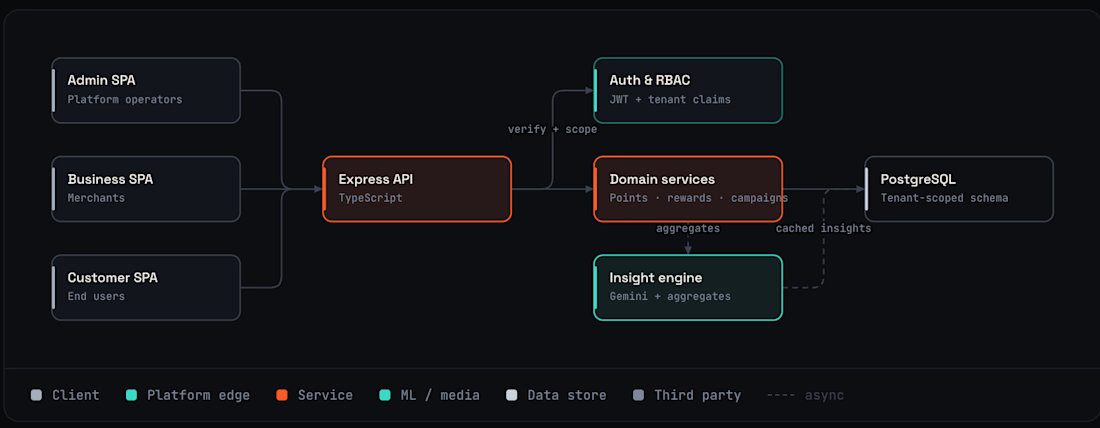
Loyalty software fails small businesses because it's built for one audience at a time — either a customer app with no merchant tooling, or a merchant dashboard the customer never sees. Bizzuri needed three surfaces: platform operator, participating business, and end customer, without triplicating the backend or the data model.
The commercial constraint made it harder. Businesses share infrastructure but must never see each other's data, while the platform operator needs a view across all of them.
What I built
One Express and PostgreSQL backend, one schema with tenancy as a first-class column, and three separately-built applications that share a component layer but never share a bundle. Each frontend ships only the code its role is allowed to run — an admin screen isn't merely hidden from customers, it's absent from the JavaScript they download.
The decision that mattered most
Tenant scope is injected at the query layer, not the route handler.
Route-level checks work until the forty-first endpoint, and then someone forgets one and a merchant sees another merchant's customers. Instead, tenant identity is extracted from the JWT once, attached to the request context, and applied automatically by the data-access layer. A query that forgets its scope fails loudly in development rather than quietly returning someone else's rows.
Isolation became a property of the architecture instead of a matter of discipline.
On the AI
Insights are computed over pre-aggregated data and cached, never on the request path. Two reasons: a dashboard that waits on a model call is a dashboard nobody opens twice, and aggregating first keeps raw customer records out of the prompt entirely.
Why this matters for your project
If you're building SaaS, multi-tenancy is the decision you can't cheaply reverse. Getting isolation wrong doesn't produce a bug — it produces a breach, and it's usually discovered by a customer. I've built it structurally, with role-separated bundles so authorisation holds at the delivery layer as well as the API.
The AI piece is worth noting too. Most "AI insights" features are a model call bolted onto a dashboard. This one is grounded in figures shown on the same screen, so the narrative can be checked against the numbers rather than trusted blindly.
Built with: TypeScript, React, Vite, Express, PostgreSQL (Neon), JWT/RBAC, Gemini API, Tailwind CSS


The network for creativity
Join 1.25M professional creatives like you
Connect with clients, get discovered, and run your business 100% commission-free
Creatives on Contra have earned over $150M and we are just getting started
Trending
retrofuturism
Share your favorite designs from the past exploring the distant future. Or your own take on the aesthetic 🚀
halftone
Dots. Texture. Grain. Let's see your designs using the halftone technique.

Midjourney
Creatives are showing off what they're making with Midjourney.
colorgrade
Video editors sound off: How do you enhance the mood of your video in color grading?
Related posts

I build Custom dashboards & portals, SaaS platforms and API & backend development by combining modern web development with cloud, automation, and security.
Whether you need a website, a custom platform, or a complete solution from development - deployment - monitoring, I can help.
Build it. Deploy it. Secure it. Scale it.


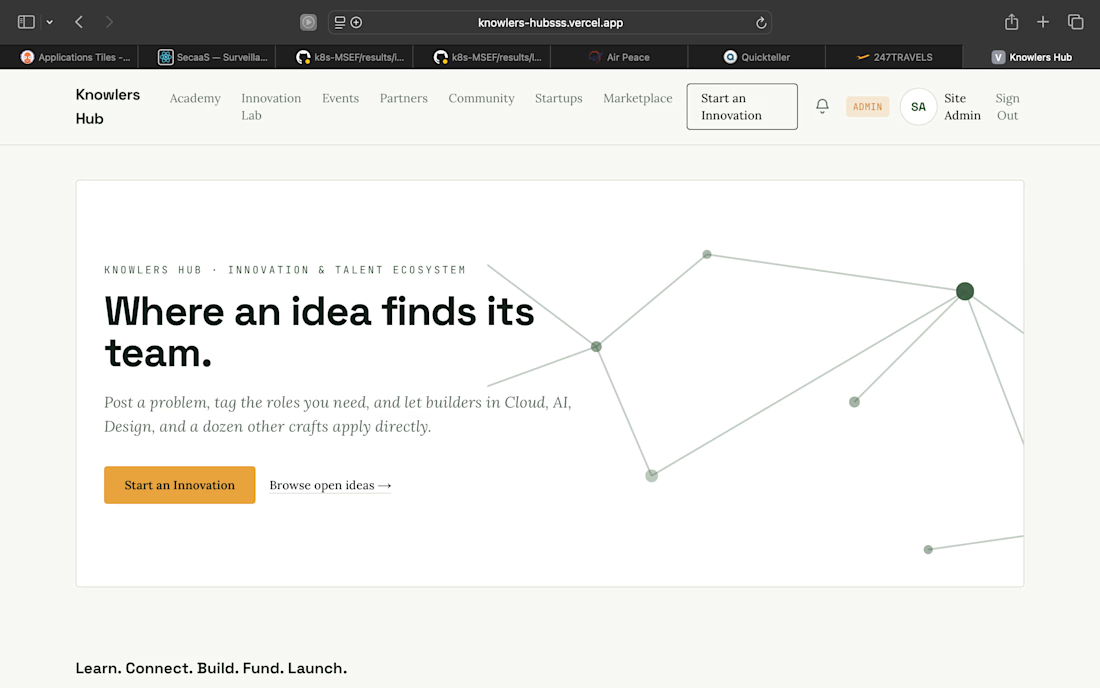

Strong positioning; covering development, deployment, security, and scaling makes this a true end-to-end solution for modern businesses. 🚀

SellerOS is a modern multi-vendor eCommerce SaaS platform designed to help businesses launch and manage their own online stores. I built the platform with Laravel, PHP, MySQL, Blade, Tailwind CSS, and JavaScript, including seller and admin dashboards, product and order management, subscriptions, store management, analytics, and a responsive mobile-first interface. The goal was to create a scalable SaaS solution that simplifies eCommerce management for online sellers.


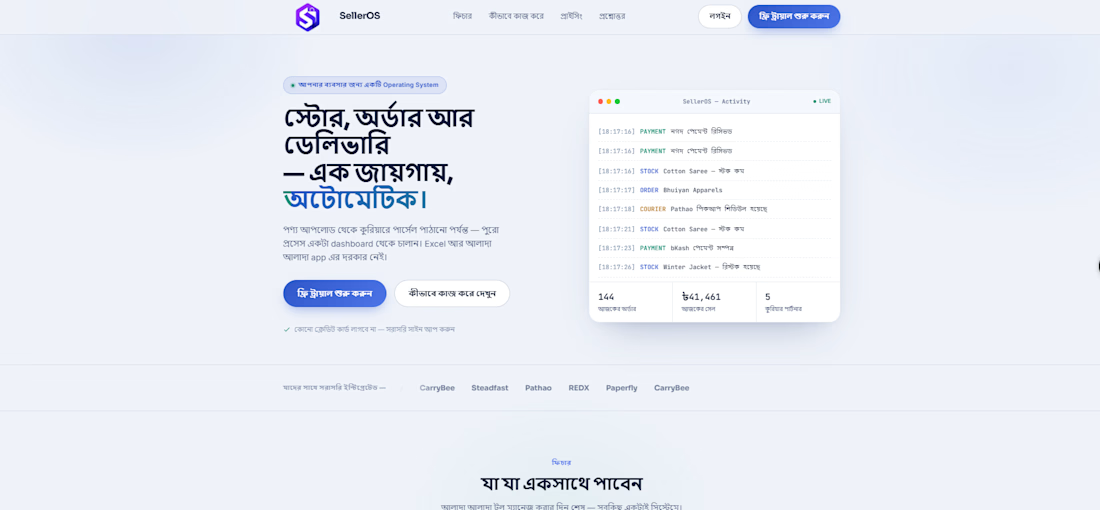
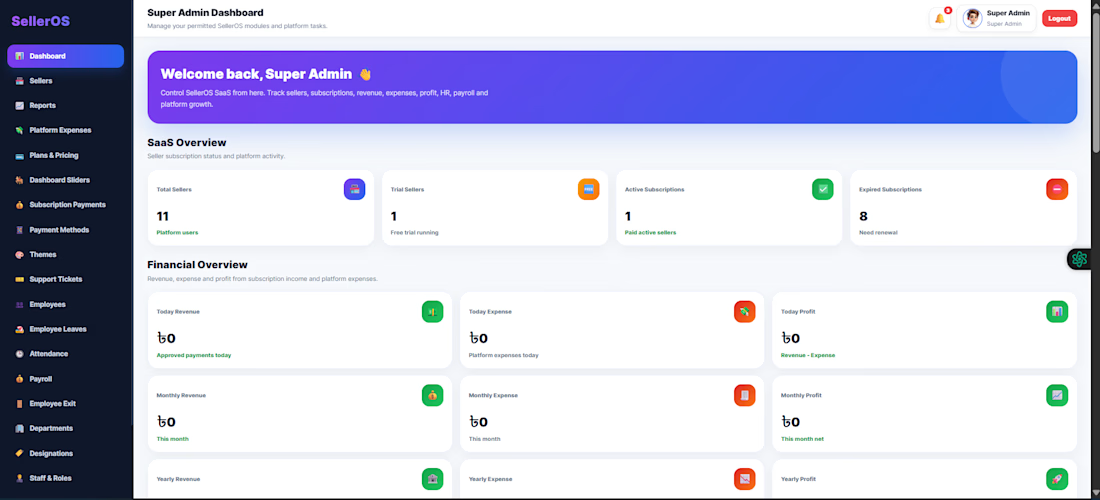
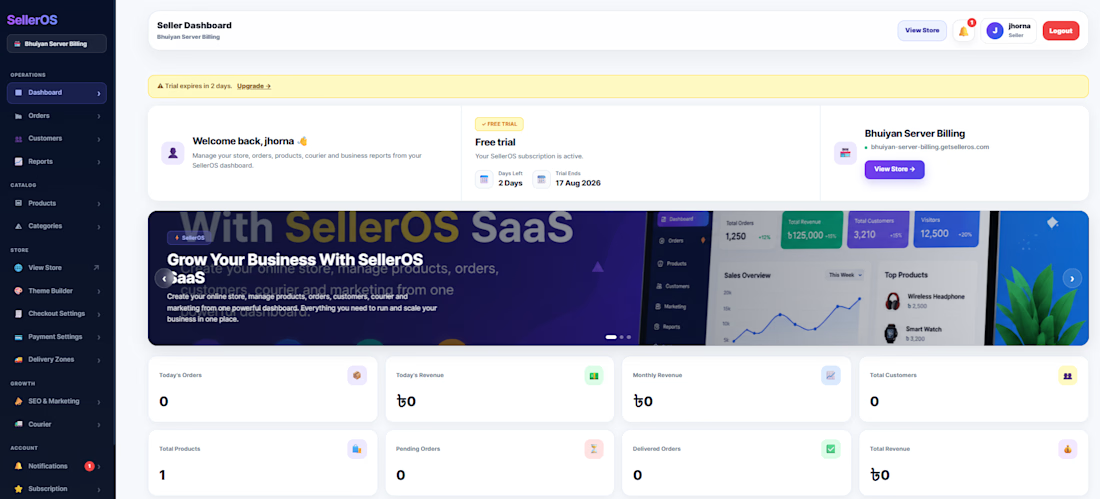
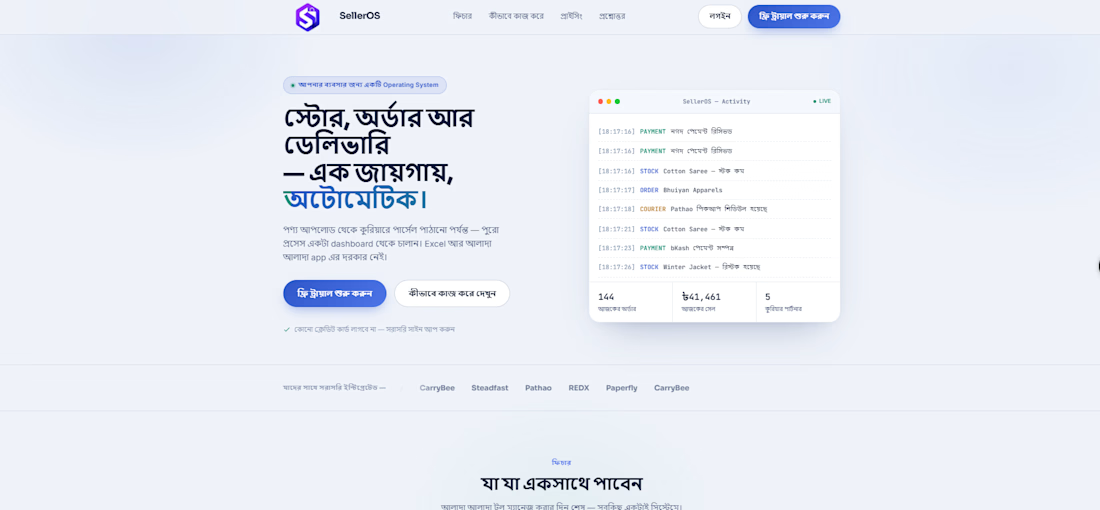
Solid SaaS build; SellerOS brings multi-vendor store management, subscriptions, analytics, and responsive design together in one scalable platform. 🚀

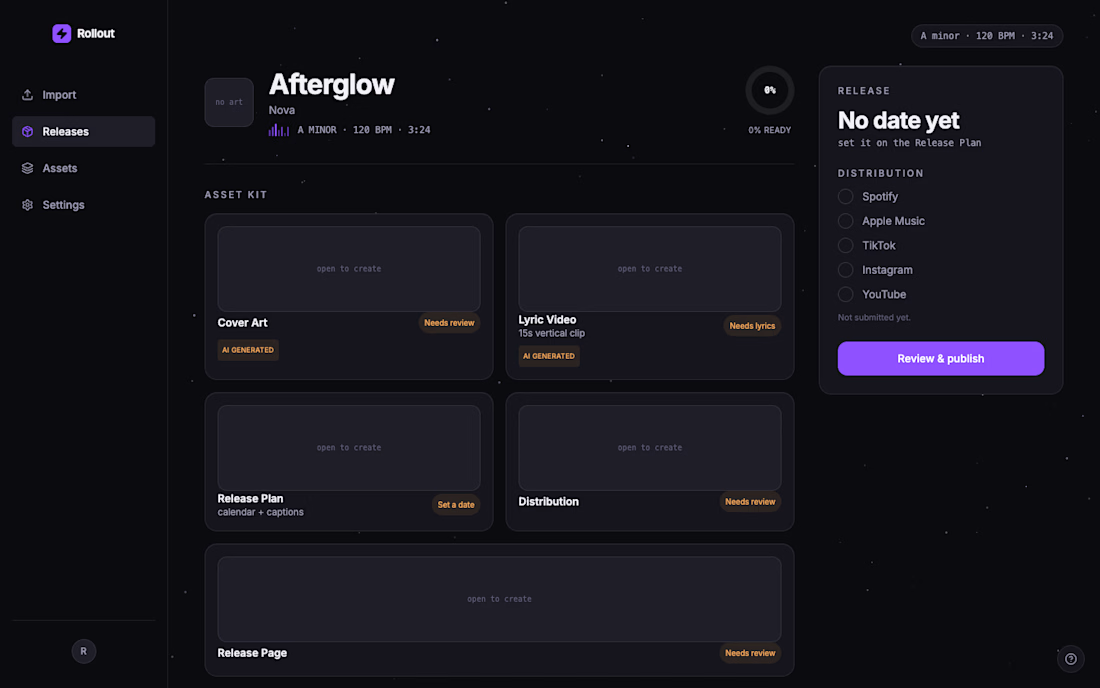
Rollout — a real-time 3D music launch platform I built.
An artist drops one finished song and gets a whole release back: AI cover art on a layered canvas, a beat-synced lyric video, a release calendar with pre-written captions, a hosted fan page, and an ad campaign. One platform, start to finish.
The landing is hand-written WebGL and GLSL. A raymarched glass blob that morphs and reacts to your cursor sits behind a real 3D headphones model, with drifting smoke and a star field, all running in a single WebGL context so it holds up across devices instead of fighting for the GPU.
Under the hood it's a real product, not a demo: multi-tenant SaaS on Supabase with Postgres row-level security, Stripe billing with server-enforced plans, and a Python engine that reads the song's key, tempo and mood and turns that reading into the whole visual and marketing direction.
Stack: vanilla JS + WebGL, Supabase, Stripe, Netlify, and a CLAP audio model for the vibe read.


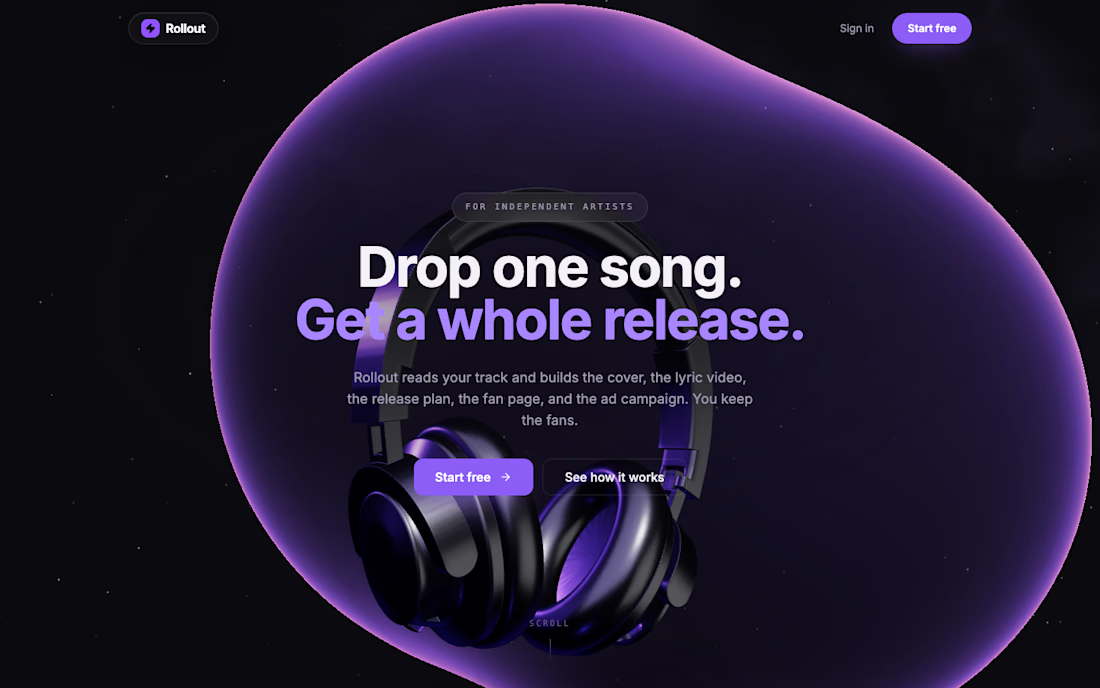

love the shade of violet you selected, super definitive in & of itself! add in those sleek, clear 3d elements, & you've undoubtedly made a memorable impression on your user. fantastic!