The network for creativity
Join 1.25M professional creatives like you
Connect with clients, get discovered, and run your business 100% commission-free
Creatives on Contra have earned over $150M and we are just getting started
Back to feedPost

Diabetic Retinopathy Detection & Grading System


The network for creativity
Join 1.25M professional creatives like you
Connect with clients, get discovered, and run your business 100% commission-free
Creatives on Contra have earned over $150M and we are just getting started




Related posts

What is a good motion concept to promote an AI assistant?
4 voted
50%
4 voted
50%
8 votes
Closed

The thread one for me. Showing the assistant actually handling a conversation explains the product faster than a floating 3D card

Tint: a Video.js skin that takes its colors from the film playing. The poster shows the film's color fingerprint, the timeline is a slice of every frame, and the scene you're watching tints the controls. Built with jelly physics, custom subtitles, and scene-aware UI. Open source.

Pulling the palette from the film itself is such a smart move, the controls can never clash with the footage. Does the tint ease between scenes or switch right on the cut?

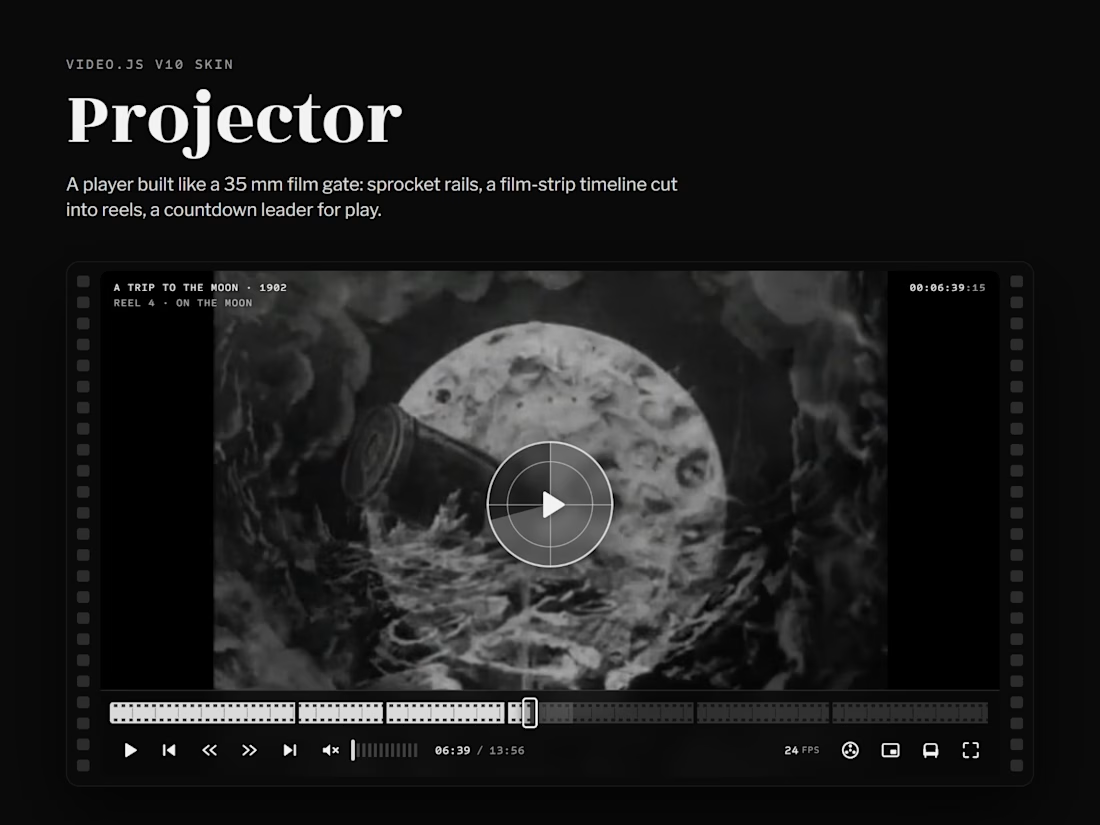
Projector: a Video.js v10 skin built like a 35 mm film gate.
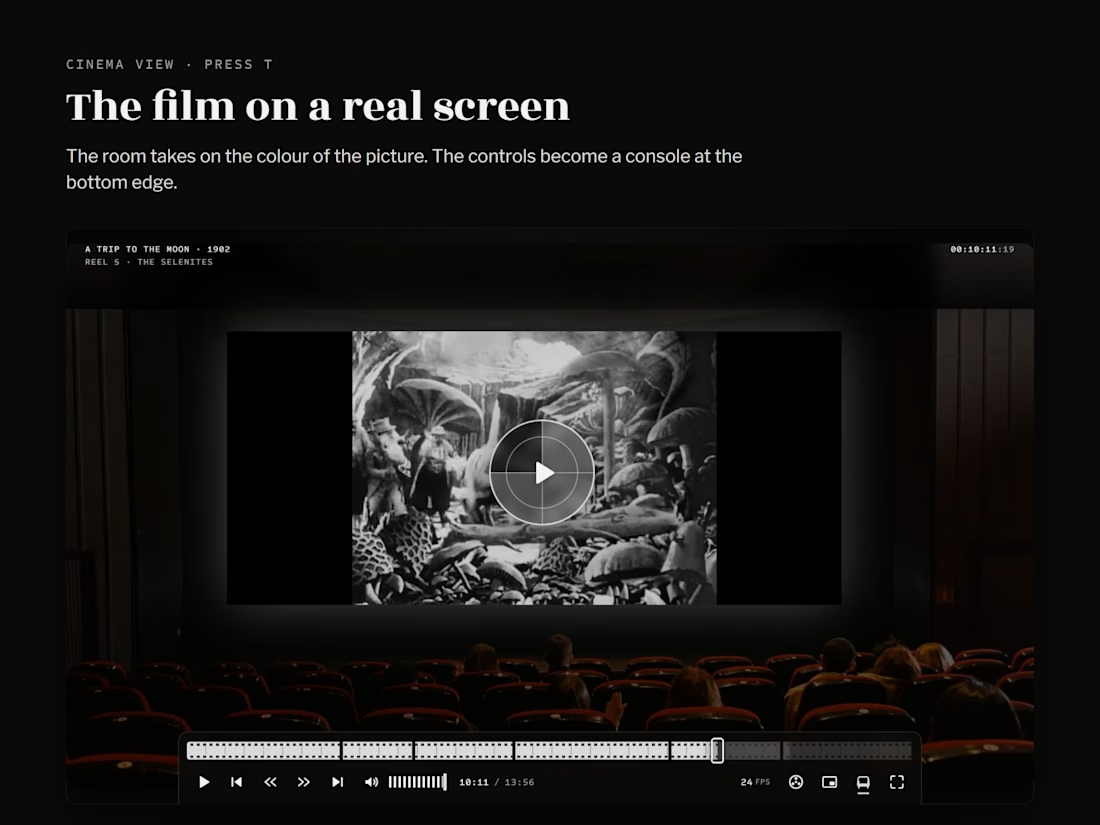
Most players hide the machine. Projector shows it. The picture sits between two strips of sprocket holes that jerk down while the film plays. The timeline is a strip of film cut into reels, one per chapter, with previous and next reel buttons. Play is a countdown leader, time is a frame timecode at 24 fps and speed is shown in fps. Pause too long and the frame burns in front of the lamp. Press T for cinema view: the film on a real cinema screen, with the controls as a console at the bottom.
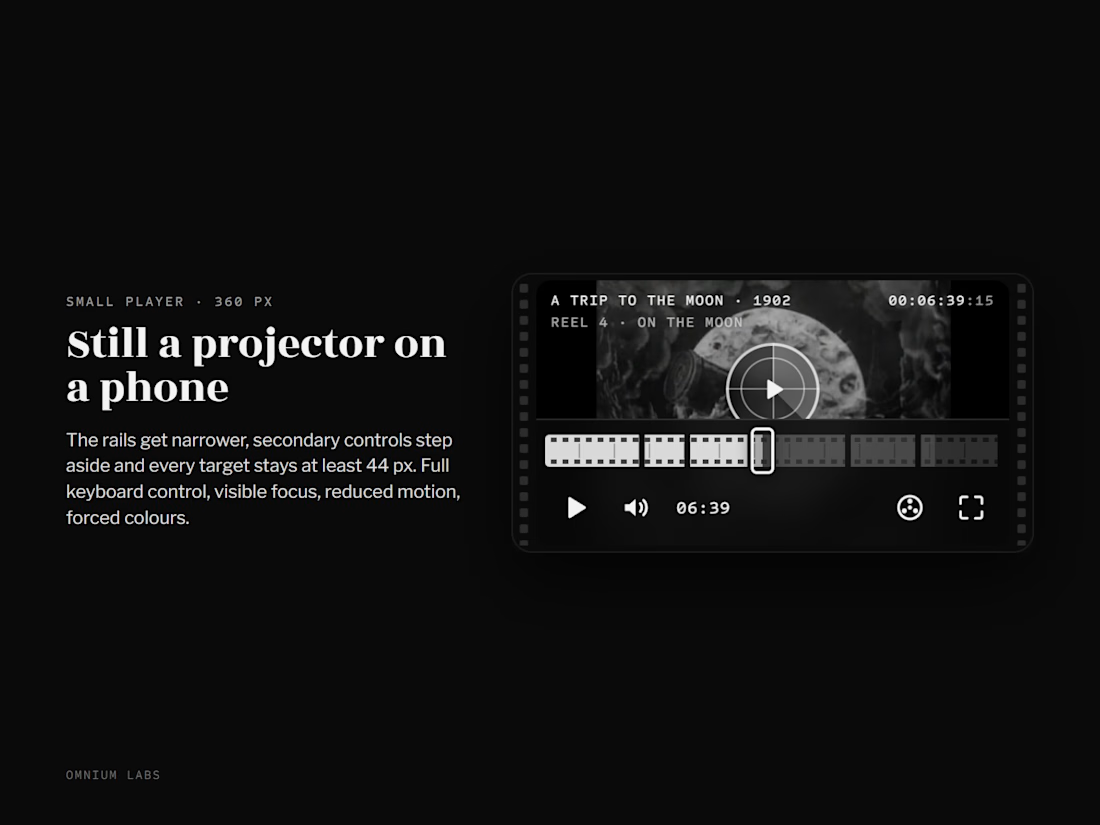
The character lives in the frame; the controls sit on a solid plate, so they stay readable over any picture. Every control is a real Video.js component: keyboard, visible focus, 44 px touch targets, reduced motion, forced colours.
Film: A Trip to the Moon (Méliès, 1902), public domain, streamed from Mux.

Pausing too long so the frame burns in front of the lamp is a brilliant, honest detail — it's a consequence, not just a state. Pressing T for cinema view, with the film on a real cinema screen and the controls as a console below, is a lovely second stage for the same machine. If...