
pro
Borna Grünbaum
Growth marketeer building in the AI era
New to Contra
Borna is building their profile!

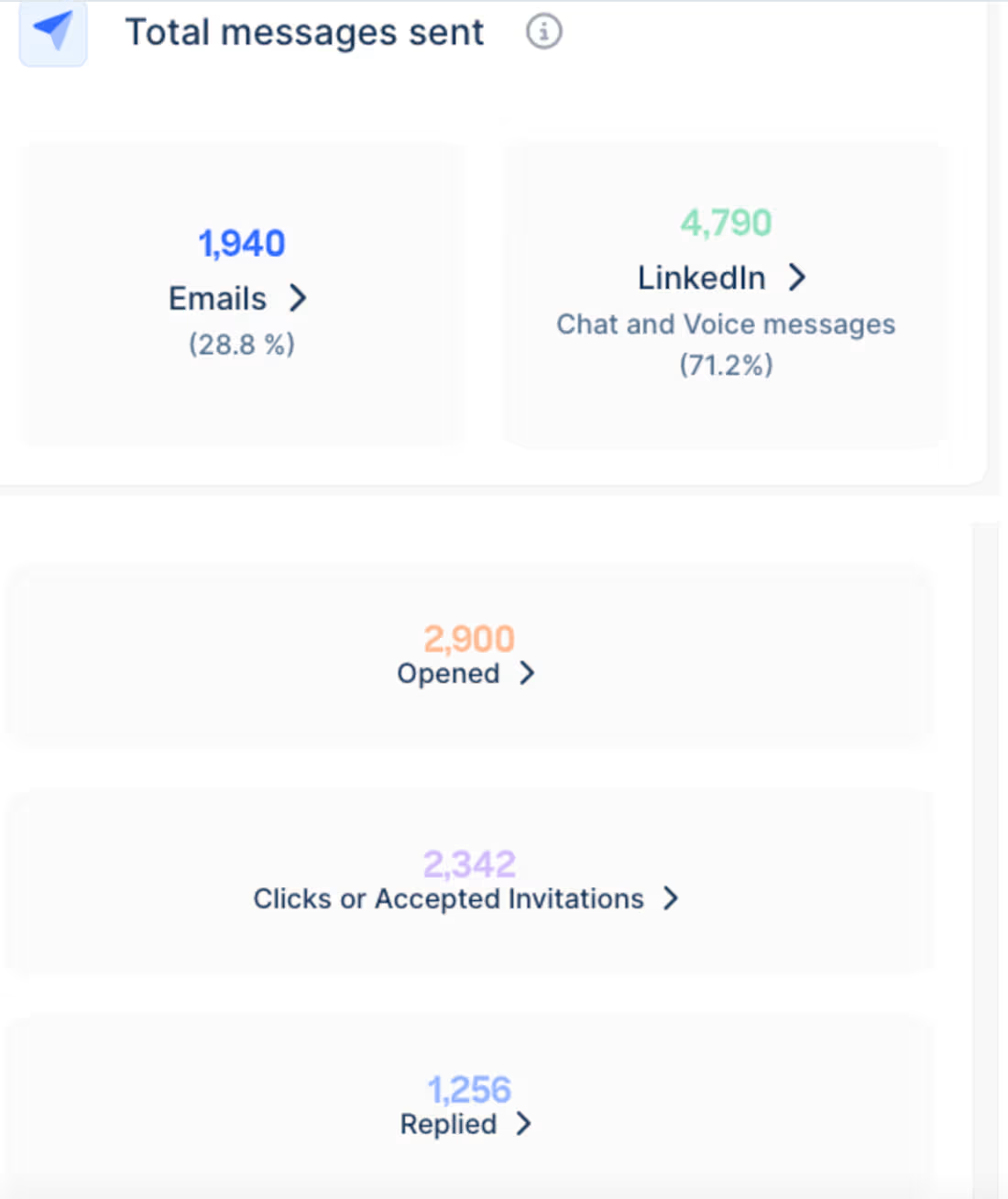
25% reply rate - 51 C-Level Meetings in 60 days
Set up the full outbound system in Lemlist from scratch, from reply playbook to Claude cowork skill that can handle replies. ICP targeting, sequence logic, copy, follow-up cadences. Sitting at a 1.5% meeting rate across three markets (Albania, Croatia, Slovenia) with no sales headcount (51 meetings
booked with biggest companies creating a 600K+ pipeline in 60 days)
1
12
AI-Powered Lead Scoring & Nurturing / Outreach System: Operations & Setup
Engagement: An AI-run lead scoring, qualification, and nurturing system on a live Salesforce, Pardot (Account Engagement), and Outreach stack Client: B2B SaaS in the public-sector / civic-engagement space, operating across multiple European and North American markets (named on request) My role: RevOps + AI operations, end-to-end implementation and operation
What the system does:
Every new lead is scored, qualified, enriched, and routed automatically, then handed to the right nurturing track with personalized outreach, without anyone triaging leads by hand. One AI routine runs the whole daily pass and writes its decisions back into Salesforce, which acts as the single source of truth. Everything downstream (nurturing lists in Pardot, sequences in Outreach) reacts to those synced fields, so there is one place decisions are made and one place they're audited.
The architecture:
The design rests on one rule: Claude writes only to Salesforce; every other tool reacts to synced fields through its own native connector. That keeps the whole system to a single write surface and a single audit trail, with no tool-to-tool spaghetti.
Claude is the brain. It runs the daily routine: enrich, match, score, route, draft, alert.
Salesforce is the routing bus. Scores, priority, routing, and the personalization payload all land as fields on the lead.
Pardot executes bulk and compliance off those synced fields (nurture lists, suppression, subscribe flows).
Outreach executes 1:1 sequences off the same synced fields, sending from the owner's own mailbox with native reply-pause and call tasks.
Zapier is the escape hatch, used only where a native sync trigger falls short.
No direct integrations to Pardot or Outreach are required; both read Salesforce natively. This keeps the surface area small and the system inspectable.
How the daily routine operates, step by step
The routine runs a single pass each weekday morning:
0 · Health check: a no-op write confirms the write path is live before anything else runs; on failure it alerts and aborts rather than half-writing.
1 · Pull: new leads, plus open leads whose signals changed, leads hitting a 14-day stall, accounts due a champion hunt, and priority leads past their response SLA.
2 · Enrich & match: fills role, org type, market, and size; matches each lead to the right account semantically rather than by name-string; layers in web-behavior intent joined strictly by email and domain.
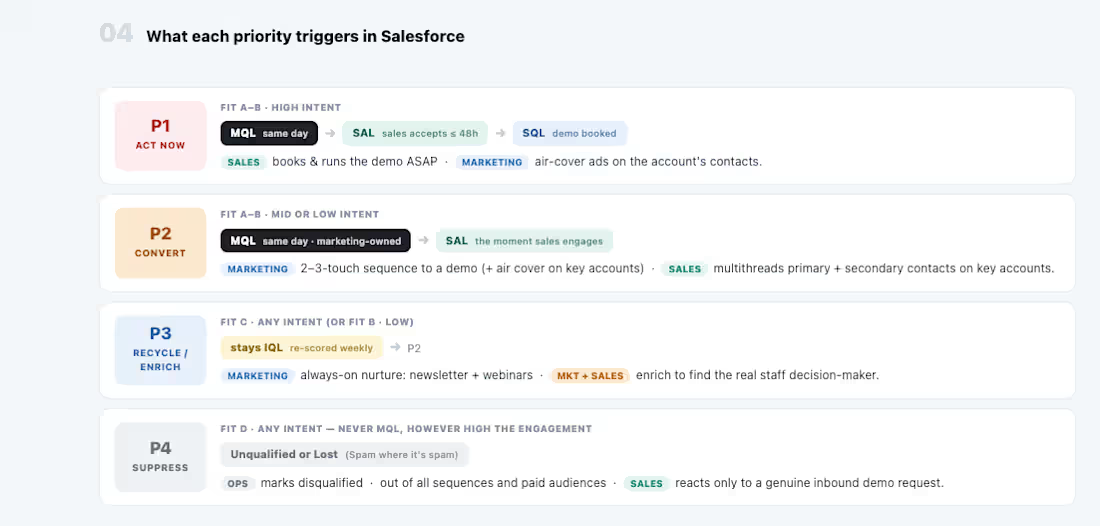
3 · Score: grades fit (organization × person → A–D) and intent (the strongest signal across web behavior, lead source, account temperature, and CRM score → High/Mid/Low), then combines them into a P1–P4 priority. Every decision is written with its rationale for auditability.
4 · Route: writes the scores, the status moves, and a dedicated routing field that determines the lead's nurturing track. Enrollment then happens tool-side off that field.
5 · Draft: assembles the personalization for each touch by selecting from an approved asset library (the right problem statement for the org's size tier, a comparable peer-city case, the angle for that buyer's role). It selects, it never free-writes claims.
6 · Alert: pushes the highest-priority leads to their owner in Slack with a full dossier and next step, flags SLA breaches, and posts a per-market recap so each sales team sees exactly what's worth their time that day.
Scoring and qualification model:
Fit is the gate (would we ever want this organization and person) and intent is the accelerator (are they showing buying energy now). Fit comes from per-market size bands and a person-tier model; intent is read as the maximum across all available signals, so a strong behavioral signal is never buried by a weak points score. The priority that falls out drives both the status move and the routing, and the model deliberately down-weights the raw CRM points score in favor of real behavioral evidence.
The write and safety model:
The system writes to a live production CRM, so every write is defensive by design:
Read-back verification: a write is not treated as applied until a follow-up read confirms it held.
Fill, never overwrite: enrichment only fills blanks and never overwrites a human-entered value; a re-score never downgrades a better existing value.
Asymmetric movement: promotions apply the same day, demotions never happen mid-sequence, which stops leads flapping between tracks.
Full audit and undo: every field change is logged with its before and after value, and each run emits a one-command restore file.
Supervised first: a human reviews the scores and drafts during rollout before any part runs unattended, and the weekly report is read-only by design.
Setup
The operating foundation is deliberately simple to hand over:
Salesforce data contract: a defined set of custom fields on the lead and account carry the fit grade, priority, routing track, scoring rationale, and the personalization payload. This is the contract everything downstream reads.
A single rulebook holds every scoring threshold, versioned, so the model is tuned in one place and never hard-coded into logic.
A per-market intelligence store feeds account size, segment, and temperature, joined to Salesforce by account ID.
Two schedules: a daily operational routine that changes state, and a separate weekly read-only report for week-over-week movement and SLA tracking.
A runbook documents the field maps, the automation rules, and the enrollment triggers, so an in-house hire can operate the system without me.
What this demonstrates
A complete, inspectable AI operations layer on a live enterprise stack: lead scoring and qualification, CRM write-back with real safety guarantees, and a nurturing engine that personalizes at scale by selection rather than generation, all running from a single routine that a cautious revenue team can actually trust with its pipeline.
0
12