
BECHEM AYUK
Premium Newsletter Ghostwriter for Founders & Executives
Ready for work
BECHEM is ready for their next project!
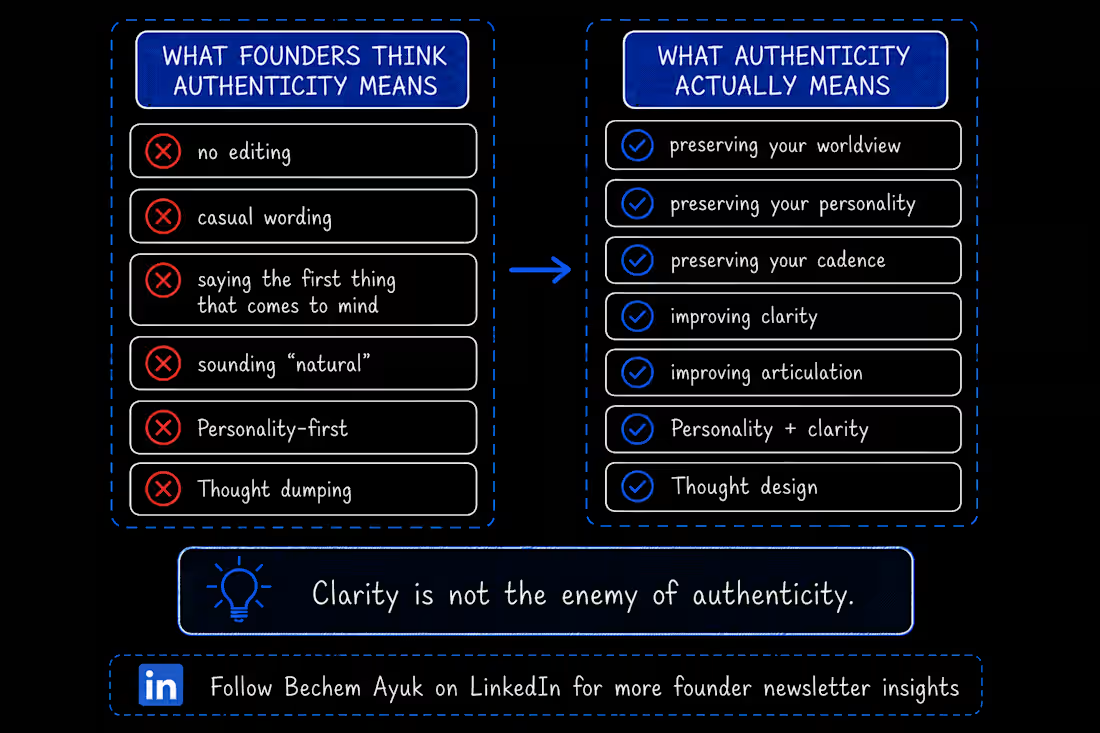
One of the biggest misconceptions about thought leadership content is the idea that you should “write exactly how you talk.”
I think that advice is incomplete.
Because many founders are brilliant thinkers but terrible articulators.
And just because you naturally say something a certain way doesn’t automatically mean that’s the best possible way to communicate the idea.
Good writing is translation.
You are taking abstract thoughts, instincts, experiences, and trying to compress them into language that another human being can immediately understand and feel.
That requires refinement.
And you do not need to transform into a language professor just because you want to improve your communication.
You can still sound like yourself while choosing better words, stronger framing, sharper analogies, and more precise language.
There are hundreds of ways to say the same thing.
Your job is to find the ones that communicate your thinking most effectively without stripping away your personality.
I call this “edited authenticity.”
You preserve the voice.
But refine the delivery.
That’s what great founder-led thought leadership really is.
1
37
I'm a ghostwriter, so my work with clients is protected by NDAs which means I can't share them with you. But to get an idea of how good of a writer I am, you can check out my personal newsletter projects. Keep in mind, I'm constantly improving, so the best of me is yet to come.
0
38
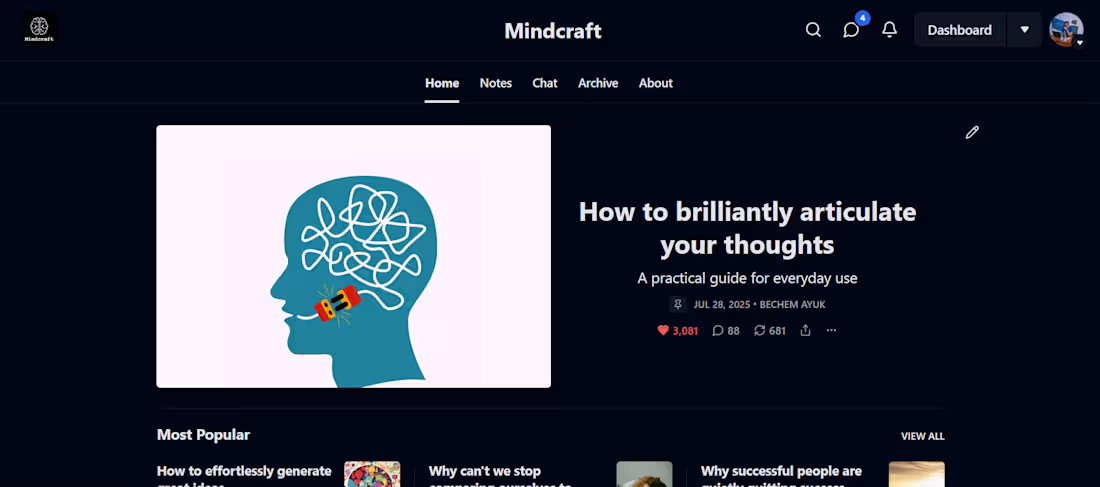
My current newsletter, Mindcraft, where I talk about everything that interests me about philosophy, human nature, psychology, mental models and productivity. This is my passion project. It's read by over 2000 people from 100+ countries and has garnered over 100,000 views. It even got shared by Professor Scott Galloway in his newsletter.
0
44
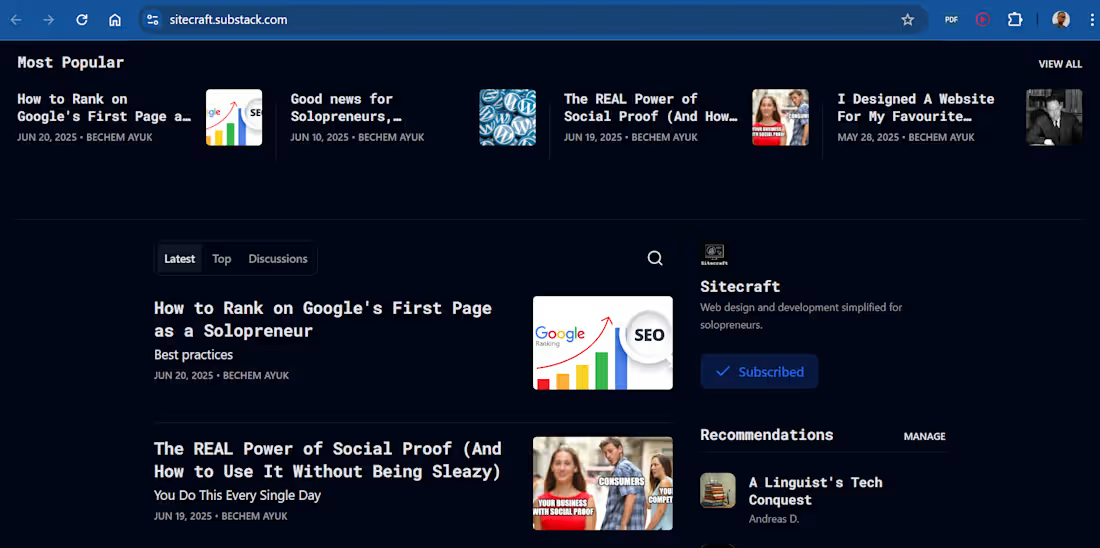
My second personal newsletter, Sitecraft. Here I broke down the principles for building portfolio websites that achieve great form and smooth function. Beautiful design and seamless usage. I explained things such as the philosophy of web design, the conept of less is more, as well as made complex, technical instructions simple enough for non-techie coaches and consultants to understand and implement. Some articles in this newsletter were so good they ranked on the first page of Google search results.
0
46
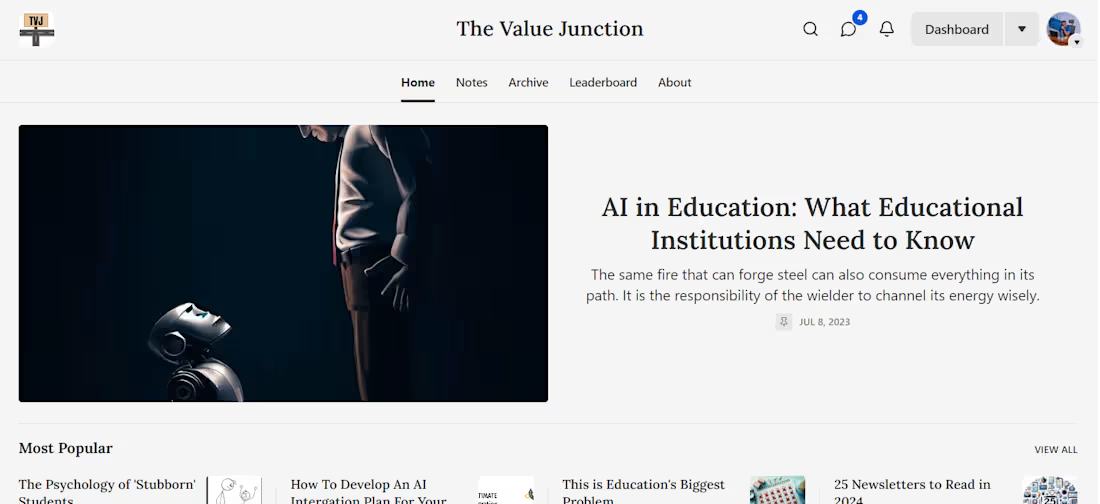
My first newsletter, The Value Junction. In this newsletter I explored education, technology and everything in between, written for educational stakeholders. The content I shared was so valuable that I was invited to write a guest article for AI Supremacy, one of the biggest newsletters in the world covering AI.
0
48