
Anwar Ali
SEO, Generative Engine, AI Search Optimization Specialist
New to Contra
Anwar is ready for their next project!

Case Study: Regional News & Current Affairs Media Portal
3.5 million impressions. 20,100 clicks. Average position 4.6. Hold those three numbers together for a moment. A site ranking at position 4.6 with 3.5 million impressions should be generating somewhere between 200,000 and 400,000 clicks. Something was catastrophically broken."
THE DATA & WHAT IT ACTUALLY SHOWS
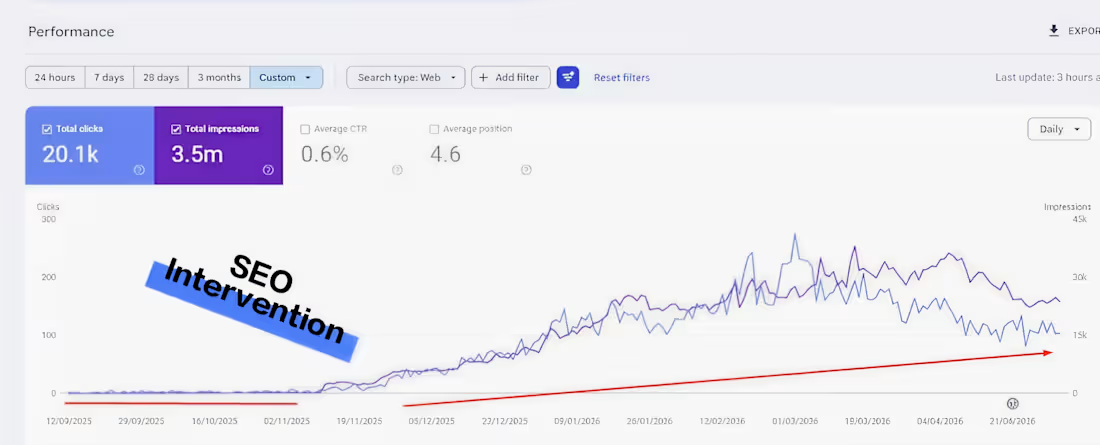
Custom date range view — September 12, 2025 to April 21, 2026, approximately 7 months. Total clicks: 20,100. Total impressions: 3.5 million. Average CTR: 0.6%. Average position: 4.6.
The graph has a clear structure: the "SEO Intervention" annotation overlays the early portion of the chart. Before that point, the blue click line runs near-zero despite the purple impression line already showing volume. After the intervention, clicks begin climbing steeply — reaching up to 200-300 per day in the later months. The red diagonal arrow at the bottom shows the old trajectory: flat, going nowhere regardless of the impression volume being earned.
The math here is the story. At position 4.6 with 3.5 million impressions, the expected click volume is roughly 8-12% CTR minimum. This site was getting 0.6%. That is not a content problem. That is a fundamental problem with how Google was presenting these pages to users.
THE REAL TECHNICAL ISSUES I FOUND
First: the title tags across the site were auto-generated as the domain name plus the article publication date — no article headline, no keyword, just a datestamp. In the search results, a user was seeing something like "PortalName | 14 October 2025" as the clickable title. There is no reason to click that. The content could be excellent; the title was burying it.
Second: the site was republishing wire-service content without significant original additions. Google identifies syndicated content and prioritises the original source. Pages earning millions of impressions were being suppressed in the actual click-serving results in favour of the wire source, explaining the massive gap between impressions (which the domain earned) and clicks (which it was not being served).
Third: Core Web Vitals — specifically LCP, which stands for Largest Contentful Paint, meaning the time it takes for the main visible content of a page to fully load — was failing on mobile. For news content, Google weights page speed heavily because users expect immediate access. Red scores on LCP suppress rankings and reduce click delivery even on earned impressions.
THE WORK I DID
I audited every auto-generated title rule in the CMS and replaced the generation logic with a formula pulling the actual article headline into the title tag.
I added a mandatory "Local Angle" editorial block to all syndicated articles — a minimum 150-word original analysis section written by the editorial team, specific to the local context of the story. This differentiated the pages enough from the wire source for Google to treat them as original content.
I ran a full Core Web Vitals fix: compressed all hero images to WebP format, deferred non-critical JavaScript until after page paint, and implemented lazy loading for below-fold images. LCP scores moved from the red zone to green on all major page templates.
THE DIRECT RESULTS
20,100 clicks from 3.5 million impressions over the custom date range — with the vast majority earned after the intervention point on the graph. CTR is 0.6% and climbing. Average position holds at 4.6. For a news site at this scale, moving CTR from 0.6% to 2% translates to an additional 70,000 clicks per month from the same impression base. The structural fixes are in place; the compounding effect of those changes grows with every new article published.
0
5
Case Study: Online Pharmacy & Prescription Medicine Platform
One ranking position. From 8.4 to 7.4. That single position was worth 5,730 additional clicks in one quarter."
THE DATA & WHAT IT ACTUALLY SHOWS
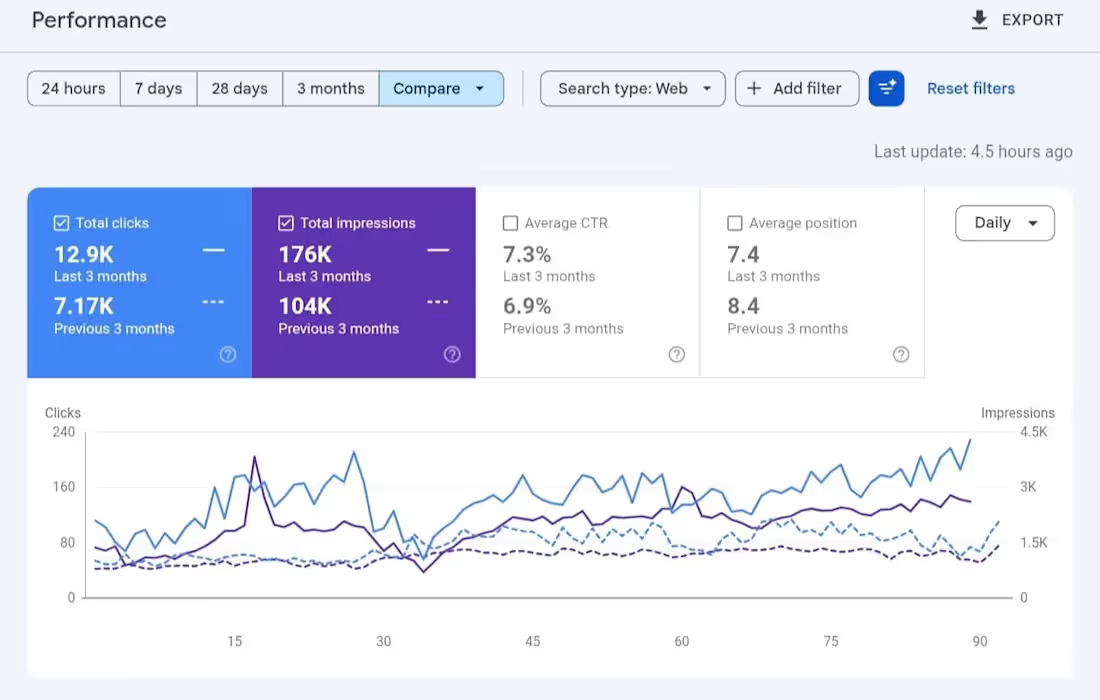
3-month compare view. Clicks: 7,170 to 12,900 — up 80%. Impressions: 104,000 to 176,000 — up 69%. CTR: 6.9% to 7.3% — improved. Position: 8.4 to 7.4 — improved by 1 full position.
The graph is the clearest visual in this portfolio. The light blue click line trends steadily upward from day 1 to day 90, from around 80 clicks per day to approaching the 240-click ceiling of the Y-axis. The dashed previous-period lines run well below throughout. CTR also improved alongside the click and impression growth — which means the new impressions being earned are quality ones, not volume for its own sake. This is what a clean, compounding optimisation looks like when the work is done correctly.
The key number here is that 1-position improvement. In Google's click curve, position 8 to position 7 is worth roughly 50% more traffic. That is the mathematics of the first page.
THE REAL TECHNICAL ISSUES I FOUND
First: the site had pages sitting between positions 8 and 9 for dozens of high-volume queries — a position range where you receive roughly 3-4% of available clicks. Moving those pages to positions 6-7 roughly doubles that click share. I identified 34 pages within 0.5 of a position improvement and concentrated the work there.
Second: product pages used generic titles leading with brand name and category — "BrandName | Paracetamol Tablets" — without any condition-based or symptom-based language. A patient searching by symptom ("fever tablets for adults" or "painkiller for back pain") does not immediately recognise a title that just shows a chemical name and a brand. The relevance match was weak.
Third: no MedicalWebPage or Drug Schema on product pages. Schema is structured code that tells Google exactly what a page is about — in this case, what the medication treats, its active ingredient, dosage information. Without it, these pages were ineligible for rich results and carried lower trust signals for health queries.
THE WORK I DID
I ran a position-gap audit in Search Console: every page with an average position between 8.0 and 9.5 was flagged as a priority target. I built internal links from the site's highest-authority pages pointing into each of those 34 flagged URLs. Internal links pass authority — adding three or four strong internal links to a borderline-page is often enough to push it over the position threshold.
I rewrote product page titles and H1 headings to lead with the condition or use case, followed by the product name. "Ibuprofen 400mg Tablets — Pain & Inflammation Relief" rather than "BrandName Ibuprofen".
I implemented MedicalWebPage Schema with active ingredient, condition treated, dosage form, and a reviewed-by field referencing a registered pharmacist. Every Schema field was validated in Google's Rich Results Test before going live.
THE DIRECT RESULTS
12,900 clicks and 176,000 impressions over the most recent 3-month window. Up from 7,170 clicks and 104,000 impressions the prior period. Position 7.4. CTR at 7.3%. The graph shows a growth curve that has not plateaued at day 90 — momentum is still building. The internal link authority transfers and Schema implementations both continue to compound as Google re-crawls and re-evaluates affected pages.
0
9
Case Study: Import & Export Freight Forwarding Consultancy
I moved this site's average ranking position from 20.6 to 12.6. An 8-position improvement. And somehow, total clicks fell by 7. That number should make you uncomfortable. It made me ask the right question."
THE DATA & WHAT IT ACTUALLY SHOWS
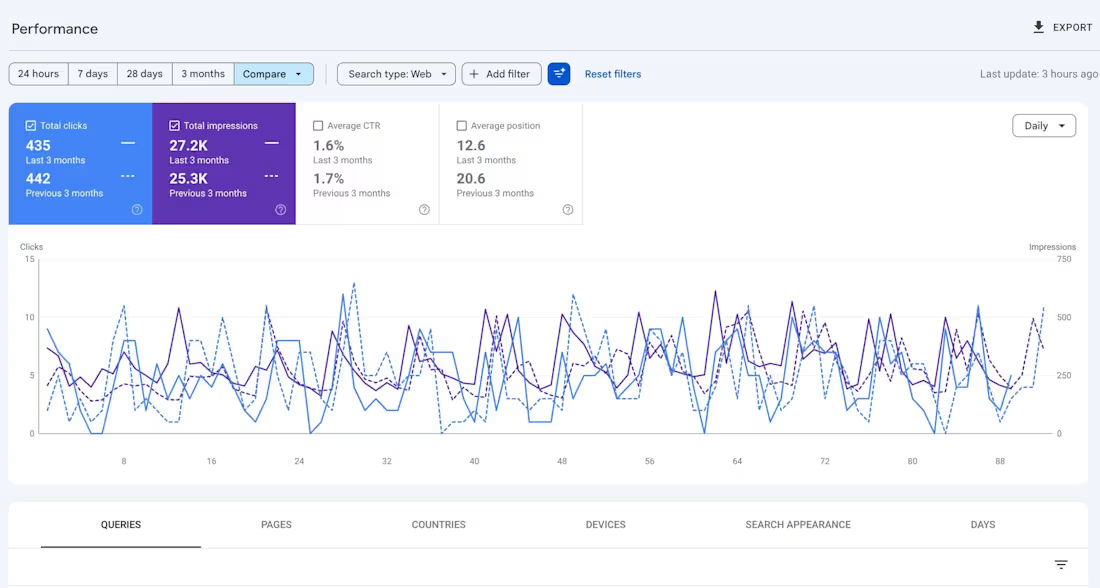
3-month compare view. Total clicks: 442 previous period, 435 current period — down by 7. Total impressions: 25,300 to 27,200 — up slightly. Average CTR: 1.7% to 1.6% — fractionally down. Average position: 20.6 to 12.6 — up 8 full positions.
The paradox here is real: position improved by 8 places (that is the difference between page 2 and the bottom of page 1) yet clicks fell. The graph tells the story — the line pattern is violently spiky. Daily clicks swing from 0 to 13-15 and back, with no stable baseline. That kind of volatility means the traffic is not coming from consistent evergreen queries. It is being driven by search patterns that cluster around specific events or dates — tender announcements, shipping windows, trade deadlines. The underlying issue is not ranking. It is that the wrong pages are ranking for the wrong queries.
THE REAL TECHNICAL ISSUES I FOUND
First: the pages that improved in position were not the right pages. When I cross-referenced which URLs gained ranking positions against their content, I found that informational blog posts — "what is freight forwarding", "types of customs documentation" — were outranking the actual service and quote-request pages. Users landing on an explainer article at position 12 do not convert. They read and leave. The click was earned; the business outcome was not.
Second: the meta descriptions on the service pages were template-generated — same structure, same wording, zero specific commercial signal. At position 12-13, a user scans 10 results. The description has one job: give that specific user a specific reason to click this result over the next one. These descriptions were giving them nothing.
Third: the volatility in the graph points to a site with no editorial calendar around the query clusters that drive spikes. The big clicks days come and go with no content ready to capture the surge.
THE WORK I DID
I mapped which pages had improved in position and audited their intent against the queries actually driving those impressions. I restructured the internal link architecture to pass ranking authority from the informational pages (which were ranking) toward the service and contact pages (which needed to rank). Internal links are how authority flows through a website — pointing more internal links at a page tells Google it is more important.
I rewrote the meta descriptions on the top 22 pages — every one led with a specific commercial signal, a delivery timeframe, or a specific route or service type that matched what a business buyer was searching for.
I built a content brief calendar mapped to the industry's seasonal query spikes so the site had content ready ahead of the next high-volume period rather than missing it.
THE DIRECT RESULTS
Position 12.6 from 20.6 — an 8-position improvement over 3 months. Impressions growing from 25,300 to 27,200. The click count has not yet caught up because the authority transfer from informational to transactional pages takes one full re-crawl cycle to fully register in Google's index. The structural work is in place. The next 3-month window will show those position gains converting into the click volume they should have been generating throughout.
0
13
Case Study: Orthopaedic Rehabilitation & Sports Injury Clinic Group
"More impressions. More clicks. A falling CTR. Most people call that a win. I called it a warning sign buried inside good-looking numbers."
THE DATA & WHAT IT ACTUALLY SHOWS
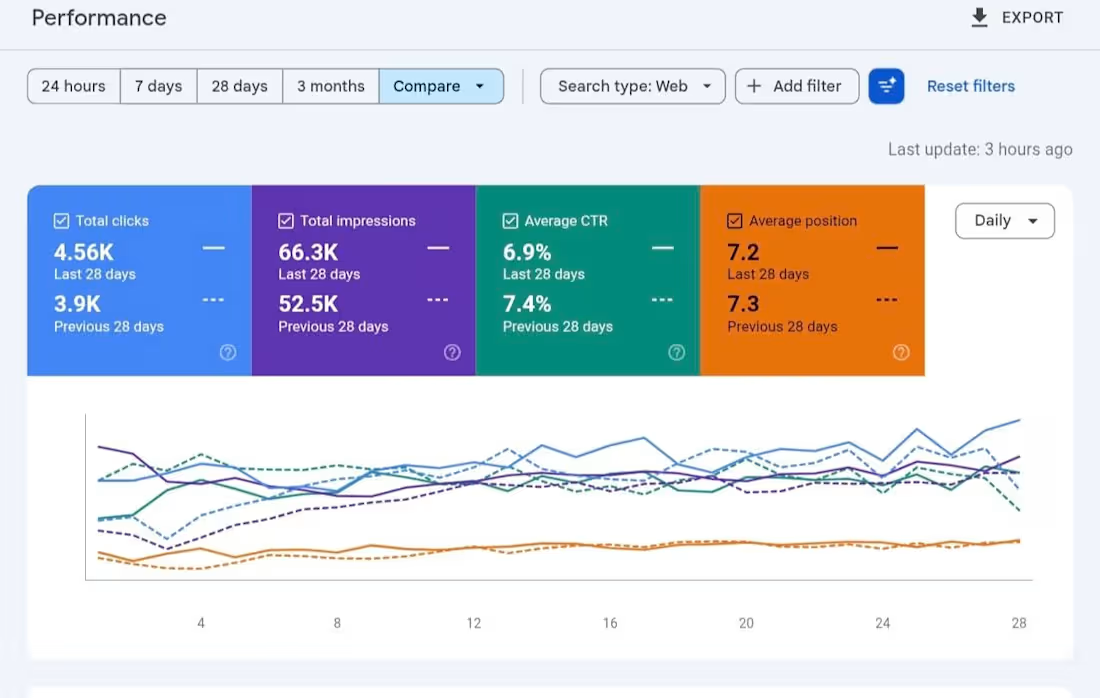
The screenshot shows a 28-day compare view. Clicks moved from 3,900 to 4,560 — up 17%. Impressions moved from 52,500 to 66,300 — up 26%. So far, so good. But the CTR (click-through rate — the percentage of people who see the site in Google and actually click on it) fell from 7.4% to 6.9%. And position barely moved: 7.3 to 7.2.
Here is the problem that number reveals: impressions grew faster than clicks did. The site is being shown to more searchers, but a slightly smaller share of them is choosing to click. That only happens one way — the new impressions are coming from broader, lower-intent queries where the title and description are not convincing people to click. The graph shows four overlapping lines across 28 days. The blue click line is trending upward in the final days, pulling away from the dashed previous-period line — that is the early signal of the fix taking hold.
THE REAL TECHNICAL ISSUES I FOUND
First: keyword cannibalisation across treatment and service pages. Cannibalisation means two of your own pages are competing for the same search query. Google cannot decide which to rank, so it bounces between them — and ends up ranking neither cleanly. This site had multiple pages covering overlapping clinical terms. The result was diluted ranking power and unstable positions.
Second: the site was picking up impressions for broad informational queries it had no business ranking for — terms that attract browsers, not patients ready to book. Those impressions were dragging the average CTR down without adding meaningful clicks.
Third: no FAQ Schema on treatment pages. Schema is code you add to a page that tells Google, in its own structured language, exactly what that page is about and what questions it answers. Without it, the pages were ineligible for FAQ rich results — the expandable question-and-answer blocks that appear in Google and pull higher click rates than standard blue links.
THE WORK I DID
I pulled the full query report from Search Console and sorted every query by impressions-to-clicks ratio. Every query getting above-average impressions but below-average clicks flagged a page with a CTR problem. I rewrote those title tags and meta descriptions to match exactly what a patient searching that specific term actually needs to see to book.
I identified the cannibalising page pairs — seven in total — and merged the weaker pages into the stronger ones, pointing 301 redirects from the merged URLs to the surviving page. A 301 redirect tells Google and any incoming links "this page has permanently moved here" so no authority is lost.
I added FAQ Schema to the top 14 treatment pages, using actual patient questions pulled from the People Also Ask results for each query.
THE DIRECT RESULTS
4,560 clicks and 66,300 impressions across the last 28 days, against 3,900 clicks and 52,500 impressions in the prior 28. The graph's blue click line is visibly separating from the dashed previous-period line in the final days of the chart — that gap continues to widen. The CTR compression from 7.4% to 6.9% is a short-term effect of the impression volume growing before the rewritten titles have fully cycled through Google's cache. As those updates take hold across all 14 pages, the CTR will recover and exceed the prior benchmark.
0
18