
pro
Andrés Lage
Independent AI Architect&Strategist EU AI ACT&OWASP
New to Contra
Andrés is ready for their next project!
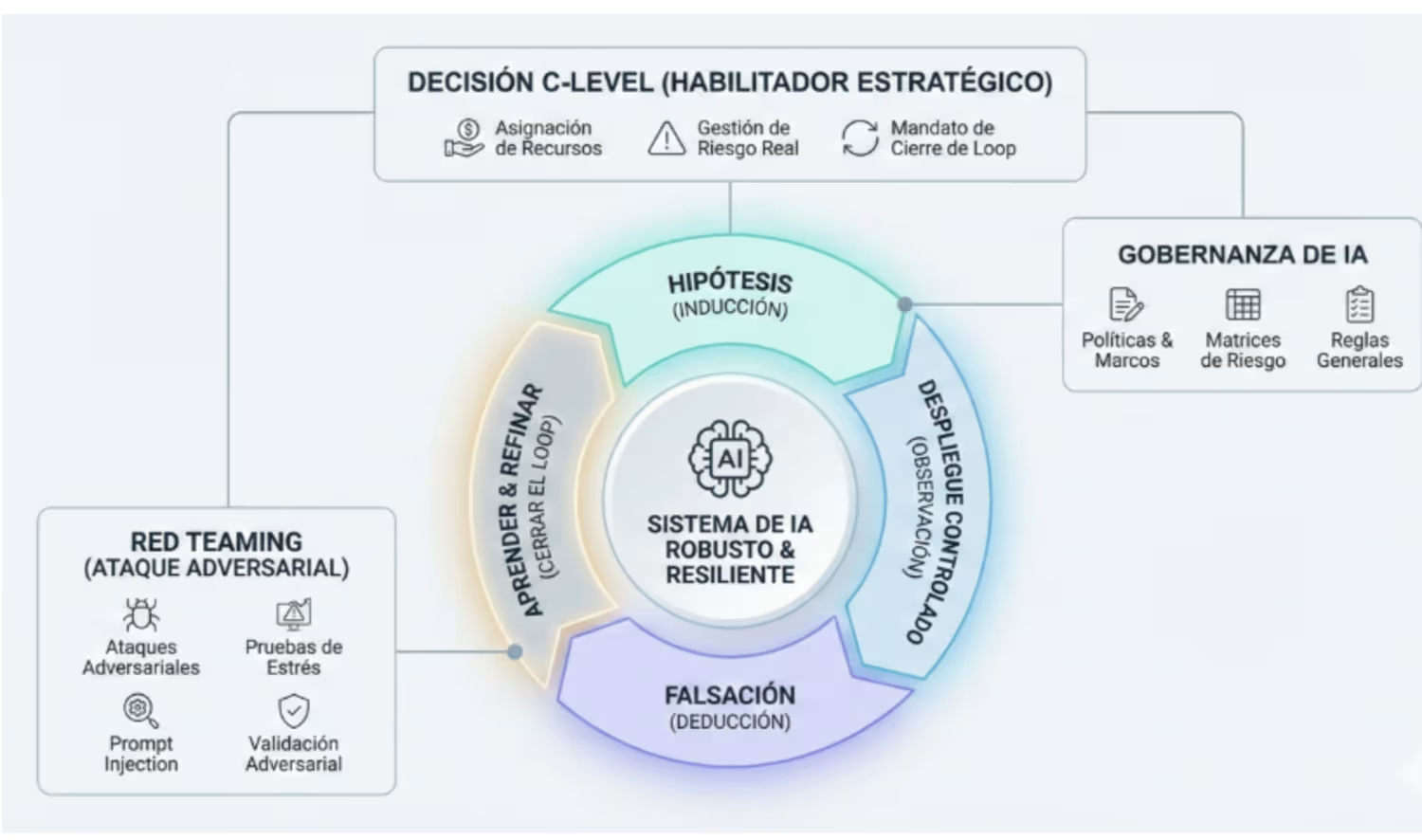
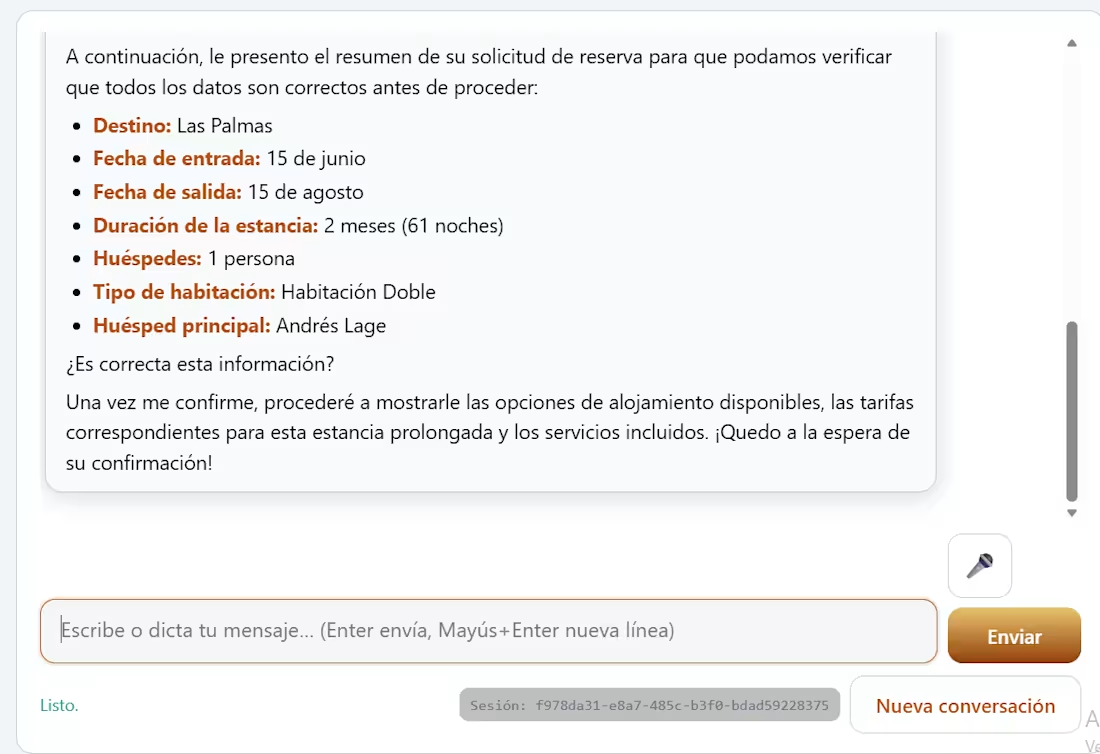
This production-ready Hotel Voice Assistant integrates Google Gemini 2.0 with a scalable Flask/Waitress backend to power fluid, context-aware conversational booking experiences in Spanish.
It leverages a distributed Redis session store for stateful multi-turn memory, backed by native Function Calling to stream live availability and real-time pricing directly from the Amadeus GDS API.
Engineered with an "auditability-by-design" framework, the architecture implements pluggable callback hooks and strictly aligns with the OWASP Agentic Top 10 (2026) to mitigate multi-agent risks and secure user data.
1
25
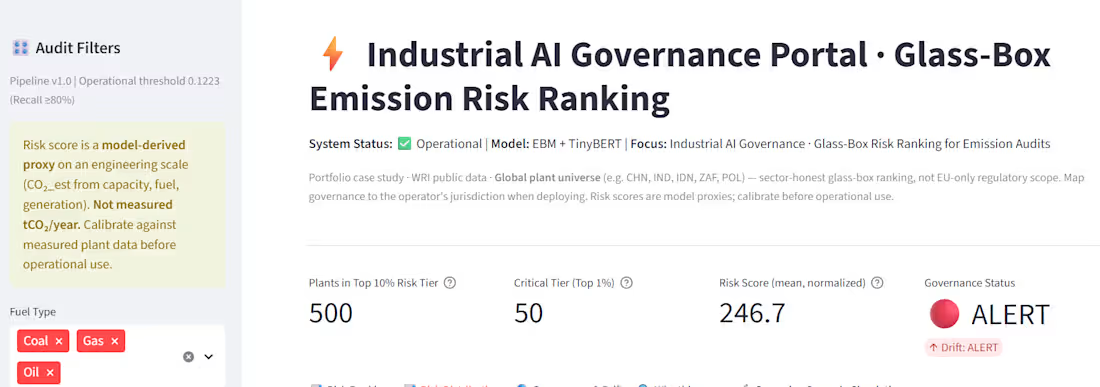
Industrial AI replaces opaque, high-cost LLMs with deterministic, hybrid architectures built specifically for high-risk, heavily regulated enterprise environments.
It leverages glass-box explainability (like EBMs) and cascading NLP pipelines to resolve up to 80% of operational traffic at zero token cost and sub-millisecond latency on CPU.
By embedding continuous statistical drift monitoring (KS-test/PSI), it translates raw telemetry into audit-ready assets, guaranteeing strict compliance with the EU AI Act and ISO 42001.
1
15
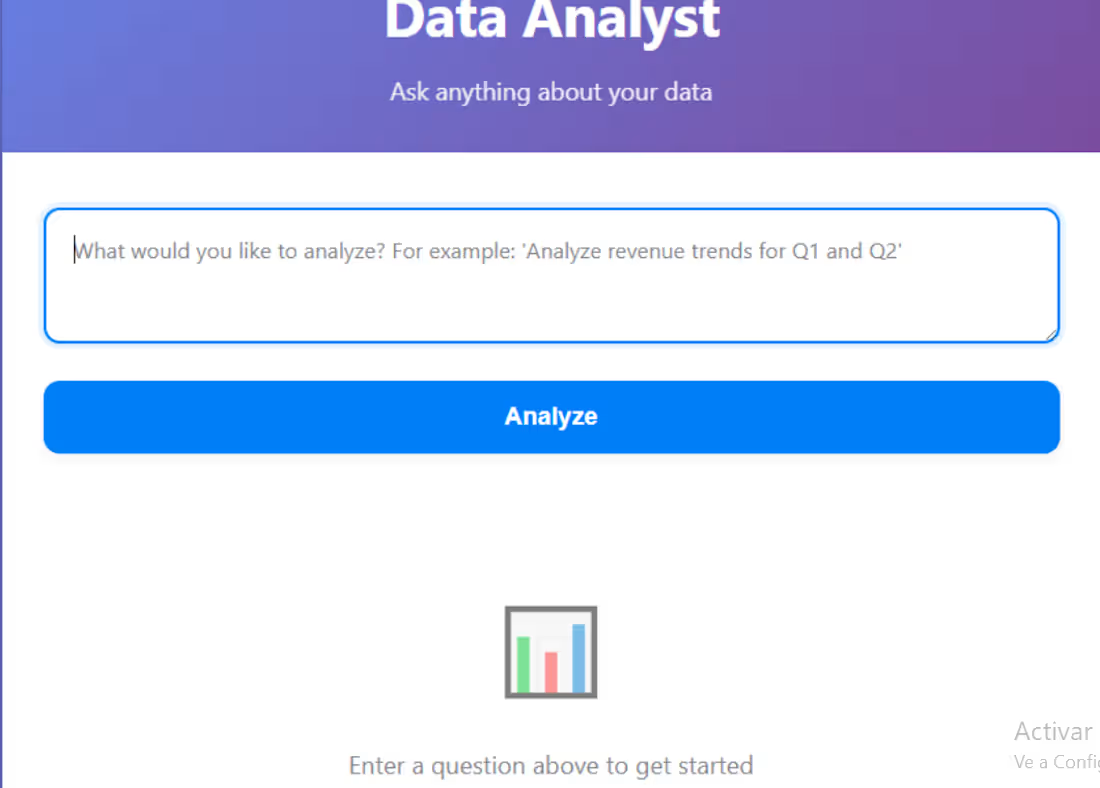
Production-ready multi-agent system demonstrating Agentic AI principles. Built with LangGraph for workflow orchestration, FastAPI for the API, and OpenAI GPT-4. Features autonomous decision-making, tool use, and multi-agent collaboration for intelligent data analysis and strategic recommendations.
0
32
Most ML projects that win Kaggle would not survive a regulatory audit in 2026. This one is built specifically to do both competitive performance AND audit-ready by design.
Insurance claim prediction (Porto Seguro dataset, 3.6% positive class, highly imbalanced) implemented end-to-end with EU AI Act, Solvency II and ISO 42001 compliance as the architectural starting point not as a documentation afterthought.
Four pillars:
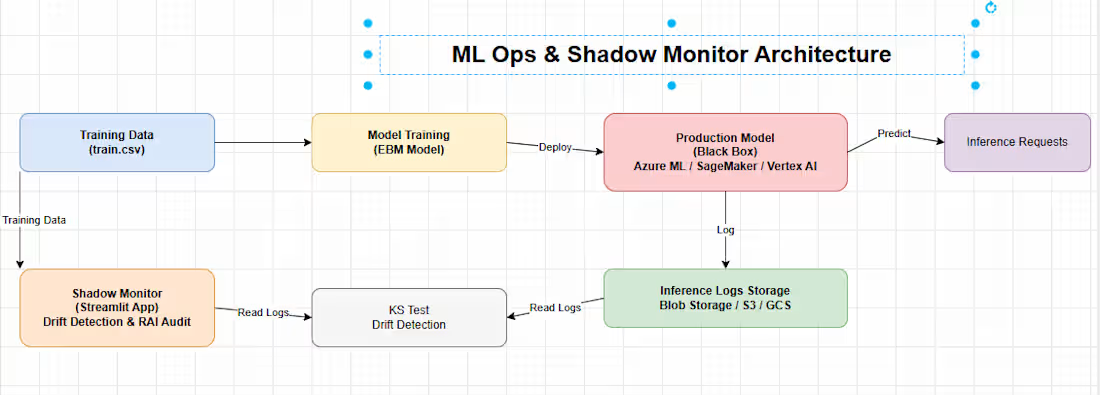
MLOps & Shadow Monitor Architecture. Vendor-agnostic monitoring layer that reads inference logs independently from the production model (Azure ML / SageMaker / Vertex AI). KS-test drift detection in real time. Zero vendor lock-in. The Shadow Monitor is the answer to "how do you audit a black-box cloud ML service?"
Explainability vs Performance trade-off, decided with evidence. EBM (Explainable Boosting Machine) chosen over XGBoost/LightGBM. ROC-AUC 0.608 vs 0.64-0.65 for XGBoost a 4% performance cost in exchange for native glass-box explainability that regulators accept without SHAP post-hoc workarounds. The right call for regulated industries, the wrong call for tech.
Threshold optimization on imbalanced data. Default scikit-learn 0.5 threshold yields F1 ≈ 0 on this dataset a model that "performs at 96.4% accuracy" is in fact useless. Custom F1-Score curve finds the optimal decision boundary at 0.091. The difference between a Kaggle submission and a production system.
Automated Compliance Dashboard. Fairness (demographic parity, equalized odds, protected-attribute analysis), Transparency (feature-level contributions, full documentation), Accountability (model card, ADRs, governance framework, human-in-the-loop). Maps directly to EU AI Act high-risk requirements, Solvency II model validation, and ISO 42001 controls. Why Polars over Pandas?
Built in Rust, 5-12x faster, lazy evaluation, native multi-threading. For production ML under EU AI Act, processing speed on inference logs is not a nice-to-have it's an audit requirement. Template replicable for banks, insurers, healthcare, and any organization where ML decisions need to defend themselves in front of a regulator.
0
32