pro
Albina Lavrenteva
Medical Designer-Illustrator
- $5k+
- Earned
- 2x
- Hired
- 5.00
- Rating
- 12
- Followers
Followed by Madob A, Ahmad A, and Harrison H



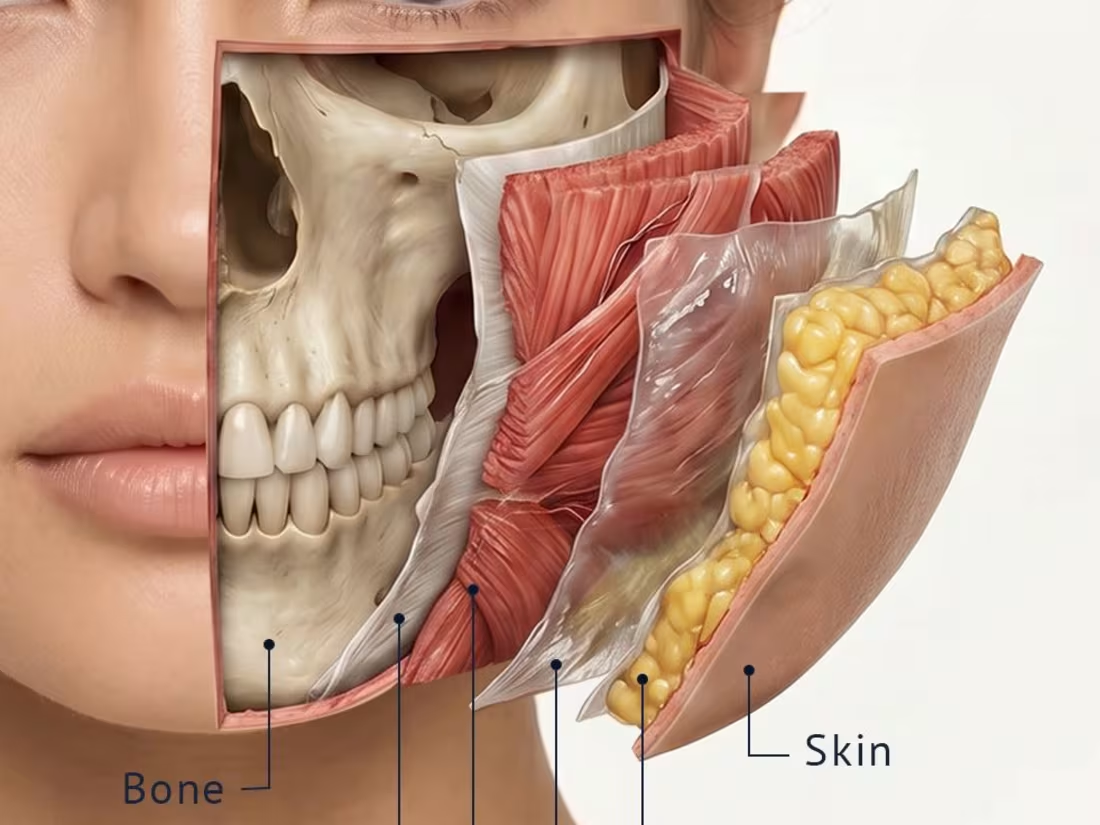
Six layers. One face. Everything a clinician needs to see — and rarely gets to.
Most people see a face as a surface. Every surgeon, injector, and aesthetic medicine practitioner works in the layers beneath it.
Bone. Periosteum. Muscle. SMAS. Superficial fat. Skin.
Each layer has its own mechanical properties, its own response to aging, its own role in how a face moves, holds its shape, and changes over time. Understanding the spatial relationship between these layers — not just their names — is what separates a technically precise practitioner from one who works by intuition.
This illustration and animation series visualizes all six facial layers in a single composition — peeling back from skin to bone, showing each layer in anatomical context.
Developed for aesthetic medicine education, plastic surgery training, and facial anatomy CME content.
If your organization creates training materials for cosmetic physicians, plastic surgeons, or aesthetic medicine educators — and needs medical illustration or animation that works at this level of anatomical detail — I'd love to discuss what's possible.
#medicalillustration (https://www.linkedin.com/search/results/all/?keywords=%23medicalillustration&origin=HASH_TAG_FROM_FEED) #medicalanimation (https://www.linkedin.com/search/results/all/?keywords=%23medicalanimation&origin=HASH_TAG_FROM_FEED) #facialanатomy (https://www.linkedin.com/search/results/all/?keywords=%23facialan%D0%B0%D1%82omy&origin=HASH_TAG_FROM_FEED) #SMAS (https://www.linkedin.com/search/results/all/?keywords=%23smas&origin=HASH_TAG_FROM_FEED) #aestheticmedicine (https://www.linkedin.com/search/results/all/?keywords=%23aestheticmedicine&origin=HASH_TAG_FROM_FEED) #plasticsurgery (https://www.linkedin.com/search/results/all/?keywords=%23plasticsurgery&origin=HASH_TAG_FROM_FEED) #facialaging (https://www.linkedin.com/search/results/all/?keywords=%23facialaging&origin=HASH_TAG_FROM_FEED) #CME (https://www.linkedin.com/search/results/all/?keywords=%23cme&origin=HASH_TAG_FROM_FEED) #medicaleducation (https://www.linkedin.com/search/results/all/?keywords=%23medicaleducation&origin=HASH_TAG_FROM_FEED) #medicalart (https://www.linkedin.com/search/results/all/?keywords=%23medicalart&origin=HASH_TAG_FROM_FEED)
0
179
Not every artery gets attention. This one deserves it.
The innominate artery — brachiocephalic trunk — is the first branch off the aortic arch. It feeds the right side of the brain and the right arm. When it fails, the surgical solution involves the arch itself.
This illustration visualizes prosthetic replacement of the innominate artery — graft anatomy, vessel relationships, surgical positioning.
Complex vascular anatomy needs precise visual support. Whether it’s for surgical training, CME content, or clinic education materials — that’s exactly what I do.
If you’re working on cardiology or vascular surgery education content and need an illustrator who understands the anatomy — reach out.
#medicalillustration (https://www.instagram.com/explore/tags/medicalillustration/) #vascularsurgery (https://www.instagram.com/explore/tags/vascularsurgery/) #aorticsurgery (https://www.instagram.com/explore/tags/aorticsurgery/) #cardiology (https://www.instagram.com/explore/tags/cardiology/) #innominateartery (https://www.instagram.com/explore/tags/innominateartery/)
1
180
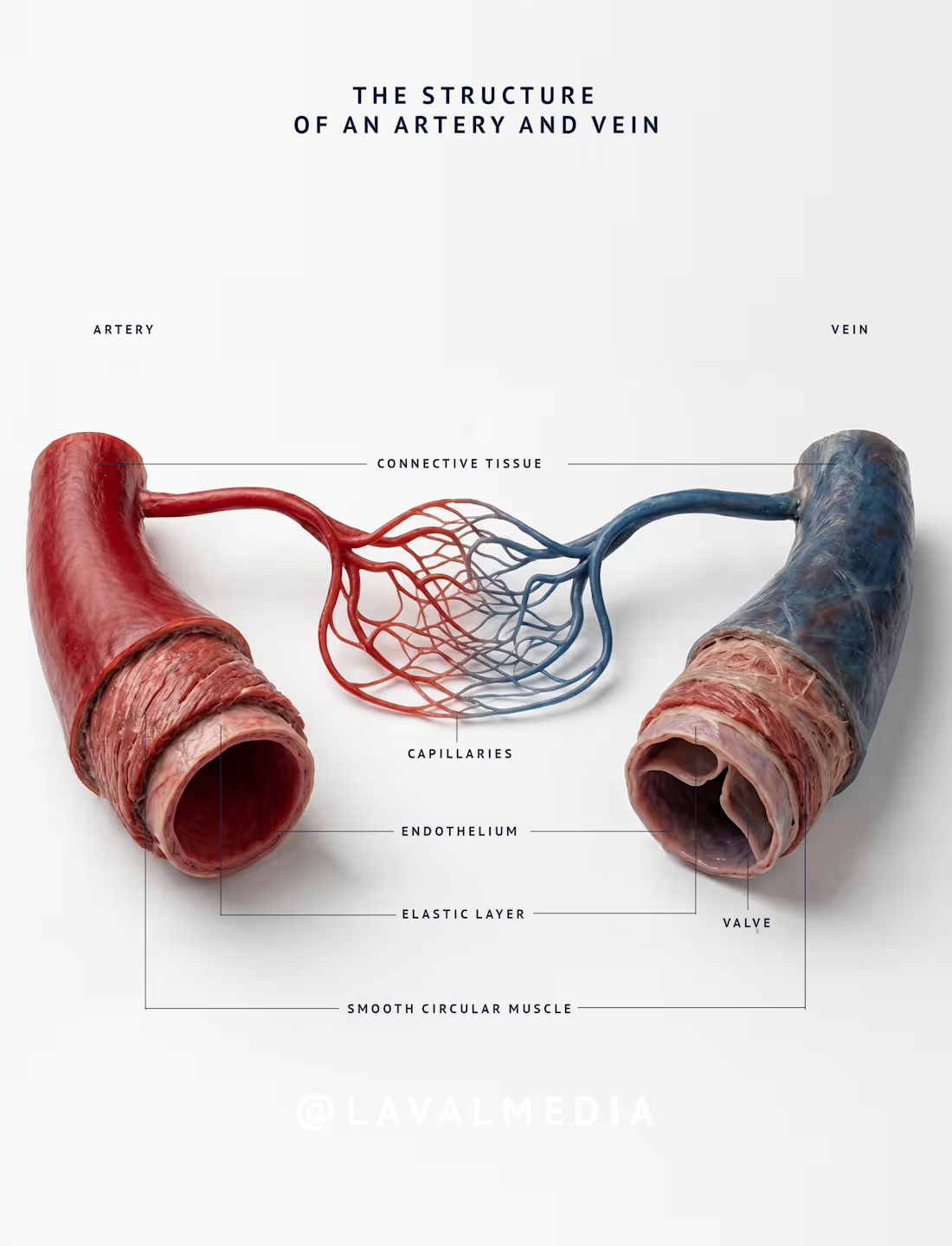
An artery. A vein. A capillary. Three completely different architectures.
The artery wall is built for pressure. Thick elastic layer, strong smooth muscle, connective tissue holding it all together. It expands with every heartbeat and springs back.
The vein carries the same blood, but at a fraction of the pressure. Thinner walls, less muscle, and something the artery doesn’t need: a valve. Because without it, blood would simply fall back down.
The capillary is just one cell thick. No muscle. No elastic layer. Just endothelium, because its entire job is exchange, not transport.
Same circulatory system. Completely different engineering solutions.
This illustration maps all three — layer by layer, structure by structure — the way it needs to be shown for medical education that actually teaches rather than just decorates.
If your team creates educational content for medical students, residents, or healthcare professionals — this is the level of detail that makes the difference.
#medicalillustration (https://www.instagram.com/explore/tags/medicalillustration/) #vasculararatomy (https://www.instagram.com/explore/tags/vasculararatomy/) #histology (https://www.instagram.com/explore/tags/histology/) #CME (https://www.instagram.com/explore/tags/cme/) #veinhealth (https://www.instagram.com/explore/tags/veinhealth/)
1
171
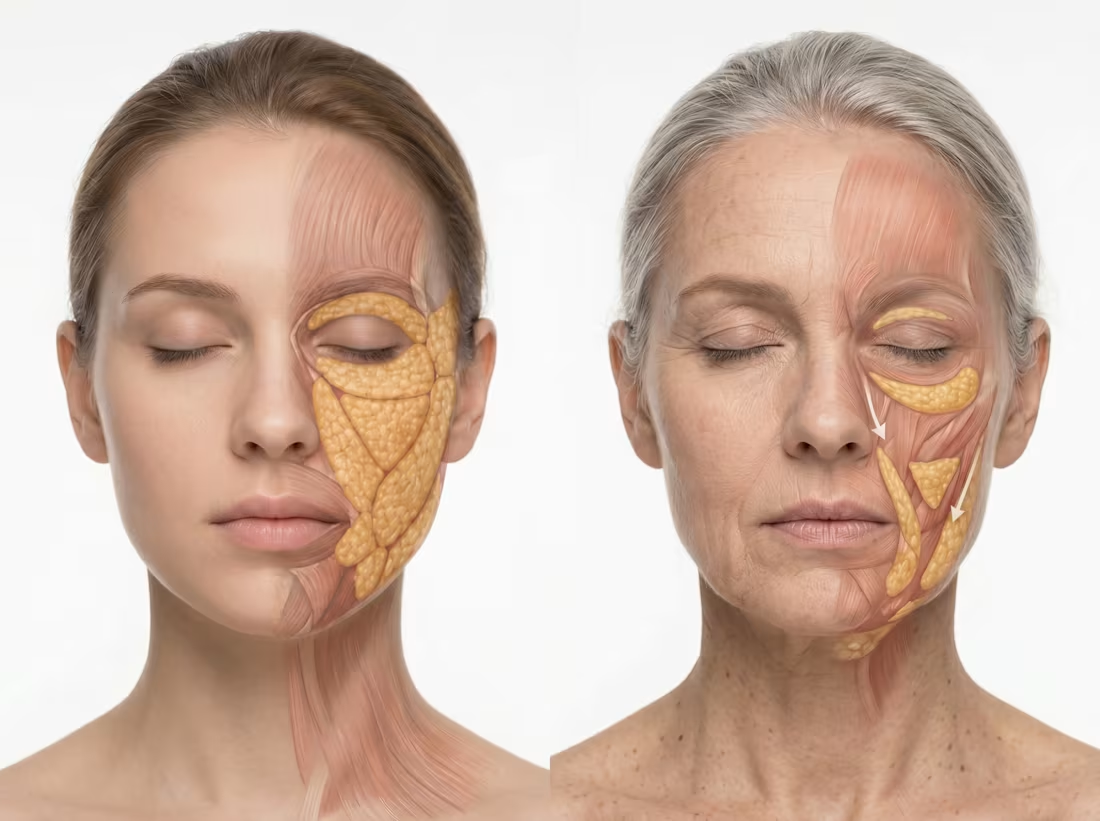
Look at these two faces.
Same person. Same anatomy. Just — time.
What changes isn't random. The fat pads that sit high on a young face don't disappear with age. They slide down. The ligaments that used to hold everything in place gradually let go. Volume shifts. Contours follow.
What you see on the surface — the fold, the shadow, the heaviness — is just the end of a story that started much deeper.
This illustration traces that process layer by layer — muscles, fat compartments, structural support — from a younger face to an older one.
For anyone working in aesthetic medicine or facial surgery — this is the part that actually matters.
#medicalillustration #facialaging #facialanatomy #aestheticmedicine #plasticsurgery #fatcompartments #medicalart
0
190